Chloe Michelle Howarth Talks Sapphic Yearning, Rural Ireland, and 'Heap Earth Upon It'
By Alivia Stonier
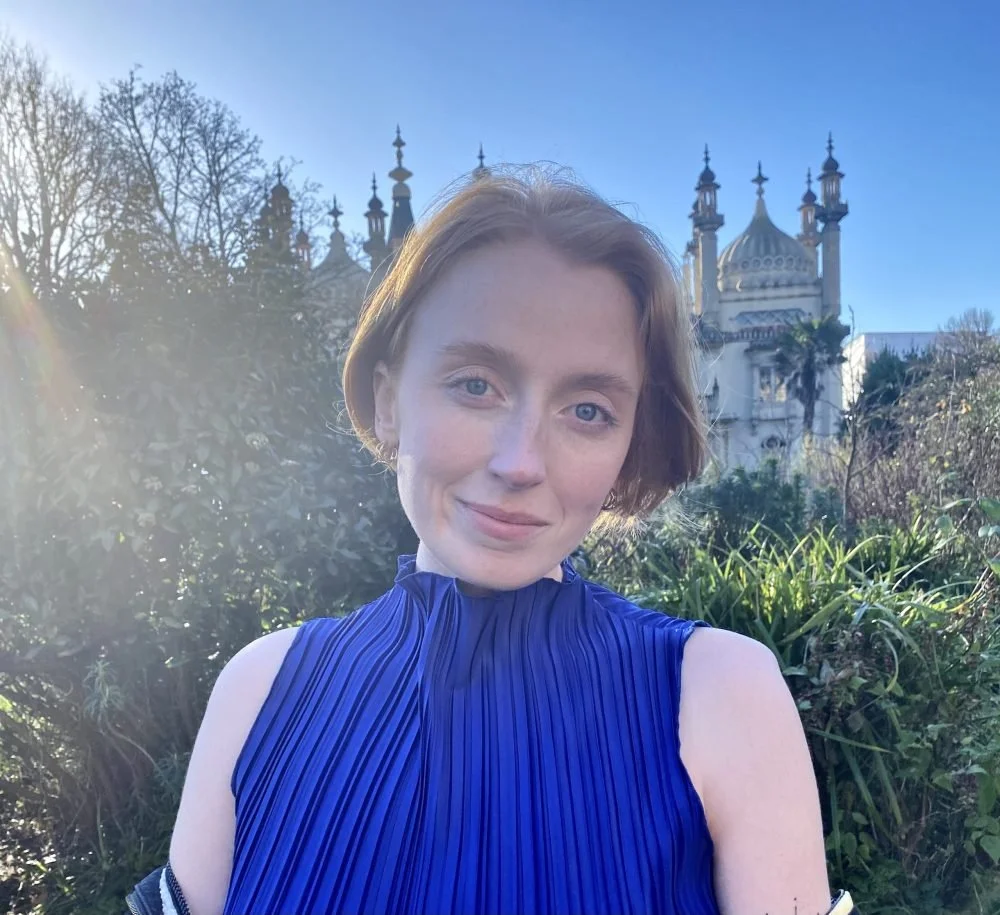
Courtesy of @chloemichelleh
Chloe Michelle Howarth is an author who writes from the depths of the heart. With an incredibly sharp voice that doesn't shy away from what it means to yearn even when it stings the hardest, it's clear that Howarth has captured the hearts of readers.
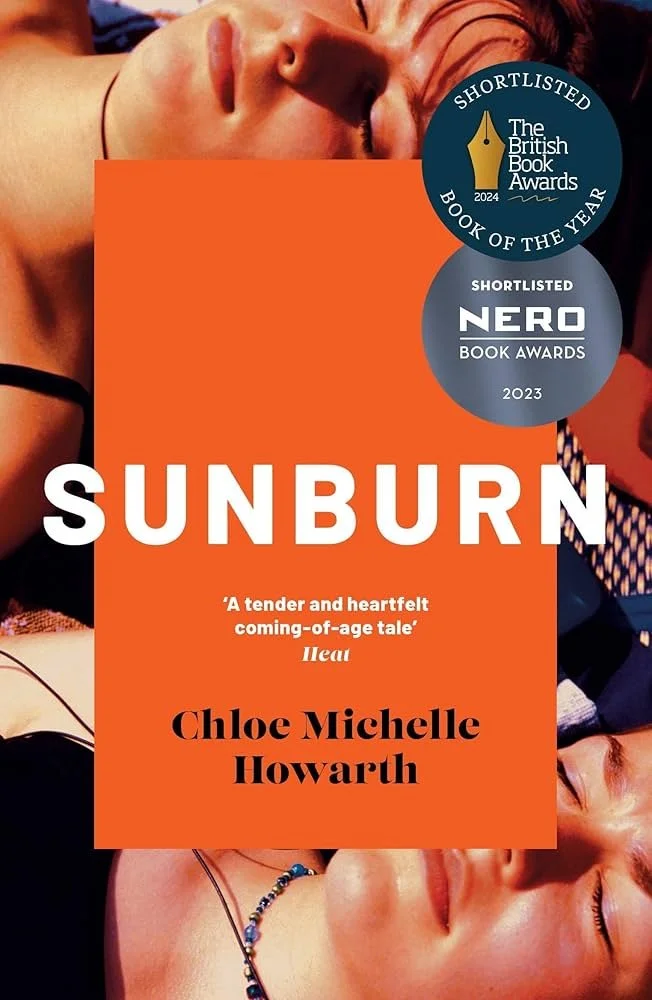
Her first novel, Sunburn, has swept the internet, with many readers remarking how the quotes stick with them long after reading the book. Enamored by the setting that the writer gently guides you through, with sticky summers that leave burns on the skin, the only relief is a cool night shower, and even stickier relationship dynamics.
Courtesy of @chloemichelleh
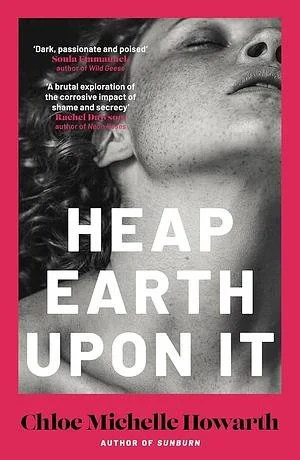
Haworth’s latest sophomore novel, officially available as of February 3, 2026, is no exception to this strength. Heap Earth Upon It is unafraid and unapologetic, and it leaves you wondering what truly lies beneath the surface. It is through the patience of the reader that a growing payoff is achieved by the end of the novel.
The project is a foil to its debut counterpart; instead of summers, there is a cold and dreary addition to the gothic genre.
As described by the official synopsis for the book, “In January, 1965, the growing town of Ballycrea has four new residents. The O’Leary siblings arrive in their new village under suspicious circumstances. Desperate to make a new start and leave their troubled life behind, the O'Learys offer few, contradicting details about their past. As they slowly settle into town, the siblings are taken under the wing of Betty and Bill Nevan, a wealthy couple in their forties who have always wanted children. However, as one O’Leary sister grows close to Betty, lines are crossed, and their intense relationship becomes difficult to define. All the while, the O’Learys’ buried secrets keep bubbling up, threatening to ruin their new future.”
Courtesy of @chloemichelleh
In order to understand the craft behind this book and talk deeper about how her line-level writing resonates with readers, I sat down with Haworth about this latest novel.
When beginning to discuss how her voice as an author developed, Hawarth had this to share, “I've always written diaries all through my life. And I think just the practice of that made attempting fiction a bit less intimidating. It also made writing fiction seem very accessible to me because I was writing all the time anyway. But it was when I was a teenager that I really became obsessed with reading and lyrics, like song lyrics and just words generally. I was like, ‘Oh wow, it can be so evocative.’ And I started to understand what it was to be like to be made to feel something by words, and I was like, I want to do that. I want to be able to write something down that makes someone feel something. And I think maybe that's why it has kind of developed to be quite emotive. Yeah, it wasn't something I was planning to do when I first started writing, but I just leaned into that desire so much, I'm not even thirty, but all that feels like such a long time ago now.”
Almost like a diary, one of the most signature parts of her writing is the way that she is able to capture yearning and the hunger for love. “It's my favorite thing to write about. I do love it. I think I am just kind of a romantic person, and I'm obsessed with longing. I'm not so much interested, let's say, in writing about love, but the absence of love and how that makes someone feel.”
“I think especially in this in Heap Earth Upon It, it was so enjoyable for me to look at different forms of longing. A lot of it is longing for people who are no longer around for whatever reason, and they just cannot be a part of your life anymore. And longing through grief. I'd done so much sapphic yearning in Sunburn. I think I'm always going to write about longing and yearning and things like that, but it was nice to also have things like grief and an ambition for a better life being different versions of that longing. I've enjoyed finding different ways to express that emotion.”
Specifically, when discussing how that origin for writing developed into the idea for Heap Earth Upon It, the writer revealed that it came from the desire for something different.
“It was a few things, really. Initially, I wanted to do basically the opposite to my first book, Sunburn, which is set in the summertime. It's very romantic. And I view it as a very sweet story. So I was like, right, I have to just kind of turn my back on this and see if I'm able to write something different or if I just need to stick to that. So I was like, okay, I'm going to write about the wintertime. And initially, I was writing more about family more than any romantic relationships. And I was also quite interested in starting from a point of looking at somebody's journey as they go off the edge of sanity. I kind of wanted to start with a character like Anna, who she's kind of already gone off the edge. And we're just realizing as we're reading, ‘oh shit, she's not– she doesn't have her two feet on the ground at all’. But you know, when you first meet her, you think, oh, maybe she's okay. So yeah, I wanted to kind of play around with how that disconnect from reality is revealed. I think it helped with unreliable narration and things like that… Because I could have written Sunburn, again and again and again. I love that whole world. But I was like, let's just make sure I can do other things first.”
We then dove more into Anna as a character, specifically how it's revealed that her sanity is unraveling.
“I think it was a real process, I will say. And it got quite granular. These characters, because it's multiple narrators and they've so much trauma and so many layers to them. The way that I started out was certainly not the way that it all finished. The characters that I thought that I was going to write in the first draft are so different from the way that they ended up.”
“I did so many drafts from each perspective, and eventually I got this kind of well-rounded version of who these characters were. But it didn't come to me in the way I anticipated that it would. It was actually quite a challenge. I'm a really disorganized person. So you can imagine all those drafts, all that information. I was confused at times. I was like, ‘What is going on?’ But yeah, it was good because each of the narrators really thinks that they're the hero of the piece and that they're also the victim. It was helpful for me to also believe that when I was writing from each point of view. So when I was writing from Jack's point of view, I was like, okay, well, Jack is telling the truth, and Jack is the one who's been wronged. And he's really the hero here, and then when I would go to Tom, I'd be like, okay, forget Jack. Tom is really the center of the piece. And he's the one telling the truth. I had to really believe it to build them all up. It was certainly a process. It kind of took me by surprise, but it was nice. I just went along on the journey and just kind of let them all develop on their own.”
Unlike her previous novel this is the first time that Haworth played with multiple perspectives, “I'm glad that I did that because, not that I feel like I got it out of my system, but basically I had become really fascinated with perspective and how, for example, like you and I are having a conversation now, but we're having two different conversations and we're experiencing it differently, even though it's one thing. So I just wanted to explore that. Some of the early things that I wrote [include] a scene very early on when they go to this gathering in a local person's house, and they hear Betty sing. And the first draft of that, it was changing perspectives in each sentence. And this really, really engrossed me. It gives you such a full picture of what's going on if you're hearing from different people every single sentence. Obviously, I can't keep it like this because I don't have the skill to pull that off, and it would be confusing for readers. But I was just fascinated by the fact that there isn't really any universal truth, and creating unreliable narrators is just leaning into the fact that they're all telling their version of the truth. They're not necessarily lying. So yeah, seeing all these different versions of the truth builds a fuller picture. I thought it was really fun. I'm glad I did it, and I'm glad I did it with four because now I know it is actually an intense process.” The author revealed that when discussing what it was like to write like this for the first time
However, that wasn't the only intense part of the process, as Howarth opened up about other challenges. “I think the first thing was having to accept that the story I had in mind wasn't necessarily the best version of what the story could be. And having to change a lot. Like they say, kill your darlings. Another challenge was figuring out how I was getting to that end point and where the story was going. With four people, you have so much room to expand on things. And sometimes I was like, is there too much information now? It was about paring it back. And also the organization. I had to color-code each narrator because I couldn't keep up with what was going on sometimes.”
On the flip side of that, there are parts of the writing process that she enjoyed the most. “I really enjoy doing line edits, which is when you go through sentence by sentence and consider every word and piece of punctuation. It's a very detailed thing. You can't do it like so early on, but I really do enjoy doing that, and considering, like, why is there a comma here? And what could that mean? And does it change the structure of everything, you know? Also, I enjoy writing the yucky things. There's this chapter in this book where Betty is showing Anna how to prepare fish and cut it into fillets, and she's like de-boning the fish and descaling it. I loved writing that. It was very enjoyable for me because it's quite visceral. I hated researching it because I had to watch so many videos of people scaling fish, and I'm vegan. I don't even like looking at meat or anything. Oh my God, my algorithm was a mess for a couple of weeks after that, but I liked writing it.”
Especially on a line level, this is where sensory details can start to come to the surface, and are essential for a character as cerebral as Anna. Someone who at times can be far from grounded.
“I think I'm quite aware, you know, they say show, don't tell. I think the best way to do that is just actually using the five senses. I try as much as possible to get those senses in because it does help to ground things. But with someone like Anna, it's difficult because it's not that she doesn't have those five senses necessarily, but she is zoning in on different things. She talked about the smell of dead blood between Betty's teeth… Now that I've said that, I'm like, why did I write that? That's disgusting. But that's the thing that she's zoning in with her senses, and it does ground you, but it's not where the other characters are going. They're going a bit more to normal things. It's just about thinking well, what would that character be drawn to, and what would they be interested in? What is realistic for them to be drawn to?”
When asked if she has a favorite line, the author shared, “There's a line in Sunburn that I nearly edited out, but it's the one readers always quote back to me. ‘To be with her is a sin. To be without her is a tragedy.’ It's become quite special to me because people put it on like their little collages and their like Instagram quotes and stuff, which I think is so nice. For Heap Earth Upon It, I think Jack has some very nice [reflections] about his past and people he's lost. He had some very sweet sentiments that were very nice to write and very romantic.”
Many readers resonate with the way that Haworth is able to capture growing up as a queer woman in the context of a deeply religious and socially conservative town. Especially in the more rural parts of Ireland, “I think growing up in Ireland, when I did, and like any age before me, Christianity is so part of the culture. It's everywhere. I'm not even from a particularly religious household, and yet, it's just part of the culture to be so Catholic.”
“With Sunburn, perhaps it was heavy-handed. I'd probably be a bit mean about it now and refine it all…But I guess that is the experience. Especially when you're a young queer person, having systems like that around you kind of breathing down your neck, you do really feel it, and it's so hard to ignore. So I think it has to be there. With Heap Earth Upon It, I wanted to look at religion, not so much in it, like the relation to queerness, but just Irish people at that time experiencing agnosticism and starting to question, is this it really? Do I actually believe in all of this?... But when you've had particularly difficult experiences, obviously, you would be questioning your faith. And that's quite a scary thing to do in that time and place… I feel like it's difficult to write about Ireland in the nineties or the 60s without mentioning it. I don't know if I personally could do that.” She said when speaking to this element of her work, and the way that she can uplift queer voices from these spaces.
Chloe then dug a bit deeper into the history of Ireland and how religion surrounds it, “Historically, we're quite bad at separating church and state. And like I said, culturally, I just think it's such a big factor. I would hope that it's starting to change because the country has opened up so much. We are like a diverse country; it's a shame that it seems like such a singular experience. And that's not really the case. There're so many people who grew up in Ireland who don't have those Catholic experiences. I hope that it's going to start changing soon and that we see different religions upsetting people in Ireland.”
I wondered how each perspective of the siblings lent itself to the way that religion can be experienced. “I was very careful with how each character expressed their relationship to religion and their relationship to God and how much they thought about it or didn't think about it,” explained the writer.
“Jack is the main one. He has a very hard time with it. I think he would very much like to go back five, ten years in the past and be in a position where he just doesn't question god at all. But unfortunately, his brain has started to question it, and I don't think he even wants that. It was super fun. A lot of the time god is written with a small G or a big G, depending on who is talking about it. And sometimes for Jack, it kind of fluctuates. Anna has kind of no interest because Anna's on her own plane. She's on her own journey. Kind of going back to that primal creature that she is. I really did enjoy it, especially with Jack looking at what a man in the mid-sixties in Ireland would do if he did start to question god. Where do you turn to if the person who's supposed to be looking out for you and the person who is supposed to be comforting you isn't there? What do you do? How is he going to cope with that? The burden of that question, it's kind of sad to think about, though agnosticism, isn't it? Like wanting to believe, but maybe not being able to believe, and that going back and forth.”
In her latest work, Anna represents being a sapphic character without that being the sole focus of her character. “It was a lot of fun, especially for a character like Anna. She exists in a time and place where queerness just isn't spoken about at all. So she has no reference for queerness. It's not even like it's a foreign concept to her. It's not a concept to her [at all], she's never seen it. So her brain doesn't go there… She's just like, ‘Oh, I don't really understand what this is, but I'm absolutely obsessed with this woman, and I just want to be with her all the time.’ And so it kind of becomes instinctual. She doesn't spend very much time wondering, what does this mean for me in society or as a woman or anything, she just allows herself to be very primal and get carried away with it. And I found that I really enjoyed that. Obviously, it's her as a character. I think with another character, I would have allowed them to have more of a reference for queerness and understand that they were different and how that would have played out.”
“But I think, again, I kind of did that in Sunburn. So I was like, let's look at this in another way. At this particular era in time, where you could get away with having a character who is exploring their queerness without even really knowing that they're exploring their queerness, it was difficult sometimes because she couldn't say anything, she couldn't use the normal words that you would use to express attraction or desire or romance or anything. Because to her, it's not; that's not really initially what that relationship was. At times it was challenging, but I really did enjoy it."
The author added about Anna, “I think she's a woman amongst men. And that is very difficult for her. And I think it's lots of things. She's trying to find her place as a woman; there's the queerness, and also definitely some mommy issues going on there. So it's kind of all rolled into one for her. Very confusing.”
When talking about the book, another element that came to the surface was how much these siblings ultimately care about each other, even in the face of moments where they may despise each other. The split point of view really allows this dynamic to shine throughout the book in a way that is distinct and doesn't inherently take sides.
However, despite this mix of love and cruelty towards one another, there are some big reveals towards the end of the book, and when it came to balancing these revelations, it took a lot of care during the writing process. “I had to be very careful with when information was revealed and how it was revealed because ultimately, [the final reveal is] such a small piece of information, but it is dragged out essentially like over the whole book, I had to be very sensitive with it.”
“I have all these different perspectives and all these different versions of the truth. So at one point, I was like, okay, well, Chloe, what actually did happen? Like, let's get an actual timeline here and then think… I had to kind of build out a full experience for each character and then decide whose information I would show and when. And who would tell which part of the story…that's the good part and probably the forgiving part about having multiple narrators who are all unreliable narrators, there is no one truth for these people. They all really do think what I'm saying is correct. So if you just line things up in the right way, a storyline will come out, and that information gets revealed.”
Ultimately, the book leaves you questioning everything, and it is your mystery to be able to unravel today in all its gritty detail.
Courtesy of @chloemichelleh
To round out the conversation, we then talked about what the author ultimately hopes people are able to take away from her work and how it has helped her as well.
“I think I want rural queer people to feel seen. Anna's probably not the best person to see yourself in. But yeah, I just kind of want to really confirm that there are queer people in rural spaces and they always have been. Just because we don't have, let's say, rural Ireland in the sixties, I found it so difficult to find resources of queer people at that time. Like any firsthand account, I found it really, really difficult. I just want to kind of remind people, queer people have always been everywhere and always will be everywhere.”
“Writing a book like Sunburn helped me to kind of heal my relationship to my hometown. Growing up queer somewhere, I wasn't even out when I was a teenager, but you just think like all eyes are on you and you don't belong. And everyone's so different from you. Actually writing Sunburn made me be like, it's fine. It's actually fine. And again, as a queer person, you deserve to be in the place that you're from, and it really made me see that. I think I also wrote it at a time when I was growing up, you know, and I guess I was just realizing that sort of thing in general. And then with Heap Earth Upon It writing Anna's perspective. Writing about a woman who is so emotionally unbridled. She just feels her feelings one hundred percent. She's not worried about upsetting her brothers, upsetting the men in her life at all. I think that's why she comes across unhinged at times. Actually, I think she's very, very liberated. It was cathartic.”
That liberation is sure to continue as she revealed details about her latest project that is soon to come, “I'm writing currently, I'd say my gayest story yet. And it's just so fun. I'm moving away now from characters whose problems stem from their queerness. And I'm writing queer characters who have other problems in their lives, like maybe. I'd better not spoil anything, but just characters who are openly queer. However, the story is still all about queerness. You know, sometimes people are like, I just want a queer character who just happens to be queer, but that's not what they're all about. I do like it when it's all about the queerness. That's what I want to write, really, really dykey books, but maybe the dorkiness isn't so much of an issue anymore for people.”
For those who love sapphic books and explorations of love and complex family dynamics, Chloe Michelle Howarth pulls you into worlds that feel like home. Through her own exploration of her identity and the way that the books have brought comfort, she's been able to similarly do that for her audience, and she will continue to do so. Howarth is a meaningful voice in the publishing industry and continues to be celebrated.