Girl, You’ve Been Brainwashed by P*dophiles. Here’s How to Undo It.
By Sadie Jane Mayhew
The title may sound provocative or even flippant, but the reality beneath it is neither.
Across generations, women have been taught, subtly, stylishly, and relentlessly, that the ideal version of femininity looks a lot like youth. Not vitality or confidence, but something closer to resembling girlhood. The message has been embedded so deeply in our culture that many of us absorbed it long before we were old enough to question it.
Once you start looking for it, the pattern becomes difficult to ignore.
In the 1930s, audiences watched a prepubescent Shirley Temple perform in films layered with coded adult flirtation. At the time, it was framed as charming “innocence.” In hindsight, it’s harder to ignore how often she was styled, scripted, and staged within adult emotional dynamics she could not possibly consent to embody.
As culture evolved over the decades, the imagery became less explicit but no less present. Instead of literal children placed in adult roles, adult women were encouraged to approximate girlhood: baby voices, wide-eyed naïveté, hair bows, pink palettes, school-uniform aesthetics repackaged as sexy. The message shifted from “be young” to “look young enough to be mistaken for it.”
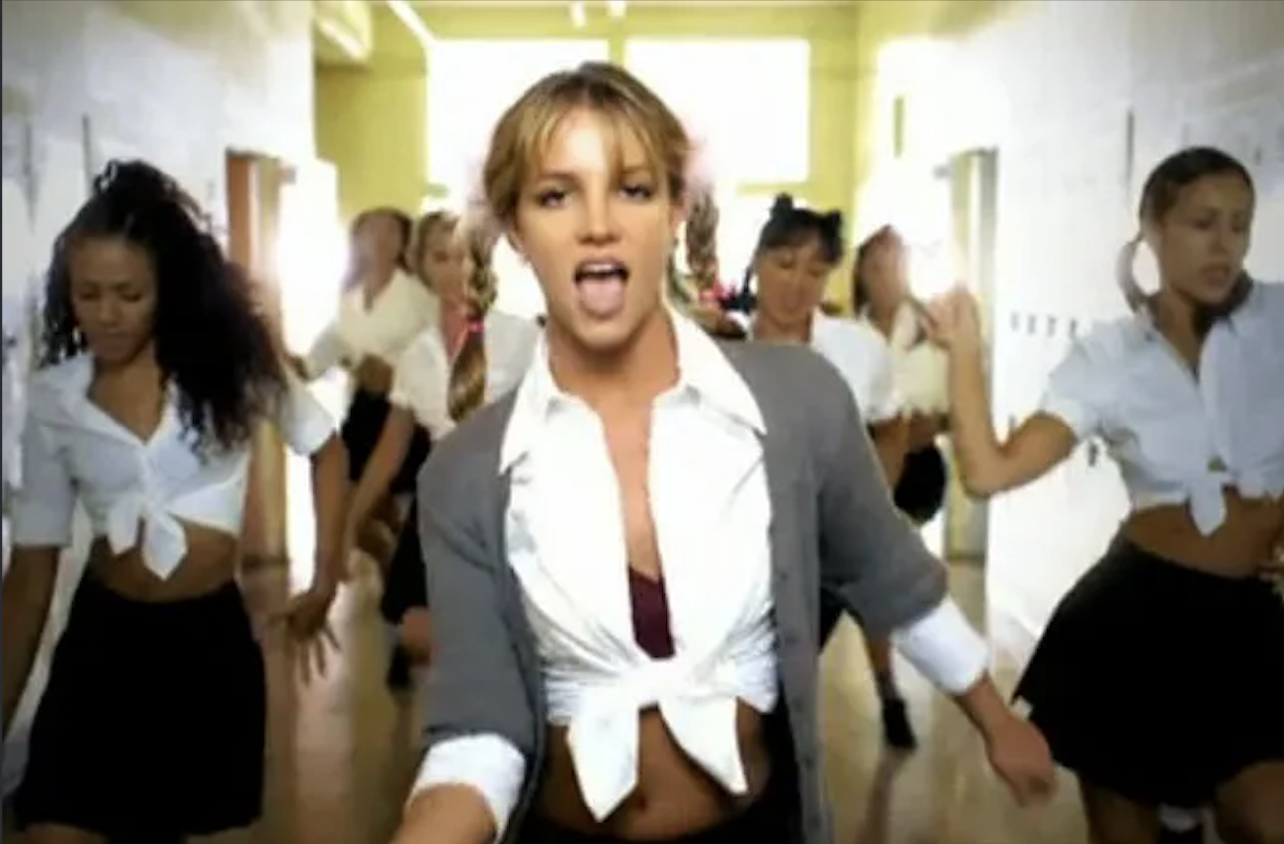
Still from “…Baby One More Time” Music Video by Britney Spears
This dynamic hasn’t been limited to fiction. In the 1990s, comedian Jerry Seinfeld, then in his late 30s, publicly dated a 17-year-old high school student–a relationship widely covered with more curiosity than alarm. And to this day, there are no repercussions for that. Seinfeld is far from the only celebrity to be in an inappropriate relationship, too. Similar dynamics have surfaced repeatedly in Hollywood and the music industry forever, often reframed as romance rather than criminal.
The pattern echoes through the stories of women like Winona Ryder, Courtney Stodden, Priscilla Presley, Demi Lovato, and Kate Moss– all people whose formative years unfolded under the gaze or influence of significantly older men and industries that rewarded their youth above all else.
When these relationships and aesthetics are normalized, and even glamorized, they don’t stay on screens. They seep into real life, which is what it was programmed to do.
Many women can trace their own early dating experiences back to this cultural script: teenage girls paired with men in their twenties, relationships framed as flattering rather than concerning, unease brushed aside with the familiar refrain, “She’s mature for her age.” Often the pattern stretches back many, many generations deeming it “normal” after some time. Mothers and grandmothers carry similar stories to their daughters because they inherited the same narrative themselves.
Many women can trace their own early dating histories back to this cultural script: teenage girls paired with men in their twenties, relationships treated as flattering rather than predatory, concern dismissed with a shrug. Often, mothers and grandmothers carry similar stories–not because they failed to protect their daughters, but because they inherited the same narrative themselves.
This is how grooming works at a societal level. It’s not always through individuals, but repetition. And it doesn’t stop at relationships but also extends into other areas in our culture like in beauty standards and the way women are taught to see their own bodies.
Consider the scale of the anti-aging industry which is valued in the hundreds of billions globally when accounting for injectables, cosmetic procedures, dermatology, and skincare. Its premise is simple: aging is a problem to solve, wrinkles are flaws to be reversed,and gray hair means youth and beauty declining. Note–this only applies to women as a majority consensus.
At the same time, many of the features celebrated as feminine ideals like hairless bodies, extremely slender frames, unlined skin, all which closely resemble characteristics associated with adolescence. Even fashion trends marketed as empowering often draw from school-inspired silhouettes: pleated skirts, knee-high socks, bows, and Mary Janes.
The body hair removal industry alone is worth billions globally, reinforcing the expectation that women’s bodies should appear smooth and unfinished which reflects closer to adolescence than maturity.
None of this is the fault of the women who comply. When a standard is presented as normal for long enough, it becomes invisible. But once you become aware of it, it should make you uncomfortable.
Lately, there seems to be a subtle shift and conversations surrounding this topic. Luckily, this behavior is being called out in more recent times, with adult women subconsciously being pushed to believe that the beauty standard is one of what a healthy adult woman should look like. Let’s just call it out for what it is… Women’s beauty standards are rooted in pedophilia.
On social media, women are beginning to question why youth has been equated with desirability for so long, and who benefits from that equation.
There’s an irony to this moment. After decades of industries profiting from Botox, facelifts, and diet culture, the most radical aesthetic may soon be the simplest one: a woman who simply looks her age… Because it continues to perpetuate the stereotypes around women’s bodies being just that. Historically, women’s bodies have always been props for fashion trends, and when the minority of looks and beauty standards becomes unique and less attainable, it becomes the new standard of fashion.
No, it should be a counter movement against the subtle and sometimes not-so-subtle propaganda of pedophilia.
The goal, however, shouldn’t be replacing one beauty trend with another. Women’s bodies have spent far too long being treated like fashion cycles. The deeper shift lies in recognizing the pattern itself and refusing to participate in it.
Movements embracing natural aging, body hair, fuller figures, and visible life experience are gaining traction, but should just be for education and reshaping the standards for the sake of existing and embracing our bodies as they are naturally designed to be. I know I’m not the first person to come to this conclusion or propose this idea. But talking about it, adding fuel to the little fire around this topic is a good thing, right? Because we’re far from it being “the norm” where we stand today.
In fact, this year alone I feel like we’re regressing even more into the girlhood propaganda similar to what we saw in the early 2000’s with weight loss injections, facelifts being done on women in their 20’s, and age gap romances still being normalized in the 2020’s.
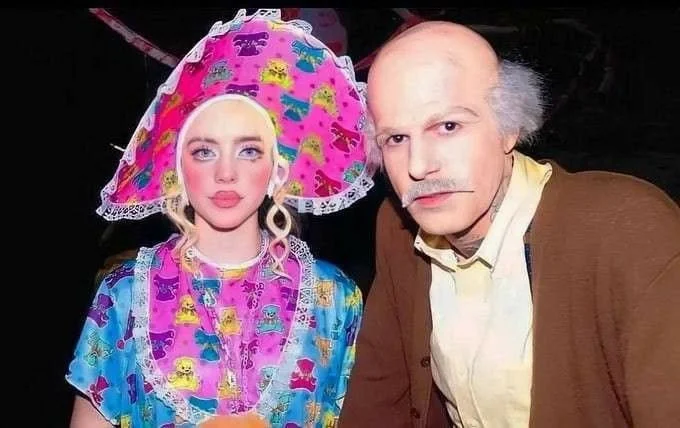
Sourced through Pinterest
A culture that subconsciously idealizes girlhood over womanhood inevitably creates conditions where power flows toward those who prefer women small, pliant, and inexperienced, therefore more easily controlled too. All adult women have experienced a decrease in attention from men as they get older. And the disgusting realization that we’re more desirable in our youth proves that point. For me, on the other hand, I feel freer every year I get older.
And with freedom comes confidence and power over oneself. Exactly what they’re trying to suppress. For thousands now, sadly. And in every new wave of feminism, it’s the same old goal but driven by different forms of rebellion.
Nonetheless, girls who are being conditioned don’t realize it yet. They don’t know. And we can speak on their behalf to hopefully undo this conditioning created by men, perpetuated in all forms of media, and participated in by girls and women someday. Undoing this starts with recognition.
Most importantly, it means shifting admiration away from youth being the prime or standard for love and attention and toward autonomy.
The first step in undoing the conditioning is simply recognizing it, which we’ve discussed. Once you start noticing how often youth is equated with beauty, desirability, and value, the illusion begins to lose its power. The “anti-aging” language in advertisements, the praise for women who look “so young for their age,” the endless messaging that your twenties are your peak, then all of it begins to look less like truth and more like marketing.
Awareness doesn’t instantly undo decades of conditioning, but it does give women something they were rarely given before, which is the ability to question it.
Undoing the narrative down the line also means redefining what beauty and desirability look like in practice. That can be as simple as allowing bodies to exist without constantly being seen through the lens of creepy older men and letting our bodies do exactly the same thing that men’s bodies do without shame…
It also means celebrating women who look like women rather than girls, in the media and in real life. Happy Women’s Month.