Looksmaxxing: The Myth of Objective Beauty
By Kianna Amaya
Does social media feel like a dark place these days? Social media isn’t just entertainment anymore. Algorithms now drive what we see on social media, but they are not neutral. They feel predatory, preying on the flaws of human nature. Boredom, greed, jealousy, and especially insecurity. This is especially true for younger people who spend a large amount of time on social media. One example of this is a trend known as looksmaxxing, which preys on insecurity in young people, particularly young boys.

Sourced through Pinterest
Looksmaxxing is a trend about “maximizing” one’s appearance alongside a culture of rating and critiquing others based on how their looks reflect their perceived worth and status. Looksmaxxing has existed for about a decade on obscure online forums, but it has become more popular in recent years because of TikTok. Looksmaxxing is also a part of the incel community. Looksmaxxers often aim to improve their appearance to have a better chance of dating women. They call it “sexual market value.”
On the surface, it may seem like self-care or self-improvement. Some videos resemble beauty hack videos. Common looksmaxxing tips include gua sha, quality skin care, and regular haircuts. But the further you look, the clearer it becomes that the looksmaxxing community pushes young people towards darker and more extreme beliefs about human value. Beliefs in which one’s inherent value is attributed to their appearance.

Sourced through Pinterest
Looksmaxxing is framed as a science when it’s not. It relies on scoring and quantifying physical traits, treating attractiveness as completely objective. People are ranked according to specific features, such as defined jawlines, high cheekbones, slim noses, and “hunter eyes.” What looksmaxxers consider as “high-tier” traits are overwhelmingly Eurocentric. Looksmaxxing content often degrades features that are associated with other races and ethnicities, like darker skin, which is often labeled as undesirable or low-tier. In this community, whiteness is idolized and positioned as superior and the ideal.
A major concern is the sheer amount of young people who have been exposed to this content since it became popular on TikTok. While looksmaxxing content usually targets boys and young men, girls and women are in these spaces too. It may seem like “just” an internet trend, but it will absolutely seep into real life. It is already shaping how kids view themselves and others.
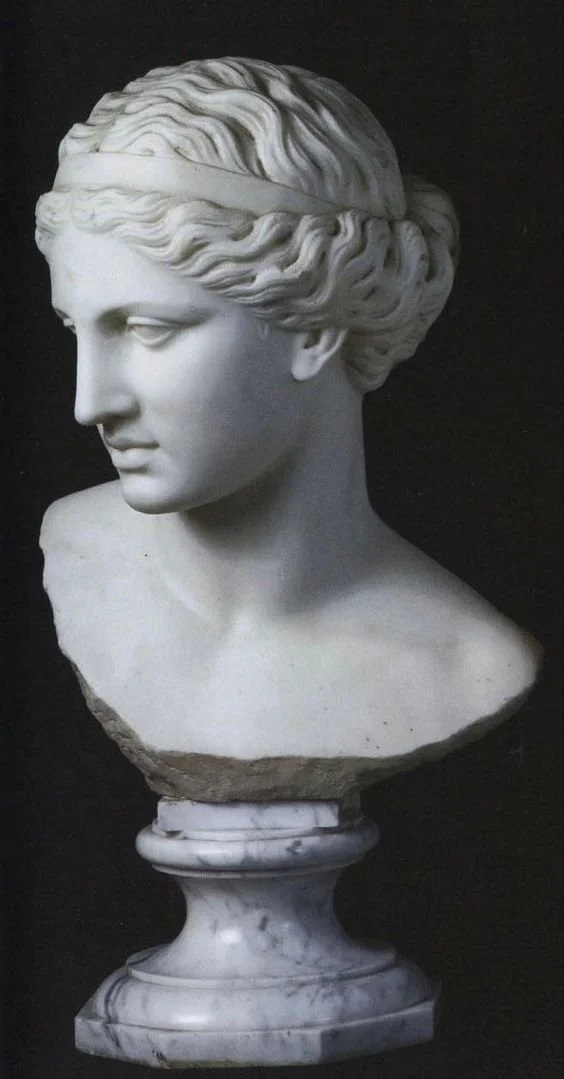
When you break it down, looksmaxxing starts to sound a lot like eugenics. I first encountered it through a chart ranking women’s appearances on a PSL scale from “sub 3” to “true Eve.” The chart instantly reminded me of eugenics diagrams from old historical texts. Eugenics is a pseudoscience that was popular from the late 1800s to the 1940s. A common misconception about eugenics is that it only applies to reproduction. In reality, eugenics was tied to appearance too, involving beliefs that attractiveness and physical traits determine inherent worth. Eugenicists believed there were good physical traits and bad ones, and that through selective breeding, you could reach the peak of fitness. Eugenics focused on the idea of an “ideal” type. They praised Eurocentric features in a way similar to the looksmaxxing content of today. It was also used to rationalize racism under false objectivity.
Sourced through Pinterest
During its popularity, academia validated eugenics as a legitimate theory. It wasn’t seen as a fringe belief but a valid science, largely based on flawed applications of Darwinism, selection, and “fitness.” It was both a scientific and a social movement embedded in education and popular media. In the United States, many eugenics-based organizations were created, and they hosted “fitter family” and “better baby” competitions. Of course, it was highly racialized and primarily targeted marginalized groups, too. Eugenics was used to dehumanize non-white people and isolate them within society. It was used to justify the forced sterilization of many Black Americans and other marginalized groups.
Before eugenics, there were earlier pseudosciences, such as physiognomy and phrenology. Physiognomy is the pseudoscience of correlating facial features with personality traits and character. Similarly, phrenology attributes personality, morality, and intelligence to skull shapes and bone structure. Both physiognomy and phrenology promoted Eurocentric features. They’d associate certain negative physical attributes with greed, selfishness, and unreliability, amongst other characteristics.
So, now we’ve got young teens asking to be rated and micro-scrutinizing their features online. Certain looks are treated as markers of superiority, much like earlier pseudosciences under the umbrella of eugenics. That was immediately what came to mind when those PSL charts started trending on TikTok.
The logic is the same. Whiteness is positioned as the default, while everyone else is seen as a deviation and automatically lower in the hierarchy. Looksmaxxing mirrors those archaic beliefs, repacking them as modern pseudoscience optimized for social media. That’s why looksmaxxing cannot be dismissed as just an internet trend. The world is becoming more conservative and has manifested through the normalization of racism, misogyny, fatphobia, and more on social media. Looksmaxxing can desensitize young people to more extreme beliefs that’ll send them further into the alt-right pipeline.
When young people start ranking themselves within a hierarchy, dehumanization becomes normal. It starts with dehumanizing themselves, then extends towards dehumanizing others. Those outside the community might find the language absurd and unserious, but to the looksmaxxing community, it's treated as objective truth. It primes young people to dissect faces and bodies, reduce people to traits, and justify prejudice.
Looksmaxxing isn’t just an online trend. While it’s disguised as self-improvement, it's reintroducing harmful ideas to a young audience. One in which human worth is ranked by appearance. It’s the same ideas that targeted marginalized people for centuries, repackaged into TikTok content. History shows us where these ideologies lead.
Sources: