By Julia Krys
Morgan Neville’s documentary Lorne attempts to capture one of America’s most notorious bosses: Lorne Michaels, the creator of NBC’s iconic Saturday Night Live. SNL, which debuted in 1975 and continues under his leadership today remains a figurehead for American humor as the longest running sketch comedy show. Michaels remains something of a producing enigma. What does a producer actually do anyway? They fund projects, shape them, guide talent, and bring coherence to chaos. As former cast member Kristen Wiig describes it, he has a Wizard of Oz mystique: a man you never fully know, running the show from behind a curtain. Neville gestures at this mystery, but ultimately trades deeper insight for a more polished, lighthearted portrait.
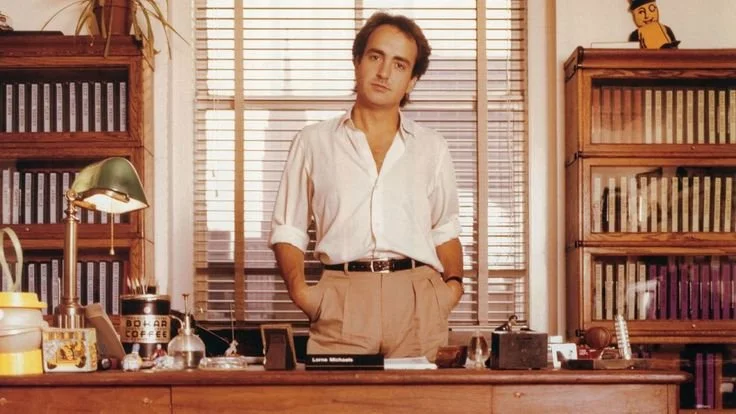
Credit: Hollywood Reporter
Michaels is not entirely forthcoming. In moments where he does not fill in the blanks, Neville leans on a revolving door of former and current SNL cast members, producers, and writers who deliver on their typical task: to entertain. Although we remain at an arm’s length, the amalgamation of anecdotes intercut with ongoing SNL production captures him as, if anything, the ultimate Hollywood survivor.
Neville emphasizes how Michaels is, at his core, an ordinary guy – albeit one who happens to be the foremost tastemaker and gatekeeper of comedic talent for generations. His close friend, American folk legend Paul Simon, says, “To understand SNL is to understand Lorne.” The documentary takes Simon’s thesis seriously and explores their inextricable link. Still, he is husband and father of three, though that life remains almost entirely separate from the onslaught of weekly shows that consume his schedule.
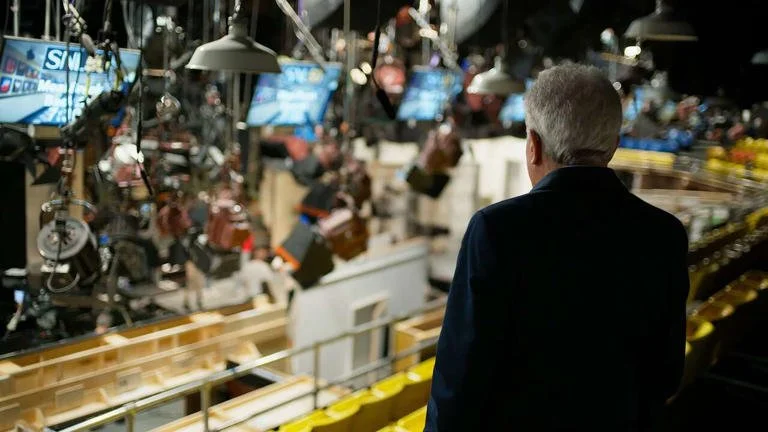
"Saturday Night Live" creator Lorne Michaels overlooks the set in Studio 8H at 30 Rockefeller Plaza in New York in a scene from Morgan Neville's documentary "Lorne." (Focus Features/Courtesy of Focus Features) via MSN
Lorne traces back to Michaels’ early career as a writer and performer. Former cast member Chris Rock notes he had a “very medium career” before producing. He worked on modest productions like The Hart and Lorne Terrific Hour and Rowan & Martin’s Laugh-In. Rock also calls it “the best education possible.” Just as Michaels would go on to launch countless careers, Lily Tomlin helped launch his. She hired him as a producer on her show, Lily. Michaels recalls aligning with her high standards, even when they came with a degree of neurosis. A direct line is drawn between the patience she showed him and the way he has cultivated talent over the years.
Saturday Night Live was pitched to NBC as a “talent variety show” where the next comedic star would be discovered. In some ways, that framing holds. Yet SNL has no interest in prize money; instead, it functions as a launchpad for rising talent. Perhaps this “talent show” pitch was simply what executives needed to hear to greenlight satirical sketch comedy, something unfamiliar to American audiences at the time. Early cast members call it a form of “anti-TV.” Michaels describes his work as a dessert – the point being its lack of a point, a confection meant simply to be enjoyed.
The documentary’s animated interludes, narrated by Chris Parnell, further reinforce its funhouse tonal priorities. These sequences reimagine unseen moments from Michaels’ life with humor, often undercutting periods of struggle. The effect is playful, and further signals the film’s preference for entertainment over investigation.
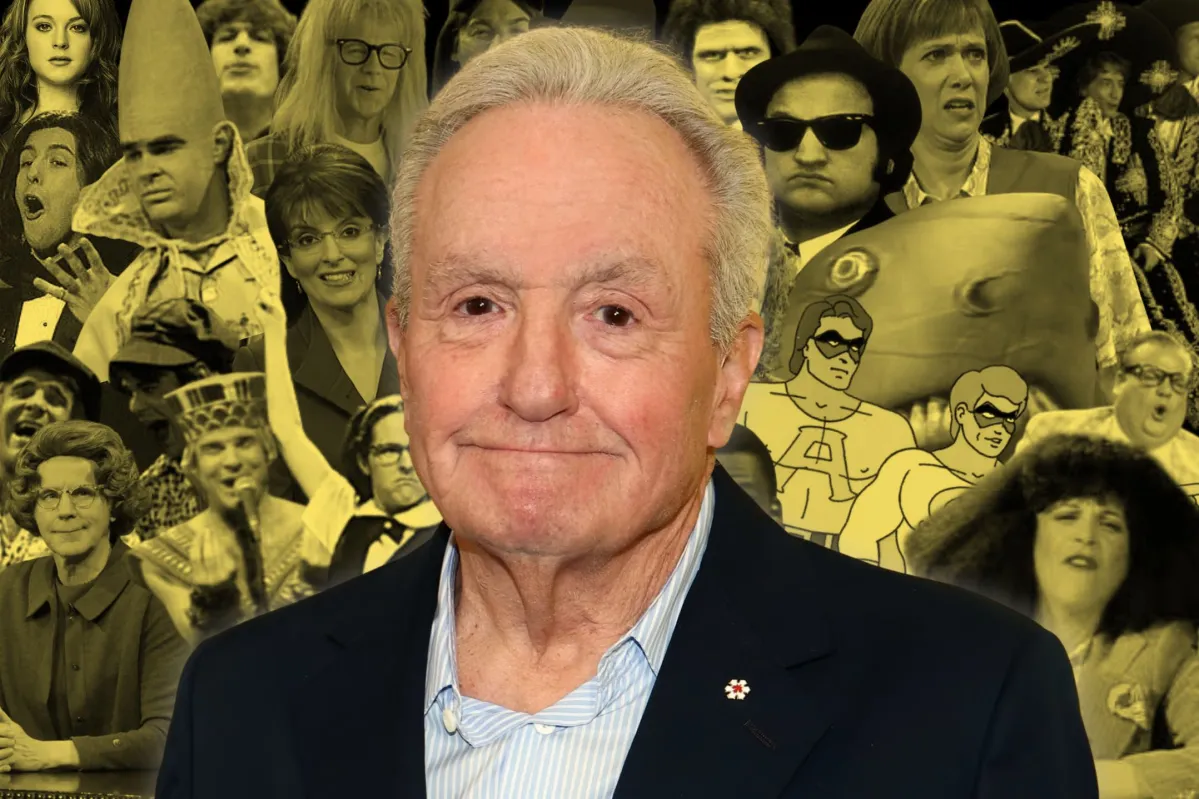
Lorne Michaels and a selection of characters he has overseen as executive producer of ‘SNL‘ Credit: NBCUniversal/Focus Features/America via America Magazine
In one scene, writers and cast members pile into his office, sitting on any available surface: couches, armrests, even the floor. Michaels emphasizes the sense of play essential to their work. That play extends beyond the physical space to a schedule built around his nocturnal habits: workdays begin between 2 and 4 p.m. and stretch until sunrise. Michaels suggests this exhaustion allows creativity to flow more freely. Notably, the documentary avoids acknowledging the role substances may have played in sustaining this culture, an omission that feels less like oversight and more like intentional smoothing.
Neville traces the show’s cycles of success and failure, displaying them as evidence of constant reinvention. A major low point came between seasons five and ten, when Michaels left the show entirely. He describes the period as a kind of heartbreak. During that time, he traveled through the American South with Paul Simon, a trip that helped inform Simon’s album Graceland and marked Michaels’ deeper connection to the audiences he sought to reach.
Another turning point came in 1995, when network dissatisfaction led to a cast overhaul. Reflecting on it, Michaels seems almost casual: “How many funny people are in America? 300?” It’s both a joke and a philosophy. His guiding principle remains constant reinvention. Former cast member, Mike Myers describes it as more of a curatorial instinct. In a huge field of pumpkins, he knows how to pick the best from the patch.

"Saturday Night Live" creator Lorne Michaels is profiled in director Morgan Neville's documentary "Lorne." (Focus Features) via MSN
Ultimately, Lorne mirrors its subject: playful and not overly concerned with depth. While this approach makes for an entertaining watch, it often skirts complexity in favor of charm. We are allowed glimpses inside, via a procession of powerhouse talent, but never a full portrait. In one moment, former cast member Kate McKinnon sits in Michaels’ office, tossing out ideas, distracted by the cameras. Laughing, she admits, “I don’t know how to be normal.” That sentiment extends across the film. Performing is second nature; being observed plainly is not. And that tension, between authenticity and performance, is where the documentary comfortably settles.