Made by Allyson: Inside the Intimacy of Live Illustration
By Natalie McCarty
In a culture engineered for distraction—where moments are filtered, posted, and forgotten just as quickly—Allyson Kim (known online as Made by Allyson) works in real time, translating one’s temporal presence into something everlasting.
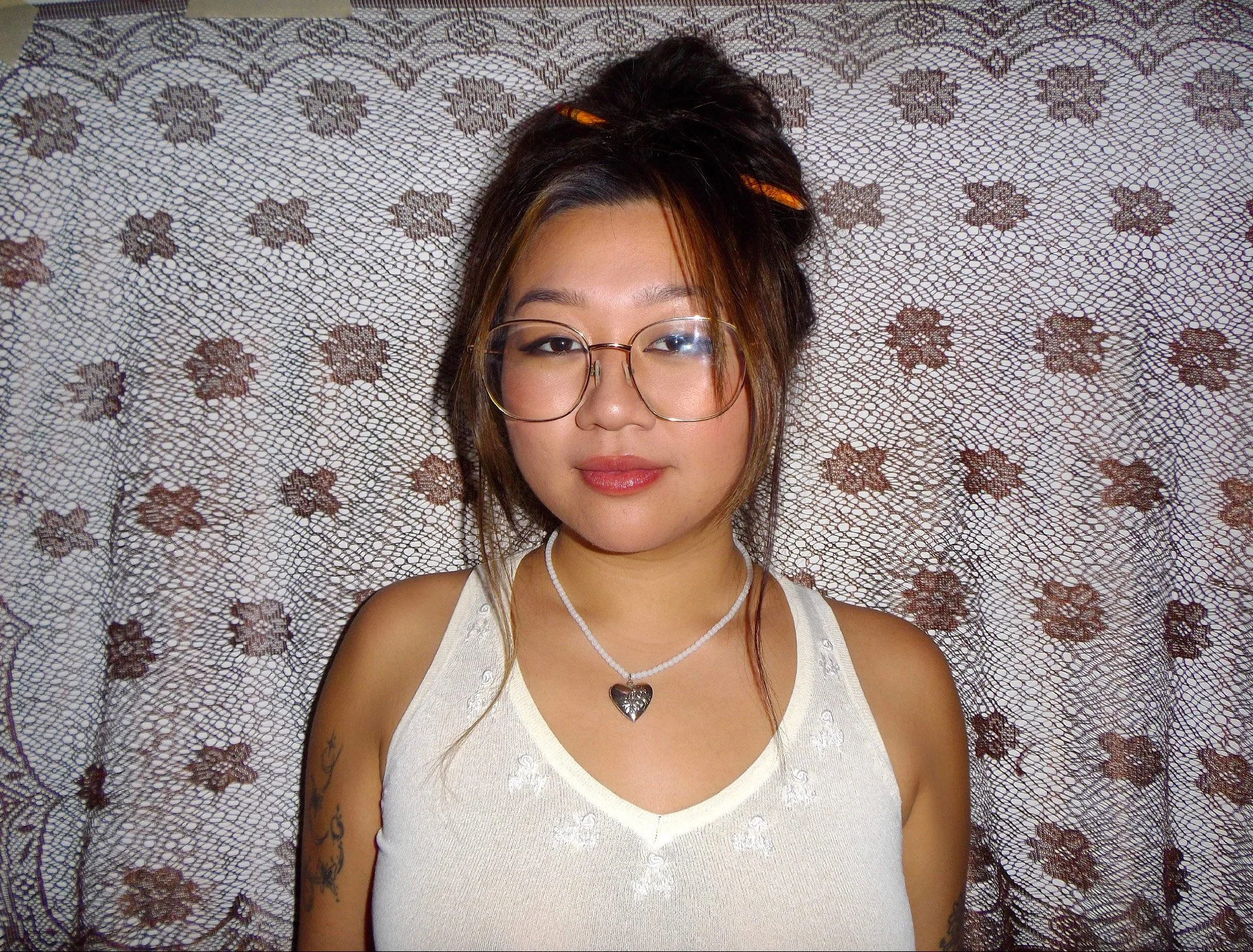
Image Provided by Allyson Kim
Based in Los Angeles, she moves through weddings, flea markets, brand activations, and parties, creating live fashion illustrations, each one rooted in the same instinct: to capture “people exactly as they are in real time” and to create “art that creates joy from life’s fleeting moments.” Underneath it all is what she describes as a constant attention to the present moment: a way of moving through the world that feels distinctly and acutely aware of the present.
For Allyson, that instinct started early. “In middle school, I used to collect little momentos from different places so I could write the date on it and put it in my memory box,” she says. By sixteen, that impulse had evolved into something more structured: “I filmed one second of my day every day for a year, edited it all together, posted it on YouTube, and then I continued to do that for the next two years.” Even then, she understood the value of accumulation, of noticing. “I’ve always treasured life’s little moments,” she says, “but it’s a quality I forgot I had.”
Portrait of Allyson Kim; Credit: Made by Allyson
It took burnout to bring her back to it. “That whole year I felt so lost, was working three jobs, and was so exhausted,” she recalls. The shift came unexpectedly while working at a pottery studio, creating custom pieces for events. “For the first time, I witnessed the first-hand joy that my art created during their special moments,” she says. “Every time I worked a shift, I could feel a little piece inside of me realign as I began to remember that I was an artist.”
That recognition forced a decision. “I knew my financial lifestyle was unsustainable and something had to change,” she says. “So I gave myself until [New Year’s Day] to create a business being a full-time artist doing live illustration or I’d be going straight to Indeed.” What followed was a reinvention supported by years not just of artistic practice, but of building and understanding how to create something sustainable. “It took consistency and hard work to build a brand so quickly,” she says, “but it all came so naturally since the inspiration was so heavily aligned with who I already was as a person.”
That alignment is anchored in a philosophy she’s carried since childhood: “If you don’t like what you do, turn it into something new.” It’s a line from her elementary school art teacher that has stayed with her, resurfacing in moments of doubt. “This is a mantra that I find repeating to myself whenever I feel like I made a mistake in my art,” she says. Over time, its meaning has sharpened. “I realize that this is a core memory because it introduced the idea of freedom in imperfection. There is something so comforting about the fact that there are no mistakes in the process of creating; no permanence in any line, and every stroke has the freedom to be anything you could imagine.”
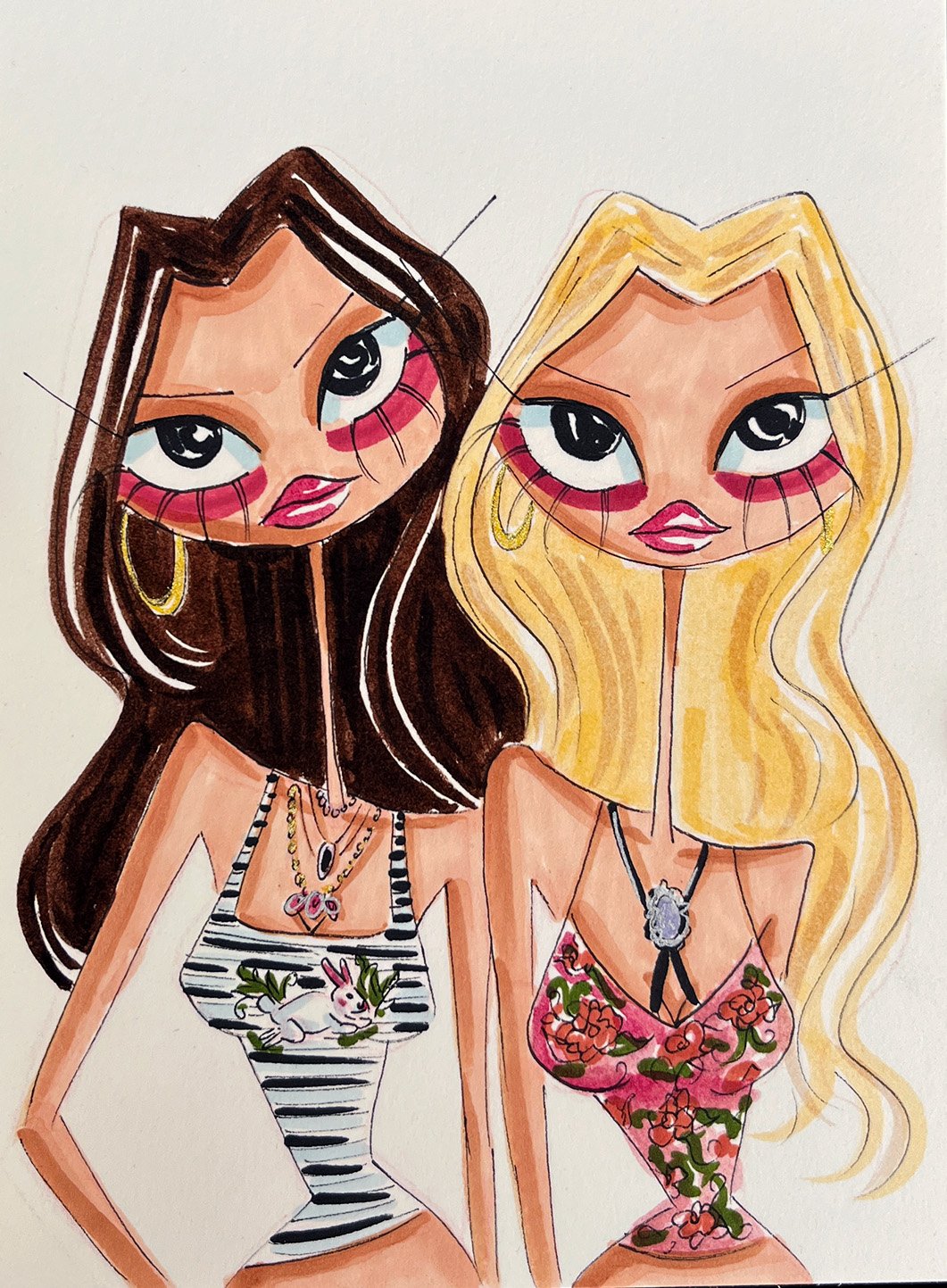
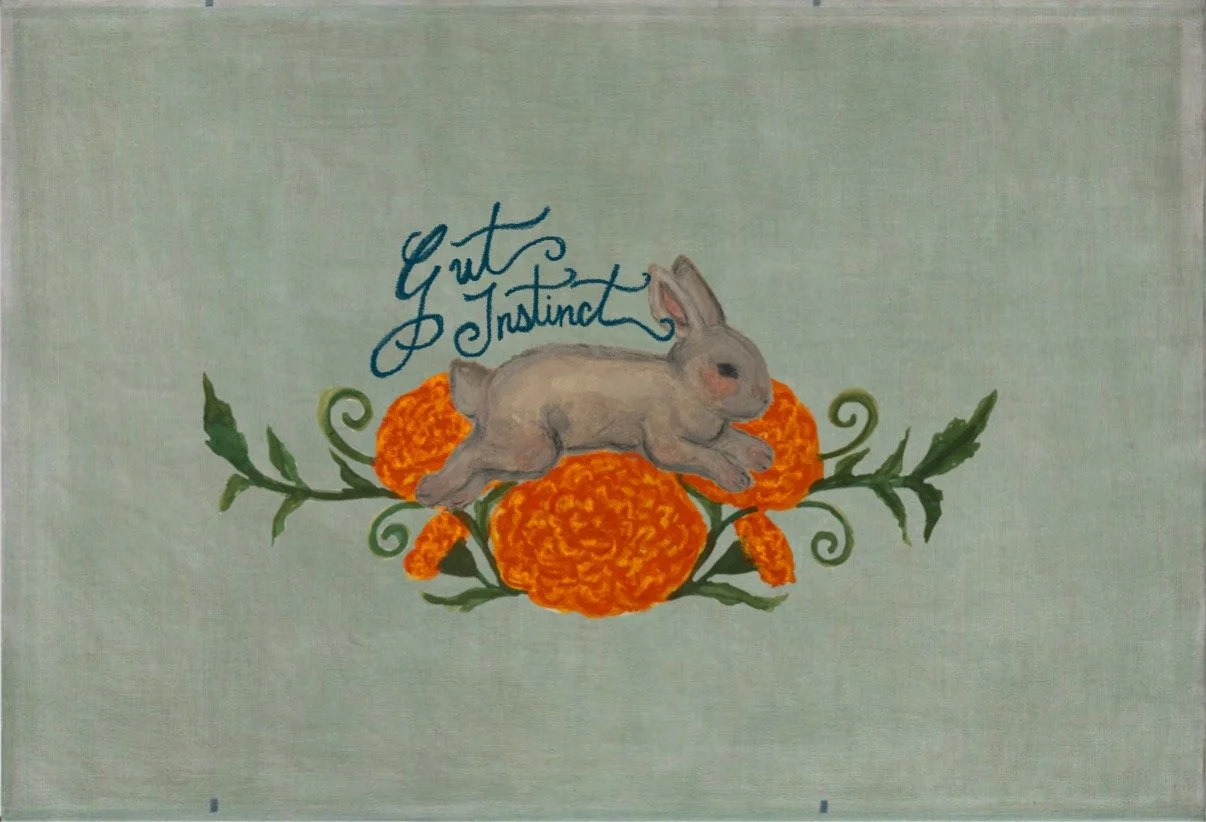
Made for Gut Instinct Media; Credit: Made by Allyson
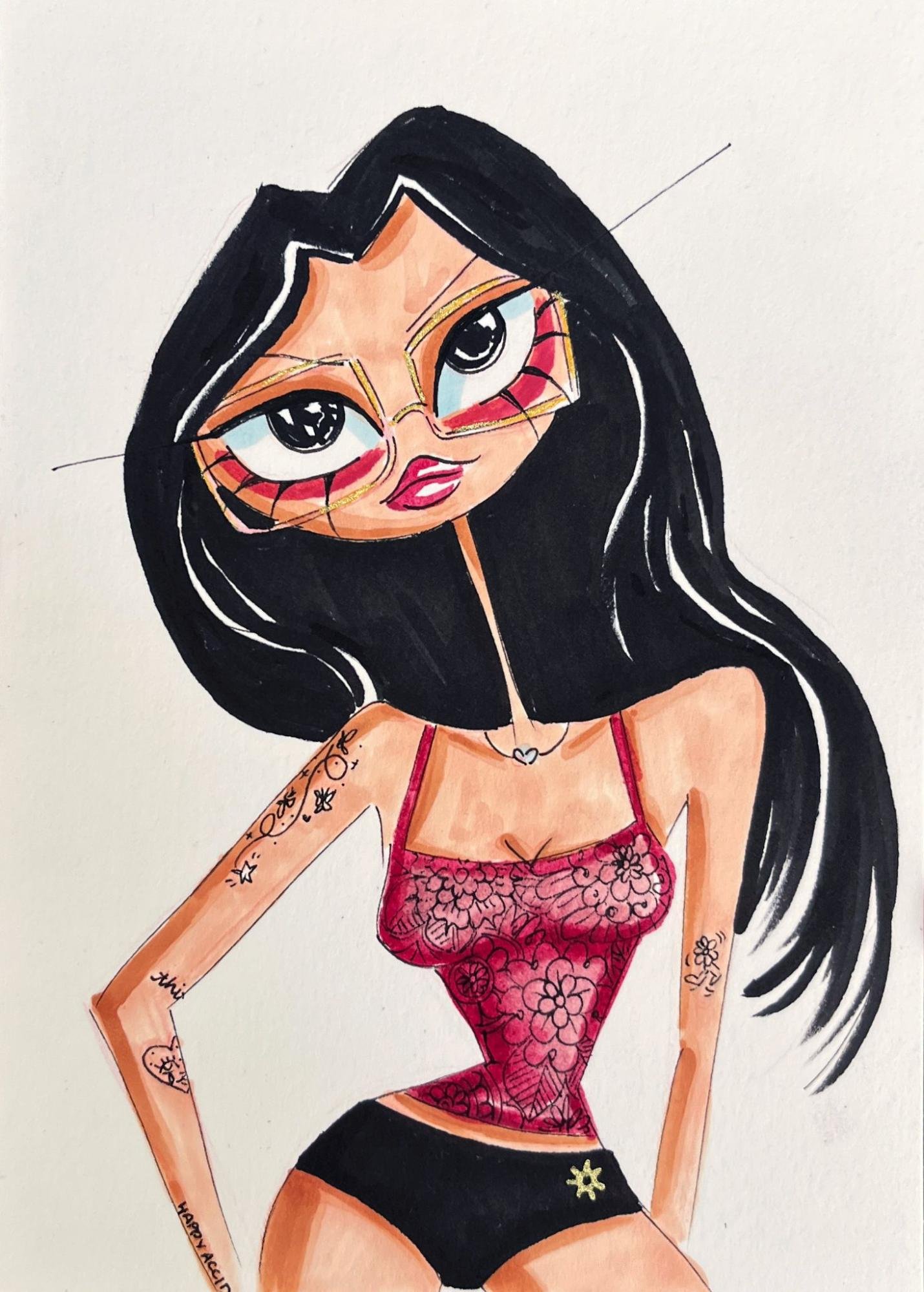
In live illustration, that philosophy becomes essential. There’s no time to hesitate. “Each portrait takes less than 10 minutes, and I am working to reach a number in a certain time frame,” she explains. “There is no time to second-guess my lines or restart.” The pace isn’t just creative, but it’s rather operational—juggling a balance between artistry and output. Instead of resisting that pressure, she utilizes it. “I draw with the mindset that mistakes can be made into something new, and it keeps the process flowing without the rigidity of perfection.”
For Kim, the work begins before the pen touches paper. “You can see on someone's face the moment they decide they want to be illustrated,” she says. “From that moment on, I am speed reading them.” It’s an intuitive process—part observation, part interpretation. “Who they are, how they aspire to be seen, and the qualities that may lie beneath the surface.” Within seconds, she’s making decisions. “I quickly decide on a pose that I feel like represents their personality, and then draw the story they are telling about themselves.”
Details become the language. “I focus on their hairstyle, clothing, colors, accessories, and anything that I feel like builds their character,” she says. But the interaction doesn’t stop at observation, as she actively draws people out. Compliments, small questions, a quick acknowledgment of something distinctive—these moments give her a clearer sense of what matters to them. In many ways, the subject has already authored the piece. “The drawing itself has already been written by them, and I am piecing together all the moving parts to create art that directly resonates to who they are showing up in the world as.” Then, just as quickly, she resets mentally, clearing space before the next person sits down.
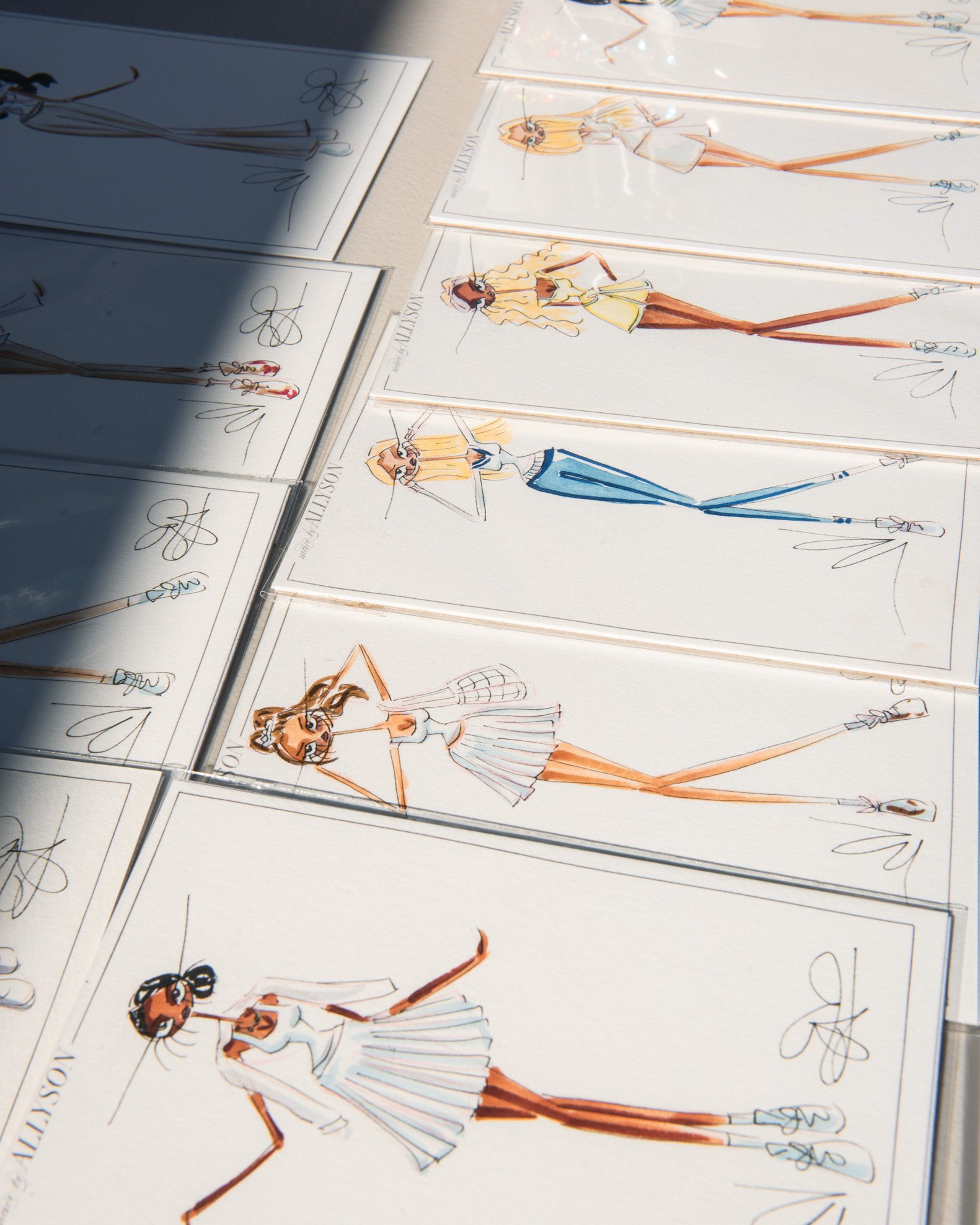
Image Provided by Allyson Kim
She does all of this in environments built for distraction. But for Kim, that crowded, fast-moving, unpredictable chaos is generative. “For my whole life, I have thrived in environments where I draw, people watch, and am surrounded by chaotic energy,” she says. The process demands constant multitasking. “I have to be able to multitask; make conversation, analyze, draw, and know my next move.” And yet, within that pace, she creates something unexpectedly still. “It’s so easy to be present when you want to be,” she says, “and taking the time to create a space for someone who wants to be seen and heard in the midst of chaos makes it all the more special.”
Though her work carries a performative edge, she resists the label. “I resonate most with the title of ‘artist,’ which has taken a lot of inner work to accept,” she says. Observation and performance, she suggests, are simply part of the role. “These are traits that need to exist because the title encompasses it.”
What people are looking for becomes clear the moment they see the finished piece. “One of my favorite parts is when people see their drawings for the first time,” she says. “A lot of the time they tell me that they are going to frame it and hang it on their bedroom wall.” Recognition is immediate, almost instinctive. “It's so fun to watch them light up and point at a detail in their drawing,” she says, “and tell me that they wear this necklace every single day, or that they made the shirt they’re wearing.” Even within a consistent style, individuality is unmistakable. “When all the illustrations are complete and lined up together, you notice that everybody shares the same poses and art style,” she says, “but people can recognize themselves in a second.”
Sometimes, that recognition carries something heavier. At one event, a woman approached her with photos of her dog. “She cried and told me her dog had passed away and she wanted a drawing of her to frame,” Kim recalls. The moment shifted her understanding of the work. “That’s when things kind of switched for me,” she says. “I remember thinking that this felt really important.” The drawing, in that context, became something more. “It was more than just a drawing of her dog; it carried so much meaning for her in this moment of her life.” It reframed her role entirely. “It shifted my mindset from identifying as a service to having a sense of purpose and giving meaning to different human experiences.”
That sense of purpose shapes how she navigates the digital world. “I think that the balance comes from authenticity within myself,” she says. Because her work exists primarily in person, she’s careful not to construct an online identity that doesn’t translate. “I did not want to create a performative online presence that I wouldn’t be able to match in real time.” Instead, she treats social media as documentation. “My mindset on social media is to create digital proof for an audience that resonates with my work.” It’s a constant negotiation. “I sometimes have to fight the urge to curate the perfect, most aesthetic feed because it contradicts the reality of my work.” Ultimately, “my value as an artist comes from experiencing live illustration.”
In Los Angeles, that work finds endless material. The city moves quickly, but its sense of identity is deliberate within its constructed expressiveness, constantly shifting. “It has made me aware of how people wear their individuality as armor,” she says, “and unlike other places, Los Angeles supports and celebrates that.” For Kim, that means an ever-evolving cast of subjects. “I get to observe and create the different ways that people use appearance as a tool for identity.”
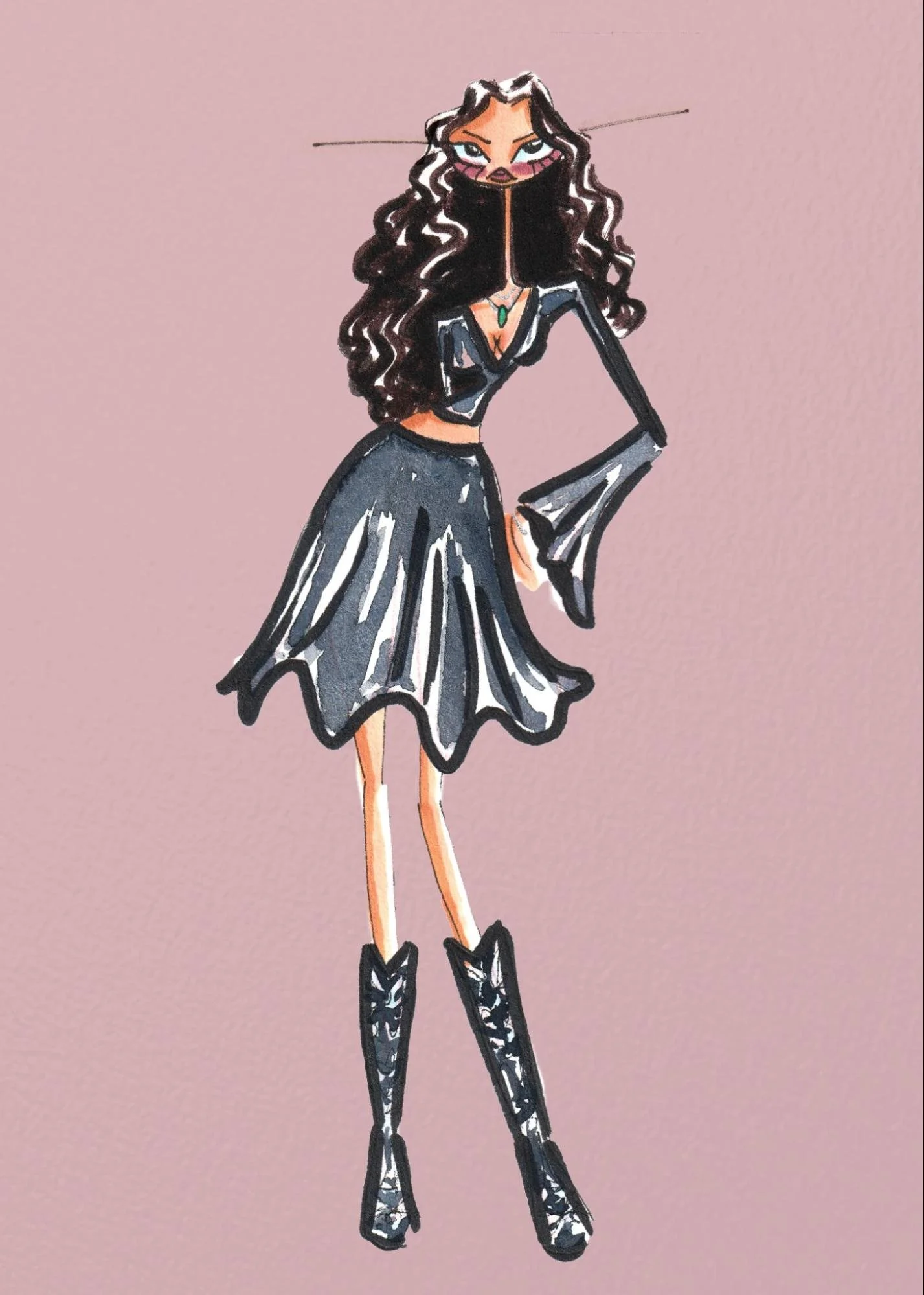
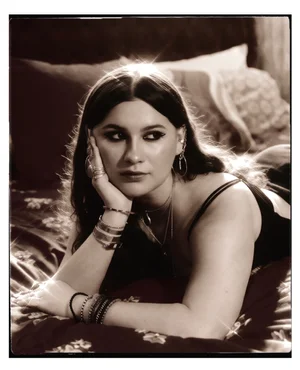
Portrait of Natalie McCarty; Credit: Made by Allyson
That dynamic is especially pronounced in spaces without structure. “Flea markets feel exposing and scary since there is no brand or event to stand behind,” she says. “It’s just me and you, and neither of us thought we would meet like this, but here we are.” The environment itself becomes a kind of blank canvas—one where she controls the pace, the number of people she draws, and the rhythm of each interaction. The people it attracts are just as distinct. Fashion illustration in these spaces tends to draw those who are “unique, confident, self-assured, high energy,” she notes. The exchange becomes mutual, almost mirrored. “Live illustration is about my ability to make someone feel seen,” she says, “but at flea markets it also feels like I am being seen and chosen.” What she gives is returned in equal measure through a shared moment of presence that exists only once.
Across environments, her approach remains steady. “I go into all events with the goal to cultivate an environment of joy and create pieces of art that resonate with whoever the audience may be,” she says. The difference is internal. “For brand or corporate events, there's more emphasis on keeping up with pace,” she explains, “and delivering a specific experience that aligns with their goals.” In more intimate settings, the weight shifts. “For weddings, I know there's a deeper level of meaning behind each drawing,” she says. “I do feel very connected to people when I know my illustrations are contributing to their special day.”
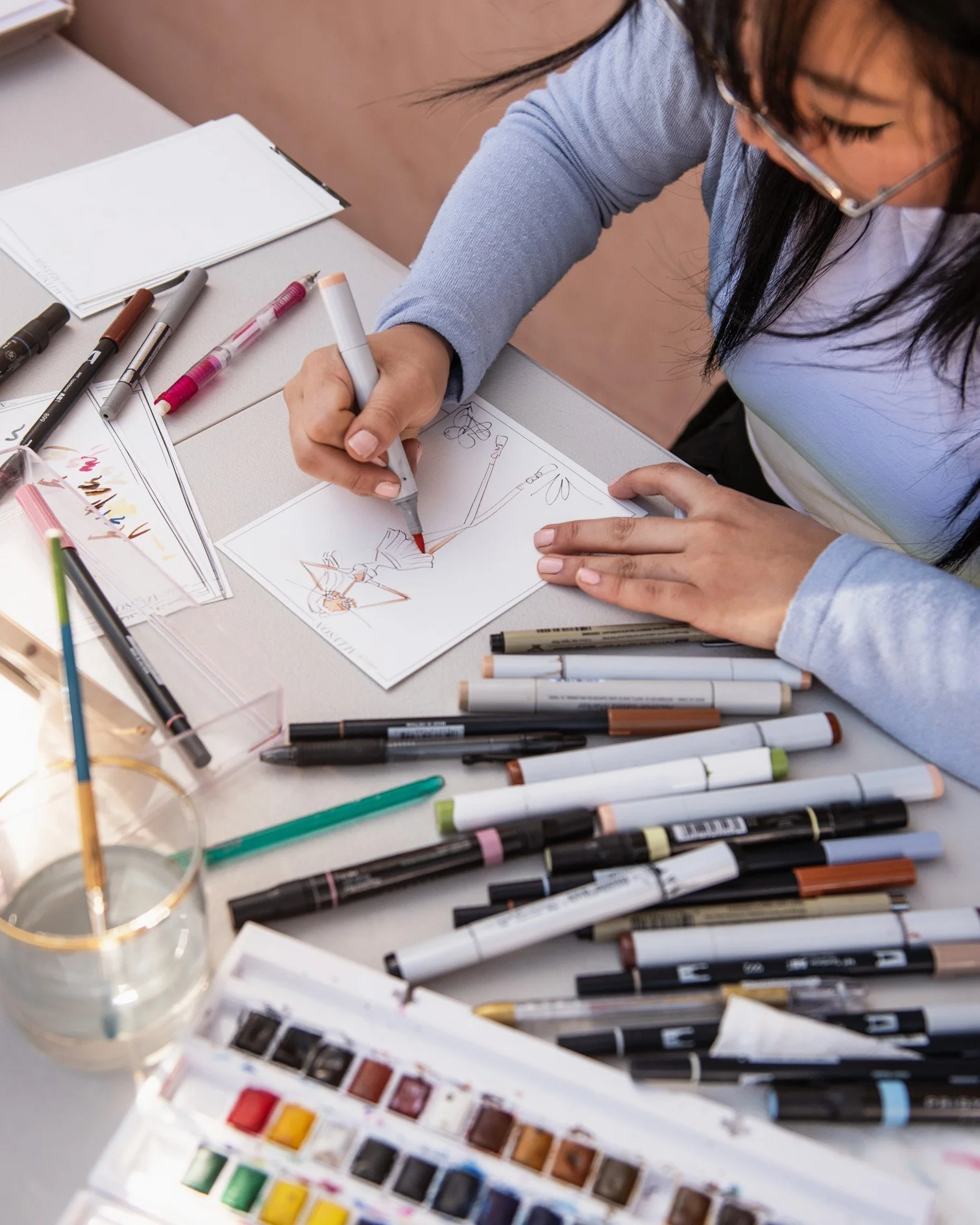
Image Provided by Allyson Kim
Looking ahead, she’s not interested in choosing between scale and intimacy. “I want to experiment with a little bit of everything,” she says. There’s a clear pull toward larger cultural spaces, “Music festivals would align super well with what I am creating,” she notes, along with aspirations for “Coachella, NYFW, The Met Gala, red carpet events, album release parties, or movie premieres.” At the same time, she remains grounded in smaller moments. “Right now I value the intimate moments,” she says, “as it reminds me of the raw and human side of this type of work.”
With plans to travel, including an upcoming trip to Korea, that scope may expand even further. “It has opened this possibility in my brain that I could offer my services in different countries and travel the world while doing what I love,” she says. Still, her foundation remains where she started. “In the meantime, I am growing roots in LA to keep me grounded in all the dreams.”
What she hopes people take with them isn’t just the drawing, but something less visible and more lasting. “I hope they remember their confidence and self-love,” she says. “It can be really scary to put yourself out there and be perceived, but in that moment, they were brave, expressive, and free.” Not everyone is willing to be seen that way. “Not everybody wants a drawing of themselves, and not everybody wants to be seen,” she adds. “So when people do, I hope they realize the courage it takes to be that way.”
“I hope the feeling of the moment stays with them longer,” she says, “and that the drawings will serve as a reminder of who they are and how they showed up.” Because what Kim captures isn’t just how someone looks, but it’s the fact that, for a moment, they chose to be seen.