Recognizing the Life and Legacy of Dolores Huerta
By Julia King
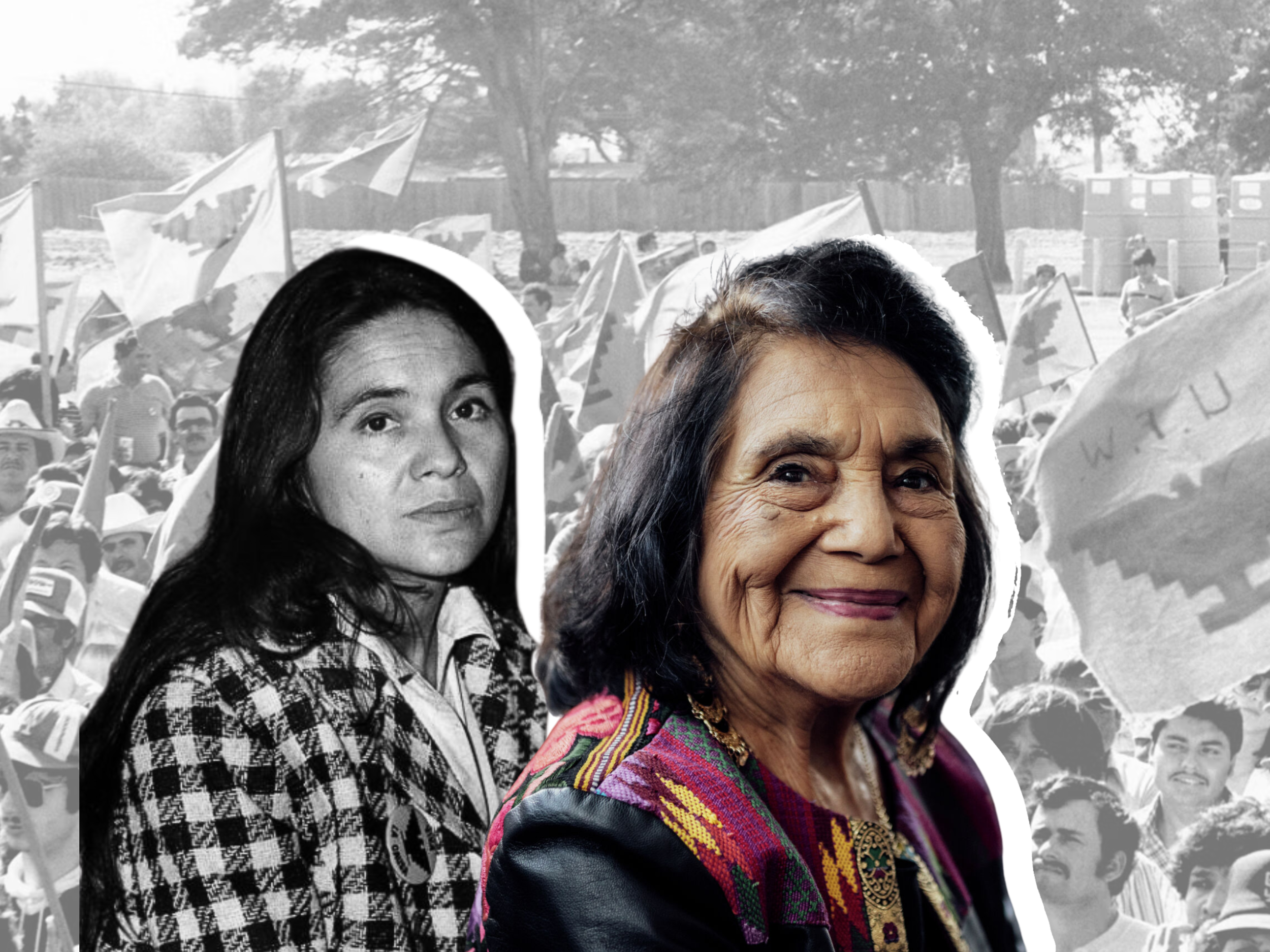
Images Courtesy of the Phillip & Sala Burton Center for Human Rights, the Walter P. Reuther Library, and Stephen Lam | The San Francisco Chronicle. Graphic by Julia King.
If you first heard of Dolores Huerta on March 18, it may appear as if she was plagued by tragedy. When I first read her heartbreaking statement detailing abuse and assault at the hands of César Chávez, I was tempted to allow her misfortunes and pain to consume my perception of her life.
Perhaps this is in part due to the fact that I never learned, or taught myself, about Huerta — I only first learned about the Farmworkers’ Movement in college, and any mention of the women integral to this movement was ultimately swallowed by Chávez’s own image. My personal ignorance of Huerta, and the broader lack of education on her among non-Latino communities, is a harmful omission, not just in light of recent events.
As further details on the United Farmworkers’ (UFW) internal patterns of misogyny and abuse unfold, and the country struggles to grapple with Chávez’s legacy, I’ve found myself weighed down by hopelessness and grief.
Despite this, my long overdue learning about Huerta has also filled me with joy, aspiration, and pride. She has a lifetime of work steeped in compassion and bravery, and her advocacy only continues to thrive today, at 95 years old. Her story did not begin with Chávez, nor will her life’s work and legacy be distilled to just our lifetime.
(It is important to note that Huerta has long been revered among Latino households since her start with the UFW, and she has also received the highest honors in America — including the Eleanor Roosevelt Human Rights Award and a Presidential Medal of Freedom.)
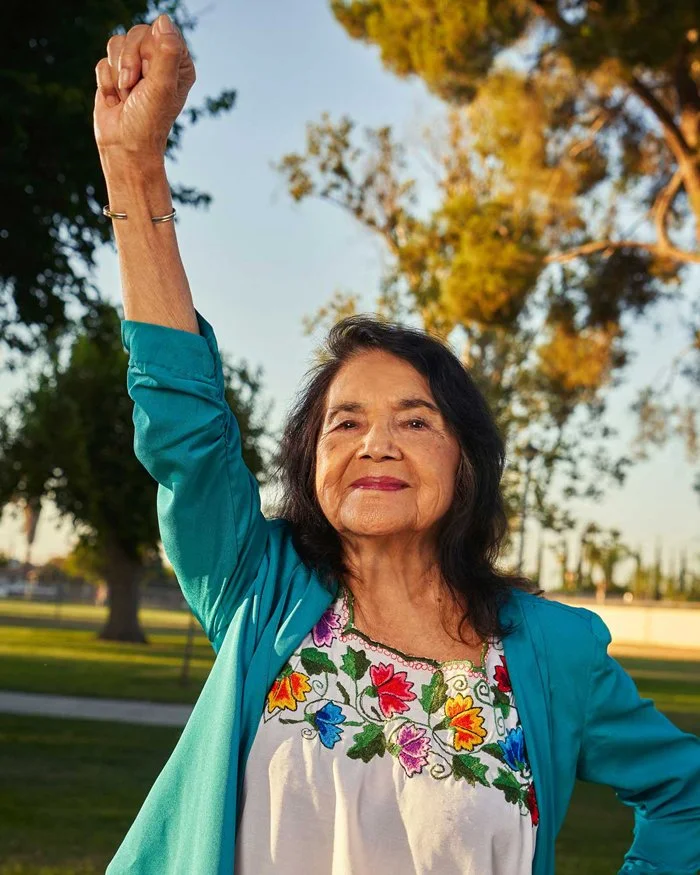
Courtesy of Nolwen Cifuentes | Glamour.
Huerta was born in 1930 to a family driven by hard work. Her father was a union activist and held a seat in the New Mexico legislature, and her mother, Alicia, ran her own 70-room hotel. Alicia was deeply intertwined with her community, involved in churches and community groups, and often waived hotel fees for low-wage workers. Her community engagement would help plant the compassion and hunger for justice that fuelled her daughter’s lifetime of activism.
Huerta first began organizing while serving with the Stockton Community Service Organization (CSO). After founding the Agricultural Workers Association with the CSO, she co-launched the National Farm Workers Association alongside Chávez in 1962. Her organizing skills and negotiating talents proved instrumental to key political developments, including the legislation of the Agricultural Labor Relations Act of 1975, and aiding the election of high-profile political candidates such as Robert F. Kennedy.
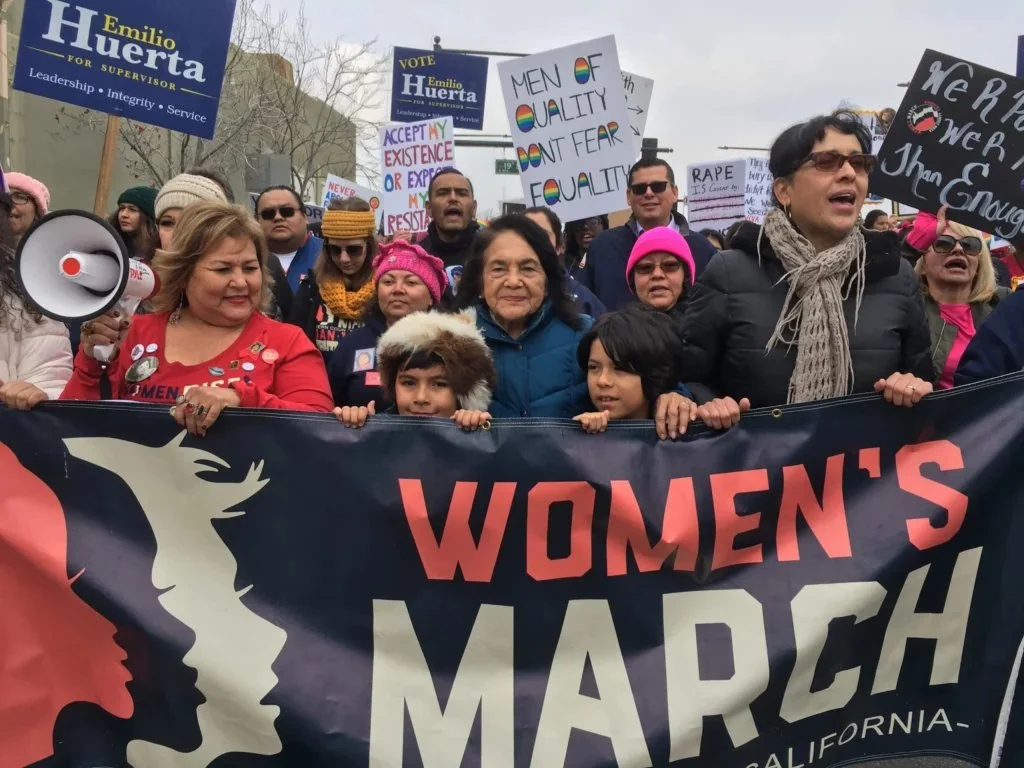
Always grounded by principles of compassion and non-violence, Huerta’s activism enveloped other key causes, including the blossoming feminist movement. Alongside Gloria Steinem, whom she met in the 1960s, Huerta championed intersectionality within the cause. Huerta intertwined feminist work with the farmworkers’ movement, while also spotlighting racial prejudice among feminist activism.
Courtesy of the Dolores Huerta Foundation.
Amidst this progress and Huerta’s achievements, her story is not fully fleshed out without acknowledging the violence and misogyny she consistently faced.
“I have never identified myself as a victim, but I now understand that I am a survivor — of violence, of sexual abuse, of domineering men who saw me, and other women, as property, or things to control,” Huerta shared in her statement released earlier this month.
Despite this, she makes herself clear: “The farmworker movement has always been bigger and far more important than any one individual. Cesar’s actions do not diminish the permanent improvements achieved for farmworkers with the help of thousands of people. We must continue to engage and support our community, which needs advocacy and activism now more than ever.”
Huerta’s efforts — and the UFW’s groundbreaking progress — are far too significant and far-reaching to be represented, or derailed, by one individual. Huerta and countless other individuals embody the resilience and courage that keep modern-day activism alive. Particularly in the face of authoritarian threat and abuse of power, Huerta is a living reminder of the power of fighting for your values.
As of today’s National Farmworkers Day, Huerta has urged those in power not to use her name as an easy replacement, but to recognize the “UFW martyrs, organizers, farmworkers, and families who sacrificed everything to build something bigger than any one person.” This March 31st, I will be grateful to have learned Huerta’s story, and to use my new knowledge as a basis for learning, growth, and advocacy.