By Julia Krys
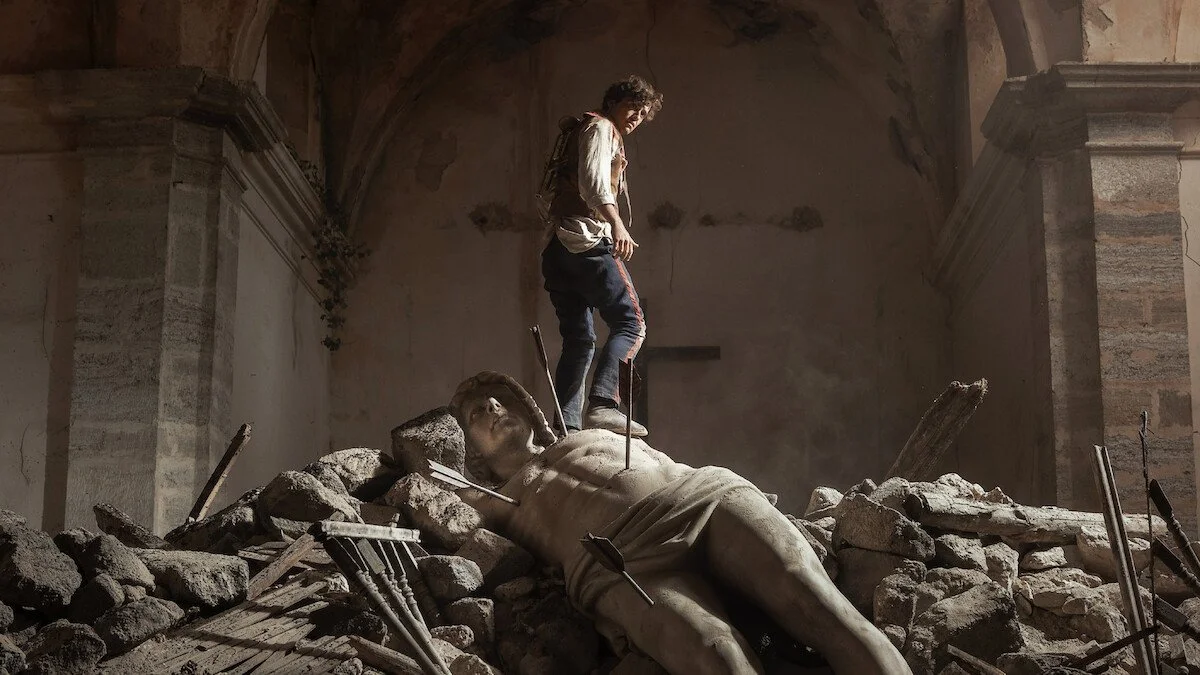
Guitarricadelafuente as Sebastián in La Bola Negra via Netflix.
In the 2026 epic, La Bola Negra, co-directors Javier Ambrossi and Javier Calvo (also known as Los Javis) take us on a sprawling journey across 85 years, following three gay men as they navigate their identities alongside the extreme challenges of their respective eras.
First, in 1937, we meet Sebastián (played by Guitarricadelafuente). Not long after his town is devastated by the ongoing Spanish Civil War, he declares his unwavering loyalty to the fascist Nationalists. Then, in 1932, there’s Carlos (played by Milo Quifes), a wealthy young man living in southern Spain who is denied entry to a casino on suspicion of homosexuality. Lastly, in 2017, we meet Alberto (played by Carlos González), a historian whose deep interest in uncovering the erasure of gay culture leads him to investigate how people survived on the margins. Little does Alberto know, his studies are about to grow far more personal.
As revelations unfold, we experience these developments alongside him. The Javis build tension between what the audience learns ahead of Alberto and what he must discover for himself.
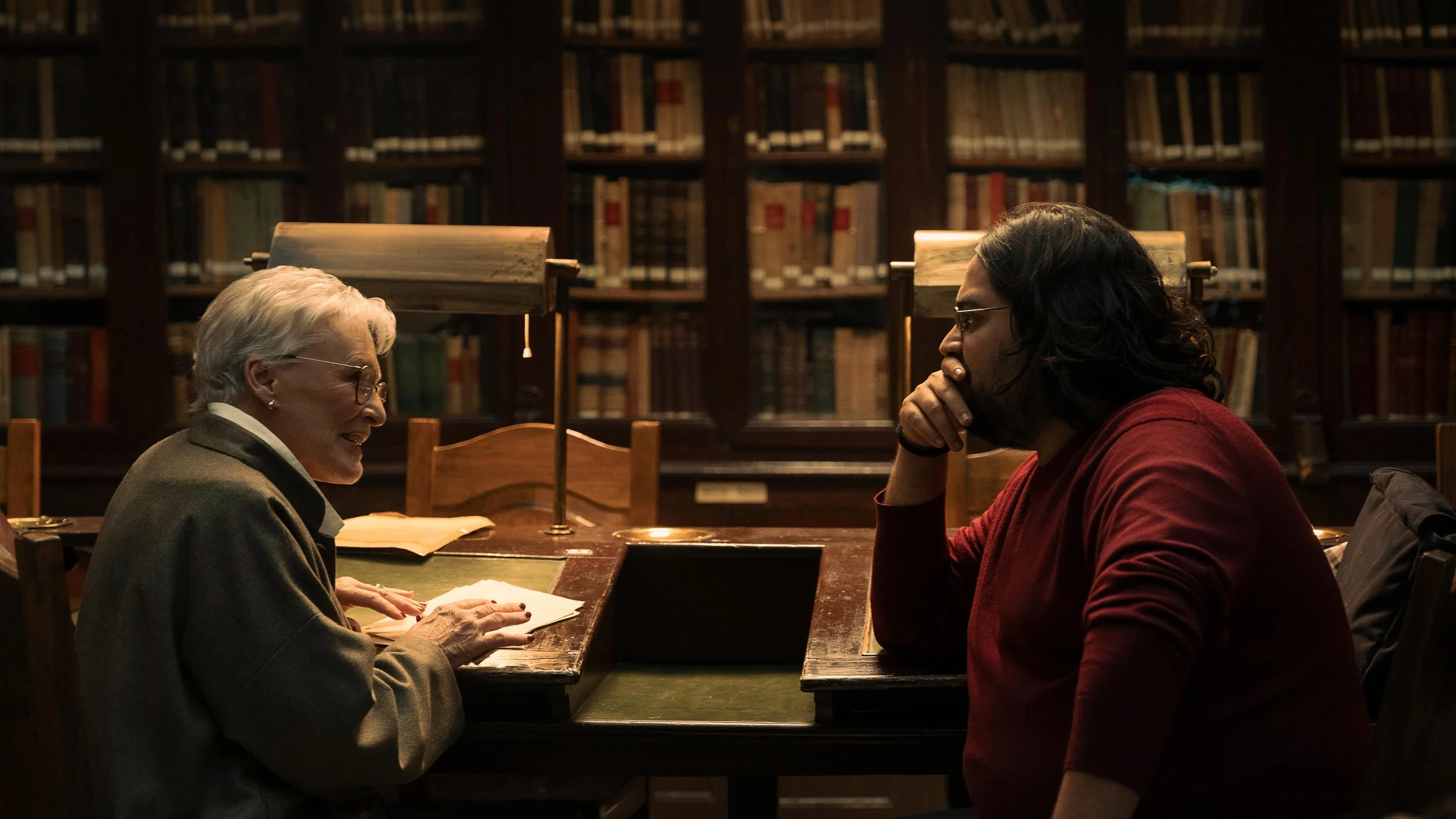
Glenn Close (left) and Carlos González (right) via IMDb.
One of the most remarkable aspects of La Bola Negra is how distinct each character’s world feels. Beyond the initial introductions that establish who each man is and when his story takes place, their surroundings take on distinct textures as we revisit them. Although the transitions between their stories vary in smoothness, the fragmented structure reflects the piecemeal nature of historical research.
Despite the contrasts between each character’s world, a lasting message emerges about the dangers of disrupting the status quo. In Sebastián and Carlos’s eras, being different could be a matter of life and death. This sharply contrasts with the relative freedom of Alberto’s openly gay 21st-century life, (albeit he must contend with his ongoing emotional baggage). The difference is further emphasized by how heavily Alberto leans on his phone, with smartphones serving as both super-connectors and sources of isolation.
The shaping of these worlds is further emphasized by standout supporting performances from Glenn Close, Penélope Cruz, and Julio Torres.
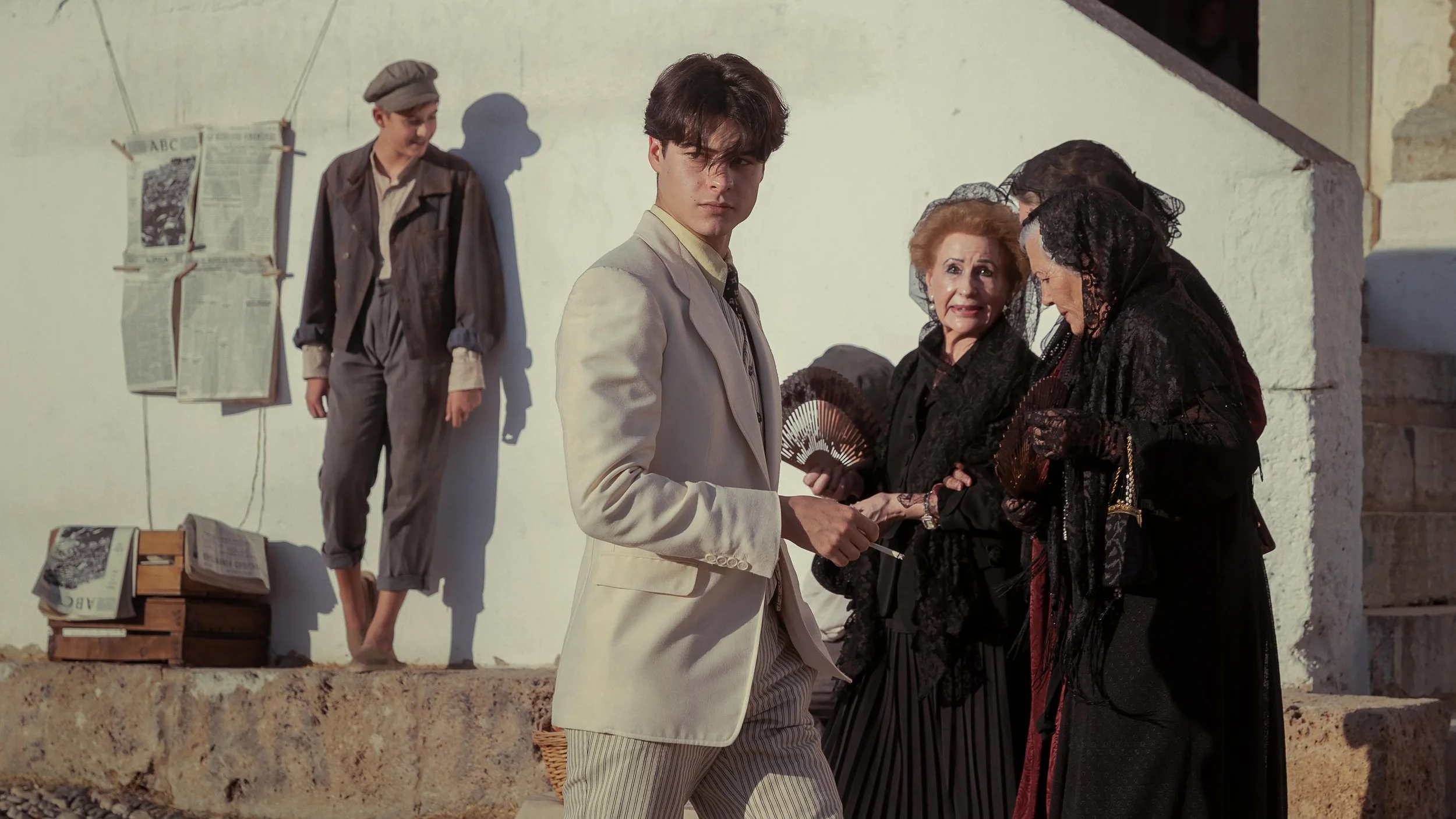
Milo Quifes (center) as Carlos via IMDb.
La Bola Negra lives up to the promise of historical fiction. Its story takes a morsel of historical truth and expands it into a world that feels fully inhabited. Through this imaginative reconstruction, the film invites a release from suppression for the gay community, reinventing stories that have been deliberately erased.
As the film progresses, metafictional elements bubble to the surface, and the worlds we see vary in their relationship to reality. Yet its expansiveness also comes from a poetic sensibility that crescendos toward the end. The audience is left to meditate on Alberto’s findings and draw its own meaning from these slanted truths.
The tension built around the audience’s historical investigation alongside Alberto slightly fizzles toward the end, as the story works to maintain momentum through its closing stretch. Still, La Bola Negra delivers a different kind of epic: an ambitious original story full of heart and meaning, one that invites viewers to contemplate their own inheritance and the untold stories in their ancestry.