Summer’s End: Combatting the Passage of Time
By Julia King

The New Yorker
Entering young adulthood, once life briskly disposes you into an immeasurable season of responsibility, you discover a lot of new fears. Perhaps some were simply brewing in the background of adolescence and only crescendo in your 20s; e.g., fear of failure, of rejection, of loss. Others are hyperspecific; only encountered in the intricate transition from youth to maturity.
Amidst this, I found one fear resounding; something that would guide the pulse of my everyday life. I discovered my fear of time passing, a concept I had not yet considered until my days transformed from the bright-eyed unpredictability of college to the tedious routine of professional life. As my days became occupied with work, responsibilities, and obligations, time felt infinitely more precious.
Many peers find this particularly resonant in their stage of life. Postgrad life unveils a new sense of urgency; an impending dread for adult responsibilities, simultaneously coupled with a desire to embrace each day to the fullest. I spent so much of my life waiting for Adult Life, yet once I finally encountered it, I was overwhelmed by self-imposed (and sometimes real) timelines and responsibilities.
As summer closes, these emotions often align with the typical disappointment associated with the end of the season. Biologically, it makes sense — the gradual decline in temperature and daylight hours directly affects our serotonin levels. This “end-of-summer-blues” is often universal, but tends to feel more pronounced to those departing from youth; a safe chapter of life.

Personally, this season’s cultural highpoints — such as the World Cup and Love Island USA — cultivated a sense of communal engagement and excitement that only compounded my anxiety around summer passing. I’m already reminiscing on moments while still in them; afraid to fully embrace each day and lose my sense of time. @georgiafoxy on TikTok described this as feeling “nostalgic for the present” — a struggle to be fully present, born out of fear of time passing.
While it may be easy to let this anxiety consume my time, putting a name to it has allowed me to consider clear ways to combat it.
Explore your individuality
I’ve found it a lot simpler to check out when I don’t have a grasp on my own goals and intentions for a certain season (summer or otherwise). If my perception of my own identity and goals feels incomplete, there is less to ground me in the present moment — why contribute if I’m not sure?
Naming certain people I wish to see, activities I want to pursue, and milestones I want to acquire provides a guide that holds me accountable. This does not require me to determine every single next step; rather, it serves as a low-pressure exercise to evaluate my own preferences. Rather than treating summer as a period of time happening to me, loaded with expectations and pre-determined memories, I take agency of my own time and experience.
Filling out my identity in this way ultimately reflects energy and effort into remaining present, for myself and those around me.
Invite boredom
At risk of sounding juvenile, my greatest fear during summertime is doing nothing. The urgency to maximize every free second often prohibits any dull, mundane moments; my conscience demands something interesting to prove the day has been spent well.
I’ve started to allow myself to dwell in boredom. In boredom, you learn to acknowledge and accept the time passing. You can recognize that each second doesn’t hold nearly as much weight as it seems; that simply letting the time pass isn’t negative, but a natural component of living.
Establish a new chapter
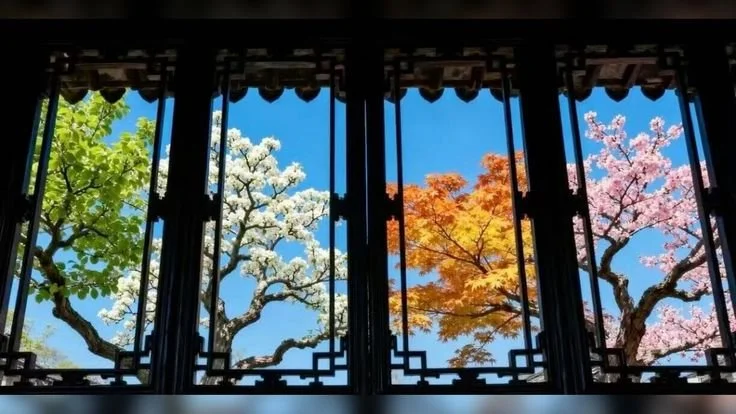
While this recommendation reads as an ambiguous motivational expression, I’ve made it a tangible step in my life. Whenever fall approached, I would view it as the end of summer, rather than an opportunity for new settings and experiences. Reframing each day, month, season, etc. as the start of something new, rather than an “end of,” has helped alleviate the pressure I (unnecessarily) applied on every moment.
Perhaps most importantly, this reframing has already expanded my perspective on identity. New seasons (i.e., the passage of time) always reveal new experiences, emotions, etc., that ultimately shape my sense of self. New experiences, while often uncomfortable, force me to discover and adapt new versions of myself, or rediscover past tendencies.
Even now, as I watch the clock on my computer screen inch minute by minute, I find time daunting. But as summer washes into fall, my newfound intentionality will help keep me afloat amidst the usual wave of dread. While I deal with my case of end-of-summer blues, I am reminded of the excitement of a new chapter.