The Geography of Control: Virgo Season
By Nomi Makin
Celebrating my twenty-fourth year on this planet came with an aggressive amount of introspection. Yes, even more than usual—if that's even humanly possible.
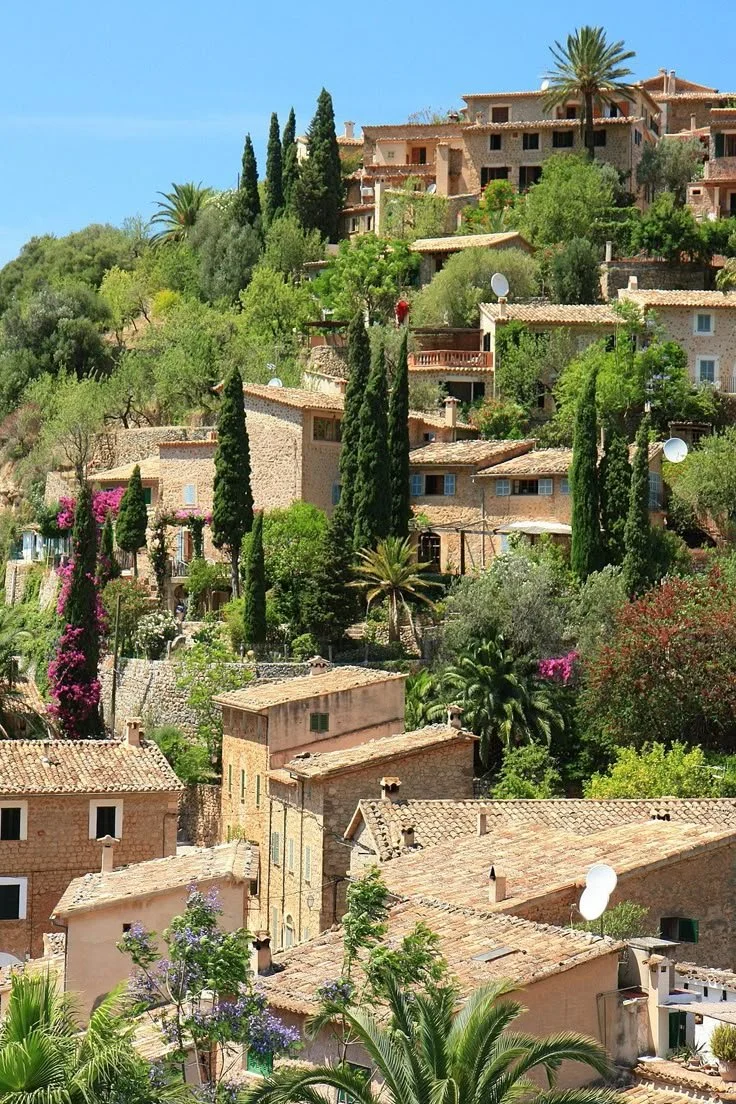
This time last year, I was living in Mallorca. I was in a relationship (which was the definition of toxic). I was pretty much unemployed (not that I was complaining). And my days were spent floating through the slow rhythms of the Spanish island that I called home.
Fast forward twelve months, and the entire landscape of my life has been flattened and rebuilt: I am single, living in Australia, and getting paid to do what I love.
By every metric our culture uses to evaluate personal progress, this is a clear-cut victory. It is literally the textbook ‘level-up’. On paper, I traded economic stagnation for creative self-sufficiency, and island isolation for global mobility. I traded the shackles of an unhealthy relationship for the glittering beauty of independence. Yet, standing on the other side of this transition, it is impossible not to feel a quiet, lingering whiplash. My life now is so fulfilling, but it is also accompanied by the phantasm of guilt. A grief for the life I once lived, the routine I knew, and the people who, only a short while ago, occupied the absolute center of my universe.
What the fuck actually happened?
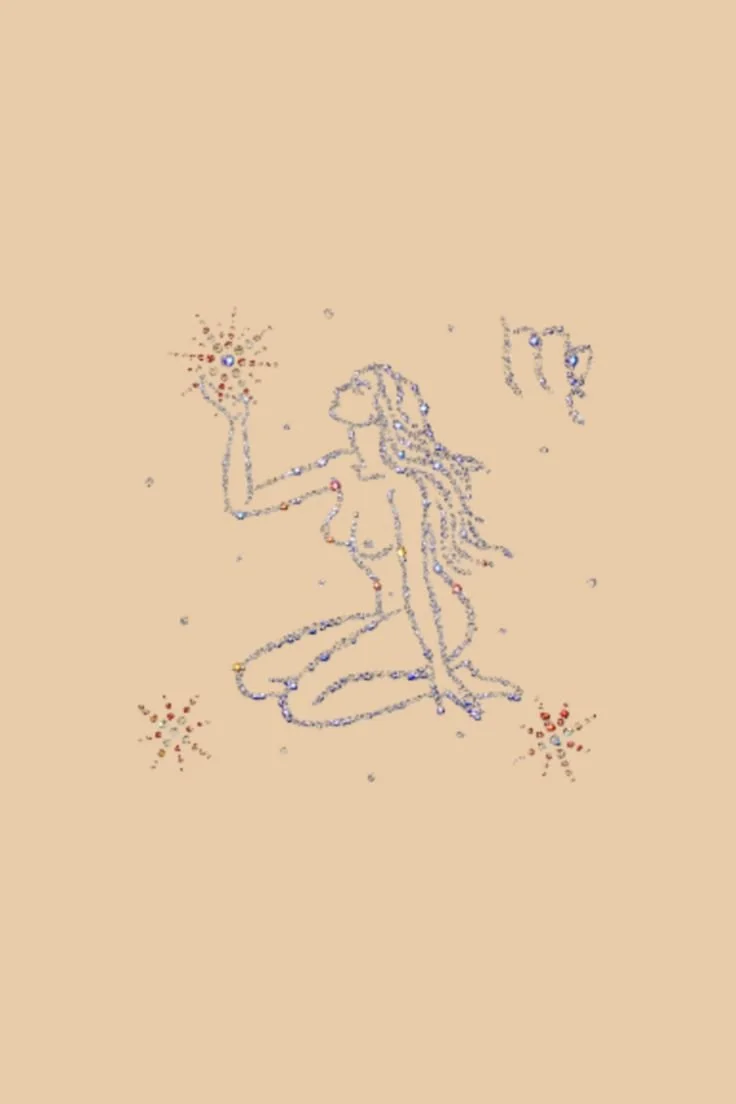
For me to even begin answering that question requires looking past the glossy aesthetics of travel and self-actualisation, dissecting the trade-offs of Australian life, and confronting the hyper-rational impulse to turn life into a project to be managed. This hyper-rational impulse is otherwise known as being a Virgo.

As a Virgo, my default response to chaos is optimisation. When the structure of my life begins to fracture, my instinct isn't just to feel the pain; it’s to audit it. My mind tries to build a spreadsheet of cause and effect, catalog every tiny variable, assign reasoning to every wrong turn, and edit out the messiness until the outcome feels logical.
I am unapologetically an ‘everything happens for a reason’ kind of girl. I missed my pole class tonight? Maybe I would've broken my arm trying a new spin. I got rejected by my crush? He’s probably a narcissist anyway. I have the worst flu and cold ever? My body is purging some energy right now that's actually necessary to my spiritual growth. Nothing, and I mean nothing, goes unanalysed.
My energy as a Virgo is fundamentally about order, perfection, and refinement. It is the archetype of the editor. The attitude that takes raw, chaotic matter and trims it into something functional and pristine. The focus that leaves nothing unexamined or left to just ‘be’. When this controlling energy is applied to personal growth, this mindset creates a dangerous illusion: the belief that if you just analyse a situation hard enough, you can strip it of its emotional risk. We tell ourselves that if we curate the narrative correctly, we can execute a seamless life transition without experiencing any emotional damage.
Much of my life’s problems follow a similar, predictable pattern: Chaotic Life Event + Virgo Analysis & Edit + Curated Narrative = Illusion of Complete Control
And to be honest? It works. Control is a remarkably effective coping mechanism. But while my Virgo Sun tries to run my life like an editorial iron fist, my Cancer Moon refuses to sign off on the draft.
If Virgo is the auditor, Cancer is the archivist. Virgo wants to trim the fat, edit out the mess, and move forward with pristine efficiency. Cancer is my emotional anchor. The part of me that holds onto old love letters, remembers the warmth of the light coming through my window in Mallorca, and craves deep roots, safety, and attachment. God knows what kind of psychopathic control freak I’d have been if I were driven purely by air or earth; it’s the water in my chart that forces me to sit in the spill.
This internal tug-of-war is where the whiplash actually lives. My Sun wants to celebrate the Australian ‘life upgrade’. My Moon is back in the Mediterranean, weeping over the ghost of a home that no longer exists and a relationship that once brought me joy.
When my relationship ended and my time in Mallorca came to a close, my inner editor immediately went to work. I framed the shift as a necessary pivot, an upgrade in my personal growth, a move toward alignment. I turned a messy, painful rupture and a soul-shattering heartbreak into a strategic life upgrade. I rewrote the story before I even had the chance to understand the plot. Looking back, it was a textbook display of my own cosmic design. Astrology isn't about predicting the future and telling us what mood we will be in today; it's a framework for understanding our psychological tendencies and, in turn, defense mechanisms.
The Virgo paradox lies in using efficiency as a shield against vulnerability. We attempt to master our circumstances so completely that nothing can catch us off guard. But when you analyse every life choice down to its root, you end up living in your head instead of in your life. You become so obsessed with understanding why things happen that you block yourself from simply feeling them as they occur.
Eventually, that intellectual restlessness demands a change of scenery. If I can’t fully control my internal landscape, I change my physical coordinates instead.
The Illusion of Travel: Freedom vs. Rootlessness
If the Virgo mind seeks to master internal chaos through control, modern travelling culture promises to solve it through geography.
We live in an era where global mobility is aggressively marketed as the ultimate form of personal liberation. Western ‘digital nomads’ frame the world as an endless menu of lifestyle options, where you can simply alter your environment to bypass stagnation. Mallorca is a primary epicenter of this. A Mediterranean island transformed into a playground for loud Americans, sun-burned English tourists, and rude Germans. Remote workers, immigrants, creatives, tourists, etc. All seeking a picturesque, low-friction life.
I spent a year inside that ecosystem. Living in Mallorca offered a specific kind of soft, atmospheric comfort, but it was anchored in a transient reality. People flowed in and out according to visa expirations, seasonal opportunities, or the pursuit of the next cheapest destination. Community in these spaces often feels like a temporary staging ground. Warm and vibrant, but structurally fragile.
Moving to Australia as a writer whose work lives inside a screen represents the culmination of that mobile ideal. I achieved the exact remote-work autonomy that modern digital culture preaches. Yet, moving across hemisphere boundaries exposes another side of hyper-mobility: the quiet accumulation of rootlessness.
When you can pack up your life and rebuild it on the other side of the planet, you gain immense flexibility, but you surrender the stability of long-term anchor points. Global mobility promises complete self-determination, but it quietly replaces deep-seated community with transactional convenience. When every place is temporary, every relationship inherits that same latent impermanence. I am now an expert at arriving, adapting, and performing integration, while remaining completely unattached to the soil beneath my feet.
We rarely talk about the psychological cost of this level of displacement, or the subtle privilege that makes it possible. In Mallorca, and now in Australia, I’ve realised how easy it is for Western expats to move through the world with zero friction. We get all the beauty and novelty, without any of the deep-rooted obligations. But that lack of friction is a double-edged sword: it means the moment things become uncomfortable, painful, or complex, the door is wide open. It’s far easier to book a flight across hemispheres than it is to sit in the mess of a dying relationship or a stagnant chapter. Sometimes, what we call a ‘free spirit’ is really just an aesthetic mechanism for avoidance.
The Privilege of Grief and the Art of Letting Go
Society gives us clear blueprints for grieving visible losses. A death. A tragedy. A sudden loss. But it offers almost no language for grieving choices that were entirely voluntary. And ultimately beneficial.
There is an implicit cultural expectation that if a change represents an objective ‘upgrade,’ you forfeit the right to mourn what was left behind. How could I possibly miss the unemployment in Mallorca if I'm now getting paid to do what I love in Australia? How can I grieve the partner I left if I spent days of our relationship crying, alone and broken? We are conditioned to view past chapters through a lens of binary utility: either a phase was a mistake, or it was a stepping stone.
This hyper-capitalist view of personal development demands that every experience yields immediate, measurable interest. It forces us to erase our own many identities, treating past relationships and our former selves like outdated software that’s now simply ‘useless’.
The reality is far more complex. You can be profoundly grateful for your current reality while simultaneously mourning the simple beauty of a life you had to abandon. Now, in my twenty-fourth year, I understand that grieving my former life isn't a sign of regret; it’s an acknowledgment that what I experienced actually mattered. The intimacy I shared with people who are no longer in my world wasn't temporary placeholders while I waited for my 'real' life to begin. The feelings and connections I cultivated were real life, unfolding in real time.
Turning twenty-four in Australia, far removed from the Mediterranean sun and the person I used to be, requires letting go of the Virgo illusion that I can neatly package this journey into an empowering life lesson.
Growth isn't about reaching a state of perfected, frictionless autonomy. It's about developing the capacity to hold two conflicting truths at once: honoring the undeniable value of where you are, while allowing yourself the grace to quietly miss where you’ve been.