The Gibson Girl Paradox
By Danielle Carnivele
As discussions surrounding women's roles continue to shape contemporary culture, questions about femininity, independence, and identity have become increasingly visible. The rise of influencer-driven aesthetics and the renewed popularity of traditional "tradwife" content have reignited debates about what it means to be an empowered woman. While some view traditionally feminine ideals as restrictive remnants of the past, others argue that embracing femininity can itself be a form of self-expression and personal agency. These conversations reveal an enduring cultural tension: must femininity and independence exist in opposition to one another?
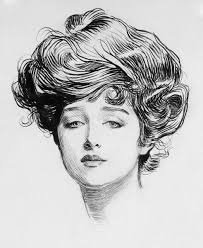
“Gibson Girl Portrait” by Charles Dana Gibson (1891)
More than a century before these debates emerged online, American culture grappled with a similar question through the figure of the Gibson Girl. Created by illustrator Charles Dana Gibson in the late nineteenth century, the Gibson Girl quickly became one of the most influential female icons of her era. At first glance, she appeared to embody conventional standards of beauty and femininity, yet beneath her fashionable appearance was a woman who was educated, socially influential, athletic, and increasingly independent in a rapidly changing society. Rather than rejecting femininity, the Gibson Girl expanded its meaning, demonstrating that beauty, confidence, and self-expression could coexist with personal autonomy.
Characterized by her tall stature, elegant posture, fashionable clothing, and distinctive upswept hairstyle, the Gibson Girl represented an idealized image of womanhood during the Progressive Era in the United States (1890s to 1920s). Her popularity coincided with a period of significant social change as women gained greater access to higher education, employment opportunities, and public life. Unlike earlier depictions of women that emphasized domesticity and dependence, the Gibson Girl appeared confident, self-assured, and active. Although her image was central to her popularity, she also reflected broader cultural shifts taking place in American society. In contrast to the overly demure Victorian ideal, the Gibson Girl was active and independent, often depicted confidently participating in outdoor, male-dominated activities such as hiking, tennis, and golf. As women became more visible in social and intellectual spheres, the Gibson Girl emerged as a symbol of these evolving possibilities.
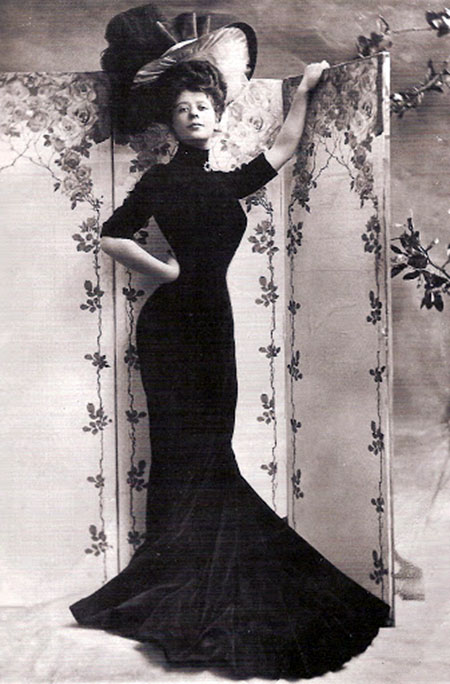
Gibson Girl Model, Camille Clifford
One of the most significant aspects of the Gibson Girl was her ability to challenge the assumption that femininity and independence were opposites. Rather than rejecting traditional symbols of femininity, she embraced fashionable clothing, elegance, and beauty while simultaneously occupying a more active role in society. This combination was revolutionary for its time. The Gibson Girl demonstrated that women did not need to abandon feminine self-expression to be taken seriously. Instead, femininity itself became a source of visibility and influence. Through her social presence, confidence, and ability to navigate public life, she transformed traits traditionally associated with women into forms of cultural power. Her popularity reflected a growing recognition that female identity could extend beyond marriage and family status and instead be shaped by individual interests, accomplishments, and social relationships.
The Gibson Girl can also be understood as an early example of self-fashioning, the process by which individuals consciously construct and communicate their identities. This early form of "personal branding" emerged more than a century before the term itself became common, and the Gibson Girl embodied many of its core principles. Her appearance, behavior, lifestyle, and social presence combined to create a recognizable public identity. Women who admired the Gibson Girl were not simply imitating a hairstyle or fashion trend. They were embracing a broader vision of confidence, independence, and social participation. This ability to cultivate an identity outside traditional family roles represented an important cultural shift. By encouraging women to define themselves through their interests, relationships, and public presence, the Gibson Girl helped expand the possibilities of female self-expression.
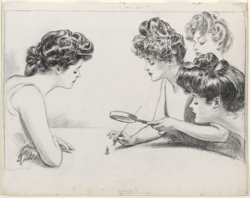
Gibson Illustration; “The Weaker Sex II”
The questions raised by the Gibson Girl remain relevant today. Contemporary discussions surrounding influencer culture, personal branding, and feminism continue to explore the relationship between appearance, identity, and empowerment. Modern women are often encouraged to express their individuality while simultaneously navigating social expectations surrounding beauty and femininity. Much like the Gibson Girl, public figures today use fashion, appearance, personality, and social influence to construct recognizable identities. At the same time, debates persist over whether embracing traditionally feminine aesthetics strengthens or limits women's independence.
The Gibson Girl's legacy suggests that this may be a false choice. Some women may reject a traditional feminine aesthetic to signal seriousness or independence, while others embrace femininity as an intentional form of self-expression. Both are forms of identity construction rather than opposing paths. Her example demonstrates that femininity does not have to exist in opposition to empowerment and that women can define their identities through a combination of self-expression, ambition, and personal agency.
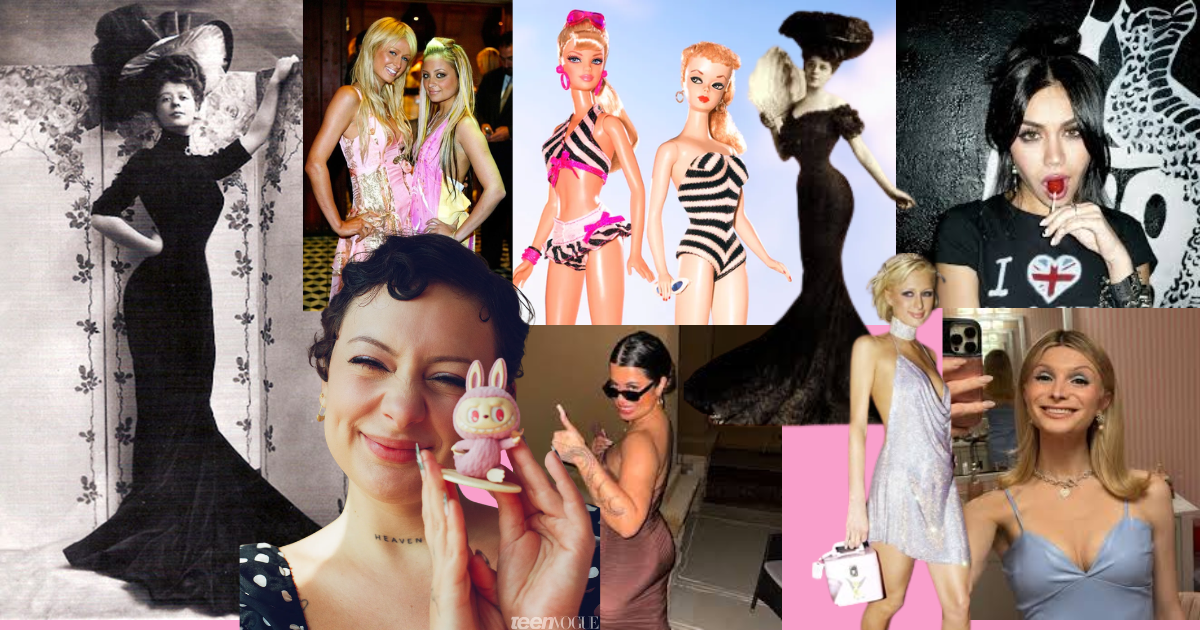
Personal Branding & Influence (ft. Camille Clifford, Paris Hilton, Nicole Richie, Vanilla Mace, Barbie, Drew Afualo, Tara Yummy, and Dylan Mulvaney)
Although the Gibson Girl is often remembered as a beauty ideal, her lasting significance lies in the way she challenged traditional expectations of womanhood. By combining femininity with confidence, education, social influence, and independence, she demonstrated that empowerment and self-expression could coexist. Her legacy remains relevant today as women continue to navigate questions of identity, authenticity, and societal expectations. Ultimately, the Gibson Girl suggests that femininity is not inherently limiting or empowering. Rather, true empowerment comes from the freedom to define femininity on one's own terms.