
By Kianna Amaya
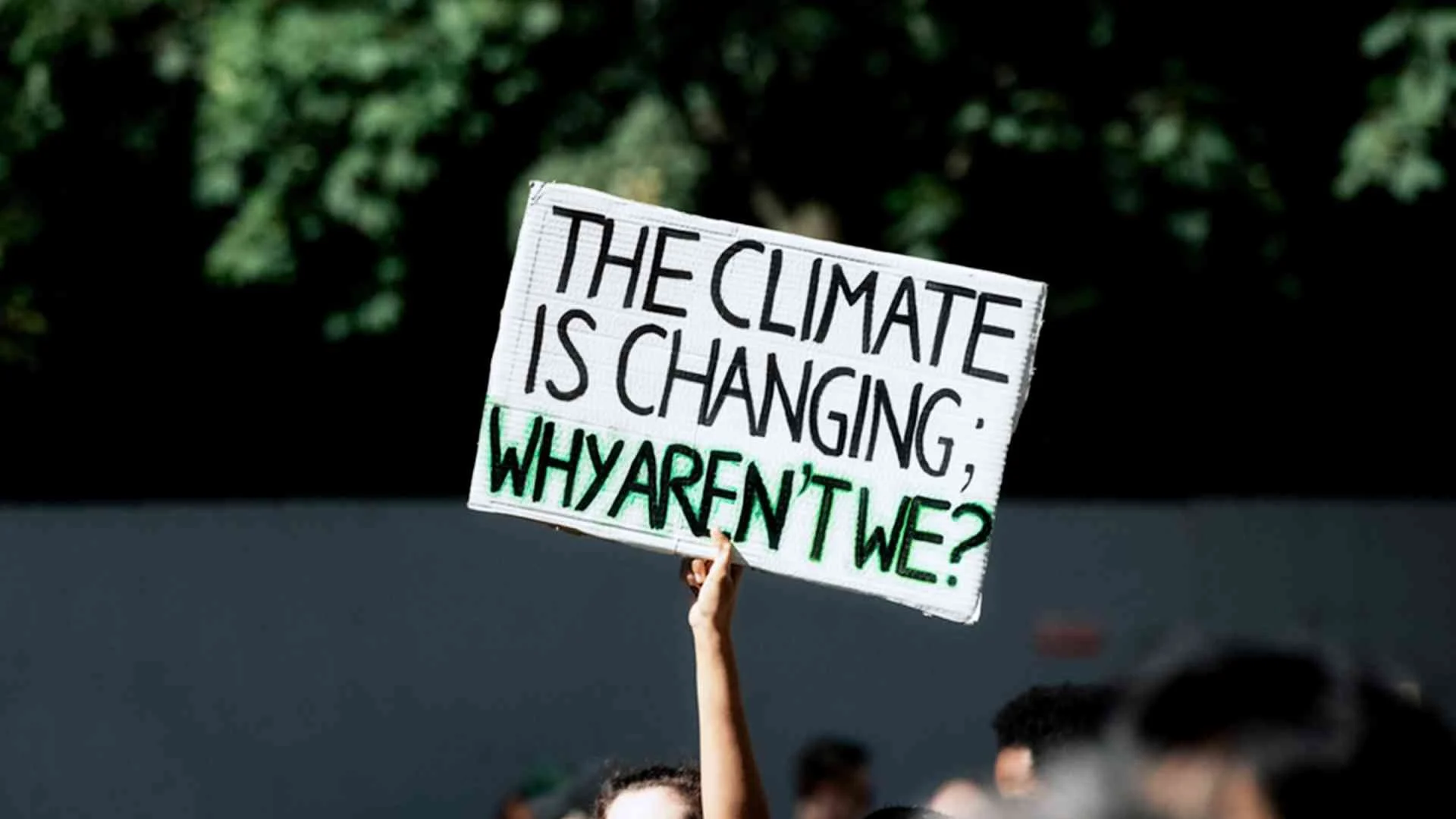
We are, without a doubt, in a climate crisis spurred on by generations of human activity. In any decent science class (though that's no guarantee in America, unfortunately), you’ve likely learned that Earth’s climate has gone through many cycles of cooling and warming over its nearly five-billion-year lifespan. Remember hearing the term “ice age,” of which there have been multiple? But the climate change we've become so familiar with in recent years isn't simply part of Earth’s natural processes. This current crisis is the result of centuries of human activity. More specifically, this crisis is driven by a concentrated few elites and corporations over centuries that have funded and built the infrastructure and technology that have damaged Earth.
Via UWMedicine
Climate change is established science, and we’re all familiar with the reality of global warming. This summer alone, we’ve had several extreme weather events, from floods to heatwaves, and rare weather phenomena, resulting in countless tragedies worldwide. For us, global warming is a clear, present threat, not just a vague future possibility. But I’m curious what led us here. Climate change has been speculated about for centuries and understood for decades, but why are we largely moving as if business is as usual? Why does it feel like nothing was done decades ago before we got to this point? What did humans think about our climate that led us here?
Note: This exploration of the history of public opinion on climate change will primarily focus on the U.S. and occasionally other countries. However, other perspectives on climate change exist around the world.
ANTIQUITY
Back in antiquity, before the field of climate change and before “global warming” was coined, people did believe, to some degree, that human activity could affect the weather. Just in smaller, contained ways. Many cultures around the world believed they could affect their local environment, especially for agricultural purposes. Since ancient times, humans have held rituals to control or alter local weather, such as summoning rain or thwarting disastrous storms. The prevailing belief was that any human impact was immeasurably puny compared to the power of Nature.
Humanity has always been concerned about the weather because it’s quite literally essential to our survival. Civilizations and communities thrive or perish based on the resources available to them, first and foremost, food. In the centuries that followed, though, the climate began to fare much, much worse on a larger scale as (some) humans sought ways to take control of the planet and its resources with the purported goal of advancing humanity to an age of “prosperity.”
THE INDUSTRIALIZATION AGE AND THE START OF IT ALL
This pursuit of prosperity led to industrialization and urbanization. Starting around 1760, during the First Industrial Revolution in Great Britain (before spreading across the globe), people extracted natural resources—coal, timber, iron ore—and exploited both labor and land, all under the allure of unprecedented wealth. From the late 18th century to the 19th century, there were major efforts to change landscapes, especially through mass deforestation in North America and parts of Europe. For many, deforestation was a positive sign of a progressing civilization. A sign that economies were thriving and lands were becoming more “civilized.” Industrializing nations aimed to “tame” the wild and modernize.
The climate was changing, and people noticed. Medical doctor and Founding Father Hugh Williamson noted in 1770 that over recent decades there was “a very great observable change of climate, that our winters are not so intensely cold nor our summers so disagreeably warm as they have been.” What people did not yet know was that the fossil fuels they were burning were already affecting the climate by the 1830s. This was also when our understanding of the greenhouse effect began, as mathematician and physicist Joseph Fourier first hypothesized that gases heat the atmosphere. This discovery preceded a true understanding of the greenhouse effect. Still, Fourier had an interesting level of cognition about how society was shaping the climate early on, writing, “The establishment and progress of human society, and the action of natural powers, may, in extensive regions, produce remarkable changes in the state of the surface, the distribution of the waters, and the great movements of the air.” Then, in 1856, Eunice Newton Foote wrote “Circumstances Affecting the Heat of the Sun’s Rays,” where she conducted the first experiments on how gases could trap heat and found that CO2 and wet air trapped heat. However, because she was a woman, she was not credited and included among the other early works on climate science.
For many decades, climate change was largely confined to scientific institutions. Overall, people believed in the “Balance of Nature” and that things would settle themselves over time. Humanity has survived many disasters, but no one thought things would keep worsening without reversing.
1911 was a particularly bad year for weather worldwide, so it's no wonder people wondered what was happening to the weather and asked about a potential rise in global temperature. In Popular Mechanics, Francis Molena pondered the future of the climate. He pointed out that, in the past, climate change had always been slow, taking centuries or thousands of years to produce noticeable shifts. In this article, Molena mentioned physicist and chemist Svante Arrhenius. Arrhenius thought it would take thousands of years for emissions to have serious effects. He and many others believed human activity would not seriously impact the climate, especially not anytime soon. This idea stuck in people’s minds for generations.
SIGNS PRECEDING
On January 12, 1939, Time published that "gaffers who claim that winters were harder when they were boys are quite right... Weather men do not doubt that the world at least for the time being is growing warmer.” Older generations had shared that the winters they used to experience were no longer the same. They likely referred to the Little Ice Age, which occurred roughly between 1300 and 1850 in the Northern Hemisphere.
At the time, most viewed the obvious warming trend as a natural shift in global temperature after the over-five-hundred-year ice age. Even so, people were still concerned about living through the warming period. There was an old—racist—belief that heat caused laziness and that is why the “natives of the tropics” were lazy and inferior to the “Caucasian race” who lived in cooler climates. There was also panic due to the heat hypothesis, a criminological theory that hot weather increases violent crime, particularly sex crime.
Sourced through Pinterest.
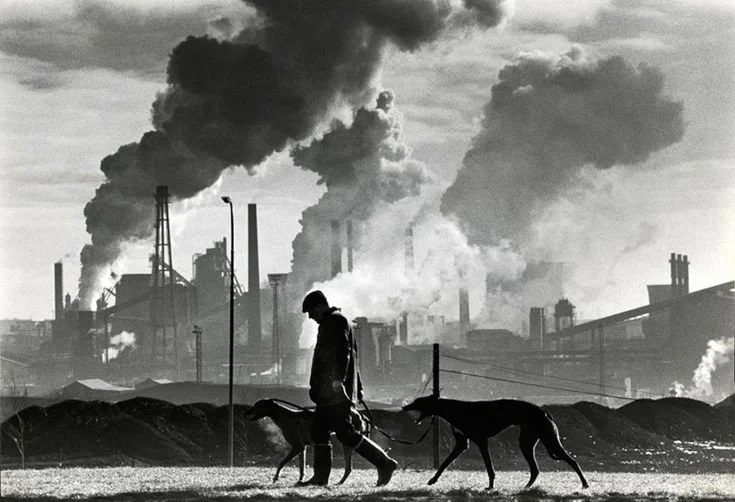
“The smell of money and jobs” was a popular industrial-age slogan, widely attributed to historian John Davis Wirth. The plants, refineries, and mills all had overwhelming, unpleasant smells, but people associated them with prosperity and stronger economies. That is until the 50s. In addition to factories, car exhaust also contributed to air pollution with the rapid adoption of cars. There was a “killer smog” in London in 1953. Los Angeles earned the title “Smog Capital of the World.” In the 50s, doctors like Dr. Haagen-Smit researched air pollution. They found connections between vehicle emissions and air pollution, showing how new technology could harm people and their health.
In 1956, journalist Bernard Kalb reported that a heat wave in Antarctica melted ice and that the weather had been “abnormally warm” lately. The following year, oceanographer Roger Revelle co-authored a foundational paper finding that fossil fuel carbon dioxide emissions were accumulating exponentially in the atmosphere. These findings contrasted with what scientists previously thought: that humans didn’t need to worry about industrial emissions because the ocean would absorb it.
Nuclear technology was also in the minds of many in the U.S., and of course, across the globe. Many countries conducted nuclear tests over the years. With fallout, people began to understand that Earth’s air had been forever changed, tainted. Thus, there was major concern that fallout, along with other chemicals, would permanently ruin the Earth and the health of many populations.
ENVIRONMENTAL ACTIVIST INCREASES AWARENESS IN THE 70s
Twenty million Americans participated in the first-ever Earth Day on April 22, 1970. Senator Gaylord Nelson introduced Earth Day a year earlier as an environmentalism teach-in primarily for students, inspired by the anti-war Vietnam teach-in efforts. The public was clearly fed up with what governments and corporations had gotten away with for so long—pollution and the destruction of the planet. Americans mobilized their anger during the 1970 election and successfully unseated seven members in Congress, of the twelve deemed “The Dirty Dozen,” with records of bad environmental policy. The 70s were the beginning of widespread public concern about climate change and environmental health.
From the everyday person’s perspective, the more immediate issue was pollution, not global warming. Several disasters also impacted countries around the world. One notable, deadly crisis was the Global Food Crisis, which began with a drought in the African Sahel region in 1972. The crisis resulted in hundreds of thousands of deaths and famine across multiple continents. Deforestation was, once again, a major concern.
In The Impingement of Man on the Oceans, a 1971 science textbook, the author said, “the hour is fast approaching when the people of the Earth will have exhausted nature's ability to adjust to the complexities of human attack." However, this remark, and many others, drew criticism, as scientists were upset with peers who made grand statements to the public because, again, they didn’t yet fully understand global warming. Climatologist William Kellogg opposed what he called the “doom and gloom” of other scientists about climate change. He said that “the ‘prophets of doom’ have taken the spotlight of public attention” and believed that the planet could withstand human interference and stabilize again. Kellogg later admitted that human-caused global warming may, in fact, be real.
“Climatic Change: Are We on the Brink of a Pronounced Global Warming?” is a landmark paper on global warming by geochemist Wallace Broecker. This paper is widely credited with popularizing the term “global warming.” Broecker correctly predicted that CO2 emissions would warm the planet. He also believed it would happen sooner than previously assumed.
Scientists began to notice gases called CFCs were eating the ozone layer, which was dangerous to humans, animals, and nature. In a positive turn of events, scientists, the media, activists, and the public collectively raised alarms about this, which led to a swift ban on products containing CFCs, like aerosol hair sprays, under the 1970 Clean Air Act. Of course, the chemical industry fought back and tried to dissuade the public from taking action. Still, they were ultimately restricted, and we finally had some regulation on the harm corporations caused to our climate and atmosphere. Unfortunately, fossil fuel regulations haven’t been that simple.
In 1977, scientist James Black directly warned oil and gas company Exxon about global warming in a meeting with the company, saying, “In the first place, there is general scientific agreement that the most likely manner in which mankind is influencing the global climate is through carbon dioxide release from the burning of fossil fuels.” Instead of heeding warnings and taking direct action to reverse or even halt the damage they caused, Exxon funded a misinformation campaign to confuse and sow doubt among the public about whether global warming even exists. Exxon, and eventually other companies, helped to fuel disinterest or outright denial of global warming. Journalist Waldemar Kaempffert said two decades earlier, “Coal and oil are still plentiful and cheap in many parts of the world, and there is every reason to believe that both will be consumed by industry so long as it pays to do so,” and that remains true.
MEDIA MAKES THE PUBLIC AWARE IN THE 80s
New scientific and technological developments, like computer models that detected climate changes and predicted what was to come, further confirmed global warming. Global warming was slowly becoming an established fact. Therefore, scientists realized they needed to act sooner rather than later. Scientists felt the government must get involved to reduce emissions and save the planet. However, most didn’t want to address the public or try to persuade politicians. Their focus was their work. A common view in the scientific community is the expectation to portray neutrality and apoliticalness, even at the risk of inaction in dire situations.
The media stepped up, bringing the discussion of global warming to the public more consistently. In 1980, CBS Evening News anchor Walter Cronkite reported on the greenhouse effect, stating that burning fossil fuels would likely cause global warming and catastrophic climate disasters within fifty to seventy years. In 1989, Bill McKibben published the first book on global warming for a general audience, “The End of Nature.” As public awareness grew about rainforest destruction, people shouted “save the rainforests,” and many worried about the risk of wildlife extinction. The media linked species extinction to global warming, and it often drew the most attention. There’s no wonder, according to a survey conducted in 1989, that 60% of Americans had heard of “the greenhouse effect” and 88% said they were willing to give up some comforts to address it.
Unfortunately, the political landscape at the time only generated apathy about climate change, essentially encouraging people to move on. In the Roosevelt era, environmentalism was an interest across the political spectrum, but political shifts (the New Left and the New Right) changed that. Climate change had become heavily politicized, and since the summer of 1988, conservatives have pushed an anti-environmentalism message. After 1988, conservatives, elites, and corporations bolstered their economic concerns and pushed against regulation.
Corporations responsible for carbon emissions were incredibly worried about potential regulation, especially as more of the public became aware of the greenhouse effect. Environmentalists advocated and lobbied for emissions regulations, which the fossil fuel industry fought, fearing lower profits if such regulations were put in place. Political conservatives took note of the public awareness and deemed global warming to be the left’s propaganda. It was clear that skepticism about global warming was heavily driven by conservatives and backed by corporations hellbent on preventing regulations that could cut into their profits.
In June 1988, many disasters hit. There were forest fires and a “super hurricane,” a heat wave in China, flooding in Bangladesh, and ocean pollution in Europe. People once again asked why. Then, on June 23, climate scientist James Hansen testified at a congressional hearing that he thought warming was imminent. He believed global temperatures would rise much more by the 2000s. Scientists were also realizing that climate change was happening rapidly and that it might no longer be an issue for future generations to grapple with, but something some of them might witness in their own lives. Hansen’s warning captured the mainstream media’s attention, with his words being plastered everywhere.
Still, the fossil fuel industry, including companies like Exxon and Shell, and even scientists continued to deny the need to act on global warming. S. Fred Singer, one scientist funded by conservatives and the fossil fuel industry, was prominently known for denying global warming. These corporations have a history of funding opposition to concerns about their environmental impacts, including ozone depletion, acid rain, smog, and oil spills. And the discrediting of global warming reached the public, leaving people confused or skeptical. The fossil fuel industry focused its efforts on sowing doubt about global warming, especially in the U.S., where it had more control over policy. In other countries, they didn’t have nearly the same influence.
MORE OF THE SAME IN THE 90s
In the U.S., global warming has firmly become a partisan issue. The politicization of climate change only made the issue more polarizing, of course, essentially placing a cog in the movement towards meaningfully addressing global warming. Even with conservatives fighting to delegitimize global warming, scientists around the world only became more direct and stark about the reality of our climate.
In 1995, the Intergovernmental Panel on Climate Change published a report that garnered global attention, in which the panel officially agreed that the global temperature was rising (at least) partly at the hands of humanity. The IPCC also reported that scientists may have been too conservative in their global-warming predictions and that a significant climate shift could happen much faster, within ten years.
In the 90s, the media also had a noticeable uptick in depictions of global warming and other environmental concerns. Adult movies like Split Second and Waterworld, children’s shows like Captain Planet and the Planeteers and Dinosaurs, and docuseries like After the Warming helped bring the concept of global warming and other planetary disasters to the general public across demographics.
People were not ready to accept the reality of global warming. Especially after the eventful decades leading up to the millennium, people wanted to experience normalcy. As geologist Eldridge Moore once said, "To imagine that turmoil is in the past and somehow we are now in a more stable time seems to be a psychological need." Global warming is so large-scale and widespread that people can't grasp it. Throughout the 90s, conversations about global warming rose again and then dissipated, as they have several times over the past few decades.
A NEW AGE IN THE 2000s
Anthropocene, or “the age of humans,” is the geological epoch when humanity became the primary driver of changes to Earth’s climate and environment. The term was coined in the 1980s but was popularized in the year 2000 by Paul Crutzen and Eugene Stoermer. Anthropocene is an informal term without a set start date, and scientists haven’t agreed on whether it began during the first Industrial Revolution, the 1950s, or somewhere in between. Regardless, we’ve finally confirmed that humanity is the single most destructive species to the Earth.
In the late 90s, the Kyoto Climate Conference brought together over 170 governments to address fossil fuels. Bill Clinton, then president, agreed to the Kyoto Protocol targets of reducing emissions by 7%. Yet, when George W. Bush took office in 2001, he did not want to implement policies to regulate and limit carbon emissions. Bush’s stance disappointed the other nations that participated in the Kyoto meeting years earlier. Europeans were especially frustrated, as, according to a N.Y. Times article from 2001, they lobbed words like "sabotage", “irresponsible”, and “arrogant” at Bush for his decision.
The “debate” about global warming was too far gone for outright denial, so opponents had to switch tactics. Corporations had to safeguard their profits and keep the public from turning against them. Internal corporate documents show companies intentionally shifted their communication strategies out of fear of becoming “The Next Big Tobacco.” An in-depth report by the Center for Climate Integrity found that oil and gas companies tried to position themselves as “responsible actors” while also deriding sustainable, renewable alternatives. In this way, they could impede progress while protecting their public image.
The fossil fuel industry continued to impede progress by pushing ineffective solutions to address climate change, including carbon capture and storage, to stay “part of the solution” and keep their wealth, power, and influence. The Center for Climate Integrity also uncovered government documents that allegedly found that the Global Climate Coalition (GCC), a lobbyist group deeply involved with the industry, directly influenced Bush to back out of Kyoto. Economic and political constraints have repeatedly locked us out of potential climate reforms.
Journalists clearly felt the need to start frank conversations about climate change, as it was frequently reported at the time. One 2004 article from The Guardian reported that the Pentagon had warned Bush that “climate change would destroy us.” In December 2004, The Harvard Crimson reported that Al Gore, former VP, called global warming a crisis while criticizing Bush’s inaction on the issue. WWF reported on May 12, 2004, that global warming may be melting Arctic ice and leaving polar bears stranded.
British Petroleum coined “carbon footprint” in 2004 in a marketing campaign to make global warming the consumer’s responsibility. The term took hold and made climate change a personal issue. But most emissions come from corporations, not individuals. Critics of the term, then and now, see the push to focus on carbon footprint as a way to obfuscate blame from corporations and governments. It makes carbon footprint seem like a measure of personal behavior or etiquette while ignoring the large systemic, economic, and political factors at play.
2005 was a particularly notable year for discussions about global warming because of many natural disasters. In late August 2005, Category 5 Hurricane Katrina made landfall in Louisiana before causing unprecedented damage and casualties. Katrina caused people to rethink what we were doing to the climate. On October 3, 2005, Time’s cover read, “Are We Making Hurricanes Worse?” questioning whether global warming caused the tragedy. Other disasters followed: wildfires across Europe sparked by high temperatures, floods in India and Europe, and more hurricanes in the U.S., the Caribbean, and South America.
On the cover of the April 3, 2006 edition of Time were the words “Be Worried. Be Very Worried.” Gone are the days of tempering fears. Now we see the start of truly stark, honest warnings about what we’re facing. At the same time, fears grew about a “tipping point” in the climate in 2006. Scientists were calling on governments to cut emissions in half within the next fifty years, or face irreversible impacts on the climate.
“As with a lot of climate science, what used to be theory is now being seen in practice on the ground,” said journalist Paul Brown in The Guardian. Even though the scientific consensus was firmly settled and disasters were becoming more visible, some people still dissented. Billionaire Rupert Murdoch, who owned a media empire including Fox, was a major part of this. Right-wingers overall were certainly heavily in opposition and seeding doubt about global warming. Senator James Inhofe called climate change “the greatest hoax perpetrated on the American people” and later released a climate change denial book. Doubt cast on global warming eroded trust in climate scientists.
The internet further spread doubt as it became a major source of information in people’s lives. In 2008 and 2009, several online communities heavily denied and conspiracized global warming. In 2008, a teenager who called themself a climate skeptic started a website called “Ponder the Maunder” to share their views of climate change. The website was quite popular among other skeptics at the time. Attention on global warming waned again in 2008 because of the obvious political and economic issues.
CLIMATE GRIEF IN THE 2010s
As governments (and corporations) continued to line their pockets, it’s clear existentialism, depression, and fatalism were rising amongst young people, especially college-educated young people. “Climate grief” is what it’s called. Journalist Amanda Hess wrote that “global warming represents the collapse of such complex systems at such an extreme scale that it overrides our emotional capacity.” Around this time, people also realized that global temperature couldn’t be kept below 2 degrees Celsius. The 2018 IPCC report said there were only 12 years left to avoid climate catastrophe, which only added to the rising emotions and feelings of helplessness.
Via Reuters
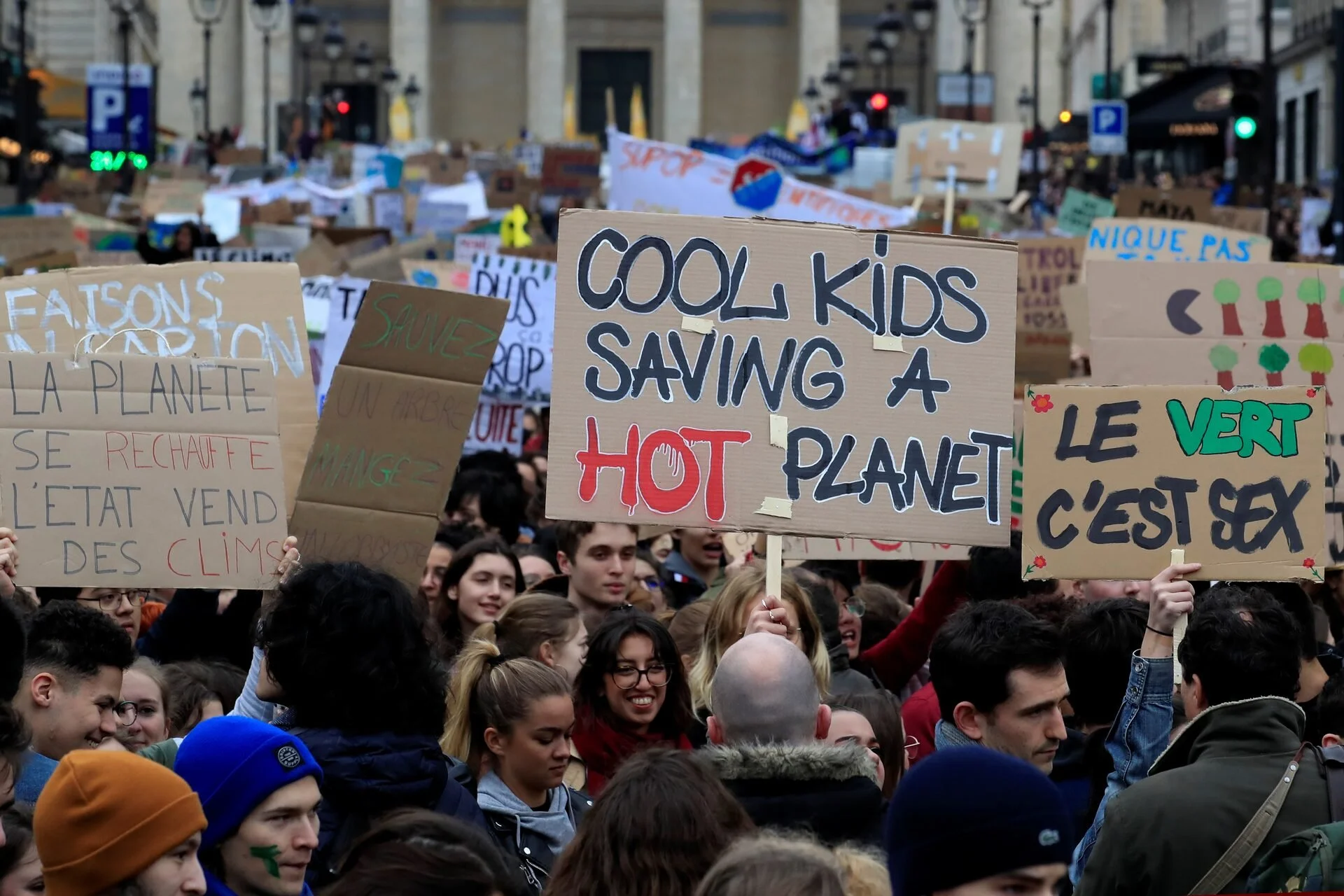
Global warming seemed like such a grand, complex thing that people focused on smaller-scale issues. Thinking, “Yes, this is a big deal, but what is something we can fix in a couple of months? That’s a better use of our time.” That didn’t stop activists from making their voices heard and taking action. Back in September 2014, the People’s Climate March took place in 150 countries to call for global action, including 100,000 people in NYC. Later, in 2019, the youth strikes, organized by activist Greta Thunberg, created student walkouts around the world demanding emissions regulations.
WE’RE IN THE 2020s, SO NOW WHAT?
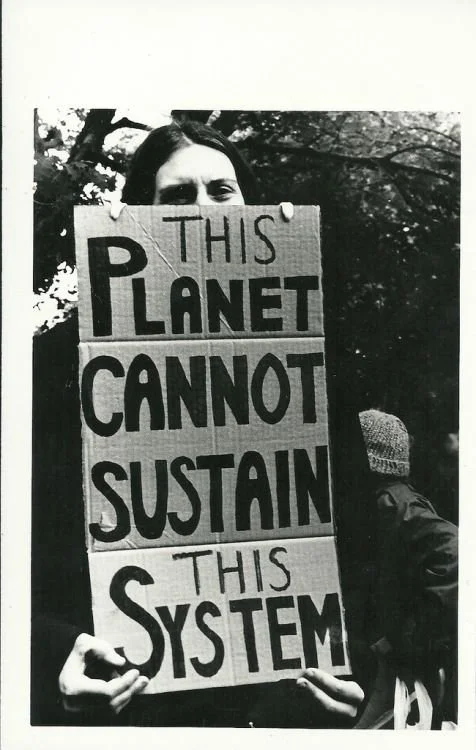
Well into the 2020s, we’ve seen many climate disasters that remind us how real global warming is. We’re living it right now. Recently, the UN reported that the global temperature is expected to cross the 1.5 degrees Celsius threshold soon, a very disappointing “milestone.” For generations now, we’ve been cognizant of the dangers we’re facing. Yet nothing meaningful seems to have happened to reverse course. Because what is really needed is global cooperation and stopping the chokehold the fossil fuel industry has over the planet. That is a tall task, as more nations that rely on fossil fuels have gained more power and wealth in recent years. There’s a subset of people who prioritize exploitation for gain who have the upper hand, and at their hands we are in this climate crisis. True climate reform genuinely requires a major shift in power and the systems that run this world.
Sourced through Pinterest.
It’s interesting to look back at how people in the past interpreted what we now know so well. For most of humanity’s history, the idea that we could impact the planet on a global scale was truly unthinkable. But with industrialization and modernization, humanity began to notice something indeed was changing, but the hope was that the power of Nature would prevail. Some even thought that warming would actually improve life. Others believed global warming would happen, but thousands of years in the future. Once humanity knew what was happening to the planet, people tried to prompt action generations ago. Still, corporations and powerful governments (especially the U.S.) fought to protect their profits and have largely continued to do so.
Global warming is no longer a future issue. People my age will certainly deal with global warming for the rest of our lives, one way or another. The hope is that we will also see meaningful work to improve the climate, and that we will not simply witness doom.
Certainly, some changes can be made, and have been, and they do help. For example, low-carbon sources now account for 43% of global electricity, and Amazon deforestation has declined for four years in a row. I won’t deny that people are taking steps in the right direction, and I think blatant doomerism isn’t useful. Even in these worsening times, some things can potentially be reversed. But the biggest changes require the biggest effort, and that too I cannot deny.
Sources:
https://www.wwf.org.uk/updates/here-are-10-myths-about-climate-change
https://publicdomainreview.org/essay/the-founding-fathers-v-the-climate-change-skeptics/
https://books.google.com/books?id=Tt4DAAAAMBAJ&lpg=PA339&dq=Remarkable Weather of 1911&pg=PA339#v=onepage&q&f=false
https://www.sciencedirect.com/science/chapter/bookseries/abs/pii/S0065260100800040
https://tellusjournal.org/articles/10.3402/tellusa.v9i1.9075
https://catdir.loc.gov/catdir/enhancements/fy0828/2007045080-s.html
https://apnews.com/article/earth-day-explained-environment-a027792357624ee3e88aea43f14d3ba0
https://www.pbs.org/wgbh/americanexperience/features/earth-days-modern-environmental-movement/
https://www.scientificamerican.com/article/exxon-knew-about-climate-change-almost-40-years-ago/
https://www.carbonbrief.org/warming-warning-1981-tv-documentary-warned-climate-change
https://tarnmoor.com/2017/04/07/in-the-right-place-at-the-right-time/
https://www.nhm.ac.uk/discover/what-is-the-anthropocene.html
https://www.nytimes.com/2001/04/01/world/bush-angers-europe-by-eroding-pact-on-warming.html
https://climateintegrity.org/uploads/media/Climate-Fraud-101-Report-2026.pdf
https://www.theguardian.com/environment/2004/feb/22/usnews.theobserver
https://www.thecrimson.com/article/2004/12/14/gore-warns-of-global-crisis-former/
https://www.theguardian.com/environment/2006/oct/18/bookextracts.books
https://www.npr.org/2006/12/07/6591614/inhofe-offers-parting-shot-on-global-warming
https://www.npr.org/2008/04/15/89619306/teenage-skeptic-takes-on-climate-scientists
https://www.nytimes.com/2022/02/03/arts/climate-change-doomsday-culture.html