By Danielle Carnivele
A name nearly erased from history, yet a voice powerful enough to define a generation. Tina Bell, often called the “Godmother of Grunge, was known for bringing audiences her commanding vocals, fierce presence, and undeniable magnetism. It’s her artistry that helped lay the groundwork for the grunge icons who followed.
So what happened to Tina Bell’s mesmerizing voice? Why is she missing from the mainstream story of grunge while figures like Kurt Cobain remain celebrated? Misogyny and racism are central to that erasure, forces that marginalized Bell and pushed her to the fringes of the genre she helped shape. Even after her death, Tina Bell’s legacy continues to be overlooked, her contributions repeatedly written out of grunge history.

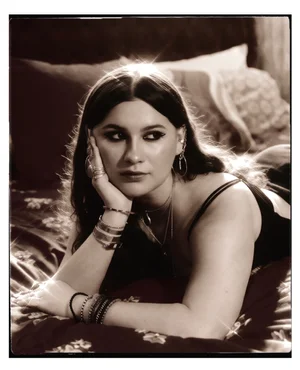
Tina Bell; Sourced through Pinterest
In 1983, Tina Bell and her husband, Tommy Martin, founded Bam Bam, a name formed by combining their last names, Bell and Martin. They soon recruited bassist Scott Legerwood and drummer Matt Cameron, who would later join Soundgarden and Pearl Jam, respectively. Although Bam Bam was rooted in punk rock and emerged before grunge had a name, their sound would help define the genre that followed.
As Seattle’s music scene began to take shape, few performers could match Tina Bell’s commanding presence. Her magnetic energy and powerful voice could fill an entire room. Bam Bam shared stages with future grunge heavyweights such as Soundgarden and Alice in Chains, and even a young Kurt Cobain was captivated by Bell’s performances. For a time, he worked as her roadie and could often be found sitting beside the stage, transfixed by her presence. The experience may have helped shape the frontman he would later become with Nirvana.
Bam Bam drew audiences from across Seattle, many of whom came specifically to see Bell. But the scene was dominated by white men, and a Black woman commanding the stage threatened the status quo. Bell faced discrimination, racial slurs, and open hostility before she had even sung a note. When she did, her voice was powerful enough to command the room, but not powerful enough to drown out the prejudice surrounding her.
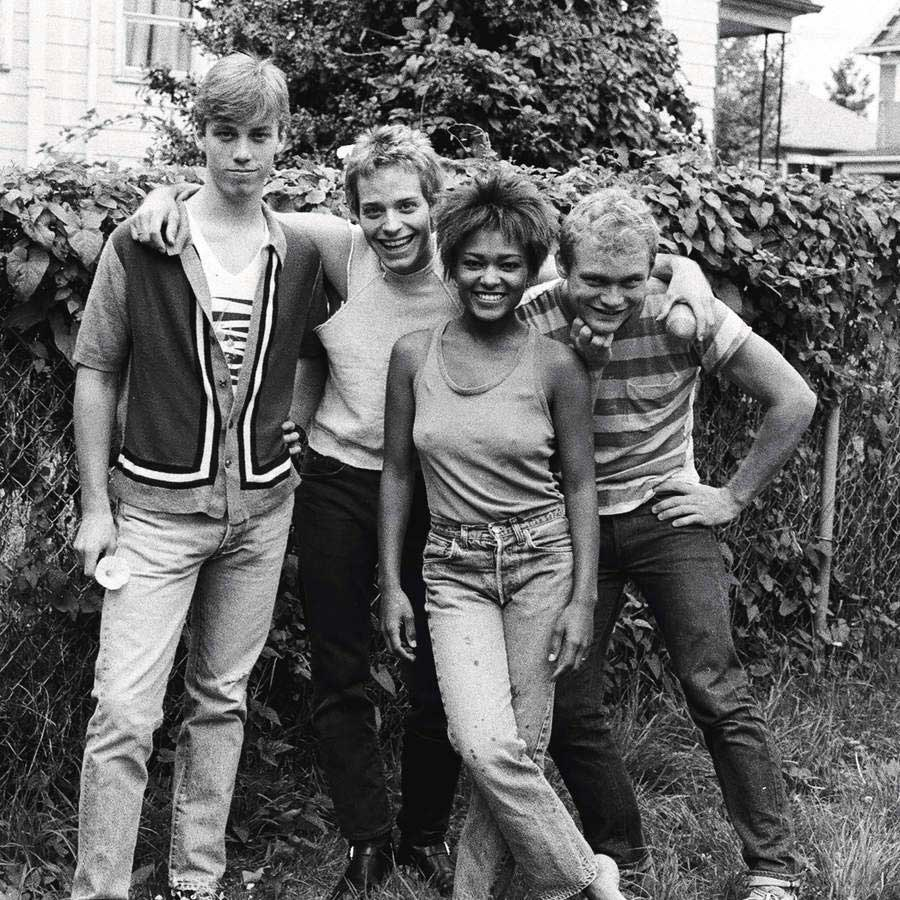
Tina Bell and Bam Bam (Matt Cameron, Tommy Martin, Tina Bell, and Scott Legerwood); Sourced through Pinterest
Punk had long presented itself as a passionate, rebellious space devoted to social change. Yet beneath its anti-authority politics, celebration of nonconformity, and rhetoric of individual freedom, the scene was often deeply hypocritical. It frequently failed to acknowledge intersectionality, and many zines even portrayed punk as a space built exclusively for men, leaving little room for women. For Bell, being a Black woman in punk meant confronting two overlapping forms of hostility from people who refused to accept her on her own terms.
Seattle’s music scene prided itself on being alternative and progressive, but that image quickly fractured when it came to Tina Bell. During one performance, two neo-Nazis pushed through the crowd and began harassing her from the front of the stage. They shouted racial slurs, including the N-word, until the abuse became impossible to ignore. Bell responded by swinging her microphone by its cord like a lasso and striking them in the head. When a punk singer fought back, the act was usually celebrated as rebellious. But when Bell defended herself, her response was weaponized against her, reinforcing the racist stereotype of the “angry Black woman.”
Record labels also pressured female artists to conform to narrow ideas of who they should be and what audiences would accept. Bell defied every expectation imposed on Black women in music. The industry often reduced Black female artists to divas or hip-hop performers, leaving little space for someone who was fierce, unconventional, and unapologetically punk. By stepping onto the stage as a commanding Black punk singer, Bell challenged not only the conventions of the genre but also the limited image imposed on Black women in music.
With her image weaponized against her, Tina found little support within the scene and could not even seek refuge among her own bandmates. When she was attacked onstage, they did nothing to defend her, continuing to play in silence. Tina was left to carry her pain alone, and that betrayal deepened her isolation. She struggled to find support from the industry, her band, or the community she had helped build. Even Deep Six, the 1986 C/Z Records compilation that helped introduce Seattle’s emerging sound, excluded Bam Bam from its showcase. Bassist Scott Legerwood later addressed fans’ confusion over the band’s absence, explaining, “America was certainly not f***ing ready for a black girl up front in a hard band let alone as a media sweetheart […] As far as Bam Bam being suppressed? There’s probably several reasons, but race and gender clearly played a major role.” Bam Bam eventually traveled to the United Kingdom in hopes of finding success overseas, but the band continued to face rejection and racial backlash.
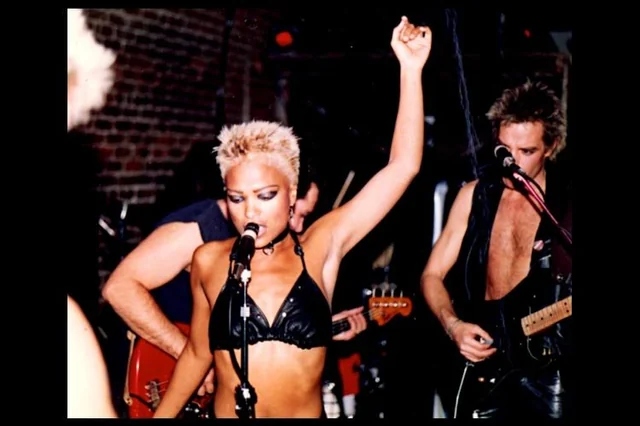
Tina Bell with Bam Bam; Sourced through Pinterest
After nearly a decade of discrimination and abuse, Tina Bell left music in 1990 and disappeared from the scene. As grunge exploded in the 1990s, Kurt Cobain became its most recognizable face while Bell’s legacy faded into obscurity. Her name gradually vanished from the history of the genre she helped usher in. Like many Black artists who came before her, Bell was denied a place in the official record. She was even excluded from the book Everybody Loves Our Town: A History of Grunge, which describes Bam Bam as a three-piece instrumental band and erases Bell’s presence and voice entirely.
Even in death, Bell’s legacy continued to be disrespected, quite literally thrown in the trash. Tina Bell died in 2012, and her body was not discovered until weeks later, after neighbors reported a strong odor. Without her family’s consent, her personal writings, poetry, lyrics, and other memorabilia were discarded, extending the erasure of her legacy beyond the grave.
Tina Bell’s contributions were never properly recorded or documented. As a Black woman in a scene that refused to make room for her, she was pushed aside and written out of the sound she helped create. Grunge defined a generation, yet the woman who helped pioneer it was denied the recognition and success her influence deserved because she did not fit the image the industry wanted to sell. That recognition was instead given to the white male artists who followed. Until Tina Bell’s name is spoken with the same reverence as theirs, the history of grunge will remain incomplete.