What It Means to Chase a Dream: Jason Mraz, Philip Labes, and 'The Opener'
By Natalie McCarty
Last night at the Grammy Museum, right before the screening of The Opener, I had the incredible opportunity of sitting down with Jason Mraz and Philip Labes for a generous, unguarded conversation about what it means to make art, how personal experiences become universal once they’re shared, and the tension between solitude and performance—especially in a time when connection often feels both immediate and distant at once.
What we spoke about wasn’t industry or promotion, but something far more fundamental: grief, honesty, surrender, and the ongoing negotiation between creating privately and existing publicly.
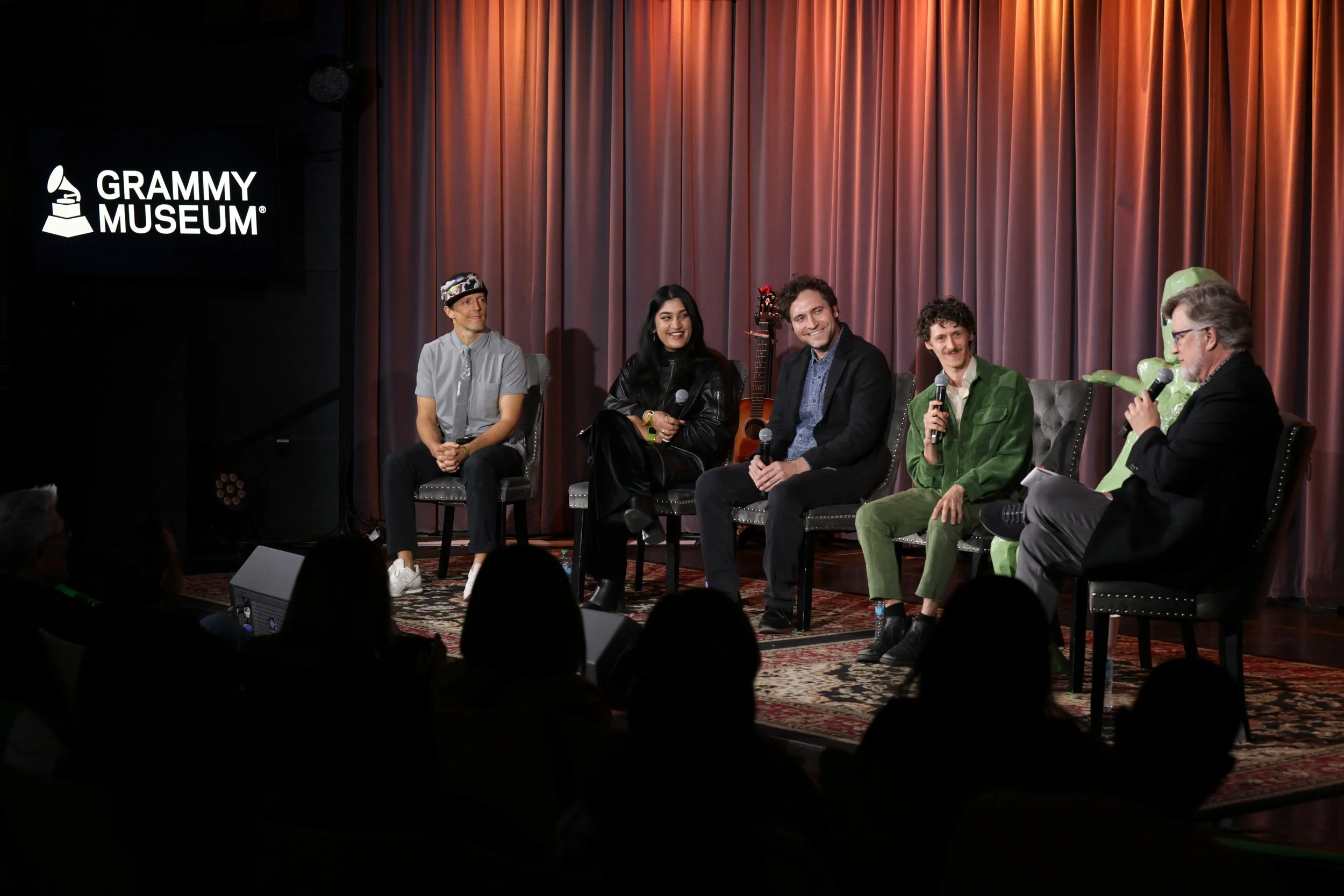
Courtesy of the Recording Academy™️/Photo by Rebecca Sapp, Getty Images© 2026.
The Film That Arrived at the Right Time
Long before this moment, I had found Philip Labes’ music during a very different kind of isolation. Nearly six years ago, during the pandemic, in a period where the world felt particularly alienating and disconnected, I came across one of his songs and remember being struck by how precisely he was articulating feelings I didn’t yet have language for.
That same spirit lives inside The Opener.
The film feels less like a documentary and more like a deeply human reminder of what it means to keep going—to keep creating, to keep believing, to keep chasing something even when the world gives you every reason to stop.
The Opener asks a deceptively simple question: What does it mean to chase a dream?
Right now, it could not feel more relevant.
In a cultural moment defined by burnout, uncertainty, and disconnection, The Opener arrives as an underdog story—hopeful without being naïve, vulnerable without losing its humor. Watching it gave me the same feeling I had the first time I saw Rocky: that impossible but undeniable belief that grit, heart, and the willingness to show up can change your life.
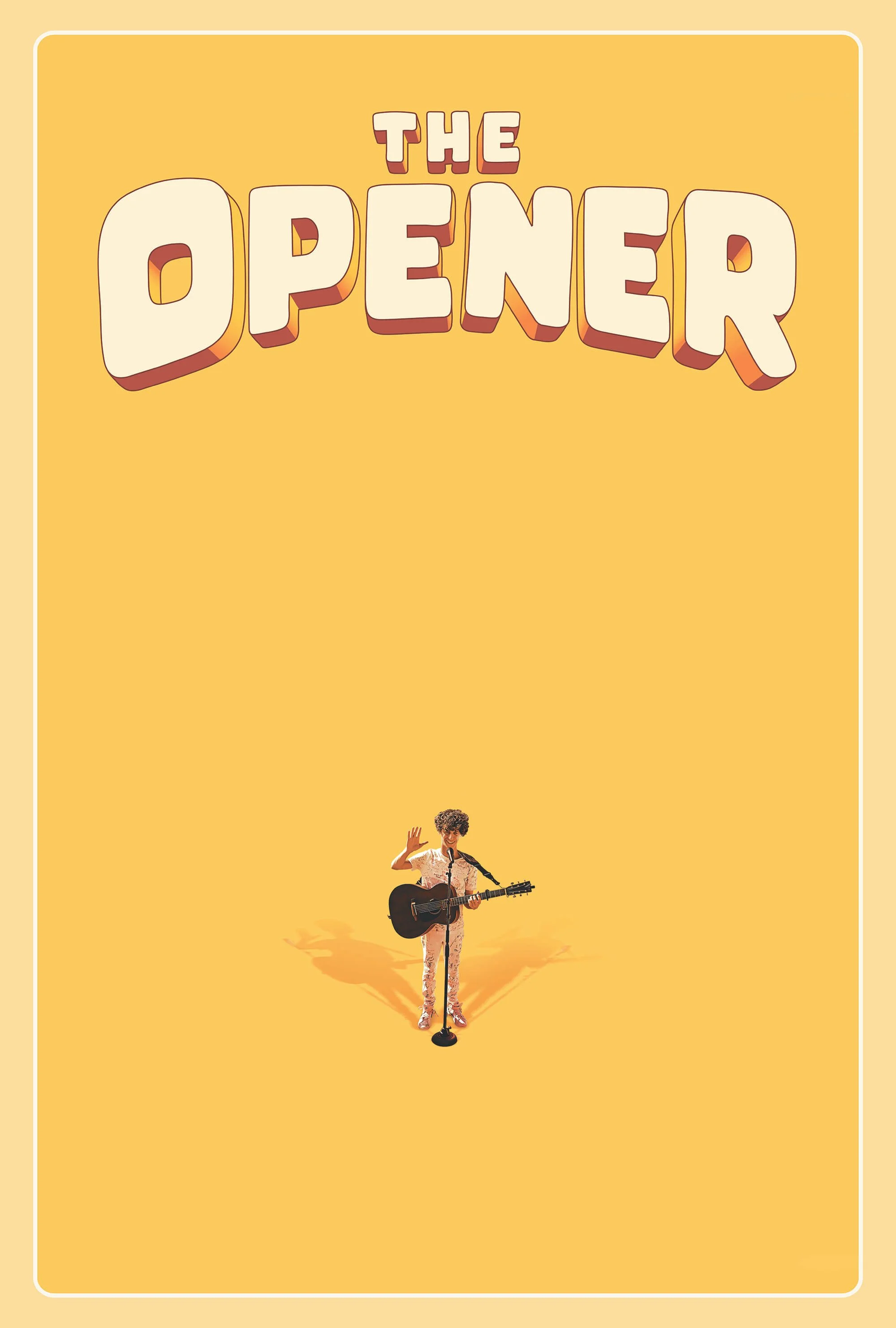
Courtesy of Dream Ops
Though born from the pandemic era, The Opener feels less like a relic of isolation and more like a mirror for the present. It is beautifully edited, strongly produced, and made with an intimacy that makes the filmmaking feel effortless—nothing feels overworked or manufactured. In many ways, it serves as a time capsule of loneliness, uncertainty, and the strange intimacy of those years, yet what makes it remarkable is how fully it lands now. Culturally and emotionally, it feels like we are living in a parallel climate.
How do we keep creating when the world feels unstable? What does it mean to keep chasing a dream when survival itself feels like the full-time job?
That is the emotional architecture of this film.
The Universality of the Personal
When I asked Philip what the film taps into culturally now, he framed it less as timing and more as something timeless.
“I think the film is about connecting with other people,” he said, “and art making as a way to make meaning out of your life when meaning feels very hard to come by.”
Philip also described that search for meaning as something modern life rarely prioritizes. “I think that message still connects with people because we still live in a time when finding meaning is an individual journey,” he explained. “It’s not super emphasized in the modern age. Anytime is a good time to make art and figure yourself out, but especially now, in an age of difficult political and social things, I think it still connects.”
That naturally leads to a larger question at the center of so much creative work: how do deeply personal experiences—grief, loneliness, uncertainty—become something universal?
Jason returned to the idea of universality through something more elemental than shared experience: vulnerability itself.
“I’ve often heard that the more personal you are, the more universal it becomes,” he said. “And I’ve thought about that. It’s not because anyone has really lived my experience exactly.”
What resonates, he suggested, is not replication, but courage. “It’s the courage someone puts into sharing something so personal. Even if they haven’t lived exactly Philip’s circumstances, their ability to share honestly—that’s what resonates.”
“The willingness to share. The willingness to ask for help. The willingness to reach out, to go outside your comfort zone, that can inspire others to be just as courageous.”
On Performing for People
That tension between solitude and exposure came up repeatedly when we talked about music itself. Writing songs can be deeply private; releasing them transforms them into something else entirely.
For Philip, performing is where a song reveals what it is. “Playing in front of audiences teaches you what’s working, certainly,” he said. “Just like a comedy routine has laughs, a music piece has energy, and when you’re not connecting with an audience, they’ll tell you.”
“The final stage of art making is the sharing… the ones that you share have a new meaning constructed through the eyes and ears of the people listening to it. What it meant when I wrote it, it means something new when people perceive it.”
Jason described it as an ongoing process of discovery. “Sometimes I’ve written many songs where I don’t fully understand the whole song yet,” he said. “It’s almost like poetry with loose ends.”
Often, the audience completes them.“Then I’ll go in for an audience and suddenly things will land and make sense that help me complete the song or find a purpose to sing it.”
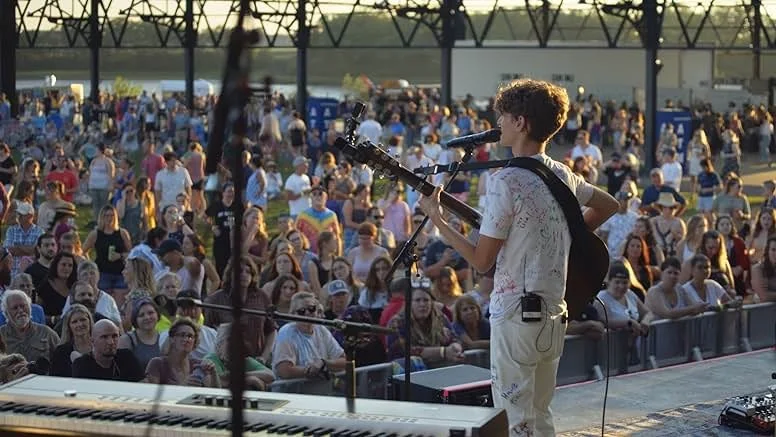
For Jason, live performance is less presentation than shared experience. “When we’re all in the room together, there’s this sense of shared time and attention,” he said. “There are real palpable exchanges that occur.”
“We understand the energy when we’ve spent too much time on stage—it’s like, whoa, we better wrap this up. Or when you haven’t spent enough time and the audience is demanding more.”
“The online world can give us that to an extent,” said Mraz. “But something like the sound of applause… that’s different.”
Courtesy of Dream Ops
On Connection vs. Consumption
That led to one of the central tensions in their work: in a time when artists are more digitally accessible than ever, why does connection often feel more distant?
Jason framed the answer in terms of presence. “I spend less time online and more time in little local gigs and coffee shops,” he said. “Working on performance, and developing my connection to the music, and my ability to communicate that music. Always preparing. Every show is the moment, but also preparation for the next moment.”
He spoke about intimacy over scale. “In a small venue… there’s real opportunity to have real conversations and see people eye to eye. I prefer that. I don’t know how to bridge the gap online other than just to stay active in public spaces.”
Philip approached it from the unpredictability of online audiences. “I’ve had many years of putting work out and not having it connect, and moments where something really connected,” he said. “Nothing about what I think will connect with people is the truth.”
That uncertainty reshaped his relationship to visibility. “There’s so much pressure to have a curated identity online… I choose the freedom of letting the algorithm and people’s experience dictate what happens.”
“I try not to get tied up in the results. You have to stay zoned in on your little vein of who you really are… If you chase the number like a gambling addict, you’ll lose yourself so quickly.”
On Letting the Art Go
Jason nodded toward that same idea through a story. That morning, at a coffee shop, someone had stopped him to talk about one of his songs—not a recent release, but one from 2004. And that, to him, is the miracle.
“We make the art, and you set it free, and you never know when or where or how it’s going to touch someone.”
Hearing him say that, I immediately thought about my own moment with his music—eighteen years ago, flying above Kauai in a helicopter, with his song playing while the island opened beneath me: impossible green cliffs, waterfalls cutting through mountains, the kind of beauty that makes you feel both incredibly small and overwhelmingly alive.
It was one of those moments where music stops being background noise and becomes part of memory itself—forever tied to a place, a feeling, and a version of yourself.
That is what Jason was talking about: songs leave the artist, and they go live entire lives somewhere else.
“And if we get a chance to connect,” he continued, “my goal is just to be as completely present and humble and grateful with that listener as I possibly can be.
“For that song to do this twenty-year roundabout to reach them and back to me… it’s kind of surrender. Just surrender to the fan experience. And then be surprised.”
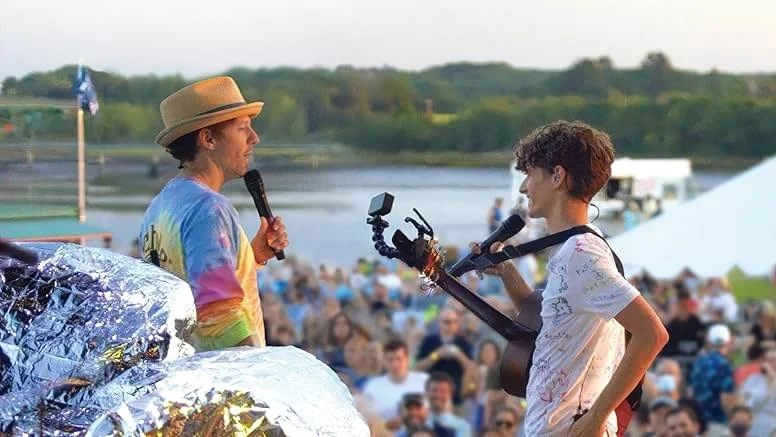
That surrender is also what defines his relationship with Philip. Their collaboration began because Jason stumbled across one of Philip’s livestreams during the pandemic, and that fan-to-friend pipeline became the foundation for The Opener.
Courtesy of Dream Ops
The Closer
When I asked what they hoped audiences would take away from the film, both returned to the same idea: joy.
“We’ve talked a lot about the serious nature of art making, and it is both serious and joyful,” Philip said. “The film is just fun. Fun and funny and adventurous.”
Jason described the filmmaking process in a way that mirrored the film itself. “I’ve had the experience of recording songs where you didn’t realize you were making the album,” he said. “It’s like—oh my gosh, I have all the songs I need for this.”
He believes the same thing happened here. “They were just on an adventure, figuring it out along the way. There was no script.”
Only afterward did that clarity arrive, and that absence of pressure, he suggested, is what makes it work. “Without the intent or the pressure of making a movie, they had the joy of making a movie.”
Before we wrapped, I asked what’s next for the duo.
Jason smiled. “I have a very humble release,” he said. “It’s a recording I made for my grandmother almost twenty years ago, and it’s finally coming out for all to enjoy.” Grandma’s Gospel Favorites is, as he put it, “music of comfort in these times.”
Philip, however, has “an extremely unhumble project” with his musical titled Good Guy with a Gun, arriving as an original cast album this July.
In his own words: “It’s like The Book of Mormon for the NRA.”
That feels like the real center of The Opener: not certainty, but openness. To grief, to failure, to surprise, and to the possibility that art still connects us to each other—and to ourselves.
The film never asks whether the dream is guaranteed. Only whether you’re willing to keep chasing it anyway.
And maybe that’s the real question: How do you chase a dream?