What Makeup Learned From Diet Culture
By Isobel Slocombe
It was the summer of color, Zara Larsson, and jelly firkins. The heat made everything feel slightly overexposed, including my patience. One afternoon, sweating under fluorescent strip lighting, dodging a queue that had backed up into the hair-dye aisle, I began the search for the perfect shade of pearlescent pink nail polish (summer of color after all). I stood there for twenty minutes, turning bottles over in my hand.
I found myself eye to eye with a lipstick branded '2000 Calorie.' Disgruntled, I averted my gaze and was met instead with a gloss called 'Butter Me Up'; a 'Jelly Crush' liquid blush; a 'Banana Split' eyeshadow palette; a body mist described as 'whipped'; a highlighter promising 'sugared' skin. Further down, a skincare brand had built a whole range around the word 'recipe', cleansing 'batters', moisturising 'jams', and a perfume counter offering variations of vanilla, caramel, and sugared musk. The language of food, everywhere and insistent.
I began to wonder why the beauty aisle was parading as some sort of sweet shop, and drew, almost immediately, an uneasy parallel to the far less innocent vocabulary of diet culture.
Beauty brands will borrow the language of restriction and reward (indulgence, guilt, absolution) and repurpose it to sell makeup. The effect taps into the same appetite-versus-restraint psychology that so many of us, women especially, have been taught to apply to actual food. Desire is held on a leash, and treats must be earned. 'Clean eating' has migrated almost seamlessly into 'clean beauty'. Non-toxic, unprocessed, cold-pressed, as though your foundation were something you might also be asked to digest.
Adverts describe lips as 'berry-stained,' skin as 'honeyed,' cheeks as 'good enough to eat.' This is a broader habit in advertising and media generally, describing women's faces and bodies in the vocabulary of a dinner menu. In feminist theory, there's a concept called the absent referent, the process by which a living, feeling subject is linguistically converted into a product to be consumed. By framing female faces as sweets and fruits, the industry flattens women into delicious items on a shelf. To be devoured.
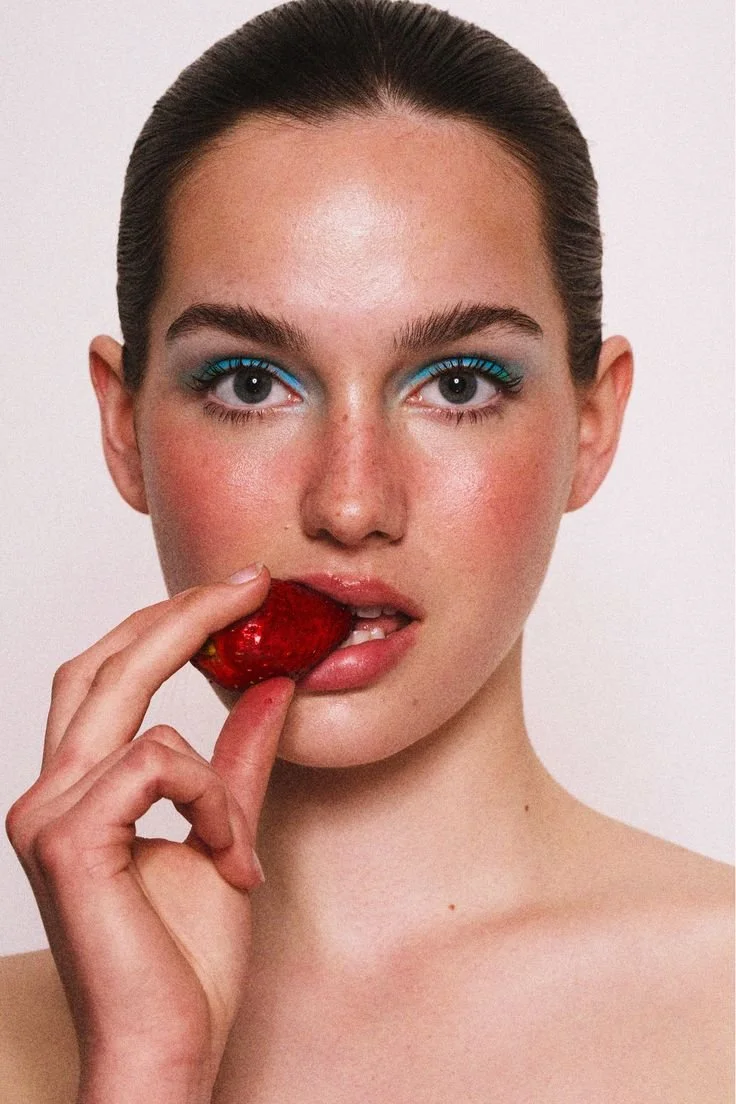
This linguistic trick feeds directly into Laura Mulvey's idea of scopophilia, the pleasure of looking, understood as a form of visual consumption. Media devours the female form, reducing people to objects built to satisfy appetites. Susan Bordo makes a related argument. That the female body functions, under patriarchy, as a text surface written on, disciplined, and read by a culture that narrates what that body is for.
A lipstick called '2000 Calorie' names the number so many of its likely customers have been trained to track and feel guilty about. It sells indulgence with the calories pre-accounted for, with zero consequence and only reward. This is the pacifier logic running through a huge amount of beauty marketing. You are not permitted to want the actual doughnut, the actual butter, the actual calories. But you can want this. You can have your cake and eat it too, so to speak. Guilt-free, because it isn't real food.
In offering food-as-makeup as a 'safe' substitute for actual food, the industry reinforces the idea that female appetite itself is the problem. That even a symbolic, calorie-free version of wanting something needs to be managed and presented as a treat you've earned. The industry gets to sell desire and discipline in the same breath, letting you feel indulgent and virtuous at once. There's a sinister double-bind here. While you think you're the consumer, buying yourself a sweet little treat, applying 'Butter Me Up' to your face is preparing you to be the one who gets consumed instead.
Plenty of women would say they enjoy this language. That calling a blush 'Jelly Crush' is a knowing, campy wink rather than a trap. Some go further and reclaim it outright, joking about 'devouring' a new palette. I don't think that response is wrong, but it's evidence of how deep the mechanism runs. Irony requires fluency in the thing you're being ironic about; you can only wink at a metaphor you've already internalised.
Beauty marketing reaches for diet culture's vocabulary because it already works. It's pre-installed in how so many of us have been taught to want things in the first place. Selling lipstick as a naughty little treat doesn't require persuasion. It's worth adding that this borrowed vocabulary isn't racially neutral. Words like 'exotic,' 'spice,' 'honey,' 'caramel', routinely used for skin tone and scent alike, carry a colonial history of racialised consumption alongside, and compounding, the gendered one. The instinct to describe a body as something to be tasted has never fallen evenly, and beauty marketing's sweet-shop vocabulary sits on top of a much older habit of talking about marginalised bodies as things to be consumed.
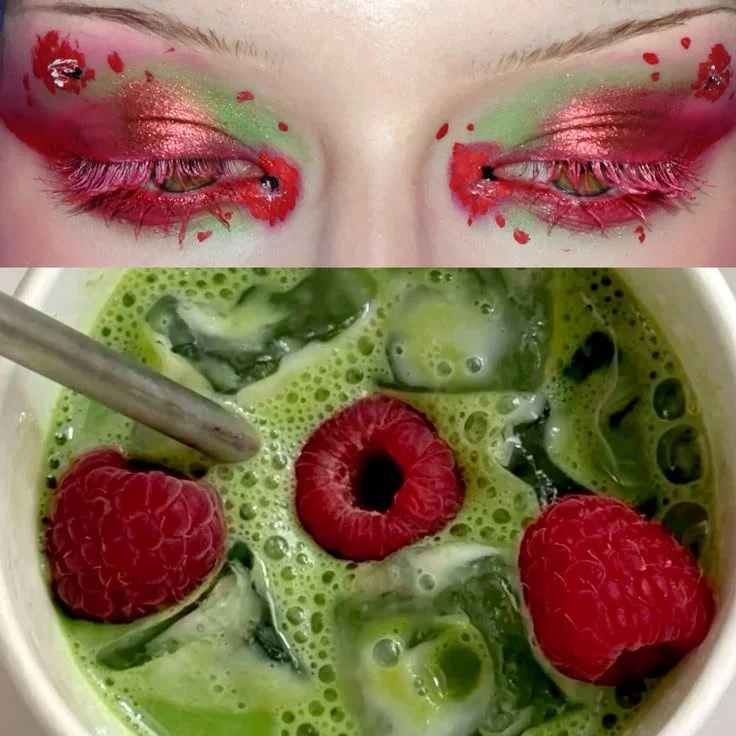
What strikes me most isn't any single product name. It's how unremarkable the whole display felt until I stopped to inspect. It's so familiar it barely registers as odd. We've absorbed the dialect of appetite, restraint, and self-objectification so completely that a lipstick called '2000 Calorie' doesn't read as strange at all.
I bought the nail polish, in the end. Pearlescent pink, exactly what I'd gone in for. I don't think noticing the language stops anyone from buying the lipstick, or the blush, or the gloss. But I do think there's something worth keeping in the twenty minutes I spent standing in that aisle, a little irritated, reading a shelf of makeup like it was trying to tell me something about hunger. Once you've heard the menu for what it is, you can't quite unhear it.