Before Charli XCX’s 'The Moment', There Was 'Alone Together'
By Stella Speridon-Violet

Sourced through Pinterest
Before Charli XCX had The Moment, she had Alone Together. Before the confidence and the fully formed pop thesis, there were FaceTimes, creative spirals, and a kind of loneliness that only exists when you’re technically never alone.
Watching Alone Together now (just as The Moment has started its press tour) feels like opening a time capsule we forgot we buried. Beyond a documentary about making music during lockdown, it’s a record of what happens when productivity becomes survival, when collaboration is mediated through screens, and when your mind has nowhere to hide.
Early in the film, Charli admits she feels “really alone.” It’s a simple line, almost obvious, but it lands hard because of the noise surrounding it: group chats, producer calls, fans waiting. The documentary quietly insists on a truth we don’t love to admit: visibility doesn’t cure loneliness—sometimes it sharpens it.
While the pandemic looms in the background, the film is far more concerned with mental health and artistry than with lockdown itself. One of its central tensions is Charli realizing that no matter how busy or successful she becomes, a persistent sense of unfulfillment still lingers beneath the surface.
Sourced through Pinterest
Alone Together captures Charli in a liminal state. She’s successful, influential, surrounded by collaborators who admire her, yet isolated in a distinctly modern way. She’s building something with people she can’t touch, trusting instincts through latency and lag. The album becomes proof of life.
She talks often about control and needing to hold onto it when everything else feels unstable. At one point, she says she just wants to “make something good,” as if goodness itself might anchor her. It’s an almost painfully relatable desire. So many of us cling to projects, routines, or people just to give shape to our days.
Anyone with a creative bone in their body knows that sinking fear of producing mediocrity. It shows up in nearly everything we make (or want to make), and sometimes it’s exactly what keeps us from sharing our work at all.
Sourced through Pinterest
What’s striking, especially in hindsight, is how emotionally unfinished Charli feels. She questions herself constantly: her relevance, expectations, whether what she’s making even matters. It’s jarring to watch knowing The Moment, and its imminent cultural dominance is coming. That’s also what makes Alone Together such an essential precursor to The Moment.
Sourced through Pinterest
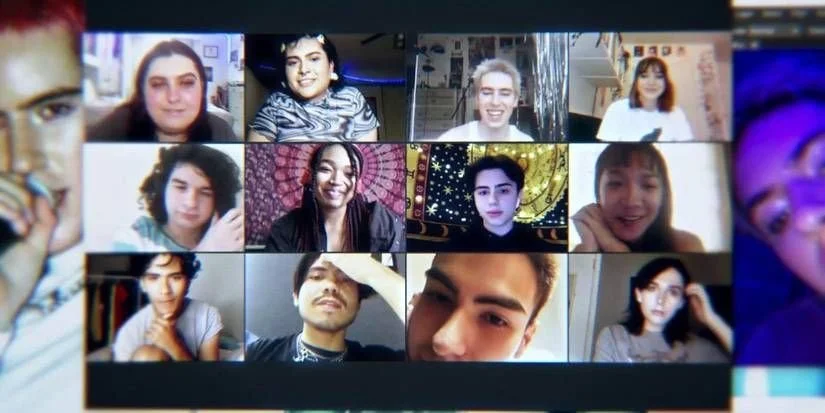
What the film does particularly well is resist romanticizing quarantine, without fully condemning it either. There’s a tenderness in watching Charli collaborate remotely, trying to manufacture closeness through creativity. When she admits it feels “strange to be this connected and this alone,” it mirrors the emotional paradox of that time perfectly. We were all together. We were all completely on our own.
Charli also opens up about her mental health in ways that feel unusually unguarded. She talks about starting therapy, about her father being adopted, and how that experience has shaped her sense of self.
“Anyone who experiences adoption experiences this feeling of unwantedness, deep within their core,” she says, explaining how that feeling can be passed down. She returns again and again to the idea of never being good enough: professionally, emotionally, personally.
This is what makes the documentary good. It isn’t perfect, and it’s not especially polished or completely visually appealing. At times, it feels gritty, rushed, and almost thrown together… but that rawness is exactly what gives it weight.
Alone Together doesn’t try to convince you it’s cool, or clever, or flawless; it just tries to be honest.
As both a consumer of art and an artist, that honesty feels rare. There’s always a quiet pressure to make something perfect, to create for others, to be palatable, impressive, worthy of approval.
We want the things we love to be perceived as “interesting” or “cool.” But the truth is, perfection doesn’t exist. No matter how deeply you care about a project, someone will always dismiss it, misunderstand it, or pick it apart. Knowing that doesn’t make it easier, especially when your sense of self is tied to what you make.
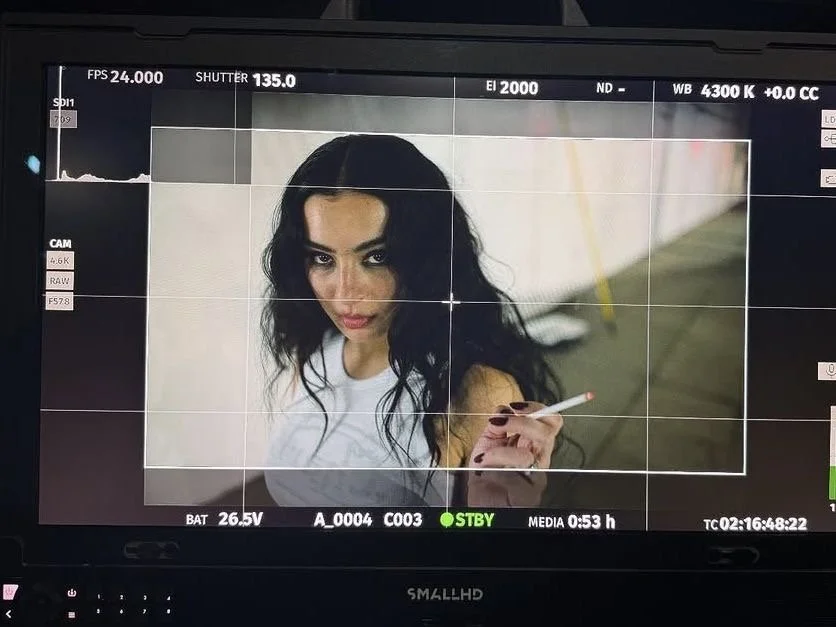
That’s why the most relatable moment in the entire documentary comes when Charli talks about her self-image.
She admits, “I’ve got serious issues with the way I handle my work and the way I depend on work to make me feel like I’m a good person.” She goes on to say she doesn’t feel pretty enough, smart enough, interesting or funny enough to exist without it.
“I feel like my work, and everything around it is what makes me different,” she says. “Without it, I just feel like I’m nothing.”
It’s gut-wrenching because it’s familiar.
Sourced through Pinterest
There’s also something deeply intimate about how public this process is. Charli is acutely aware of the audience even when she’s alone—of fans watching, interpreting, consuming her vulnerability in real time. When she reflects that “everything feels so exposed,” the line lingers. Exposure has become synonymous with authenticity, but Alone Together quietly asks what that exposure actually costs.
Watching the film now, it’s impossible not to project ourselves onto it: our own isolation, our own attempts to define ourselves through productivity, our fear that if we stopped making, we might disappear.
Alone Together humanizes Charli by showing the cost of creation, the loneliness that can exist even amid constant collaboration, and the emotional labor of turning yourself into something consumable. In doing so, it mirrors a generation taught to be visible, productive, and self-aware at all times, even when we’re barely holding it together.
Arguably, this is why the documentary still lingers, because it captures the space before becoming—the uncertain stretch where you don’t yet know if what you’re making will matter, or if you will. In this, Charli shows us something far more intimate than success: what it looks like to keep going anyway.