Before He Was Anthony Bourdain, He Was 'Tony'
By Natalie McCarty
Before the best-selling books, the hit TV shows, and the voice that defined a generation—before Anthony Bourdain became Anthony Bourdain—there was the summer of 1975. In the picturesque beachside enclave of Provincetown, on Massachusetts’ idyllic Cape Cod, a lanky teenager from New Jersey discovers the first taste of the man he would become.
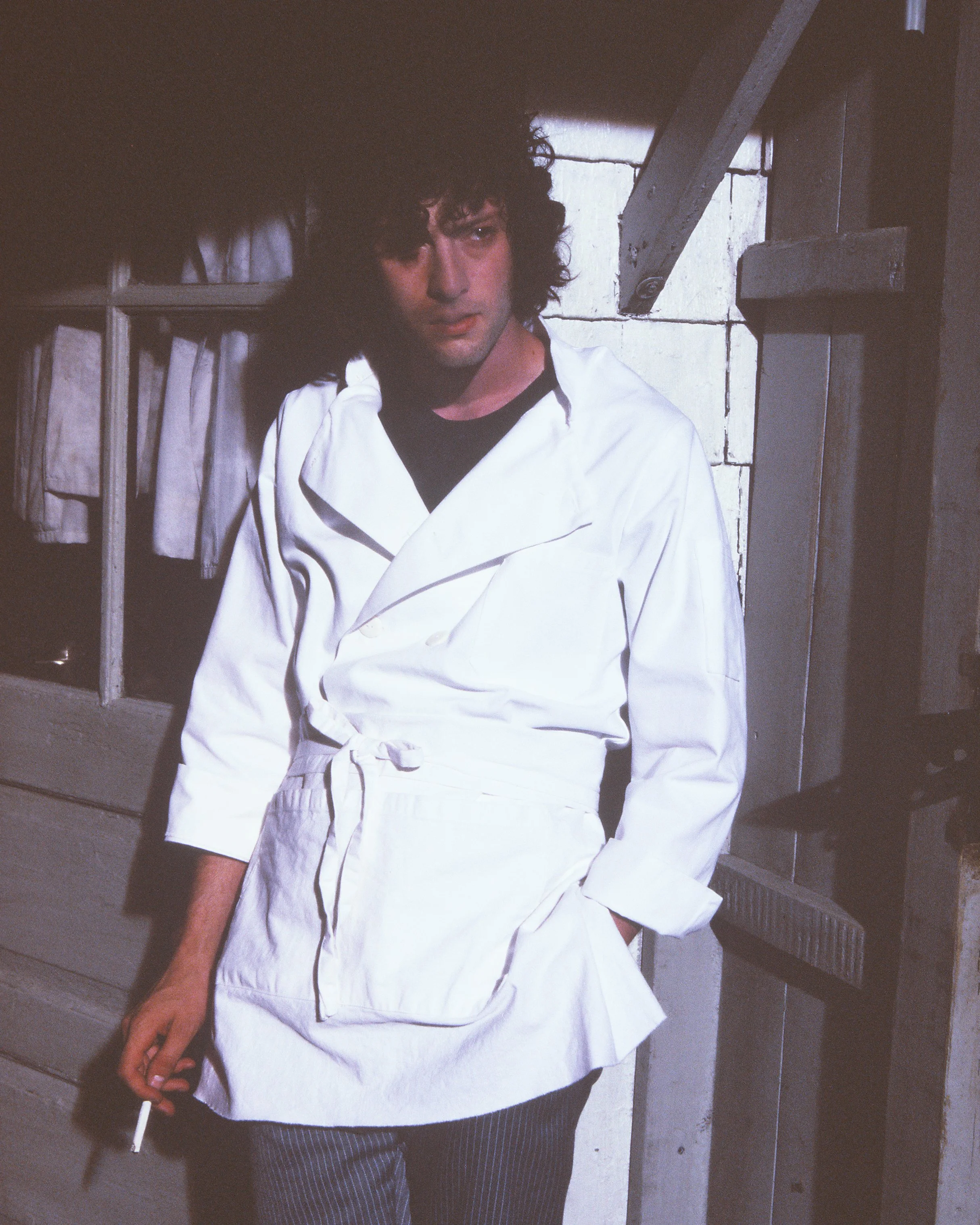
In Matthew Johnson’s Tony, a 19-year-old Anthony Bourdain travels to Provincetown and stumbles into the chaotic world of a restaurant kitchen, setting off a summer that will shape the course of his life.
Bob Gruen / A24
I have nine contacts in my phone right now, perfect assholes who were known to talk to anyone they could, who were gunning to play the role of Anthony Bourdain. All of them as perfectly plain as they are cock, and also in total lack of that certain je ne sais quoi that only Anthony had.
I am of the belief that Anthony Bourdain was single-handedly one of the most enlightened people there were. He, to me, led the perfect life. He achieved what I’ve only ever aspired to: full immersion in global culture, an understanding of the world. He risked it all, tried it all, gave everything to be embedded in the culture.
He didn’t just want to see a place; he wanted to know it intimately. He wanted to eat what people ate, drink what they drank, sit at their tables, listen to their stories. There was no real distance between Bourdain and the world. He threw himself into it.
But how did he get there? How did he become that?
In Tony, we see a version of him that he wrote about in his books or alluded to in Parts Unknown, but it’s a version of him that is not quite yet the Anthony Bourdain we know.
We know the man he becomes, which makes watching this version of him particularly interesting. This isn’t the worldly, assured Bourdain sitting across from someone in Hanoi or Buenos Aires asking them about their life. This is a kid who is still figuring out who the hell he is. He’s arrogant. He’s difficult. He’s selfish. He’s hungry for something he can’t quite articulate yet.
Tony opens with a quote from Kitchen Confidential: “I was — to be frank — a spoiled, miserable, narcissistic, self-destructive and thoughtless young lout, and badly in need of a good ass-kicking.”
And that is the Tony, not quite yet the Anthony, we see here depicted by Sessa.
There’s something about Dominic Sessa I’m particularly fond of. He’s got a demeanor about him that is a bit Bourdain-y. A middle offering and also downright charming. He’s brooding in this like the dark Bob Dylan days. I’ll accept this casting any day over my Silver Lake or Brooklyn lanky loser that drank fifty beers and tried Thai food one time and thought, gee, I should be Tony now.
Thank God the title was bestowed to none of them!

Seacia Pavao / A24
Sessa has the physicality of Bourdain down, and even his cadence to a point. It’s not an impression, exactly, but there are these little moments in the way he moves, talks, looks at someone, or delivers a line where you can see the man he will become. There’s this stand-offishness and openness and rawness about Sessa, coupled with a face that isn’t of this time but belonged maybe in Woodstock. He just has something about him that makes the casting work for me.
And importantly, he doesn’t seem to be trying too hard to be Bourdain. He gets that this is Tony. This is a kid in a state of becoming and long before the whole world knew his name. He’s a kid who is still figuring out what food and kitchens and this strange life he’s stumbled into might mean to him.
Of course, the kitchen is really the beginning of everything.
Bourdain’s relationship with food was never really just about food. It was his way into people. Into places. Into class and culture and the strange intimacy of sitting down with someone and eating what they eat. The kitchen is where he first gets thrown into that world—hierarchical, vulgar, obsessive, demanding—and watching him enter it as a kid, before he understands his identity in it, is one of the things I enjoyed most about the film.
There’s something almost funny about watching the origin story of someone whose entire worldview would eventually be built around getting as far inside a culture as possible. At this point, all he knows is just that he’s found something.
Bob Gruen / A24
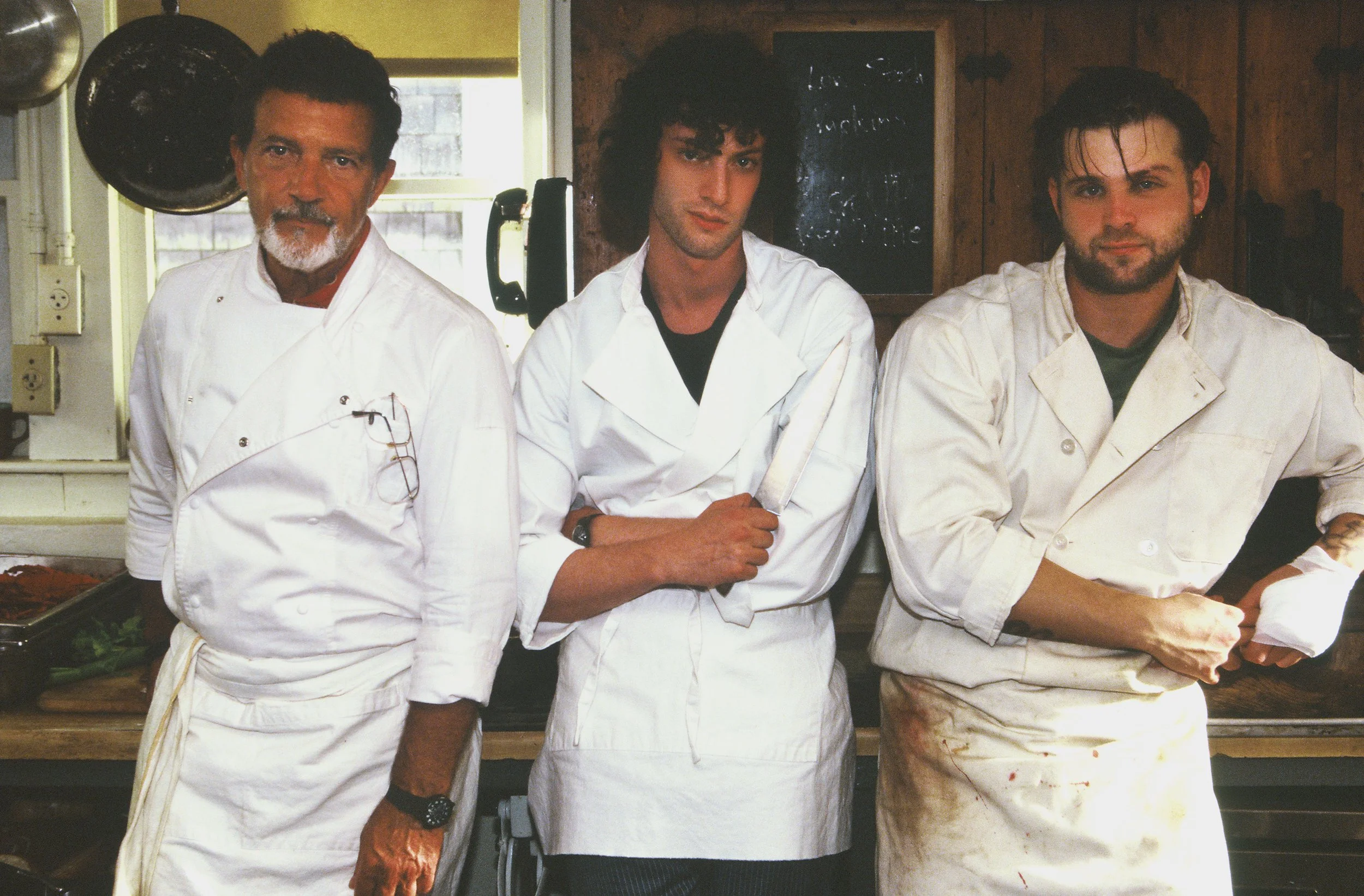
And then there’s Antonio Banderas, who is fucking incredible in this. Banderas needs more A24 collabs now (great in Babygirl, great in this). He’s really the standout star for me in this. There’s something so lived-in about what he’s doing here with Chef; he has that quality where you feel like he’s been in this world for thirty years before the movie even started. He doesn’t need to do much to command a scene, and I wouldn’t be mad at an Oscar nom for it.
Emilia Jones & Leo Woodall are really enjoyable in this film, really both very befitting. They fit naturally into this world and never feel like they’re simply there to service the Bourdain story.
What I like about Tony is that it doesn’t seem desperate to make him into the man we already know. It lets him be an asshole. It lets him be young and selfish and lost. It lets him be the “spoiled, miserable, narcissistic, self-destructive and thoughtless young lout” he described himself as.
We know where Anthony ends up, but Tony doesn’t. I quite liked that, that there’s a story in which we get to spend a little time with him before the rest of the world does.
Ultimately, I’m charmed by this movie. Me encanta.