Rebecca Gourlay on Finding Herself in Her Art
By Natalie McCarty
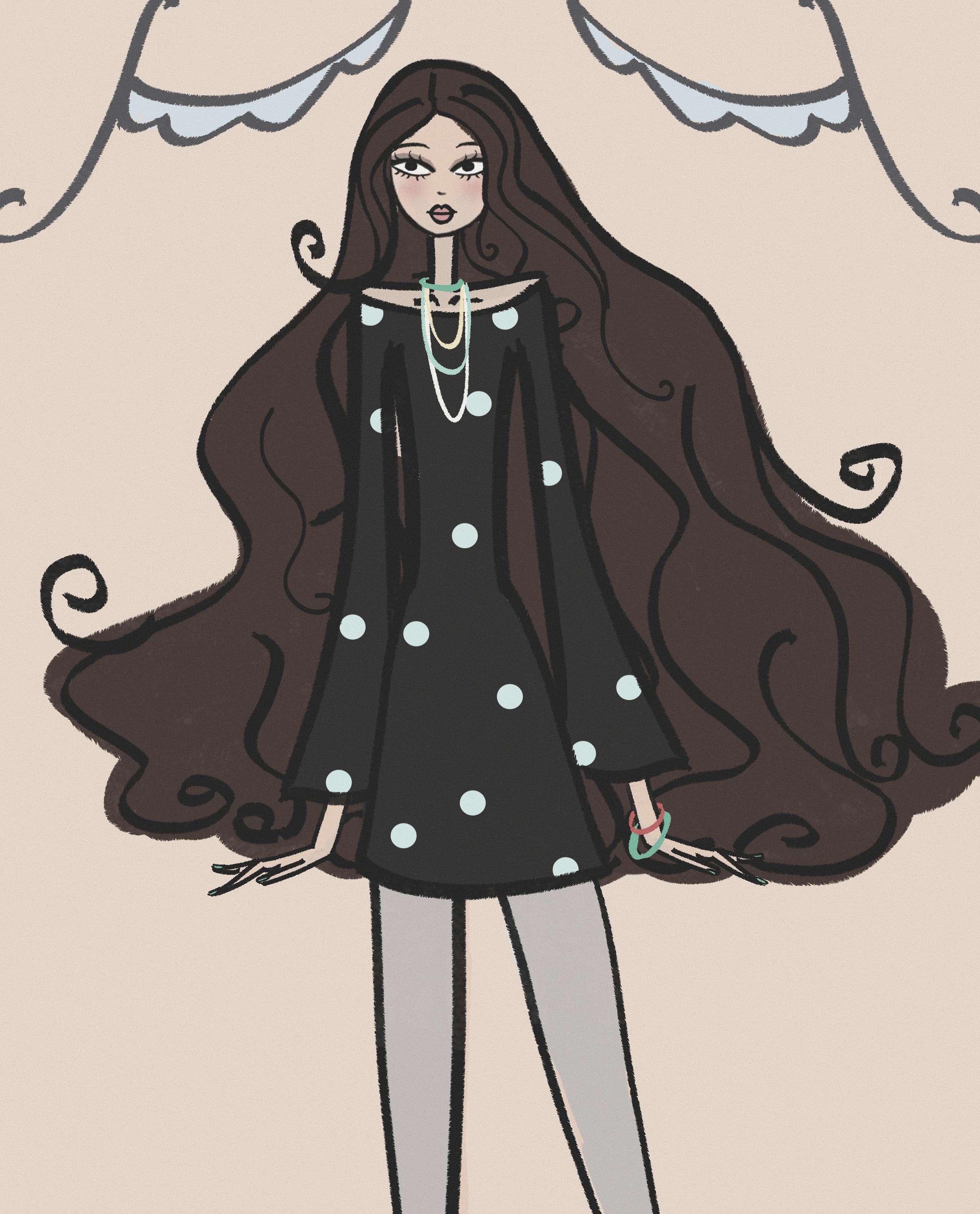
Rebecca Gourlay's girls always seem to have somewhere else to be. They appear dressed for a party, wandering through whimsical landscapes, caught somewhere between the glossy fantasy of a childhood dress-up game and the melancholy of an old painting. Her colors are beautiful. Her worlds are stranger than they first appear.
Gourlay, with her somehow perfectly apt artist name that sounds like it belongs alongside Rembrandt or Monet, is one of the most strikingly talented artists I've come across in the past decade. Her work is girly, chic, polished, and feels like the love child of a 1950s pin-up girl and a painterly palette of the great impressionists, filtered through a distinctly contemporary lens. It is instantly identifiable and unmistakably hers.
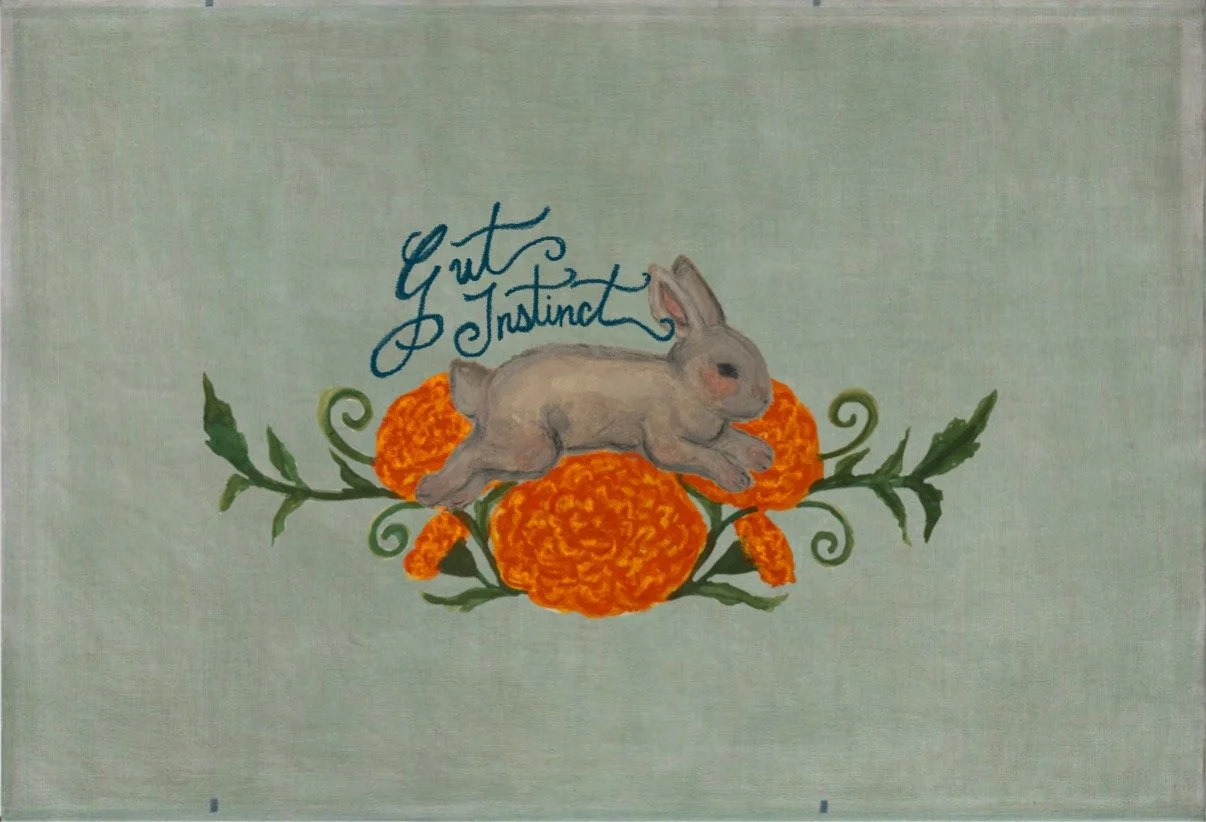
Rebecca Gourlay x Gut Instinct Media
Growing up in the south of England, Rebecca Gourlay was encouraged to draw from an early age. “I can’t remember a moment of my life where I didn’t want to draw!” she tells me. Her sketchbooks became private worlds, places where imagination was not something to be disciplined or explained.
“I was always encouraged to draw as a child and lived in my own little fairy world for most of my childhood. The worlds I created in my sketchbooks were where I felt the happiest and most like myself.”
She went on to study Illustration at Camberwell College of Arts, University of the Arts London, and later completed an MA in Illustration at Edinburgh College of Art. But somewhere along the way, that childhood certainty began to recede. “I lost some of that passion and magic as I got older and tried alternative career trajectories,” she says; however, it was studying Illustration at Edinburgh that finally cemented her decision to make art her life and career.
“It helped me realise the drive and focus I felt was missing in my life was right under my nose, and it was very much in the form of drawing.”
Now, drawing feels less like a career choice than a way of being for Gourlay. “I feel totally connected to my creativity now and embrace its significance within my day-to-day.”
“I truly believe drawing is my purpose in this life, and it brings me so much joy.”
Finding that sense of purpose, however, did not mean Gourlay immediately felt certain of her artistic identity. For years, she was “caught up on the notion of ‘style’ or of needing to have a niche… I think nowadays, especially everything must have a label or sit within an “aesthetic”, and it pained me that I couldn’t find my own,” said Gourlay.
Eventually, she stopped looking for it and instead went back to her first sources of inspiration through her childhood sketchbooks. “At the start of last year, I just gave up and decided to draw whatever I liked and experiment with new software, just letting go of needing any sense of perfection.”
What she found on the other side was not a new identity, but an old one. Gourlay’s approach to art had been forming since childhood through the peculiar little artifacts that become formative before we are old enough to call them influences: Bratz dolls, My Scene dress-up games, illustrated packaging, Bobbypin cosmetics bags, and, ultimately, Jeffrey Fulvimari, the artist behind Madonna's English Roses books.
“I was having a pretty big nostalgia moment back then and loved looking back at my sketchbooks from when I was younger.” The nostalgia brought her back to her love of drawing fashionable girls. In following that feeling, something in her head clicked, and everything changed for her art.
The work became more playful, but also more intimate. Gourlay was making something that felt like hers. There is this fantasy of getting to invent yourself through clothes, colors, and characters within her pieces.
“I began making work I found so much fun and which resonated with the little girl within myself.”
And other people began to recognize something in it, too. People online (myself included) connected with the world she had rediscovered, and Gourlay found herself building a community around a visual language she had originally returned to simply because she loved it–to which she shares she is “so grateful!”
There is a particular kind of girlhood running through Gourlay's work, one built around getting dressed up, looking beautiful, inventing characters and trying on different versions of yourself. Dress-up is one of the earliest forms of self-invention and also of fun. But more than that, Gourlay lets these beautiful, doll-like girls collide with things much older, stranger and more melancholy.
Her starting points are often deliberately ordinary. “I don’t really know what exactly I’m trying to express when I draw; it just kind of comes to me in the moment! Usually I’ll draw a quiet moment, something pretty but also mundane, and then make it feel a bit odd.”
The oddness is part of the pleasure. “I have always enjoyed creating strange dream worlds within my drawings, and I guess my animations and illustrations are little stories that live within that world.”
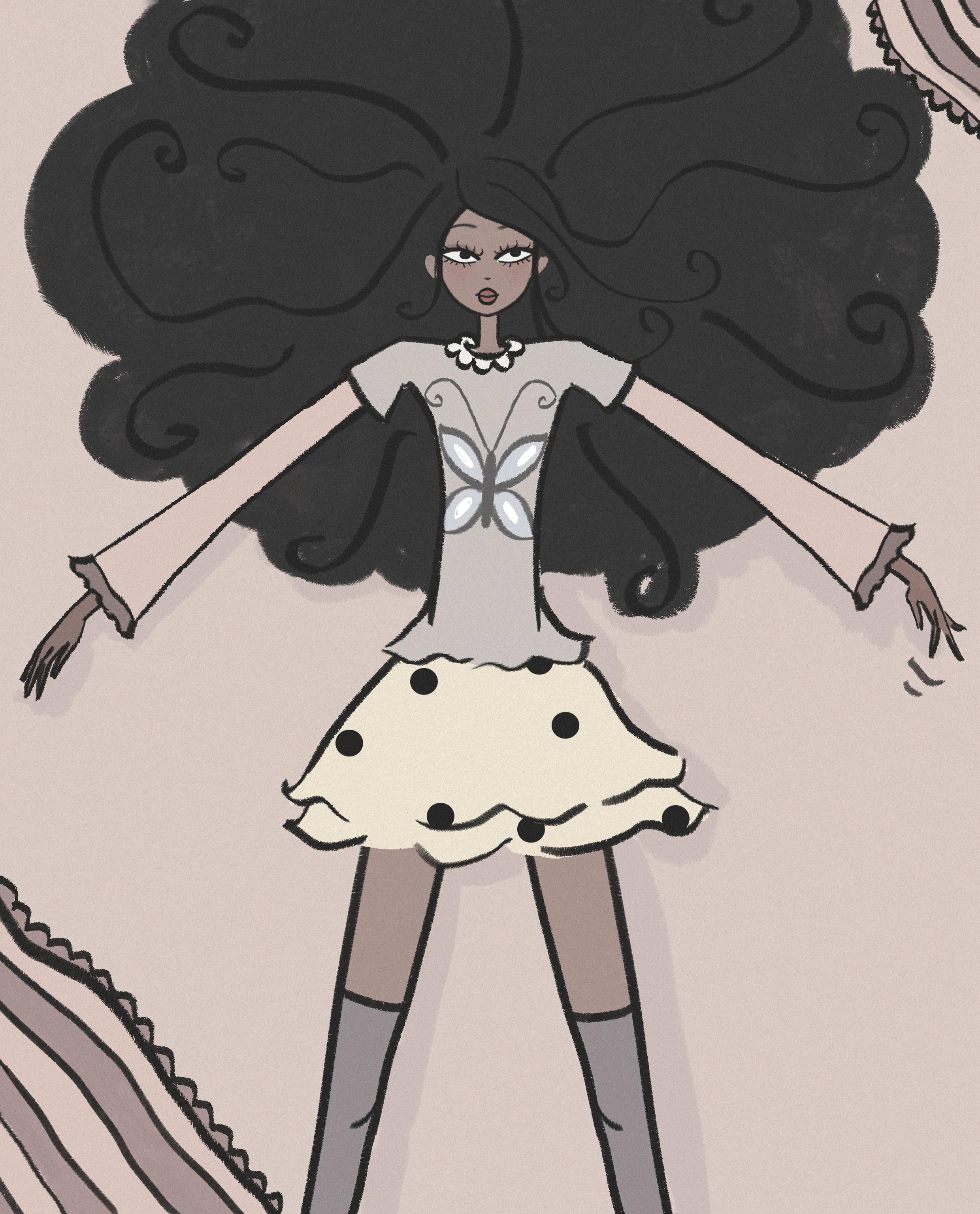
Her references stretch from pop culture to poetry, old paintings and natural landscapes. She became obsessed with Sylvia Plath and the Brontës. She is drawn to things that seem to belong to another time, things that feel displaced but somehow remain emotionally recognizable. “I enjoy things that feel pretty but sad at the same time, and poetic.”
“I like the sense of something being of a different time and feeling a bit out of place within the modern day, but still connecting to people now.”
Nature becomes another part of that visual vocabulary. Landscapes sit beside fashion girls and childhood characters, offering something less constructed and more ancient. A manufactured fantasy can exist beside the unpredictability of a landscape, just as a glossy girl can inhabit the same emotional universe as a Brontë heroine.
There is no neat formula connecting all of these things, or as she says, “It’s all a mishmash!” That ‘mishmash’ extends to the way Gourlay actually works. “I work very much on feeling and in the moment—I have ADHD and am not a planner whatsoever, so I very rarely will write down ideas to draw in the future.”
For a long time, she thought this meant she was doing something wrong. “I used to get very down on myself about this, feeling like I should be working in a much more regimented and structured way, but I’ve learnt my brain simply does not thrive when it’s expected to be linear.”
“My brain works like a root growing into lots of different areas.”
With one idea branching to another, client work naturally requires structure, but Gourlay has learned that structure does not have to extinguish instinct. “Working on client projects is different– there has to be structure, communication, organisation, and deadlines to work within, etc., but I still try to work with the flow of my imagination!”
It helps that she has begun finding collaborators who trust her process. “I am very lucky to have creative and open clients who trust me, and we work in tandem. It’s been so lovely.”
More than that, she has started encountering people whose minds seem to work in ways that feel familiar. “I feel like I am finding people whose brains work similarly to mine, which was never the case when I was at school or in past work environments, so it’s been a very transformative time for me! And one of acceptance of myself and my mind. I am very aware of how lucky I am to feel this way.”
“Things seem to have a way of knowing where they want to go, and it’s nice when a client knows what they roughly want because then my imagination can begin to work backwards and think up all kinds of stories and ideas.”
She will daydream until a good enough idea emerges, particularly enjoying, as she puts it, “the patchwork-y nature of a project coming together.”
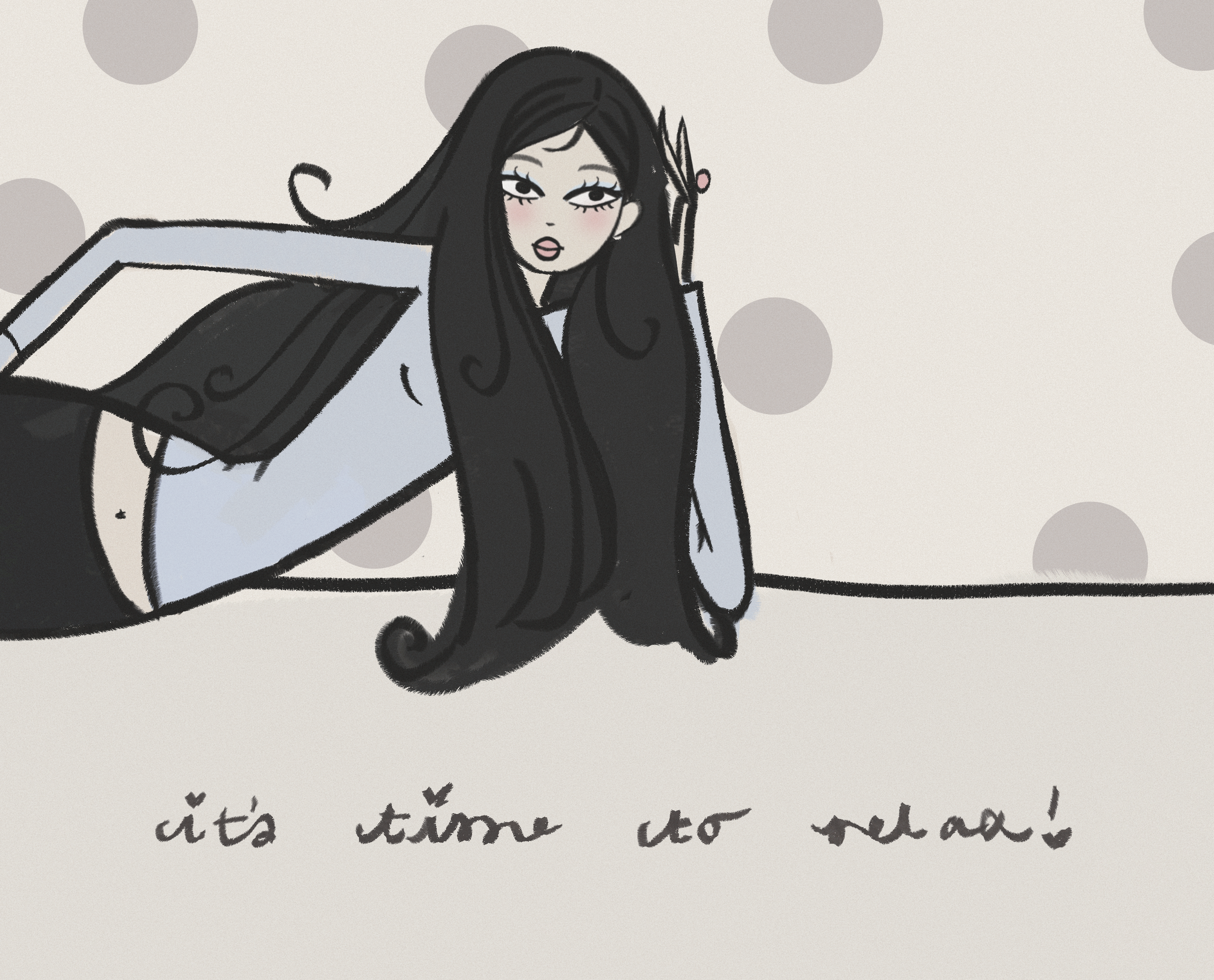
There is another kind of perfection Gourlay is suspicious of, and it has little to do with aesthetics. It is the synthetic perfection of AI, which she sees as fundamentally at odds with what makes art matter in the first place. For Gourlay, an artwork is inseparable from the person who made it, from the years of looking and learning, the private obsessions, the mistakes, the memories and everything else that accumulates along the way.
“Human art is an extension of the soul. AI has no soul; it has no heart. Human art comes from layers of experience, growth, pain, joy, love, loss, and, most importantly, from a unique mind that is totally one of one. It’s a curation of all the tiny little fragments of you, and nothing can ever recreate that.”
What bothers her is not simply the technology itself, but what happens when the difficulty of making art is treated as something to eliminate. “There is something so jarring and uncanny about AI “art”. The whole thing is completely pathetic to me. Art is meant to be difficult; it’s meant to take years upon years to craft and evolve. It is meant to be something you must dedicate yourself to, and learn over time.”
Her objection ultimately comes back to authorship and integrity. “Taking shortcuts will never create something meaningful and poetic, and you are most definitely not an artist to me if you think using AI to plagiarise real artwork and fob it off as your own is morally okay.”
And yet Gourlay has noticed something almost paradoxical happening in response to the technology. As AI-generated images become harder to distinguish from human work, people seem to be looking more deliberately for evidence of the human hand.
“As much of a stain upon the creative landscape AI has been, I do truly believe it has encouraged people to seek out the thoughtfulness of human-made art. There is a yearning for something someone has spent time on that doesn’t feel eerily “perfect”, and yes, most definitely there is a desire for connection.”
She sees the same hunger in music and books. “I find this with music and books too- the fact we have to triple-check if something has been made by an actual person is freaking everyone out.”
What people are looking for, she thinks, is personality. “There is so much sparkle and personality and mystique within human-made art.”
AI, by comparison, leaves her cold. “Everything feels so flat with anything AI-made. There is nothing cool about it, nothing exciting or vibrant. It’s just so basic and underwhelming.”
So much of what makes Gourlay’s work recognizable comes from accumulation: childhood drawings, Fulvimari, poetry, old paintings, natural landscapes, melancholy, fashion, daydreaming. Her work is not built from a single aesthetic or formulaic approach; it is built from a life lived.
Which makes her collaboration with Olivia Rodrigo feel even more personal and expansive. Gourlay was approached by Rodrigo's creative team to create lyric videos, bringing her intensely personal visual language into a much larger cultural orbit. “It is something I doubt I’ll ever get over!”
She was struck by the team's genuine investment in the artists involved. “I was approached by Olivia’s creative team, and it was clear from the start they were all truly invested in us artists and genuinely excited at the notion of working with us. It was the coolest experience in the whole world–I’ll be endlessly grateful for it.”
Rodrigo's songwriting gave Gourlay a new kind of material. She had never made work directly in response to music or lyrics before, but the songs offered the same emotional fragments she already finds in poetry. “Olivia’s songwriting is so tender and beautiful–I’ve never made work in response to music or lyrics before, so it was a new experience for me and one I adored.”
Some details became almost physically attached to memory. “I cannot listen to ‘cigarette smoke’ without a punch of nostalgia and love in my gut!!”
Gourlay approached the songs almost like visual annotation, pulling out individual details and allowing them to expand into their own worlds. “Olivia’s storytelling is just so vibrant and full of meaning, and so I could pick so many details out and interpret them, make little worlds out of them—it was like when you read a poem or something and annotate it but with drawings! There was so much to find within the songs.”
The emotional territory was familiar, too. “Like I mentioned, I love when things feel pretty but have a sadness that darkens them, so this project was a dream come true.” But perhaps most importantly, the experience gave Gourlay another reason to trust her own instincts. “The team was also so wonderfully open to my ideas and encouraged me to trust my instincts–I have always been doubtful of myself, and the process helped me learn to be more sure of my way of seeing the world and how I respond to it.”
That seems to be the larger story of Gourlay's work now. The things she once thought belonged to another version of herself became source material. The lack of a defined aesthetic became freedom. The nonlinear mind she once thought needed correcting became part of the process. The seemingly unrelated pieces of her life began to reveal themselves as connected.
Her hope for the people encountering the work is wonderfully uncomplicated. “I would like it if people who see my work feel strange but comforted, and also think the colors I chose are pretty!”
And although Gourlay has spent years developing her practice, she does not feel particularly interested in pretending she has arrived. “Although I’ve been working on my practice for many years, I definitely feel I’m very much at the beginning of my career.”
There is excitement in that space of development: “It’s a very exciting space to be in, and I am energised by all the possibilities!”
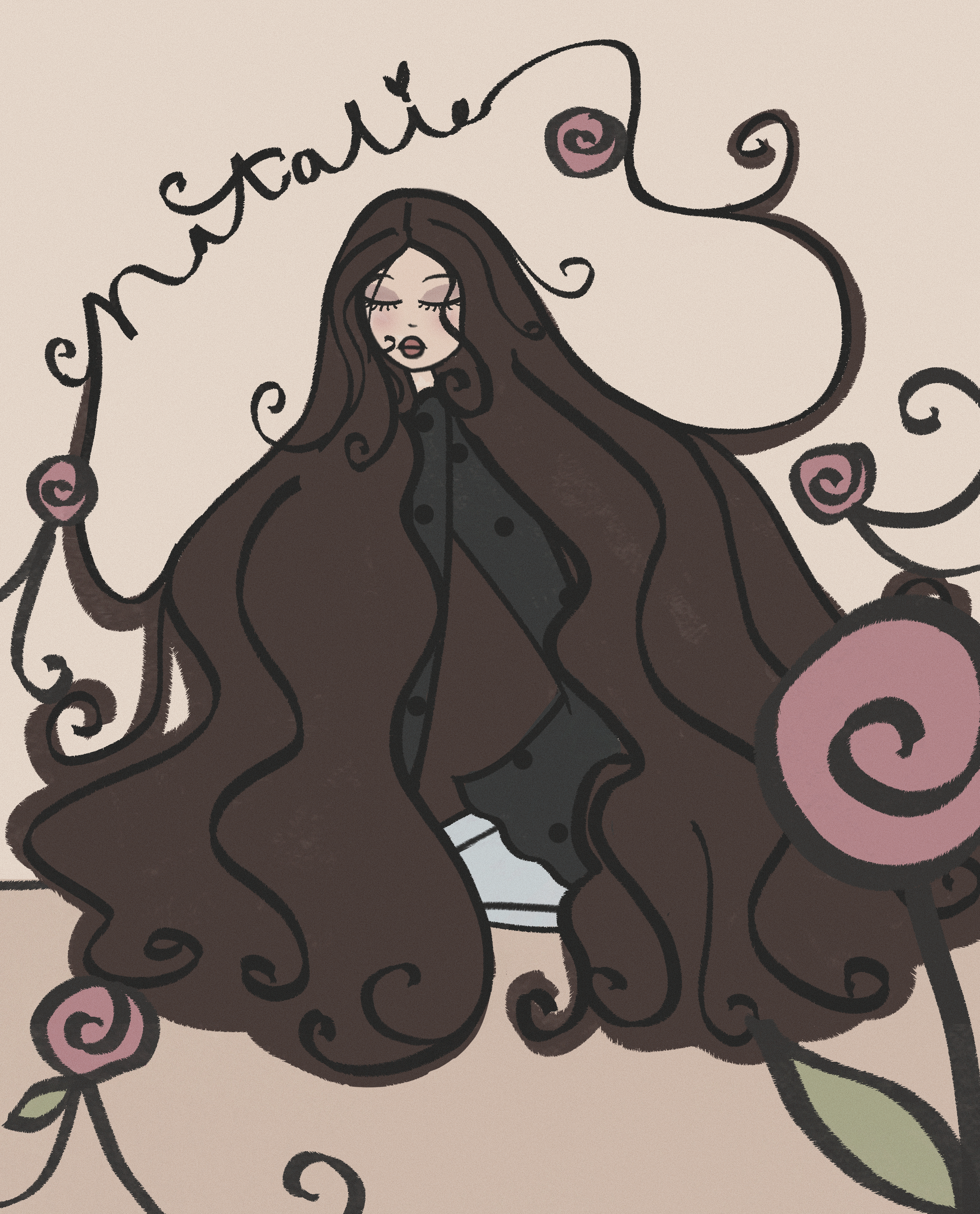
Rebecca Gourlay x Gut Instinct Media
She wants to keep meeting interesting people, experimenting and finding new ways into the work. “I would like to work with lots of different, interesting people and keep developing the ways I make art.”
As for what she might eventually leave behind, she would rather not think about it too much. “I tend not to think too much about what I might leave behind, (I get myself into an existential spiral), but perhaps I’ll know sometime… maybe we can talk again when I’m 70!”
For now, there is no need to know. There are still sketchbooks to fill, strange worlds to build, songs to annotate, landscapes to look at, old images to rediscover and new people to work with. There is still the freedom of not knowing exactly what comes next.
“For now, I’m excited to learn more, do more, see more and grow!”