Benito Bowl: A Halftime Love Letter to the Americas
By Julia Krys
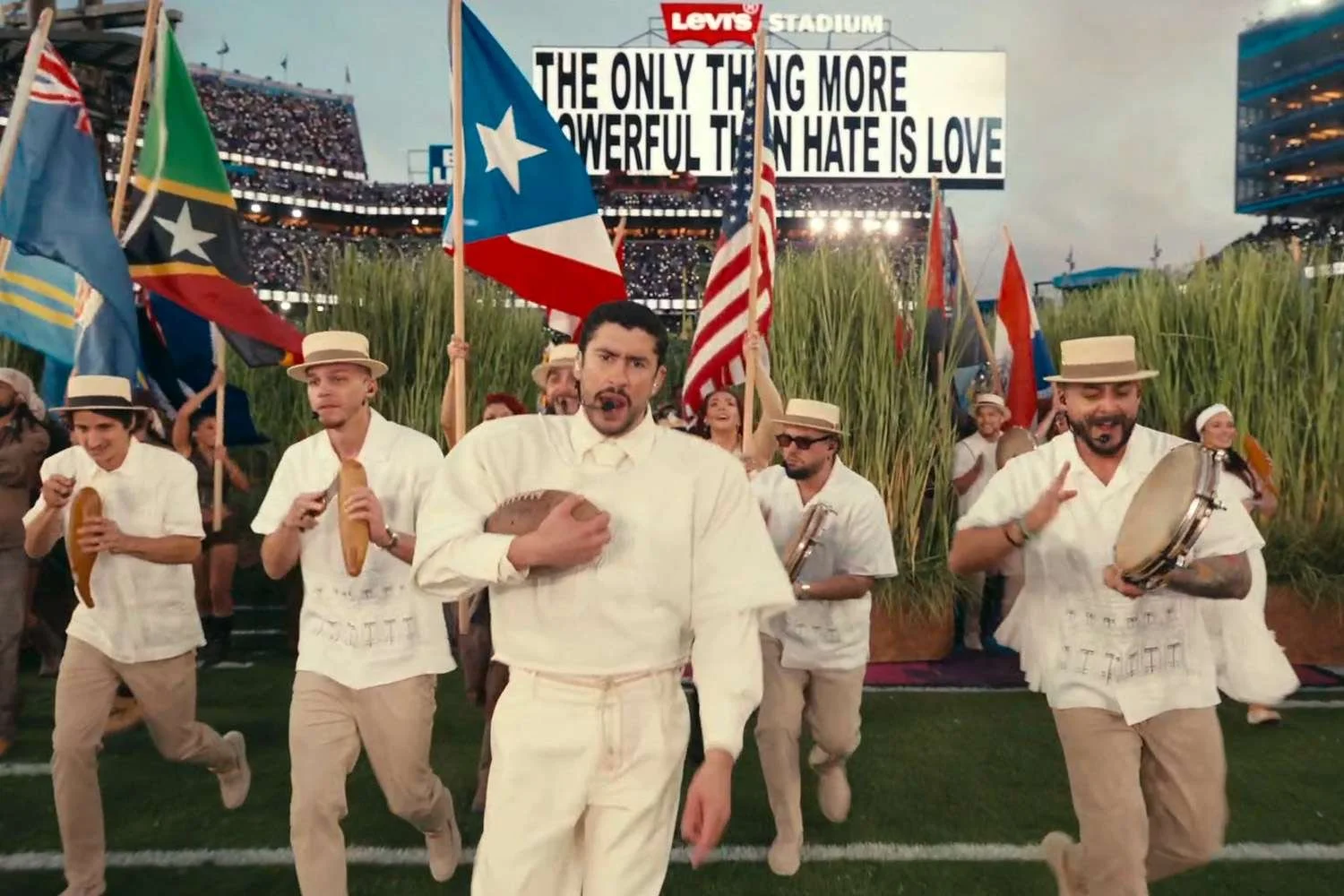
Bad Bunny Superbowl LX halftime performance. (Credit: NBC via People)
There has never been such a highly anticipated and politically divisive halftime show headliner as Bad Bunny for the 60th Super Bowl. The newly minted Grammy Album of the Year winner and Puerto Rican superstar Bad Bunny took the opportunity to foreshadow the themes featured in his halftime show a week prior during his Grammy acceptance speech (albeit more directly) when he proclaimed, “ICE out.” His lasting message, encouraging love over hate in trying times, was deeply underscored throughout his halftime performance.
In the week leading up to the show, politicians took to social media platforms to disavow this halftime performer, even encouraging alternative halftime programming: the Turning Point-endorsed All-American Halftime Show, which ultimately drew just 4% of the viewership that Bad Bunny’s official halftime performance commanded. This stands in stark contrast to how previous halftime performers have been publicly received, especially considering Latin performers are not new to the stage. The 2020 Super Bowl halftime show featured several Latin artists, including Jennifer Lopez, Shakira, and even a Bad Bunny cameo, and did not face this degree of backlash. Still, Bad Bunny was set to deliver a historic performance as the first primarily Spanish-speaking artist to headline the halftime show. Fans anticipated he’d speak no English at all, as he continued to spread the message that you don’t need to know Spanish to enjoy the performance.
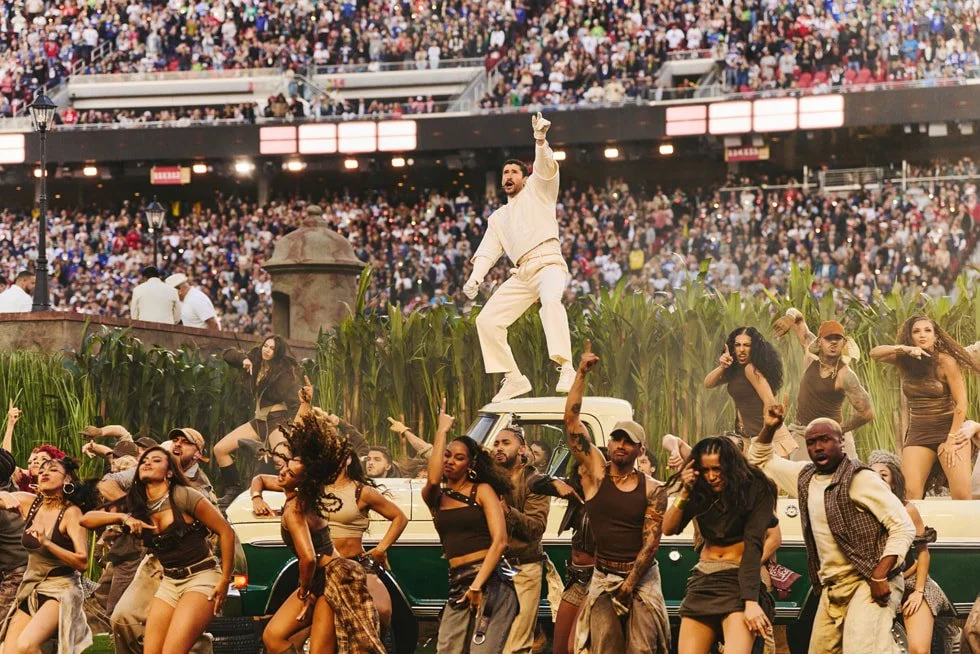
Bad Bunny’s Super Bowl LX Halftime Show performance. (Courtesy of Apple News)
Bad Bunny’s halftime show was immersed in a highly symbolic set that delivered multi-layered Puerto Rican cultural references. It unfolded with a scene accompanying each song, taking audiences through an emotional journey greater than the songs themselves. The show opened with Bad Bunny surrounded by sugar cane stalks and agricultural workers, a meaningful nod to Puerto Rico’s history. He proceeded to climb onto a power pole while singing “El Apagón” (“The Power Outage”), perhaps his most pointed critique of U.S. negligence toward its colony, as Puerto Rico experiences routine outages. Moments later, a tableau of a family watching Bad Bunny’s Grammy acceptance speech appeared, in which he gives his Grammy to a child. This heartening moment was meant to represent passing on inspiration to his younger self and to future generations. Here, Bad Bunny provided powerful, encouraging imagery that resonated deeply with audiences.
Next, Toñita, the iconic owner of the famed Caribbean Social Club in Williamsburg, NY, appeared as Bad Bunny sang “NUEVAYoL.” Here, Bad Bunny paid homage to the Caribbean population of New York City; he is also friends with Toñita and previously fundraised for her establishment through one of his albums. We were then taken to the roof of the midfield structure, where a wedding scene unfolded. Bad Bunny jokingly awoke a child sleeping on three chairs, a cultural inside joke within the Latin community that was translated for a national audience. After Bad Bunny officiated what viewers would later learn was an actual wedding, Lady Gaga appeared. She sang a salsa arrangement of her song “Die With a Smile,” marking the first English-speaking moment of the show, set against a backdrop of Latin beats. Social media quickly flooded with memes dubbing Lady Gaga Latin-influenced names like ‘Doña Gaga’. The wedding sequence introduced the performance's most powerful theme: love. The following cameo featured Ricky Martin in a recreated version of Bad Bunny’s DeBÍ TiRAR MáS FOToS album cover, with white plastic chairs set against a tropical scene.
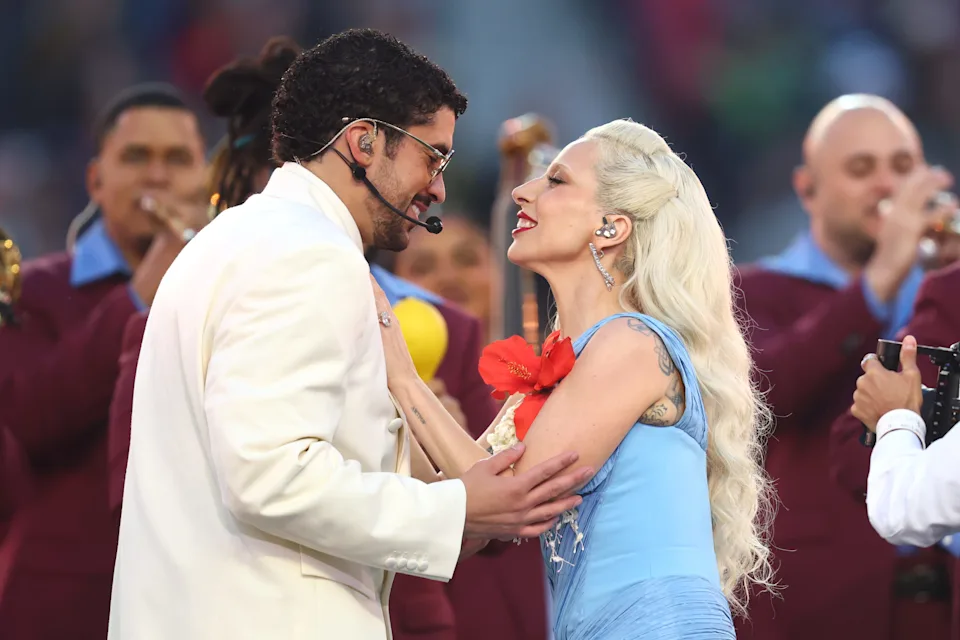
Bad Bunny and Lady Gaga perform a salsa-inspired "Die with a Smile" during his Super Bowl halftime show. (Courtesy of Yahoo! News)
The show’s emotional conclusion rallied around Bad Bunny shouting “God Bless America!”, followed by an exhaustive list of countries across the Americas over his latest award-winning album’s titular track “DtMF.” As he called the countries out, many nations’ flags trailed behind him, and a massive sign illuminated the words: “The only thing stronger than hate is love.” This moment served as a reminder that while the United States has laid claim to American identity, the Americas encompass a sprawling, multi-continental geography. Bad Bunny embraced these nations in a powerful display of unified global identity and, of course, love.
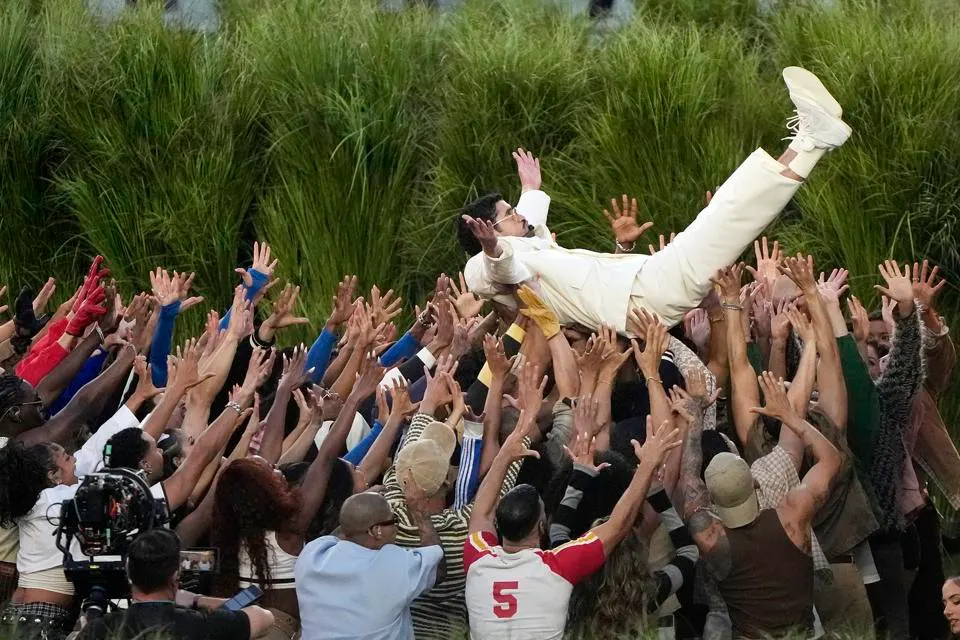
Bad Bunny performs onstage during the Halftime Show at Levi's Stadium. (Photo by Thearon W. Henderson/Getty Images via Forbes)
The halftime show delivered on bringing a party to millions of living rooms. Bad Bunny overachieved with production design and technically impressive, sophisticated camera angles, all of which are not always present in such a large-scale live setting. Although not all Americans understood the cultural references baked into his performance, he emphasized how music connects people even when you don’t understand the words. Most of all, in these politically trying times for the Latin community, love is more important than ever. It was appropriate for Bad Bunny to lace his performance with political undertones; ultimately, his music is inseparable from his national identity– one that remains deeply impacted by U.S. policy.