“Could AI Do This?”: How Artists are Channeling Imperfection
By Zoe CN Smith
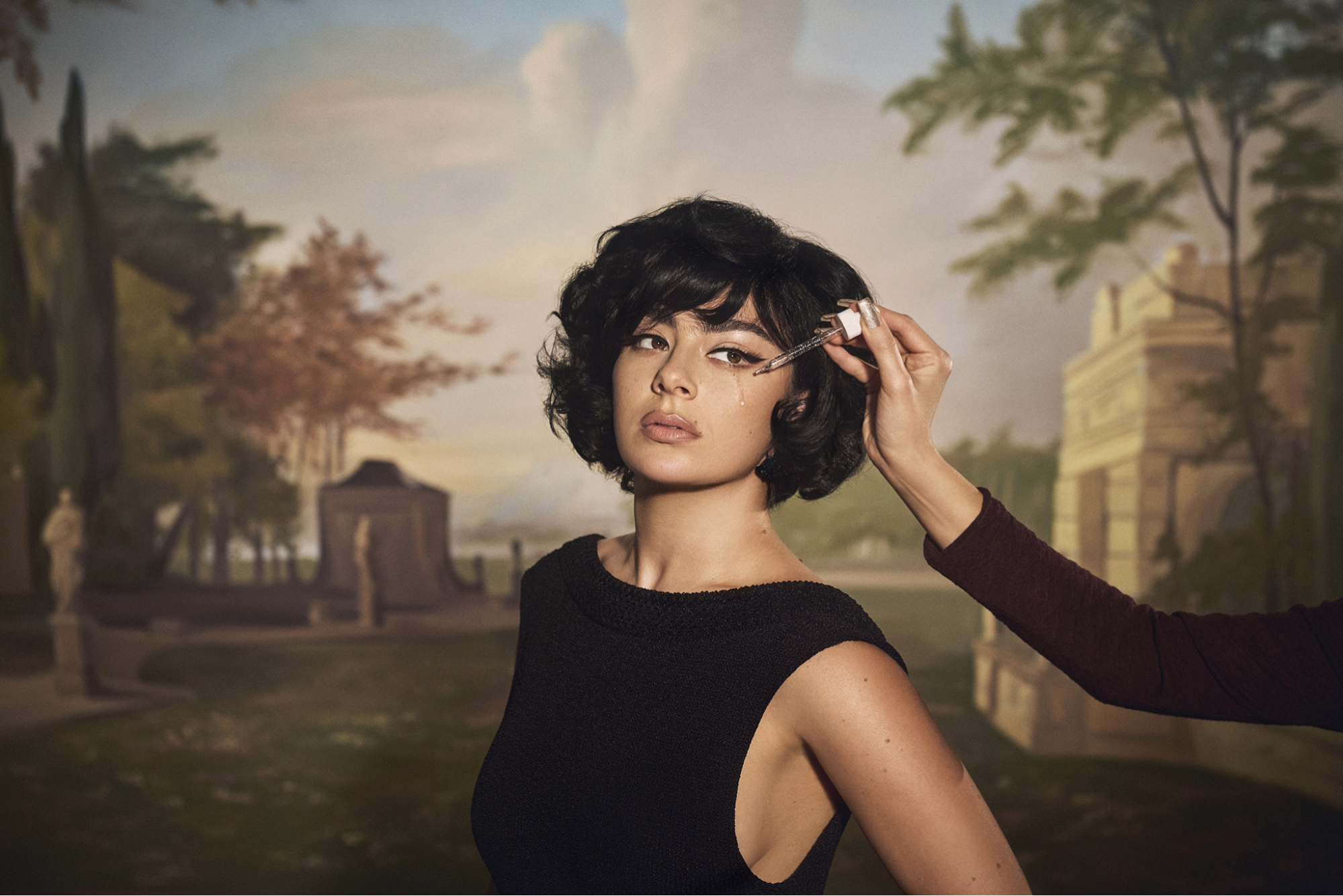
You wouldn’t know it, but everyone’s a literary critic now. Case in point: Charli xcx’s widely derided Substack posts last month, or more specifically, her entry titled ‘The Death of Cool’. Never mind the actual substance of the essay, users took to the internet mostly to talk about how much they disliked her writing, with some calling it ‘vapid’, and others gleefully pointing out she’d initially posted it ‘with a huge typo in the first couple of sentences’. It wasn’t unreadable, as some had dramatically commented. In fact, it felt like a consistent continuation of what she’d been producing lyrically. I was surprised anyone had expected anything else.
Courtesy of A Rabbit’s Foot
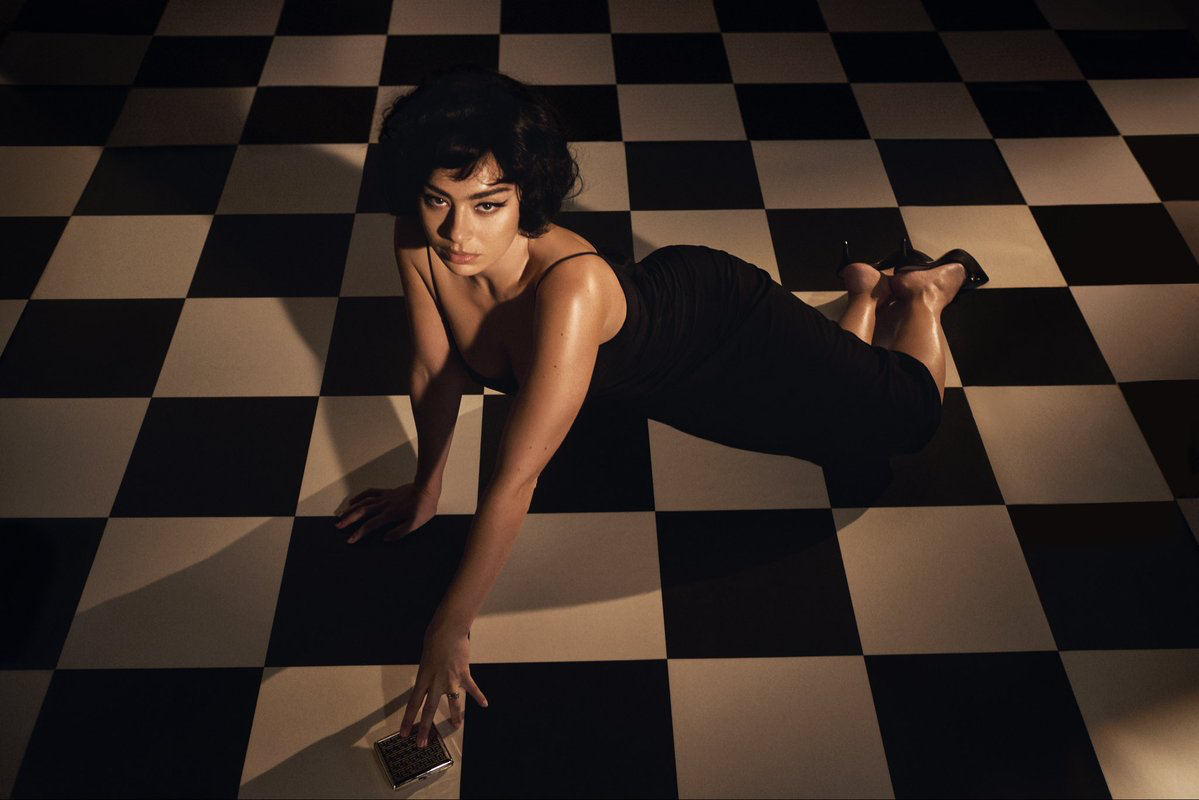
We’re talking about a singer who created an entire movement out of mess, rawness, and lower- case font. The artist who wrote ‘When I go to the club, I wanna hear those club classics, club classics, club, club classics’. Once upon a summer, we could recognize that her simple, superficial, repetitive lyrics were communicating an attitude above all else: the brash confidence of someone who literally couldn't care less. Were we now so traditional that we equated intellectual depth with an academic writing style? Why would a self-professed ‘365 party girl’ obey academic convention, let alone any form of grammatical rules? How ironic that our poster-girl for unapologetic imperfection was now being criticized for exactly that.
Whether it’s mispronunciations, typos, smudges, or improper grammar, flaws in creative execution have traditionally been interpreted as signs of carelessness. The assumption is that any artist truly dedicated to their craft would re-record over their errors, proofread their writing, or clean up their drawings. Much like overbearing parents, modern audiences have developed an inherent belief that the artists they support should always be aiming for perfection or polish— if not for themselves, for their fans. To me, this seems to be less about the specific execution (although clearly this matters) and more about fans receiving proof of a reciprocated feeling: a sign their artist makes an effort for them. In the face of increasing feelings of ownership, fans dress up parasocialism with terms like ‘accountability’ and ‘support’, and co-create their own narratives to exert more control over their artist’s creative decisions. Because an artist whose art doesn’t serve fan expectations is not only at risk of disappointing fans, they’re at risk of undermining perceptions of their capability altogether. Fandom has always been a cog in the cultural machine we call ‘brand’, except increasingly it seems like fans expect art to be delivered to them with a clear message and polished aesthetic.
Courtesy of A Rabbit’s Foot
This expectation is a relatively recent phenomenon. As Eugene Healey argues in ‘Friction: The Cure for A Society Bored to Death’, the widespread adoption of AI has significantly reduced the amount of friction we’re exposed to daily. By ‘friction’, Healey means ‘things that make the final outcome more difficult, or take longer’. After all, AI is a product designed to help us expend as little effort as possible. Personalised algorithmic churn means we no longer have to search for information we’re interested in. Faster wifi and systems mean less delayed gratification. ChatGPT can write out an answer for you in a maximum of a few seconds. Today, even waiting for something to load is a rarity.
And that’s ignoring the fact that it’s everywhere. Far beyond its initial usage to execute menial tasks or to accidentally create pictures of people with twenty fingers, we’re now firmly in an era of AI ambience. Beloved platforms once positioned as havens from AI, like Pinterest, have been quietly turning over AI imagery for some time. AI is coming for our writing, padding out our entertainment, our music, and even our romantic partners. Everything about AI delivery is effortless and comprehensive, which is to say, it’s everything good art is not. This is why, when I saw a sarcastic comment on Charli’s essay, which said ‘At least we know it’s not AI’, I found myself thinking, well, yes, exactly. Well-written or not, the flaws and idiosyncrasies of Charli’s text are a refreshing proof of life amid the sea of AI cadences and ‘it’s not X, it’s Y’ sentence constructions. Set within this context, her choice to use a stream of consciousness style is as deliberate as it is subversive, regardless of whether you like what she’s saying or how she’s saying it.
Courtesy of Hermès
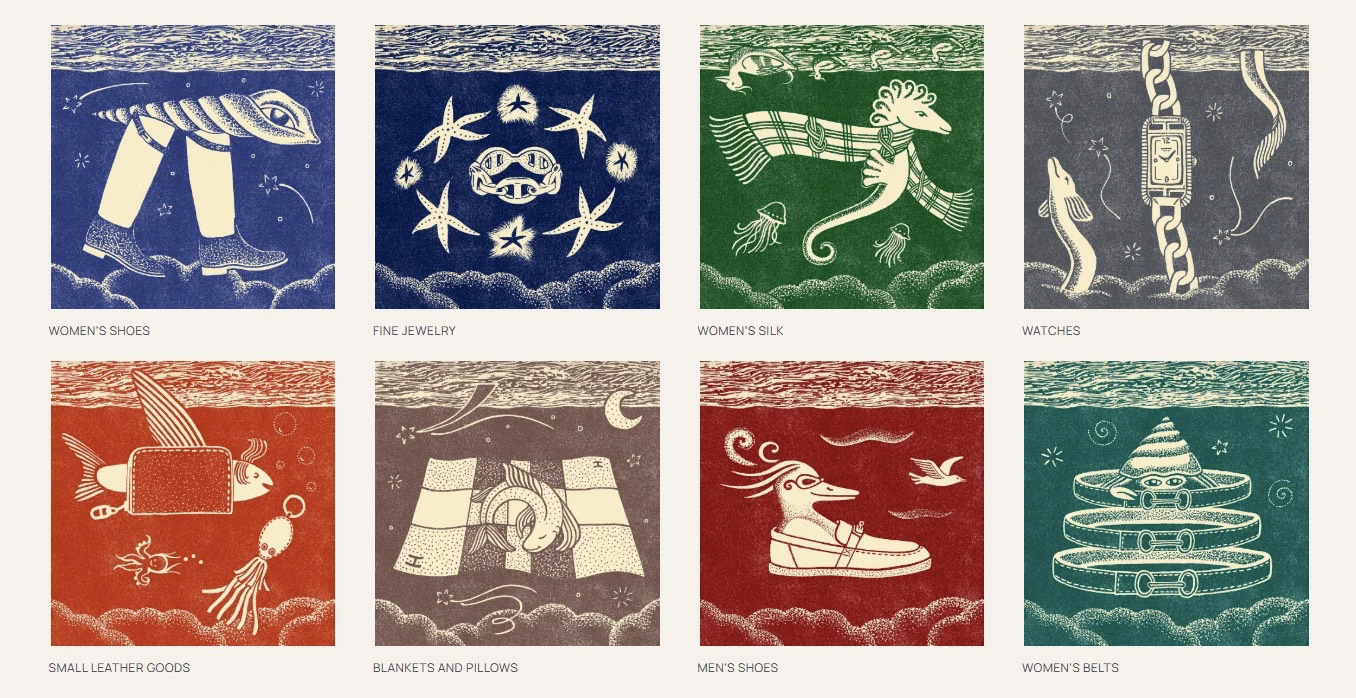
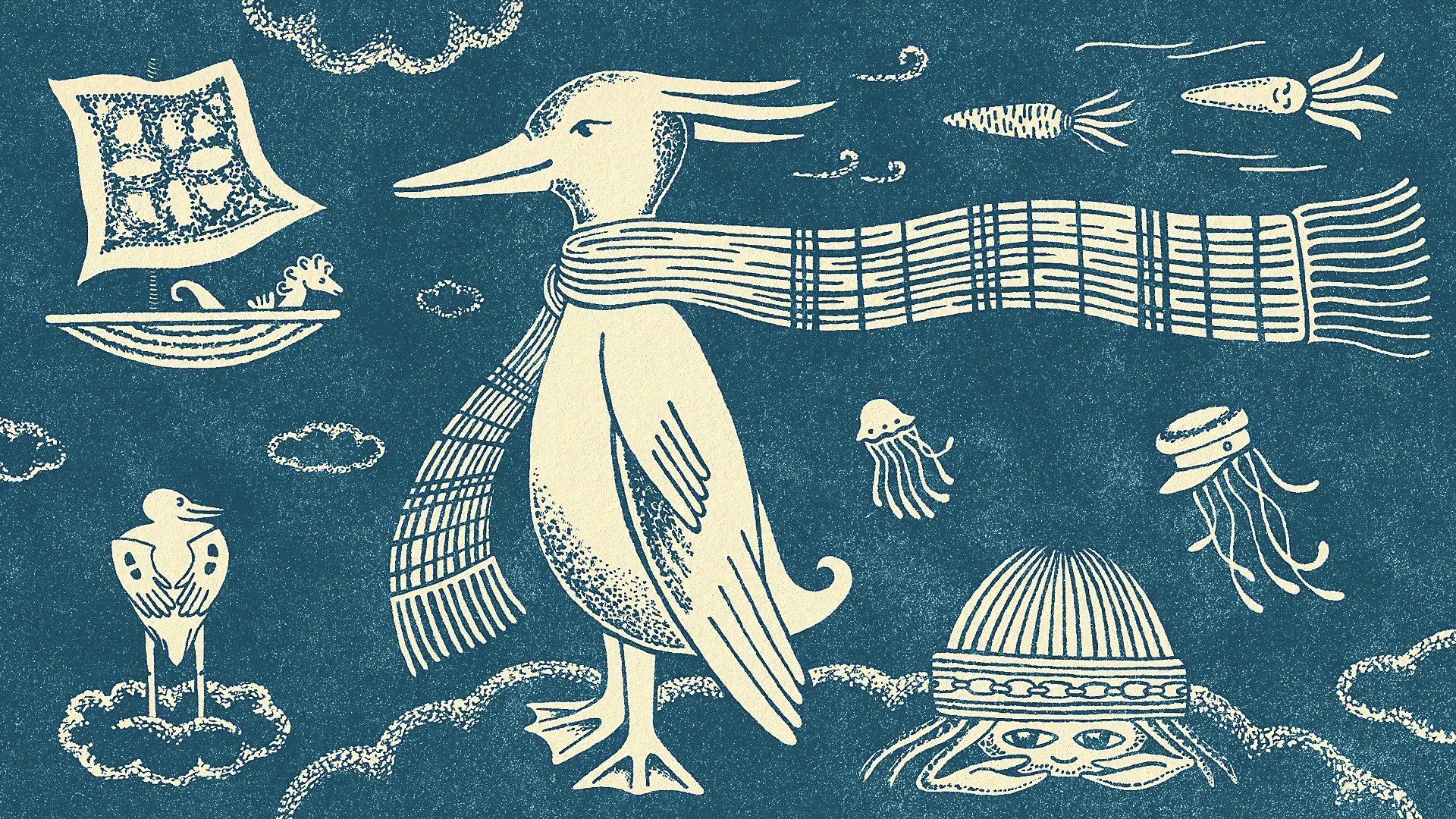
Charli’s not alone. In response to an AI-ified landscape, creatives are increasingly channelling imperfection and human craft in their art. In January, Hermès temporarily redesigned its website with hand-drawn illustrations by Lina Merad, which were then animated by Kit Klein for their ‘Venture Beyond’ digital campaign. Inspired by lithographic prints, each illustration depicted a different whimsical scene of sky, sea, and its creatures. Although digitally illustrated, each work possessed all the expected marks, scratches, and imperfections of the printing transfer process. This was a pointed aesthetic choice which positioned imperfection as a marker of status. The luxury industry has always championed craft and heritage as a means to justify high prices, but set against the ubiquity of polished AI productions, this approach takes on a new resonance. By drawing on signs of hand-crafted, physical media, Hermès tells us that in this digital age, the real luxury is effort.
Courtesy of Hermès
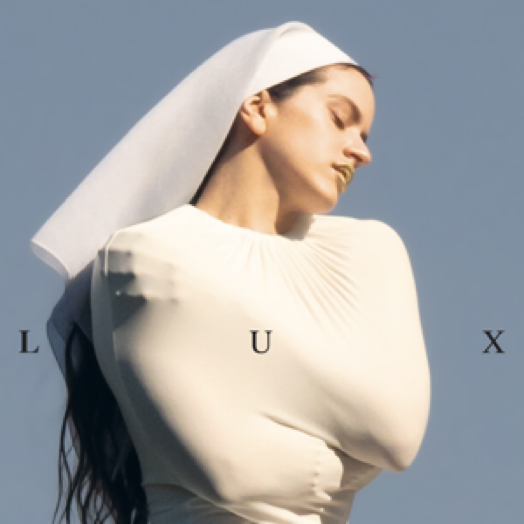
Meanwhile, in music, Rosalía leaned into imperfection and its possibilities in her album LUX by singing in 13 different languages. In striking contrast to the post-production AI usage on The Brutalist used to perfect Adrian Brody’s Hungarian accent, Rosalia sang without any external intervention, embracing all her linguistic imperfections. In an interview with El País, she stated: “AI is non-existent on this album. At one point, I had the thought: let’s take advantage of the fact that AI exists, let’s ask it to write a verse, and see how it goes. The result was terribly disappointing. AI is very interesting, but for now, this album is made by humans.”
Like Rosalía, we can acknowledge there’s an opportunity for thoughtful AI usage in the creative industry, but I don’t think we’re there yet. What AI is, like any kind of programme, is a tool. What it definitely isn’t, is a direct replacement for artists, writers, actors, craftspeople or any kind of creative. Speaking about her process, Rosalía stated, ‘I know my work will be imperfect because it’s human, and I accept that from the start’. In framing her decision to avoid AI through the idea of human limits, Rosalía not only deepens her album’s broader themes of religion and the impossibility of communicating the experience of the divine, but also reminds us of its inverse, cautionary tale that nothing good will come of people playing God. And if ongoing bets on the probability of ‘existentially catastrophic outcomes’ caused by AI are anything to go by, it’s time we accept it’s not going to save us, let alone be the sole creator of anything with true, human resonance.
Courtesy of Rosalía
In an era where we can churn out unfiltered AI and call it ‘content’, it’s become all too easy to forget that great art takes effort. Flaws and imperfections not only remind us that there’s a real person behind the things we often consume so thoughtlessly, but they also pave the way for ‘happy accidents’— inadvertent artistic features which can elevate a work from good to great. Mastery is now only a prompt away. Input enough instructions, and you too can generate digital art which would have taken you a year to perfect, or write a polished four-page essay about a book you didn’t read. You could even delegate your art criticism to another AI, and watch that AI give you feedback to improve your AI art in one huge repetitive cycle. But efficiency, convenience, and comprehensiveness were never what art was all about. Embrace imperfection. Dare to create something and risk failing. Challenge yourself to invest time and effort into what you love. By seeking out friction, you’ll learn something valuable about yourself and the world in the process. And in an automated age, it doesn’t get more human than that.