By Katherine Mulinga
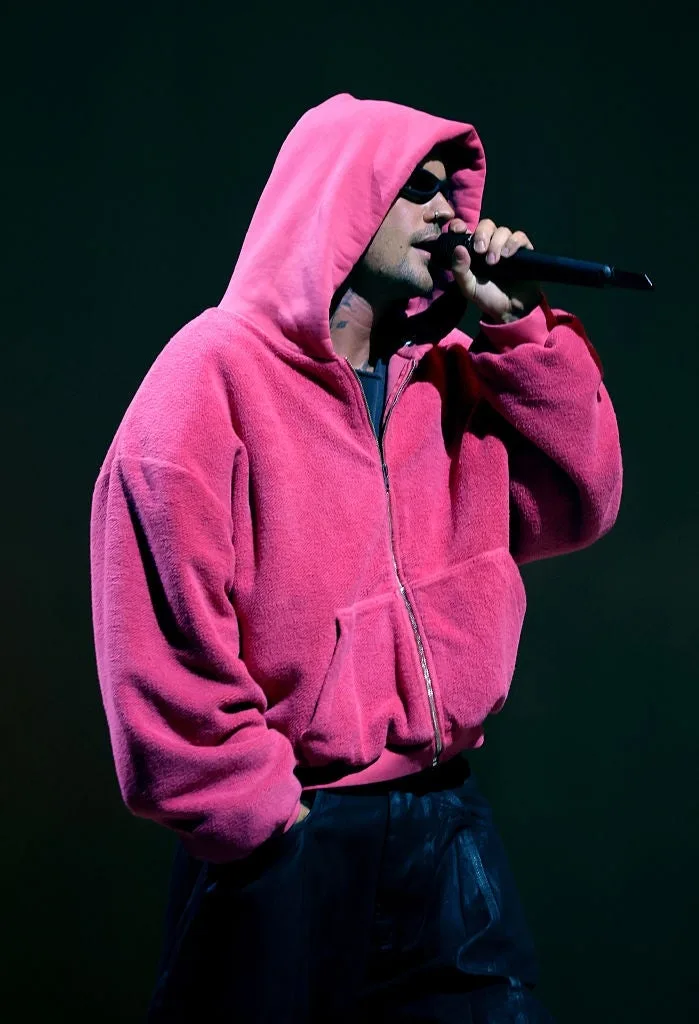
Justin Bieber’s Coachella 2026 performance was never meant to be a traditional headlining set. It was not built around spectacle, choreography, or the kind of polished perfection people often expect from festival history-making moments. Instead, it felt like something far more personal: a confrontation with memory, fame, and the version of himself the world exploited.
Courtesy of Coachella
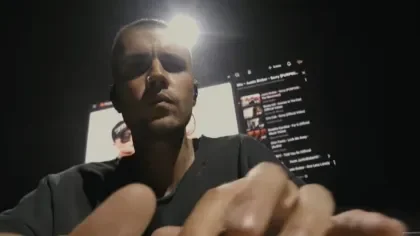
Across both Friday nights, Bieber delivered something far beyond a typical festival performance and well outside what most expected. He opened with songs from his Swag albums before shifting the tone entirely. Sitting behind a laptop, he pulled up old YouTube videos and sang alongside his younger self—the teenager the world first met on a staircase in Canada with nothing but a camera and a voice. The moment was not performative. It was reflective. Nostalgia was part of it, but the real weight came from watching him confront his past in real time and reclaim the narrative for himself.
The numbers that followed reflected the scale of the moment. Billboard reported that Bieber had his biggest streaming day of 2026 on Sunday, April 12, immediately after weekend one. Reports also confirmed he became the highest-paid Coachella artist in history, earning $10 million for the performance—surpassing previous headliners like Beyoncé, Lady Gaga, Ariana Grande, and The Weeknd. According to Vogue Business, he also drove the highest ticket demand the festival has ever seen, delivered the most Googled performance in Coachella history, and generated $5.04 million in merchandise sales through his brand Skylark during the first weekend alone. He also pulled in 24.6 million streams that day, his highest total since July 2025, according to Luminate.
Courtesy of Coachella
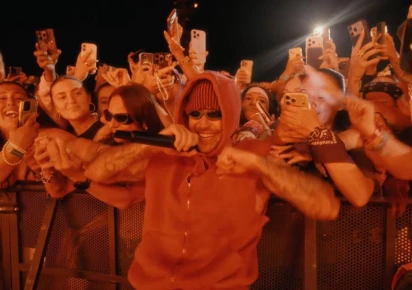
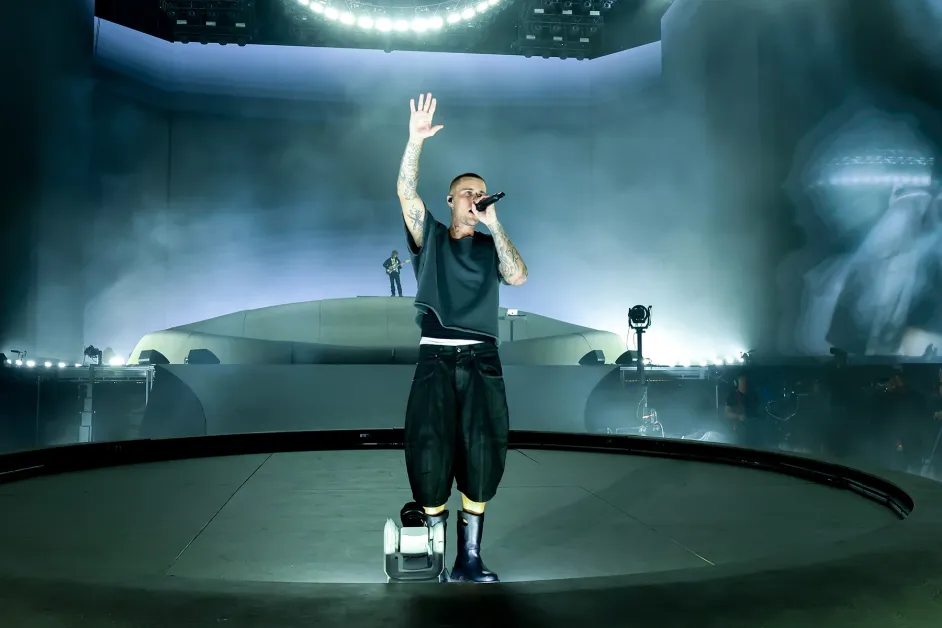
Across both weekends, Bieber treated the stage like a collaborative space. Weekend one featured appearances from The Kid Laroi early in the set, with Dijon, Tems, Wizkid, and Mk.gee closing out the night. Weekend two expanded the lineup with Sexyy Red, SZA, and Big Sean. One of the most talked about moments came when Billie Eilish joined him onstage for the iconic “One Less Lonely Girl” segment, a full-circle moment for longtime fans like her who once imagined themselves in that exact position.
After weekend one, backlash followed. Critics compared him to fellow headliner Sabrina Carpenter and past performers like Beyoncé, calling his act lazy in comparison… but fans saw something else. They saw an acknowledgment of years of pressure, a lack of privacy, and the extremes of global attention from a young age.
Much of the criticism came from people expecting the version of Bieber they met at 13. That version has been gone for years. He has spent much of his career trying to separate himself from the overproduced image that once defined him. His roots matter here. Bieber began on YouTube, the foundation of his career. His documentary Justin Bieber: Never Say Never opens with those early clips that introduced him to the world.
Seeing Bieber in 2026 means seeing him as he is now: a vocalist first, no longer spectacle built for approval. That shift is intentional. He gave audiences their childhood while sacrificing much of his own. There has not been another artist like him in the past twenty years, and there likely will not be again. At 16, he was already selling out arenas, including Madison Square Garden, in twenty-two minutes. Many artists never reach that level, even at their peak.
His history as an artist made his stripped-back performance land harder than anyone else could have pulled off. Sitting with a laptop, revisiting songs like “Baby” and “U Smile,” along with early covers that caught Scooter Braun’s attention, he recreated the feeling of early YouTube. Before algorithms, before curation, when discovery felt organic. This time, he controlled the narrative.
Some called it lazy, but fans saw something else: this performance was Justin's acknowledgment of years of pressure, a lack of privacy, and the extremes of global attention from a young age.
His Coachella set was so touching because he performed his songs the way we first found them—by sitting on our laptops, scrolling through YouTube.
Courtesy of Coachella
Bieber now has nearly two decades of music behind him at just 32. By 21, he already had a catalog good enough for a greatest hits tour if he wanted to do one. His impact is measurable in records and numbers, but also in cultural memory. He delivered one of the simplest yet most memorable Coachella performances of all time, even outside of Coachella talk. It will likely become a reference point in conversations about talent, artistry, and what fame actually means in an era shaped by fast, algorithm-pushed visibility. The performance pushed a clear idea: beyond the production and popularity, what lasts is voice and intention.
With everything happening in the world, there was something comforting about returning to that version of ourselves—the younger selves who found his music without knowing what the future would look like for him or for us.
Courtesy of Coachella
What comes next for Bieber (and Beliebers alike) remains uncertain. For many, a tour is in hopes (especially for those who not only missed Coachella, but also his canceled Justice tour). However, despite all his fans who’d love the chance to get their hands on any ticket for a show of his, a return to a quieter life is just as likely.
Either way, this moment captures an evolution not just of Justin Bieber, but of how audiences understand artistry and the humanity behind it all. At the end of the day, he was just a 13-year-old kid from Canada, sitting on the stairs and singing into a camera when it all began. Before the stadiums, the headlines, and the expectations, there was simply a boy who loved music, and that is worth remembering.