By Natalie McCarty
Provided by Courtney Klevenhagen
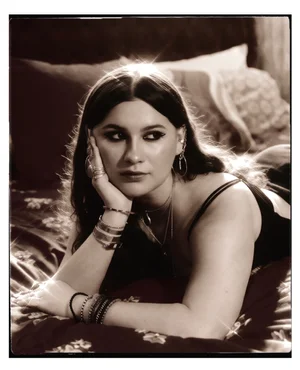
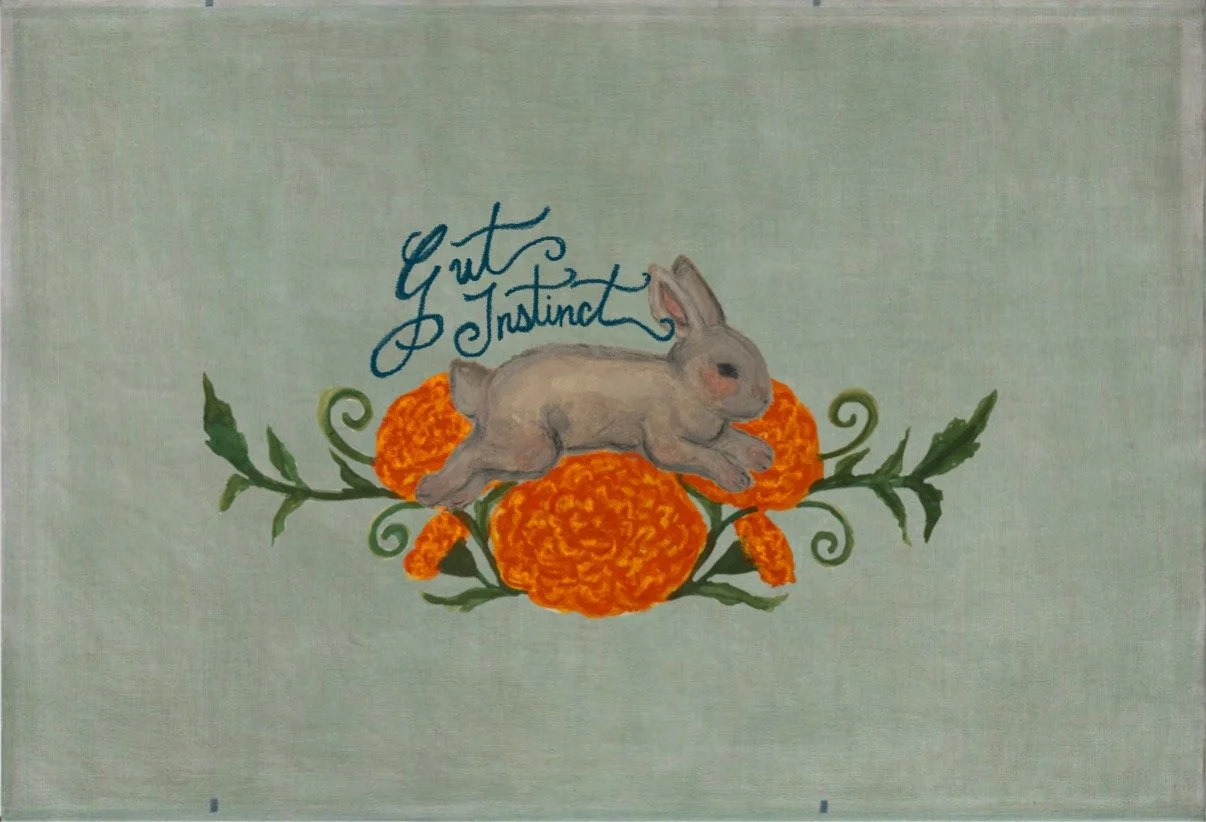
Courtney Klevenhagen didn’t arrive at design through a single turning point. It started earlier, in scattered forms—craft projects, sculptures, painting—long before anything felt like a discipline. “I grew up always loving crafts, sculptures, and all kinds of creative projects,” she says. By the time she was 11, she had already taken part in a studio show with friends, though pursuing a path in the arts itself was never fully locked in for her. “I really enjoyed painting, but it never fully clicked for me in the right way.”
That clarity came later, however, in high school through introductory graphic design classes. The shift wasn’t dramatic, but it was decisive. “I quickly realized my love for digital art/design.” From there, she built her practice independently, studying design in college but largely teaching herself through repetition and experimentation. “Digital design became my passion, and I basically taught myself everything I know.”
What followed wasn’t a fixed style so much as a moving target. Klevenhagen doesn’t describe a moment where her voice appeared fully formed. Instead, she talks about progression—different phases that never fully disappear. “I think my style is still evolving all the time,” she says. “It reflects where I’m at both mentally and creatively.” Even earlier work, which once felt definitive, now reads differently to her. “I don’t think there was one moment where it all clicked. It’s more like slowly building a language for the kinds of visuals and ideas that excite me.”
Music was the first real structure inside that language. Alternative artists like Superorganism and Terror Jr opened up a visual world that felt immediate and unfamiliar. “The music video for Something for Your M.I.N.D was the coolest thing I had ever seen,” she says. That relationship between sound and image stuck. “It’s almost always inspired by the vibe of an album,” she adds, even when no direct song reference is present.
As she moved deeper into design, inspiration shifted online toward independent designers building dense, unconventional visual identities. “Seeing people making really bold, awesome, weird work made me want to be doing the same thing,” she says. She also names a pull toward what she calls anti-culture aesthetics—work that feels unpredictable, even abrasive in its originality. Recently, film has entered that ecosystem, especially with Gregg Araki. “There’s this balance between humor, discomfort, and sincerity that really resonates with me.”
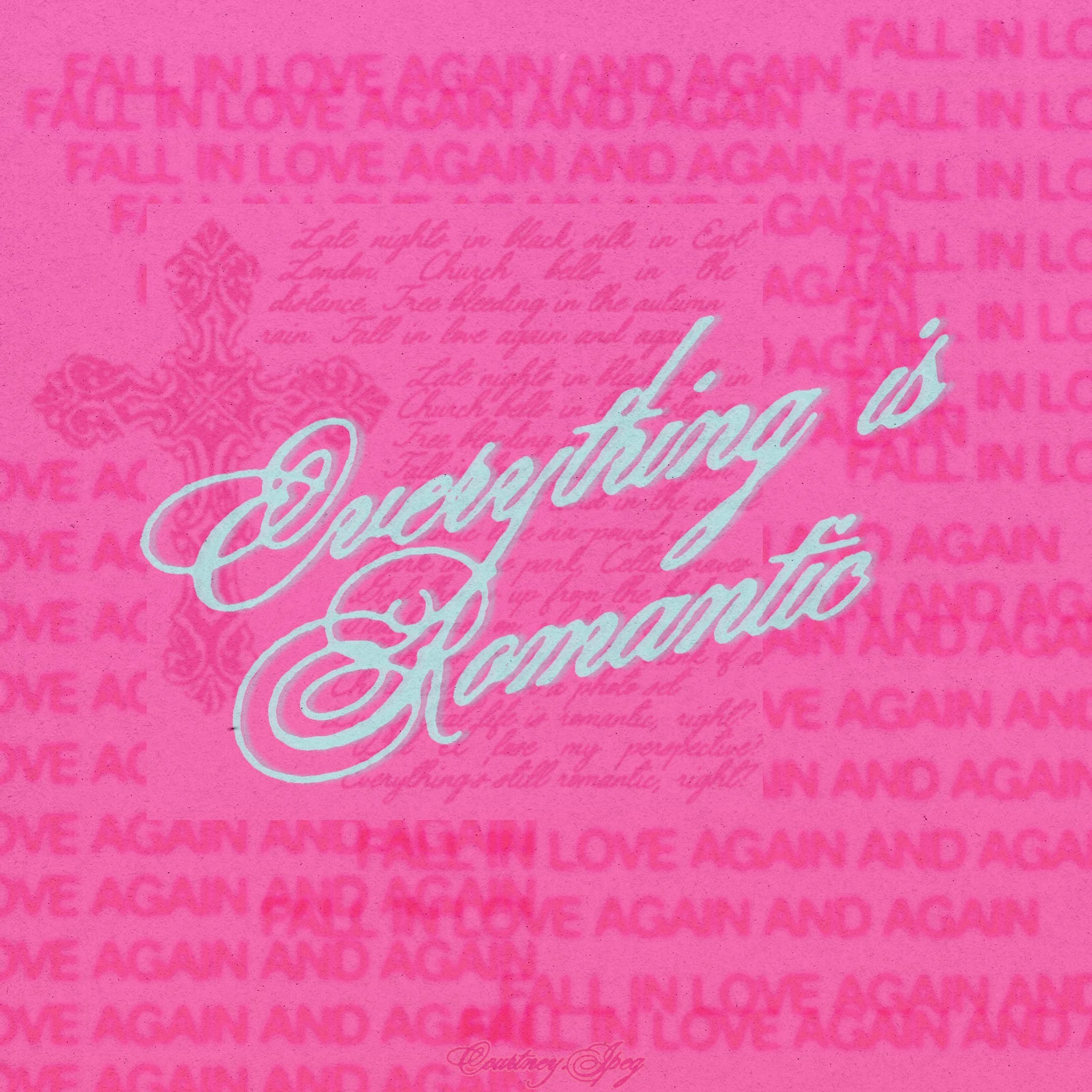
Her process mirrors that openness. Ideas usually start in fragments, such as notes, lyrics, isolated thoughts, and then become visual through trial and error. “I’m constantly writing down ideas in my notes whenever something sparks,” she says. From there, she builds by layering: color, typography, texture, images, and effects. “It’s honestly just messing around until something clicks,” she says. Most of her work is made in that space between intention and accident.
Provided by Courtney Klevenhagen
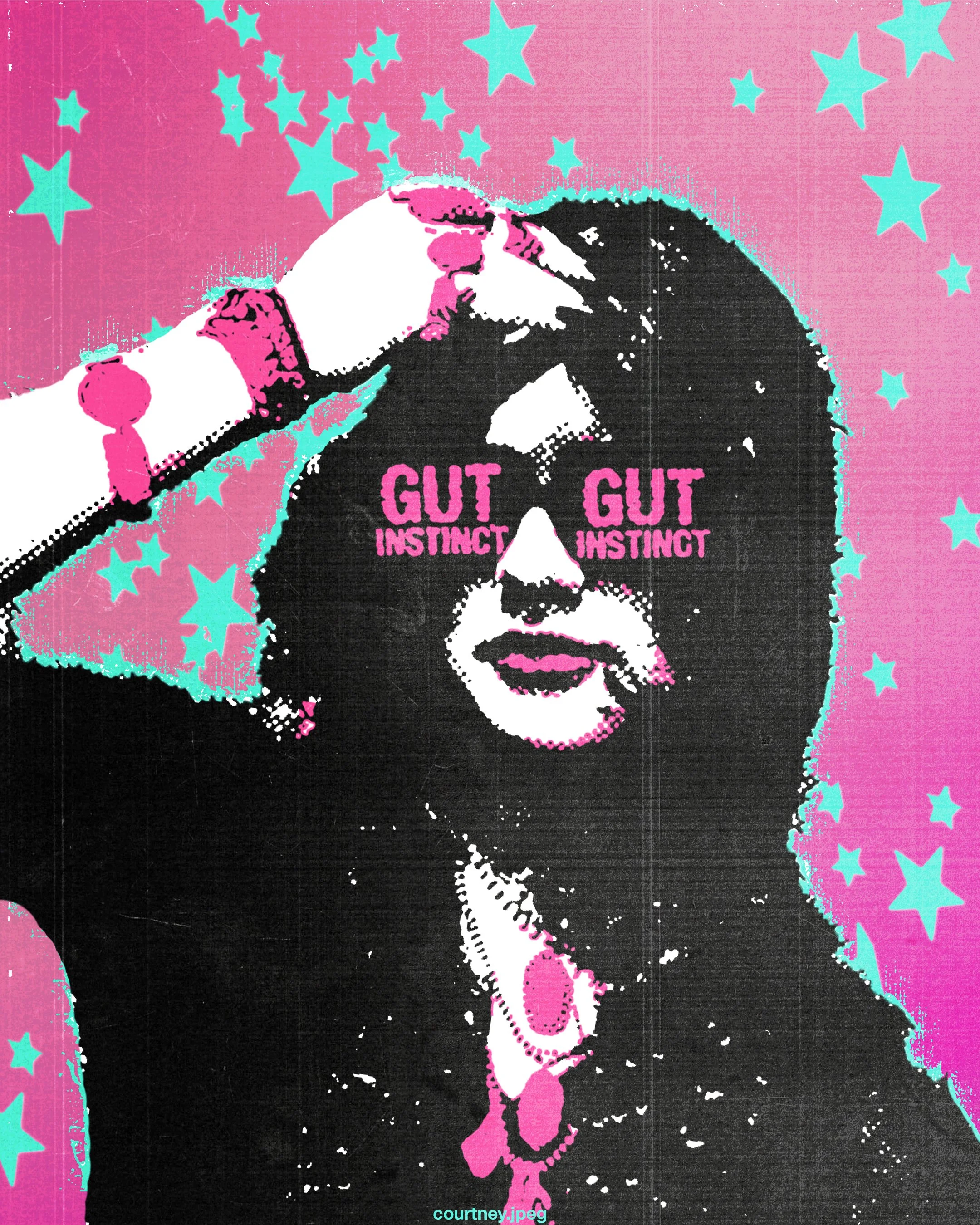
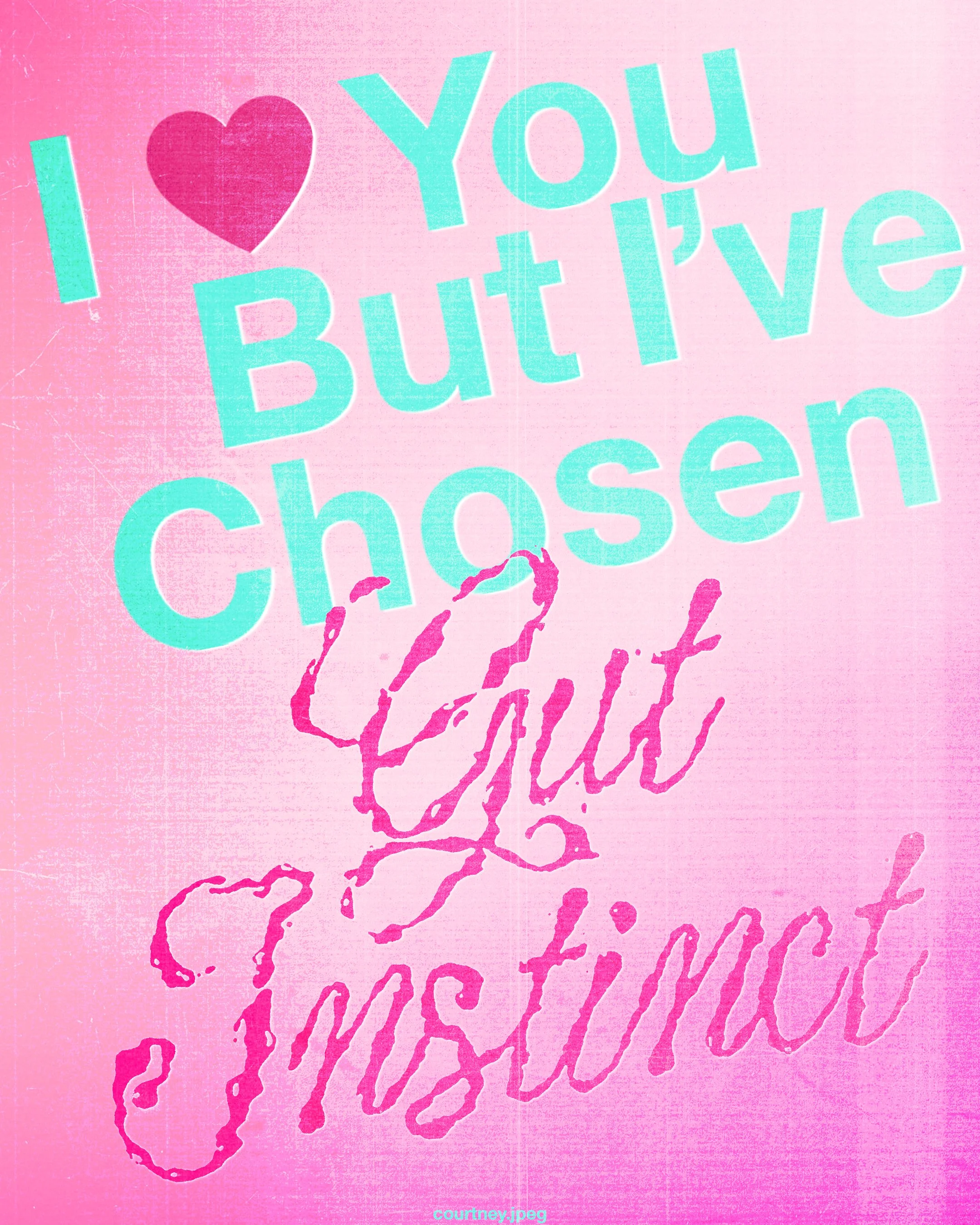
What she’s looking for in the final image is immediate impact. “I want someone to see something I made and have that immediate reaction of ‘omg, that’s sick,’” she says. But that first response is never the full point. Her work often sits in contrast—playful on the surface, more considered underneath. “It can feel messy or even a bit ridiculous at first, but there’s still intention and emotion behind it.”
Provided by Courtney Klevenhagen
That balance is also where she lands on meaning. Not as something declared, but something that emerges later, if at all. “At the end of the day, though, I really want people to think my art is fun,” she says. “I think there’s real value in something simply being fun and making you feel something in a more immediate, instinctive way.”
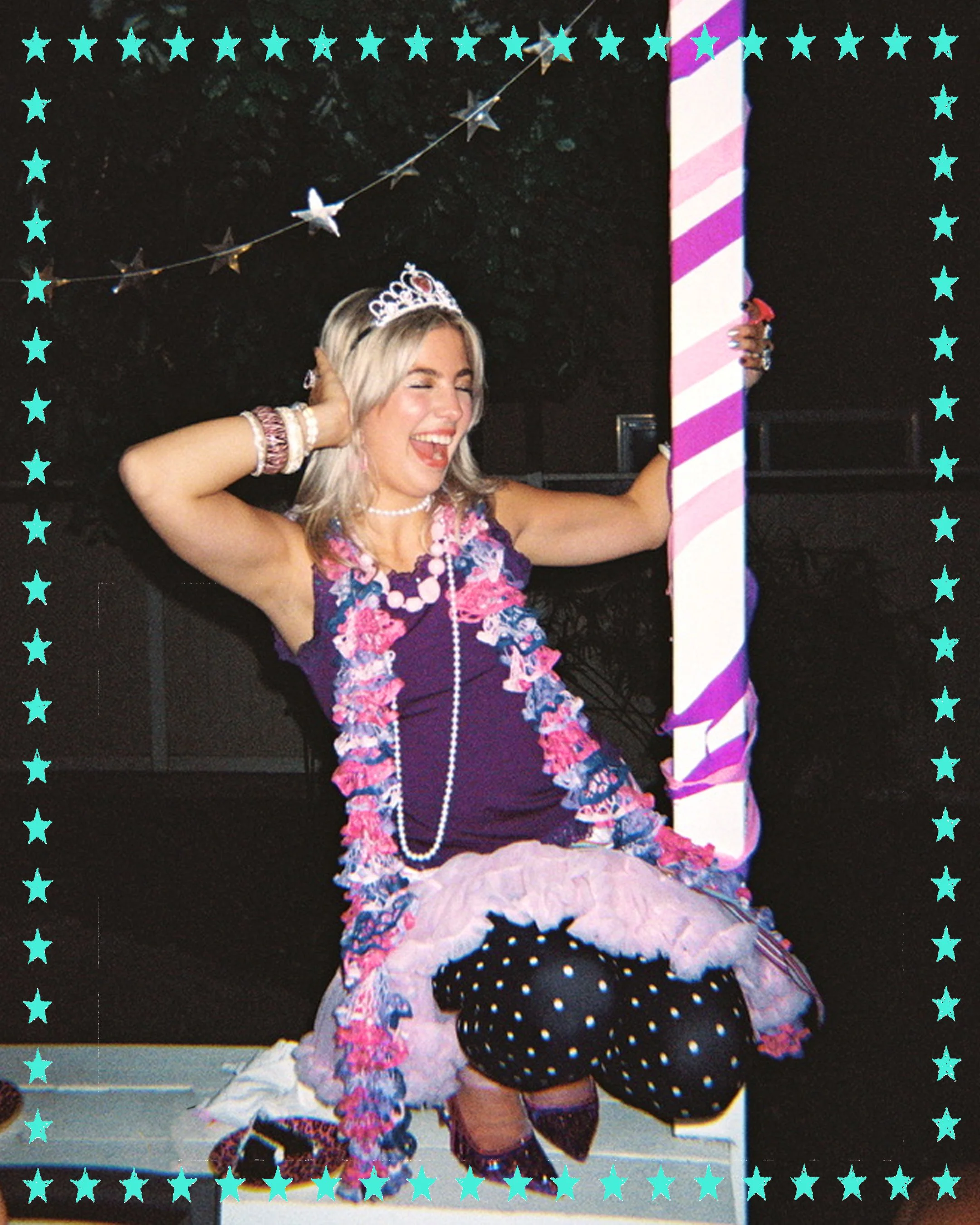
Over time, her aesthetic has shifted alongside her thinking. Earlier work leaned darker, more minimal, tied to a different emotional state. Now, she’s drawn toward saturation and contrast. “Recently I have been much more interested in bright neon contrasting colors and 90s/early 2000s aesthetics,” she says. “If you would have told me that a year or two ago, it would've been like no way.”
Provided by Courtney Klevenhagen
Looking ahead, Klevenhagen wants proximity to collaboration, especially within music and adjacent creative industries. “I’d love to work with musicians on any kind of creative project,” she says. She’s also looking for a full-time role in Los Angeles that allows structure without flattening her personal practice.
At the center of it remains courtney.jpeg, which functions less like a brand and more like an ongoing file. “Courtney.jpeg is everything to me,” she says. “I can’t wait to keep exploring and expanding my style and see where the future takes me.”