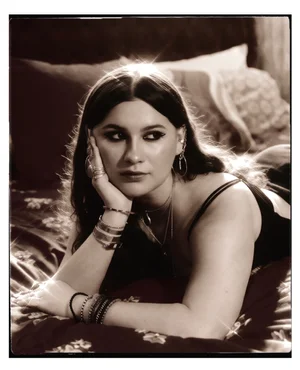
Blair James on 'Obsession', Instinct, and the Subconscious Architecture of Costume
By Natalie McCarty
Discovery, in this case, arrived through a screen. A TikTok surfaced, and soon I was connected with Blair James—instantly likeable, impeccably dressed, and unmistakably sharp in the way she speaks about styling as if it were a sixth instinct to her.
She is impossible to ignore: articulate and instinct-driven in equal measure, a sensibility that translates directly into her costume design, particularly in Focus Features’ latest with Curry Barker’s Obsession, where clothing becomes more than an accessory to the narrative. What becomes clear almost immediately is that James is not simply dressing characters; she is structuring perception, embedded in the storytelling—building emotional response before the viewer fully registers what they’re seeing.
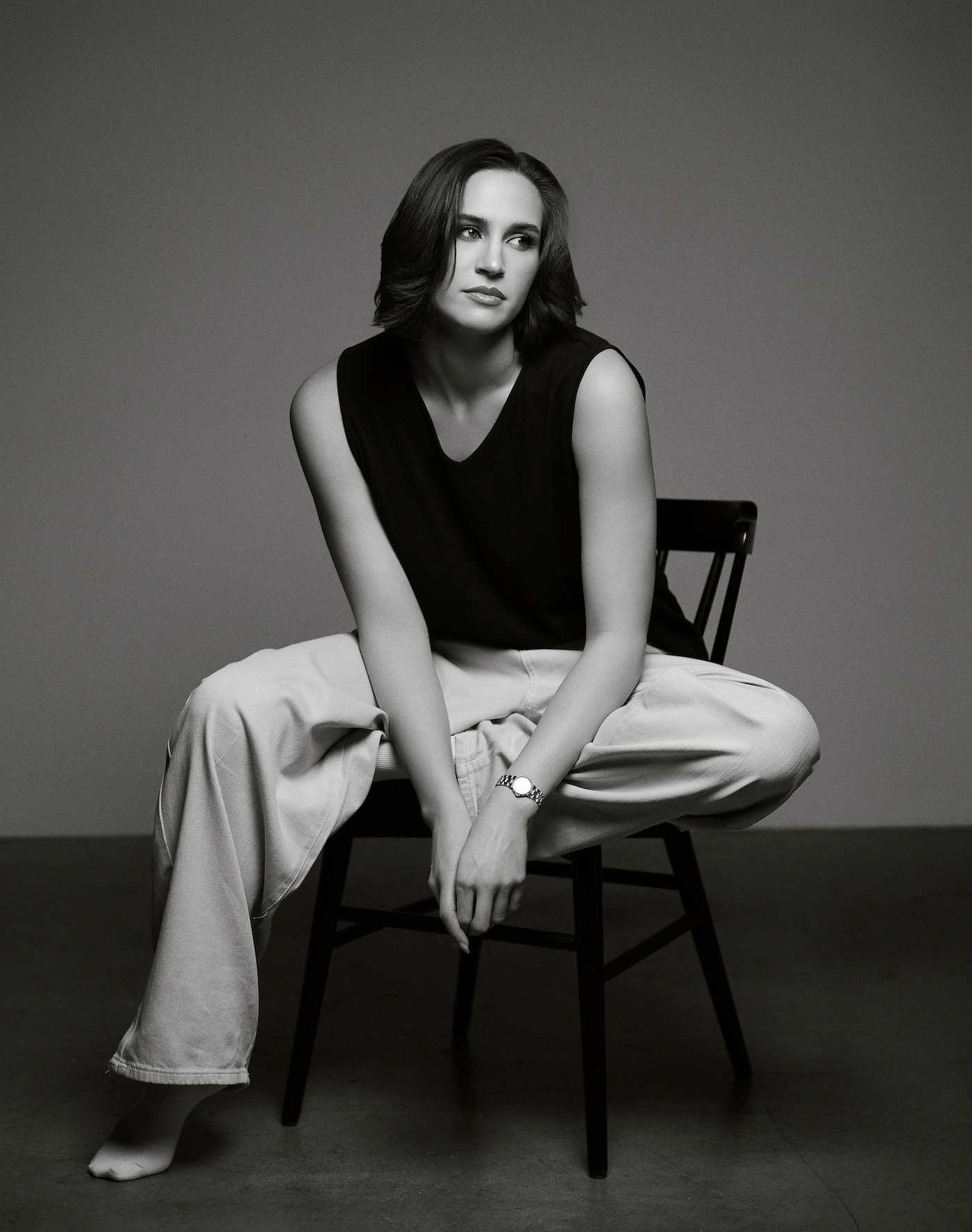
Courtesy of Blair James.
First Instincts: Before Costuming
Blair initially moved to Los Angeles for college to pursue dance and acting. While in college, however, she began her love affair with fashion and styling. “Growing up, I was never into fashion per se, but I always loved clothing that made me stand out or made me feel more confident in my body. When I moved out to LA, I realized that I could really express myself to a whole new level and that really began my exploration.”
Even here, clothing is not treated as decoration but extension—something closer to movement translated into material form. That logic would later define everything she builds, as the shift into costume arrived almost accidentally.
“During my senior year of college, I was helping produce a self-written musical for my friend, and we realized that we didn’t have the budget to hire a Costume Designer for the show. I offered to do it because I thought, ‘I’m good at dressing myself, so I could do it’.”
What followed was not hesitation but recognition through doing. “When I designed that show, I genuinely had no idea what I was doing technically, but I also knew exactly what I was doing as it came to me so naturally. It was like no one had to teach me how to do it because I just naturally understood how to go about it. I had that natural ability to look at someone’s body and know what color, shape, and style of clothing looked the best on them.”
That instinct immediately became visible. “I ended up getting nominated for a national award for the work I did in that show and started wondering if this was something I could really pursue.”
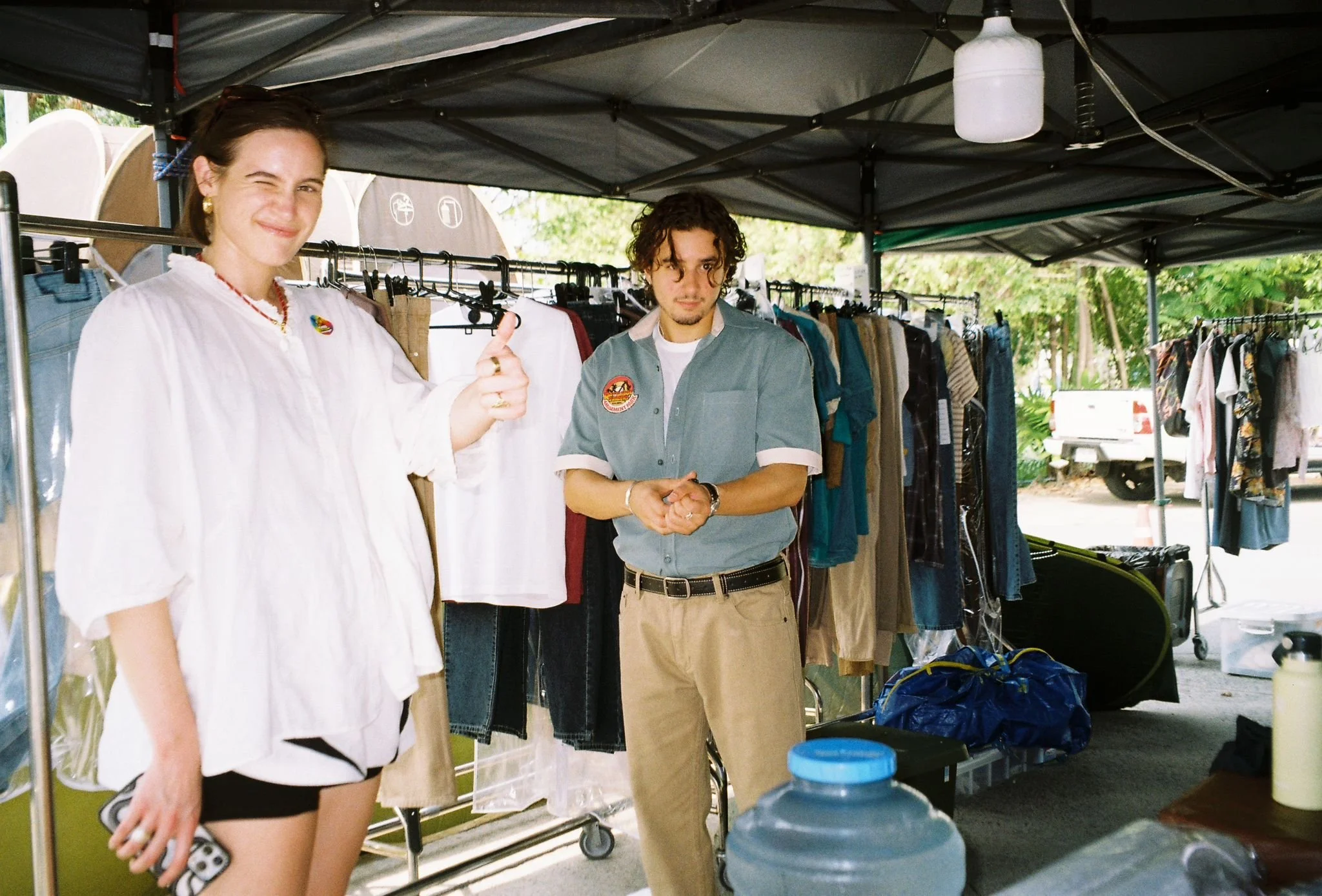
Courtesy of Blair James.
On Mentorship and the Decision to Pursue the Unbeaten Path
Before the industry ever formalized Blair’s path, it was shaped through mentorship—something accumulated across disciplines, long before it had a name within fashion. She traced its origin back to competitive dance, where meeting Arleen Sugano became foundational. “She gave me so much confidence in a time that I really needed it & she taught me the value of bravery and just going for it,” James said. More than technique, it was a way of thinking: “She taught me that creativity & artistry is never limited to one avenue,” a perspective that would later make her open to styling and costume design at all.
That openness sharpened once she entered the industry. Assisting Tara Swennen as a celebrity stylist ultimately gave her not just access, but real investment in her craft—“It is rare to meet someone who invests in you the way Tara does”—while Daniela Romero became another steady, shaping presence during her assistant years.
With Obsession, her work took on new life. “I created it exactly how I thought it should look like… I am so confident in my taste now,” she said, recognizing that “leaning into your taste and style will lead you to the right people.” At 24, costuming her first feature didn’t just mark a milestone—it confirmed something she already felt: “Yeah, this is exactly what I want to do for the rest of my life.”
Underneath all of it, though, is her ultimate inspiration and example set by her parents. “They never just talk the talk, they always let the work just speak for itself,” she said.
Costume as Behavioral Psychology
For Blair, her philosophy behind styling is not segmented between character, tone, or world-building; it is all simultaneous.
“Costume design is so valuable and important to the world. You are adding skin to the actor’s bodies, in a way, and those clothes need to help them feel their character physically, which naturally results in an emotional response.”
In this way, her method acts as a sort of behavioral psychology. “I am very character-driven when I am designing, and I break down scripts just like I did as an actor. I read through the script multiple times, following each of the characters’ journeys, and try to place myself in their mindset. How long did they sleep? How long did it take for them to get ready? Where are they going? Are they trying to impress anyone? etc., etc.”
“The character’s physical appearance will always speak and create narrative before the character speaks a single word,” she adds. “This is the funnest part of the job, as you get to kind of mess with people’s subconscious without them knowing.”
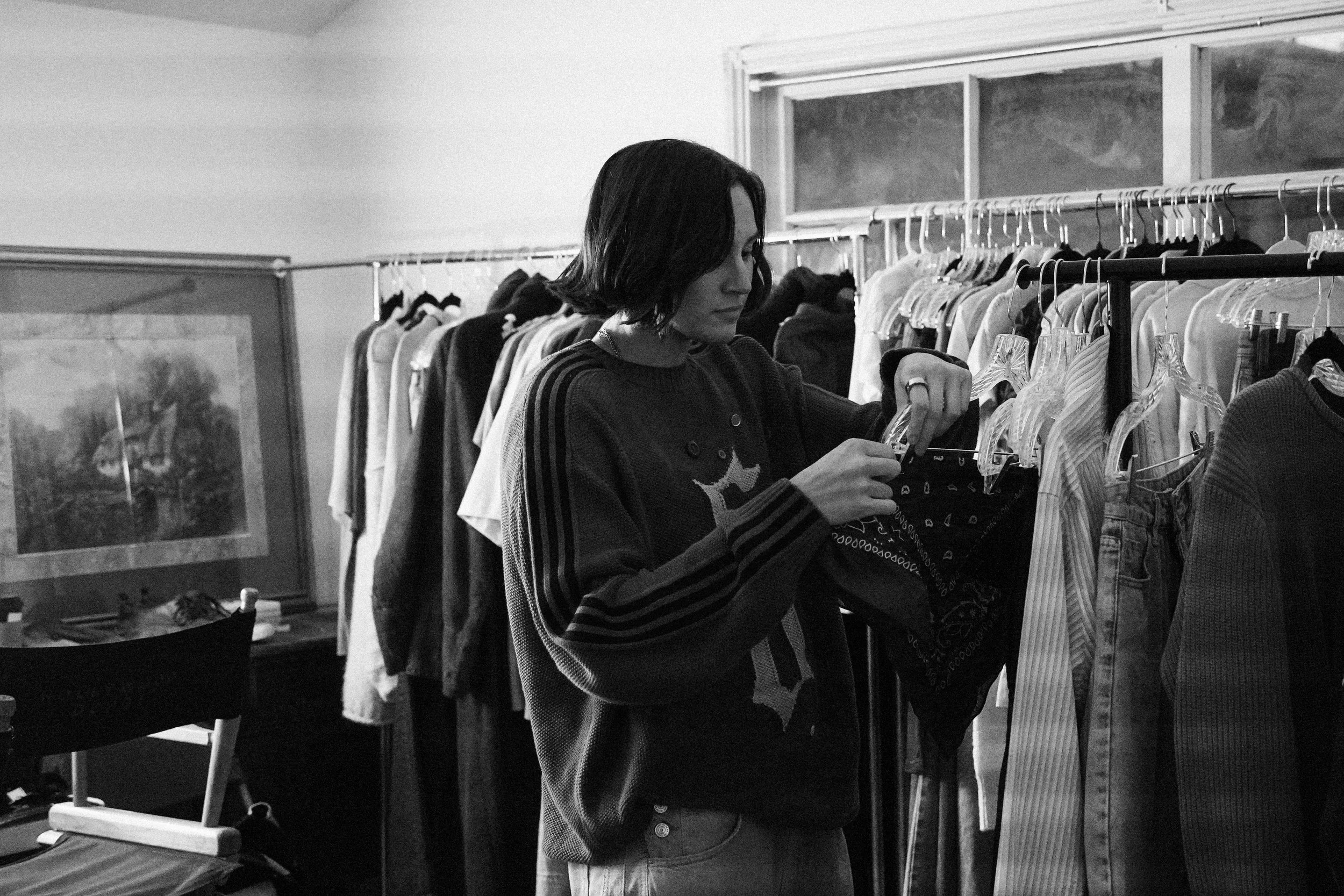
Courtesy of Blair James
Using Color as Emotional Architecture in Obsession
Color is often paramount in her choices. “I feel like when I start working on a feature or project, color is a huge guiding light to me. It’s one of the first things that I can imagine when I read a script, and usually my first instinct for color ends up in the final product.”
In Obsession specifically, that becomes abundantly clear within the wardrobe.
“I only got one costume to tell the audience who Nikki was before she slipped under the spell. I had one shot, so that costume was so important to me, and I knew it had to be blue.” Contrasted to that, “I put Inde in this bright, cherry red dress. I wanted that change to be so jarring as everything up to this point was muted, cool-toned colors.” Even jewelry carries narrative coding, as she adorned Nikki exclusively in silver while Sarah is mostly in gold.
There’s even psychological signaling in deviation. “When Nikki and Bear are at dinner, that is the only time you see Nikki wearing gold. I did this because I wanted to slowly start shifting the narrative of her possessed self, thinking if she dressed like Sarah, then maybe Bear would love her more,” said James.
Bear’s arc is constructed in parallel with behavioral degradation and aspiration, which she achieves in styling by picking a blue and brown cardigan for him, connecting him to both Nikki and Sarah. After that, he shifts back into darker browns and (the last look) a grey, striped sweater, which echoes that character arc perfectly.
Industry Reality and Internal Structure
The misconception, she explained, tends to arrive quickly and reductively. “That is an easy, vanity job, and that anyone could do it.” In reality, the work operates across multiple registers at once. “Being a costume designer and stylist is a physical, mental, emotional, social, and creative job all in one,” she said, describing a role that demands not just vision, but constant calibration—between people, process, and pressure.
Internally, she understands that balance as a dual system: “I always say there are two versions of myself: there is the creative being, and there is the logistics being.” Neither can function without the other, and both are ultimately in service of something more grounded. “Regarding the actor’s comfort, that is always going to be my number one priority. What people are wearing on their skin affects how they will move their bod[ies] and how they will feel about themselves.”
That sensitivity extends into the most technical aspects of her process, where her attention becomes almost imperceptibly precise. “I love to look at the ‘negative’ space on camera… the skin that shows on the actor,” she said, describing the way she tracks visual movement within the frame. “When looking at the negative space, you can find what is pulling your eye and to where,” a method that leads to a singular directive: “My goal is for the eye to always be drawn back up to the actor.”
On set, that translates into instinctual adjustment. “I decided to drop the off-the-shoulder top more drastically on Inde once I saw it on camera”. It’s small interventions like this that recalibrate focus without announcing themselves.
Ultimately, the intention, always, is cohesion. “I think I am always seeking a sense of effortlessness on the screen,” she said. “It should flow and feel relaxing to the eye to some degree.”
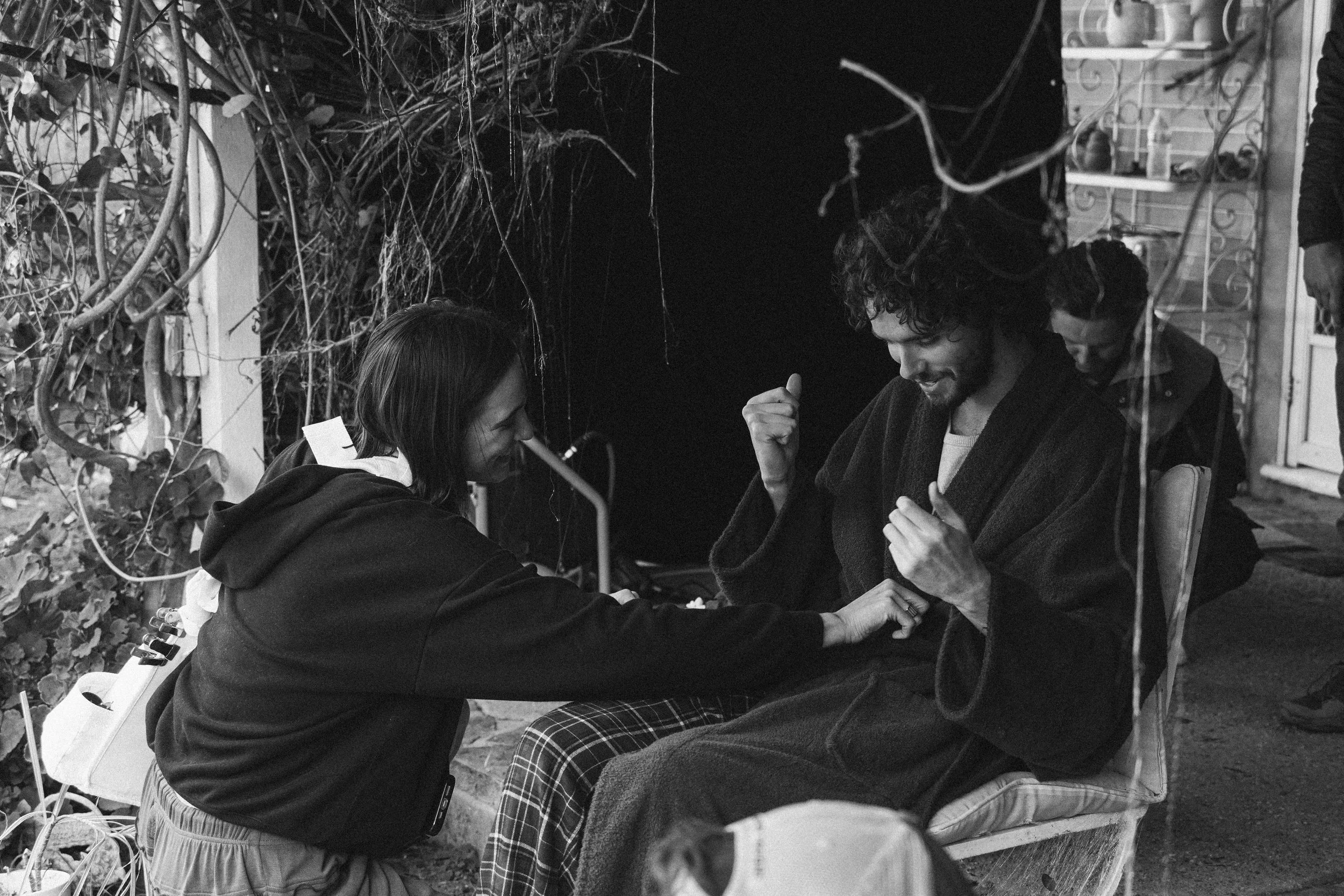
Courtesy of Blair James
Forward Motion
There is no stillness in the way she thinks about growth—only movement, risk, and repetition. “You have to drop your ego, and you can’t be scared of making mistakes,” she said, framing failure as part of the process itself. “I literally fuck up all the time, and sometimes my lessons are harsh and hard to learn, but they make me invincible.” What she describes isn’t confidence in the traditional sense, but a kind of practiced resilience—one built through doing, misstepping, and continuing anyway.
That logic extends outward into something more instructive. “Being stagnant is just the fear of going for it,” she said. “The going for it part is the hardest part, and then it’s easy because it is a lesson you learn, and then you’re one step closer to the person you want to become.” Or, as she distilled it more simply: “Be bold and brave.”
And yet, beneath that forward momentum is a genuine excitement for the work itself. “Almost every part of it excites me, minus the returns and billing,” she said, before admitting, “I sometimes will just randomly think like ‘holy shit I am literally getting paid money to do the thing I love the most’.”
What remains is not a stylist or a costume designer in the conventional sense, but something closer to an architect of perception: someone building emotion into image before the story has the chance to explain itself. Because for Blair James, the character has already spoken long before the actor ever says a word.