Digital Whimsy: How Butterfly Girl Grace Captures Modern Internet Culture and Contemporary Girlhood
By Alivia Stonier
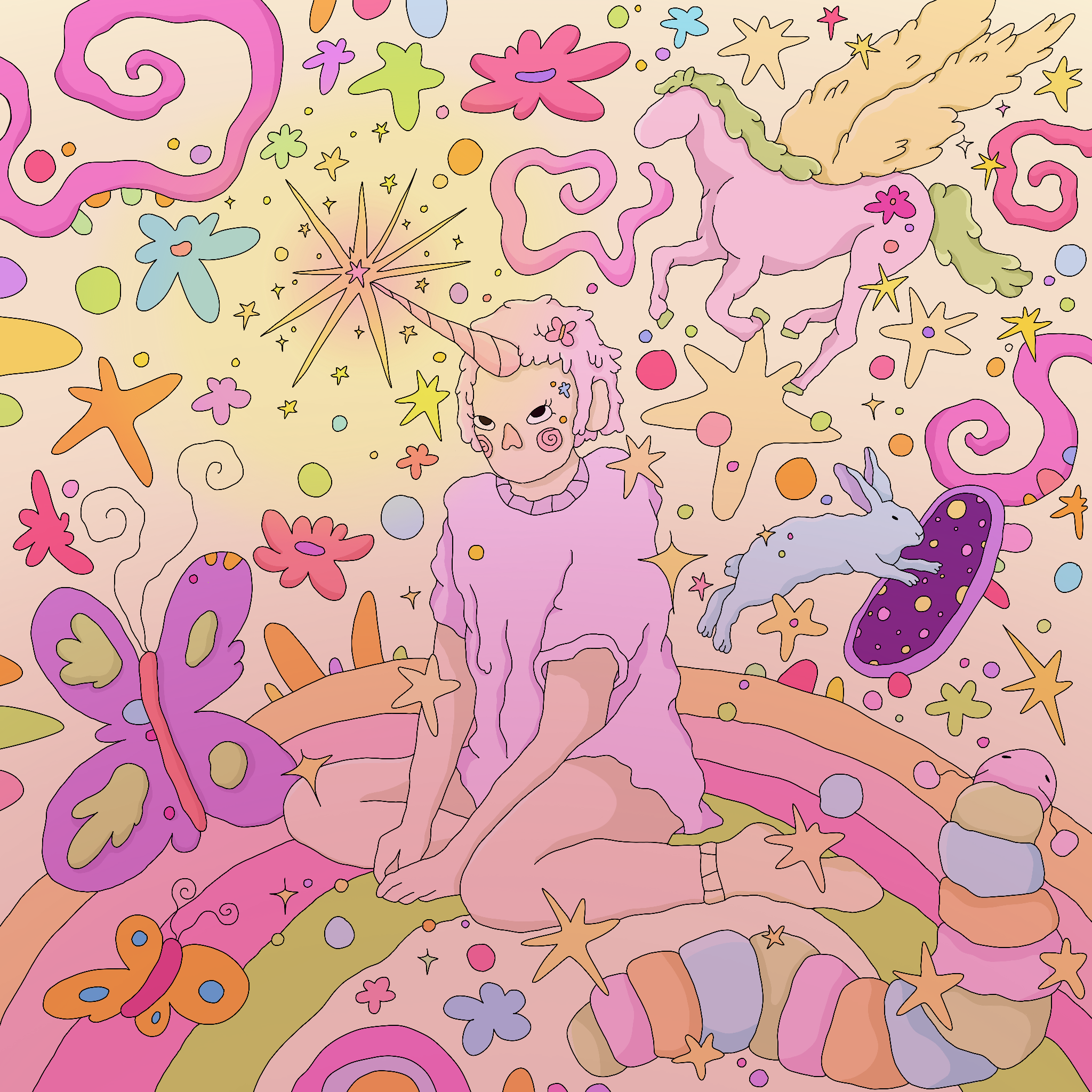
Designed by @butterflygirl.grace in collaboration with Gut Instinct Media.
Grace Ruby (known online as @butterflygirl.grace) is an animator who has her fingers resting on the pulse of the effects of internet culture on Gen Z, and it beats alive in her creative work across the screen. Bright colors and lush landscapes that feel like childhood, yet carry the deeper edge of coming of age.
Before digging into where this contrast truly came to life in her mind, I wanted to understand where Grace's journey began, allowing her current online conversation to take shape, specifically through her popular online series Girl In Her Room.
“I think, like a lot of artists, I had a love of it from a very, very young age. I always struggled—or I didn't really like the academic side of things like science and math, because I was always a lot more of a visual learner and communicator. I was also really blessed to have parents that really encouraged me to be creative, because they were creative people themselves. So I was brought up in a very creative environment, and they really did encourage me to explore and pursue the arts. So it was always just there [and] was always something I did. I was always the art girl. [Art] was always in the back of my mind. I always knew that art was something I wanted to do, but I just didn't really know in what capacity; it just sort of happened.”
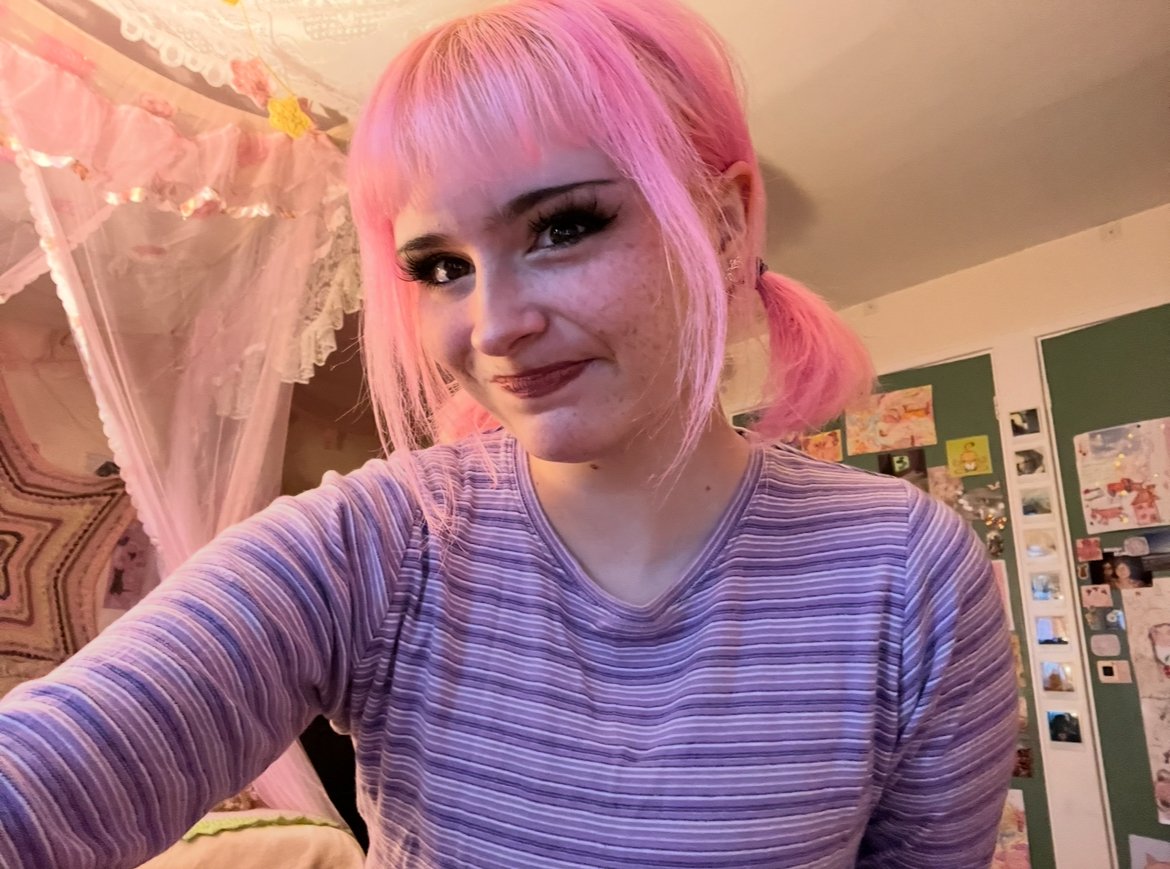
Grace Ruby; Provided by @butterflygirl.grace.
Despite naturally having her love for art come to the surface, what came first was a lot of intention in learning her craft. “I started learning more of the academic side of art. Then I started reading books on it, and I started learning about form and anatomy. I decided to learn animation when I was sixteen or seventeen, and it was really hard. I was like, This is not at all what I thought it would be. I just kept trying, even though it was really hard. I think I was also really worried because I was like, "I don't have an art style," so I think that made it really difficult. I feel like with an art style, there comes a lot more passion with it and a lot more flow. When you don't have that, it feels really clunky and weird; you don't know what you're doing and why you're doing it. You don't know what you want to say either. But I think that not forcing an art style is really important. You just have to slowly grow into it, and it sort of slowly reveals itself to you as well.”
From this very naturally artistic upbringing mixed with determination for her craft came a project that resonated with audiences through its authenticity. Across social media, the animator would see the rise of her series Girl In Her Room. A project that chronicles the day-to-day happenings of a young woman in her room, but also highlights the darker parts of the internet and the way that women specifically can end up navigating these public spaces.
“Girl In Her Room” is the first project that's gained the sort of momentum that has followed, and I think it slowly unraveled. I just started showing my art online, not really expecting that to be the sort of way things were going to go, but that kind of gained legs and started to consume my life, really. I didn't actually have any big projects I was working on before Girl In Her Room. I was mostly doing little bits here and there; this was the first sort of properly published thing I had done.”
“I had been doing art, and I had started to learn animation for a few years up until that point, and I was, like, posting a few bits of art here and there, but it wasn't anything serious or big. I had just quit my corporate job, and the day after, I was like, "I'm just going to make something to take my mind off everything." And every time I'd like to create anything, especially an animation. I was trying to challenge myself, and I struggled with animation, funnily enough, up until that point. I decided to think about what I wanted to make it about, and I like to draw from personal experiences, especially subjects I feel quite deeply towards, and make what I know. As a teenager, I suffered from anxiety and mental health, and I spent a lot of my time in my bedroom. It really did consume my life. I wouldn't go out a lot, and I would just be in my room. It kind of became its own sort of universe, in which I experienced girlhood merging into adulthood and blended with the unforgiving nature of unsupervised internet access. It really created these specific experiences in which I was a part of the very first generation of girls to go through.”
The series that spawned from this unique side of girlhood in today's modern world quickly gained traction. “I was really shocked to see the amount of people that seemed to strike a chord in. And I was like, ‘Oh, maybe I'm, like, not the only one who sort of feels this way or has had these sorts of experiences.’ It was actually just supposed to be just a one-off short, and a lot of people were asking for more. So I kind of grew with it, and I sort of found my voice as I was making them.”
Unfortunately, many dangers of the internet and the impacts that it can have on adolescence were unknown to the degree that they are today at this time, and it is unsurprising that many women found their girlhood shaped by these times and were able to find comfort in Grace's echo of experience.
Specifically, one of these experiences that gets highlighted is the objectification of women in the commodification of sexuality within certain spaces online. When talking about the topic in particular, the artist mentioned how it ties into her personal experiences. “I feel really connected to sort of feminism and girlhood and everything. I love exploring that sort of theme, and every girl I know has been through objectification. It's kind of a universal experience. And it's sadly something that I feel like connects us all together. It kind of is the girlhood experience to have these sorts of things happen. And I just want people to feel seen in that. I think that exploring these [topics] and making sure that people know that these things happen a lot and to a lot more people than you probably think. I feel like it can feel quite isolating and lonely. But it is a very common and almost universal experience to have.”
Despite the deep resonance, I wondered what it's like balancing the vulnerability of sharing these experiences with a desire for privacy when it comes to her life as a creative. “'I’m not sure. I do try to balance it because my animations are all based on my personal experiences or inspired by them. And I do also like to keep them very open to interpretation. I don't make them super on the nose. I think it's because I like people to be able to see themselves in them, without it being too difficult to follow, and like having different things that aren't necessarily explained… I think I just try and make things that I feel like people have been through, especially myself. And it can be very vulnerable at times, but I think the reaction I've had to it has been way worth it. People have messaged me and everything, saying how seen they feel from these, and just leaving things open to interpretation is the best way to keep it from being completely vulnerable.”
What brings this project to life is not only the ability to capture this vulnerable side of girlhood and growing pains, but also the whimsical elements visually that are paired with the darker elements of these experiences. With the use of soft colors and mystical creatures, what comes together is an otherworldly space.
“I remember that the main thing I wanted to do was to have an art style that kind of says what I want it to portray, the contrast between the naivety of girlhood with the sort of heavy reality of life. It represents the sort of way that you thought the world was when you were younger—colorful and quirky and weird and whimsical. And I feel like the whimsical, weird representation is met with these realistic, uncomfortable portrayals. It creates this out-of-place feeling of uncertainty, which is how I felt a lot growing up. It was this weird mixed hybrid of the world, of how I thought it always was and how I sort of created it, and then meeting it with these experiences was very, very jarring. I feel like it kind of represents the child in all of us [how we can] be bewildered by this weird world that can be very unforgiving at some points. I try to balance that out. I like making that sort of contrast to sort of represent that.”
The animator mentioned one of her biggest inspirations, which has a lot of the same core values when it comes to mixing the whimsical with the darker parts of life: “Adventure Time—that was my favorite show in the world. That was what kind of introduced me to animation when I was younger. I just fell in love with it—the colors and the dialogue and the vibe and the humor and everything. I really grew up on it, and I just fell in love with that. Also, the creator, Pendleton Ward, I'm very inspired by him because he also created Midnight Gospel, which was like my first time experiencing an animation that had all these really cool colors and vibes, but necessarily a much more realistic tone to it.”
Not only did the art expand because of the range of topics and the way that they are approached, but also through the technical side of creating the work. “I think I do like to experiment… I've been so involved in the digital art realm that I started to lose that ability to work with my hands and do traditional art. I love traditional art. It was the first thing I worked with. So, I just wanted to start working with that again and experiment. I thought it'd be really fun and cool as well. I also think in an ever-growing world of AI and digitalness. I felt like I had a responsibility as an artist to sort of challenge myself with my creative abilities [by] working with my hands, sort of like coming back to that old version. So I didn't feel like I'd lost it.”
The artist also touched on how AI will never be able to replicate the human experience and the way that humans are able to bring in their lived stories to bring that to life for other people.
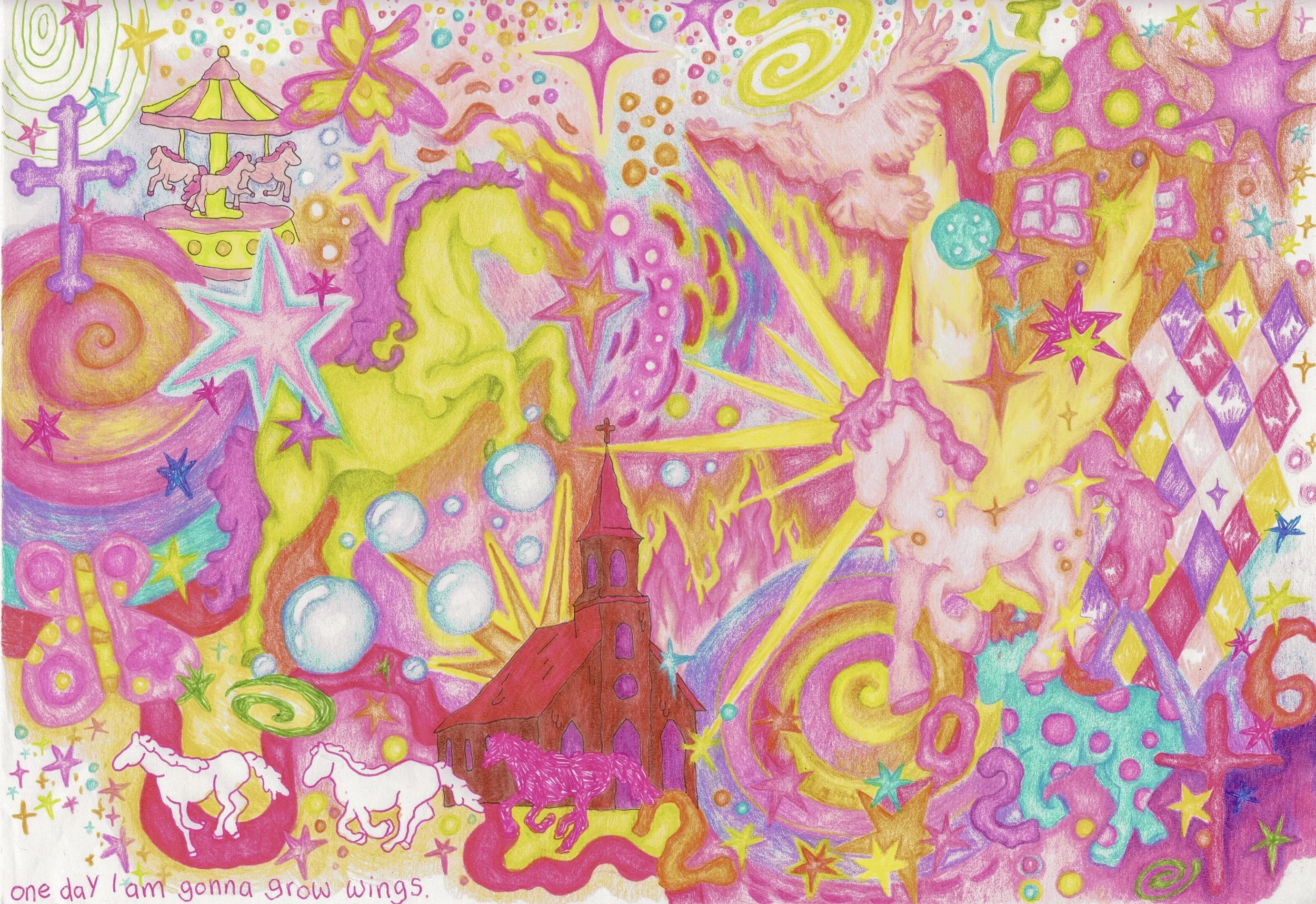
Provided by @butterflygirl.grace.
Through this ability to represent an experience, and specifically for many women, the animator has undeniably been able to evolve on a personal level: “This has helped me grow massively, in myself. I feel like it's helped me be able to process things that have happened to me, and I've grown to understand my voice so much better. When I started, I didn't really know what I wanted to do. I didn't know what I wanted to say, and now it's so much more like I have a really good vision of what I want to do and the issues that I want to tackle. It's just helped me; I've been able to develop my art style in doing this as well. It's just been an amazing opportunity to grow in myself as a person. I started seeing things from different perspectives that have happened or things that might happen.
However, the project wasn't always one that Grace anticipated to be deeply serious; instead, it began more lighthearted and later took shape as time went on to become the emotional anchor that it is for many people today. Specifically, what came before the first episode. “The first episode that I did was a longer episode that I really wanted to get out; before that, it was just funny shorts, and I did a few. One I made was about experiences I had on dating apps, but then that was the first episode where I was like, "Maybe I can say something a little deeper and a little more metaphorical and a little bit longer as well." That was really a turning point. I was like, I can really talk about social issues in a kind of fun, weird way. It really changed my perspective on things. That's what kind of got my cogs turning. I was like, what else can I say? What other things have I been through that I can explore and make a story or a theme on?”
“‘Good Girl’ was based on a layer of themes in my episodes. It had themes of objectification, consumerism, and being alone in an online presence, and how putting yourself out onto online spaces and public spaces can easily go south, and it's like a machine. I feel like the internet is a machine. Especially if you're a younger person, you can be very naive with that, and the consequences are forever lasting. Even if your intentions were very innocent. It can definitely have a much different impact on you, especially in the future.”
When discussing how her relationship to the internet has changed from adolescence and the pressures of internet use as it stood to be coming in now, public figure Grace spoke candidly on this progression. “My brain has developed a bit more, and obviously, through my experiences, I've learned from them. The internet is still very scary to me. I think putting myself out there, I've taken a lot of risks…kind of just sharing myself and my brain. It does feel like a new territory that I'm not really used to. To this day, I'm still learning certain things; I still have made mistakes. And I'm still dealing with consequences from certain things. It's just really interesting because we're the first generation to grow up with this internet. So we're only just now seeing the consequences of what that does to someone when they're younger and growing up with it. I'm still stumbling onto new things with the internet.”
With this new territory comes more room to explore topics on a deeper level. “I have so many topics that I love and that I really want to think about and delve into. My favorite subject and thing to explore is the human experience and people, or characters, and different relationships. So that's definitely something I’d like to continue. There are a few other subjects I'm very interested in, like the dystopian reality of our world. So things like consumerism, capitalism, and AI and how that is having an impact on us in real time. I would like to do more on mental health issues, as it's something I have also dealt with, and I love bringing light to subjects that I feel I want to talk about more.”
With a lot of people feeling disillusioned with the state that our world is currently in, the discussion of mental health opened up further. “Mental health is definitely one of those [subjects]; if there's a subject people aren't talking about enough, I really want to spark a conversation about it. It's definitely some of the things I've done. I did an episode on gore watching because I thought that it really has such an impact on people, and it's just never, ever, talked about. And when I uploaded that, it was my most popular episode; it received so much attention, and I was so proud that people are actually talking about this. Finally, that was the whole purpose of it—to get this conversation going about how traumatizing and how gory watching affects people, especially young people's brains, and how seeing that at a young age can really mess you up, or at any age, really. Those are some of the themes that I would like to do.”
My main thing is, I want viewers and people watching to feel seen because I know how isolating and lonely it can feel; you're not alone. I see you; it's happened to me. It's happened to many people. And they can connect and sort of just heal slightly; especially in the comment sections and the messages I get, people seem to really feel it. It does really achieve that goal. That's my main reason for doing everything, and it makes me really happy.”
But what is the process of putting together all of this work to create the important messages for Girl in Her Room? Grace pulled back the curtain.
“It starts off with me coming up with an idea or becoming inspired by something. So that can be sparked by media I've consumed, like a film or a song, or a conversation I've had with someone, or maybe even a memory. I get this idea of something, and then something I always do to sort of elaborate on it is I like to listen to music and consume media that reminds me of it. So I can get in the headspace and the vibe. And then once I've got a good idea for something, sometimes it really flows, and I come up with something really quickly, and other times it's a bit more difficult. I walk around my room and bang my head on the wall because something's not working. But once I have something, I'm a little bit disorganized, so sometimes I will actually write a script that I can follow, and other times I might scribble something on a piece of paper. And then storyboard out an idea of what I want it to look like. Then, if it has voice actors, which I don't use a lot, but I have used a few, I will put out a little voice actor audition. I already have some friends that are voice actors. I often use friends and family for it as well.”
“Once that's all done, I'll do the actual animation. After that, I will do sound design, which is one of my favorite parts because that's when it really comes to life, and then editing it all together. I think it depends on how locked in I am. I think sometimes I'm really into it, and it's all I do, and it's my whole life. So if it's like that, it'll take one or two days. And then other times, I'm working on it on the side when I have some time. And that will take maybe like two or three weeks if I do it that way.”
It's clear that the artist has more in store, as she also touched on a long-term project that she has been working on alongside the popular series—which is a project that also gave her the internet name butterflygirl.grace—fans have definitely more to be excited about!
To finish off the discussion of her creative work, Ruby advised those who want to use their platform and creativity to spread messages that people can resonate with, just as she has been able to do through Girl In Her Room.
“I would say, just start. There's no right time; just start making it and not worrying that it's going to be perfect or it's going to convey exactly what you wanted it to say. I think it's sitting there and thinking about it as much as you do, that it's not going to fix it. You just have to churn out some terrible ones. And then eventually you'll find your voice along the way, and you'll find your style, and you'll find sort of the meaning with it as well. It's all part of the process; you learn so much when you do that. I think also just don't be scared to be vulnerable, because you'll actually be surprised how many people will connect with what you're doing.