Alysa Liu and The Freedom To Become Yourself
By Dani Ambersley
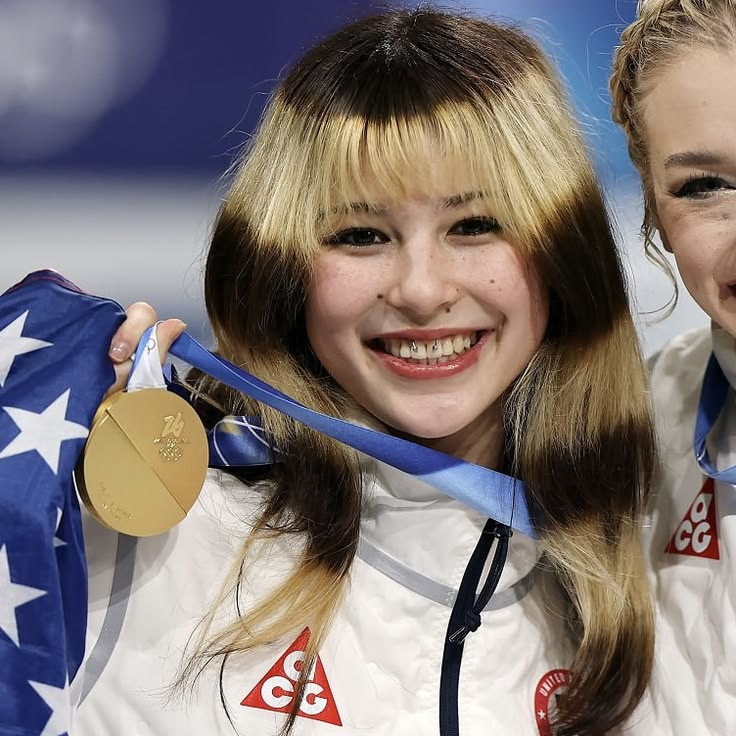
Sourced through Pinterest
Alysa Liu’s return is easy to package into the classic comeback story, a morality lesson about grit, redemption, and “finding joy again.” But what Liu has done was much more challenging, than simply returning to skating. This time she was fully in charge and refused to let anyone control her journey.
In any Olympic sport, there is an unspoken bargain: you give the system your time, your body, your adolescence, and your interior life, and the system gives you meaning. You become a symbol. A prodigy. A hope. A storyline that can be sold. You are not supposed to say that your sport made you hate your own life at sixteen or that your experience was so traumatic that you can’t really remember it. When your dad is a former Chinese dissident who built a second life as an immigration lawyer in California, and spends over half a million dollars on training, there’s an added political significance in her success, too. It all builds into the familiar model-minority narrative, where gratitude, discipline, and filial duty are expected to outweigh personal cost.
On April 9, 2022. Alysa posted an Instagram caption starting with “heyyyy” explaining that after eleven years, she was retiring. I thought it was a late April Fool's joke out of context. It wasn’t.
At that point, I was a former skater myself, nowhere near Liu’s level, but very familiar with the quiet forms of burnout the sport can produce. When I read her caption, I recognized the feeling: that split-second of relief when you finally stop letting a sport control you. And then, later, the other truth: that your love for it still comes back, whether you want it to or not.
What makes Alysa Liu’s return to Olympic ice in Milan so fascinating is that she arrives having already built a life beyond it. The medals are important, yes. But what is more impressive is how she occupies the Olympic Games without succumbing into the pressure of competing. For her, the Olympics are no longer the center of the universe. She now views herself as an artist more than an athlete. What Liu values most is connecting with others and making them feel something.
Most elite athletes don’t get the chance to live a fully separate life until their sport has already kicked them out. Alysa did so by choice. For two and a half years she learned, very concretely, that there is such a thing as Saturday mornings without practice, that group chats about finals week can be more important to you than choreo, and that friendships can be built on something other than shared ice time. She moved to Los Angeles, enrolled at UCLA to study psychology, hiked to Everest Base Camp, learned to ski, and travelled. Alysa built a life where “figure skater” was no longer her only identity.
When Alysa says there is more to life than the Olympics, she knows for a fact it’s true.
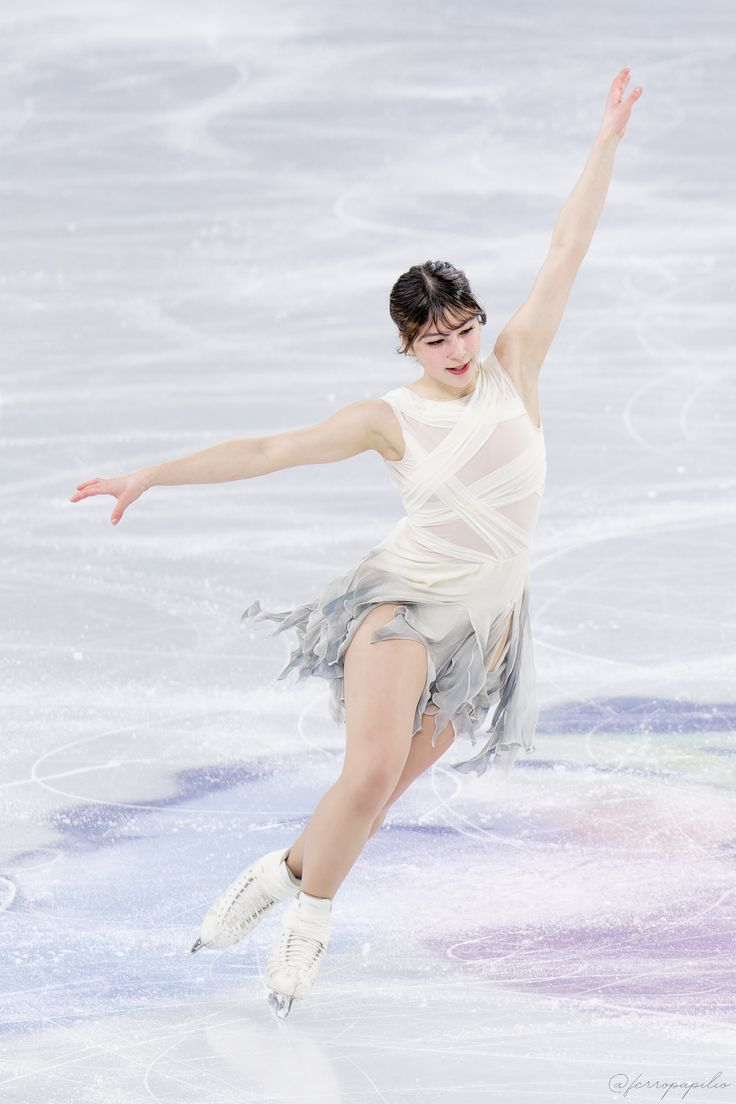
Sourced through Pinterest
Liu is part of a change in how ambition is being treated in public. The older story of women’s sport treats endurance as a virtue. If you can tolerate anything, you must be strong. Limits get framed as weakness, or softness, or not wanting it badly enough. Gen Z athletes like Naomi Osaka, Simone Biles, and Alysa Liu are pushing back on that idea. Boundaries are now proof of competence. If you cannot protect your mind and body, whatever “success” you achieve is fundamentally unstable. You can achieve everything and still feel empty if you are disconnected from yourself the entire time.
You see Alyssa’s mindset shift most clearly in the short program. She steps onto the ice in an ombré white-and-gray dress, shoulders loose, eyes up, looking at the audience, or as she would say, her fans. Liu’s hair is streaked with blond halo rings, each one representing a year lived away from this spotlight. There is a calmness now that did not exist in her teenage years. She moves through the choreography with a lightness that suggests she is no longer asking the sport to tell her who she is. She already knows.
Her music choice, “Promise” by Laufey, is a song about leaving someone and still feeling their gravitational pull, that uncomfortable space between closure and longing. The lyrics “It hurts to be something, it’s worse to be nothing, with you” capture that tension. When Alysa skates this program, you get a glimpse of what it feels like to return to a place that once defined you, to feel both distance and attachment at once. Her short program carries the complex emotions she has related to skating: the resentment, the nostalgia, the guilt, the pride, the knowledge that you can walk away and still choose to walk back in. In that moment, she is showing us that you can return to something you love and still honor the part of you that wanted out. You can be the child of a refugee, the beneficiary of enormous sacrifice, and still insist on a life that belongs to you, in your own way.
That’s what makes her skating in Milan feel so impactful. Not just the fact that her Gold win tonight has ended U.S. women's figure skating’s 20-year Olympic medal drought (the last winner was Sasha Cohen in 2006), not her “once-in-a-generation” talent, but how she is quietly testing how much authenticity she can sneak into a system that still expects compliance. “Promise” is her way of talking about the parts she can’t say out loud without breaking the illusion everybody else is invested in. And that, more than any jump she lands, is what stays with me. There’s a sense that the most groundbreaking thing Alysa Liu is doing right now is skating with her ambivalence intact and letting it speak with the only language society really listens to: performance.