Cars and Conversation with Paycheque
By Kelly Darroch
Barreling down the I-5 South highway at a healthy speed, I started to hear the sound of loud, scraping metal dragging over the synthpop blasting through my car’s speaker. That synthpop was none other than the LA duo, Paycheque, whom I was about 7 minutes away from meeting before my back tire decided to give out for the very first time.
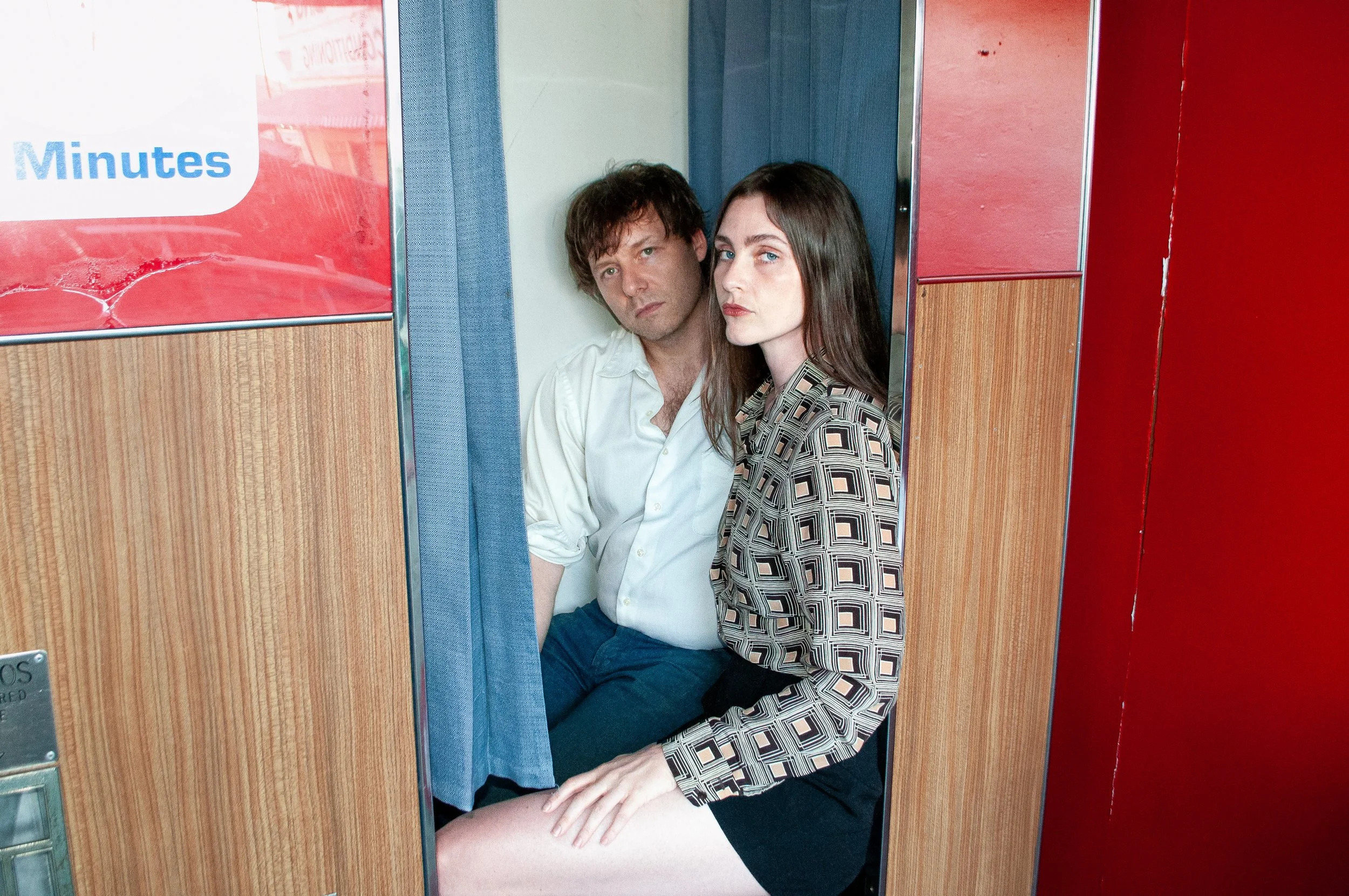
Paycheque posing for the photobooth. Jackson MacIntosh (left) and Allison Goldfarb (right). Photo by Kelly Darroch.
In a large O’Reilly’s parking lot on Eagle Rock, I pulled off safely to see my tire corroded entirely, so I immediately gave the band a ring. “Are you on Eagle Rock?” they said. “Don’t worry, you called the perfect people in this situation.” And I was not duped; they truly were the perfect people. After rolling up in their sleek 1982 Mercedes-Benz, out walked Allison Goldfarb and Jackson MacIntosh. Just my luck, because MacIntosh is somewhat of a car aficionado. After ensuring that I had a spare, he kindly promised to change my tire after we conducted the interview at a bar just down the street. No need for AAA (score).
This past June, Paycheque released their debut self-titled album, a record full of synthpop for the purists and those looking for something fresh. This synthpop power couple is not new to the music, film, and art world – Jackson MacIntosh might ring a bell for his extensive work engineering, recording, or playing with TOPS, Drugdealer, Jessica Pratt, Bernandino Feminielle, Mega Bog, and far more. Once he heard The Who for the first time in the car with his dad, it was nonstop from there. Allison Goldfarb (and no, she isn’t confused as often as you’d think with Alison Goldfrapp) may be familiar to you from her film work, such as the short film Radical Honesty that premiered at SXSW 2022, which she wrote and starred in, or the record she released pre-pandemic under the name Geranium.
The two have lived in Los Angeles for roughly ten years, coincidentally on the same timeline, but they did not know one another until living in LA (apart from later discovering that they met briefly in Indianapolis 12 years ago). After a vast musical history in Canada, from Nova Scotia (Cape Breton Island) to Montreal, where he had been playing in bands since the age of thirteen, MacIntosh headed down to California to work further with TOPS. Goldfarb grew up in St. Louis, before attending college in Minneapolis, a place that, despite feeling a bit suffocating, had what she described as a “really cool scene.” She began experimenting with music recording out there before finally moving to LA, where she started to mess around with it solo before inevitably joining forces with MacIntosh.
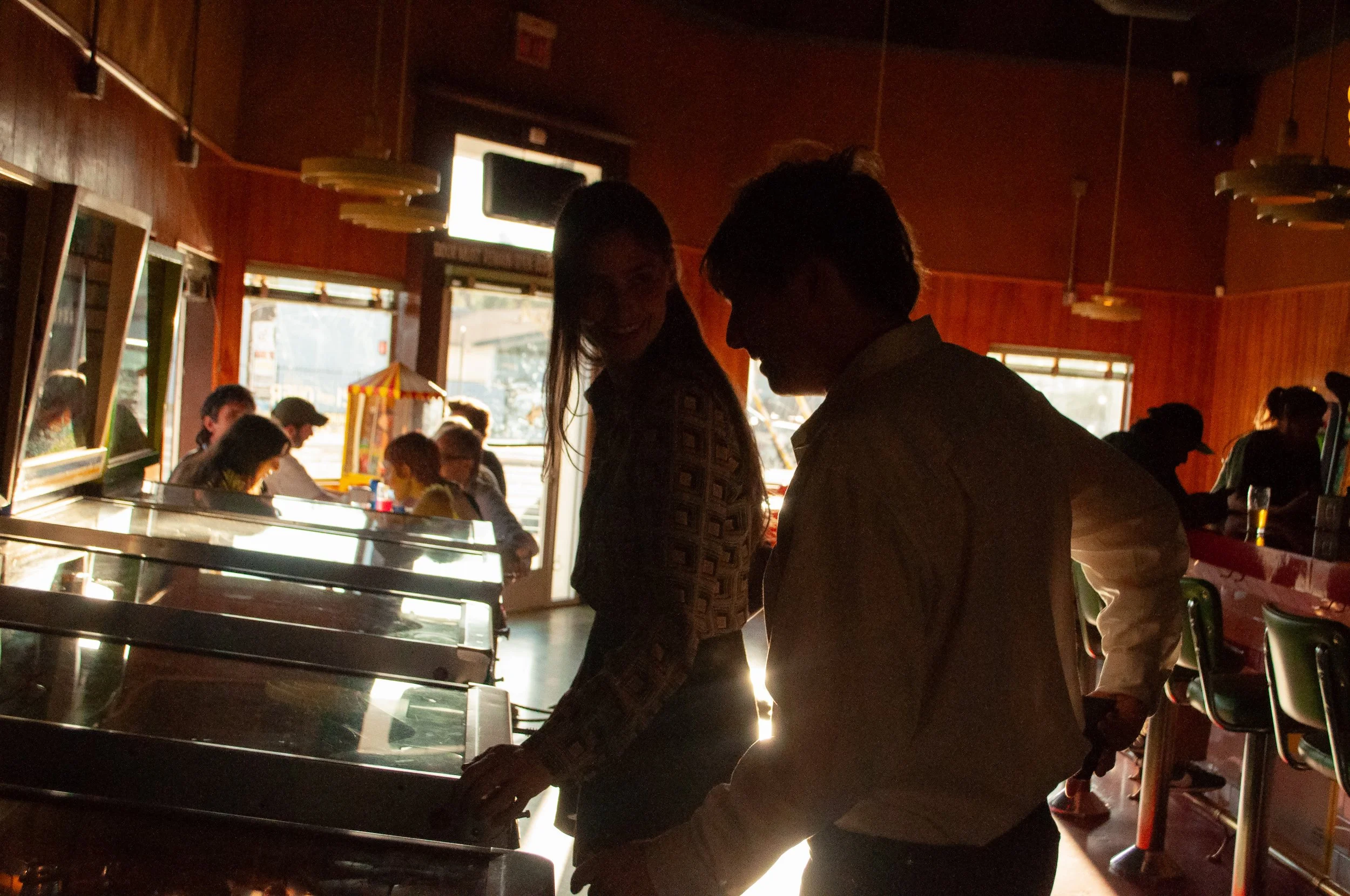
Paycheque playing the pinball machines. Photo by Kelly Darroch.
Paycheque had previously stated how they were weary of being trapped in the “retro synthpop dungeon,” which they seem to have successfully avoided, falling right at the intersection between contemporary and a tasteful nod to the classics like Depeche Mode and Saâda Bonair. As for contemporary artists, Paycheque has a handful that they admire (synthpop and beyond) like Safe Mind, Boy Harsher, Ricky, Geneva Jacuzzi, Smerz (who MacIntosh had just toured with in TOPS), Discovery Zone, Better Person, and more.
To make synthpop is to know synthpop and to know it is to love it. Paycheque loves synthpop. A lot. “I can’t, I guess some people can, but I can’t,” Goldfarb replied when I said, “You can never have enough synthpop.” And you might be curious what synths they used on this album since they love them so dearly; well, here it is! The Roland D-50 with an expansion card, Korg Polysix, Ensoniq ESQ-1, Korg Wave Station, and the Akai MINIAK. “That one is definitely kind of a sketchy early 2000s digital synth, but the bass sounds are just so good,” MacIntosh described the MINIAK. “It just can’t be denied!”
With endless mutual inspiration and an unstoppable force of synthpower behind them, Paycheque makes new songs constantly, but roughly one in ten mature into a complete song. They began making the record unofficially during the pandemic, and ceased production and finished mixing in late 2025 with a few singles released already in 2024. Their first single, “Next In Line,” was the first song they finished and the first they thought was worth releasing. Before releasing it, Jackson thought, “If it gets more than a thousand plays, I won’t feel humiliated.” Safe to say that it had more than a thousand.
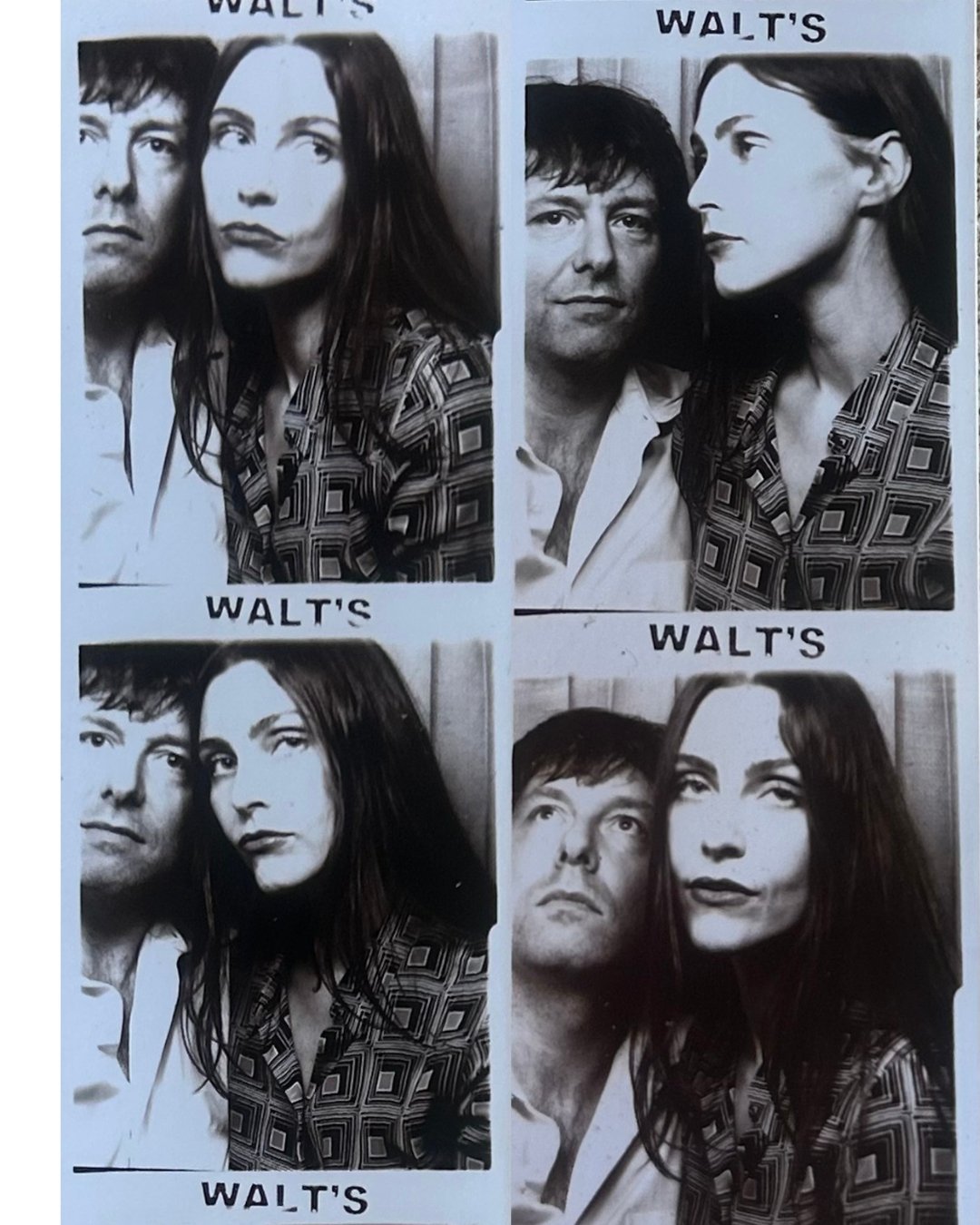
Paycheque’s photobooth results. Taken by Paycheque.
The duo met officially at Zebulon in Frogtown right before the pandemic and quickly sparked a connection over a shared love of music, which quickly turned into a partnership, both musically and romantically (aw). After querying a memory of their first interaction, Goldfarb quickly interjected, “I already know what you’re going to say.”
I’ll paint the scene a bit more clearly: it’s 2020 at Zebulon, and you’re there to see Maraschino perform with a group. In this crowd, Goldfarb turns to MacIntosh and tells him that her teeth are perfect… or at least that’s how MacIntosh likes to jokingly describe their first exchange. The more accurate version is that Goldfarb and their friend Jimmy Whispers were discussing how “fucked up teeth are cute,” and MacIntosh said to Goldfarb, “Wow, your teeth are perfect,” to which she replied, “Ugh, I know.”
In a way, their meeting was fate because it truly takes a perfect pair to love sophistipop (mid-80s genre that emerged out of new wave) in such a superbly equal way. The pair gushed over their favorite Blue Nile songs – “I Love This Life” and “Tinseltown in the Rain” (which was secretly Goldfarb’s lyrical inspiration for “Temporary Love”) – and illustrated the collection of Prefab Sprout cassette tapes they picked up in Mexico City, “We actually wore out those tapes in the car; they’re unlistenable now,” said MacIntosh.
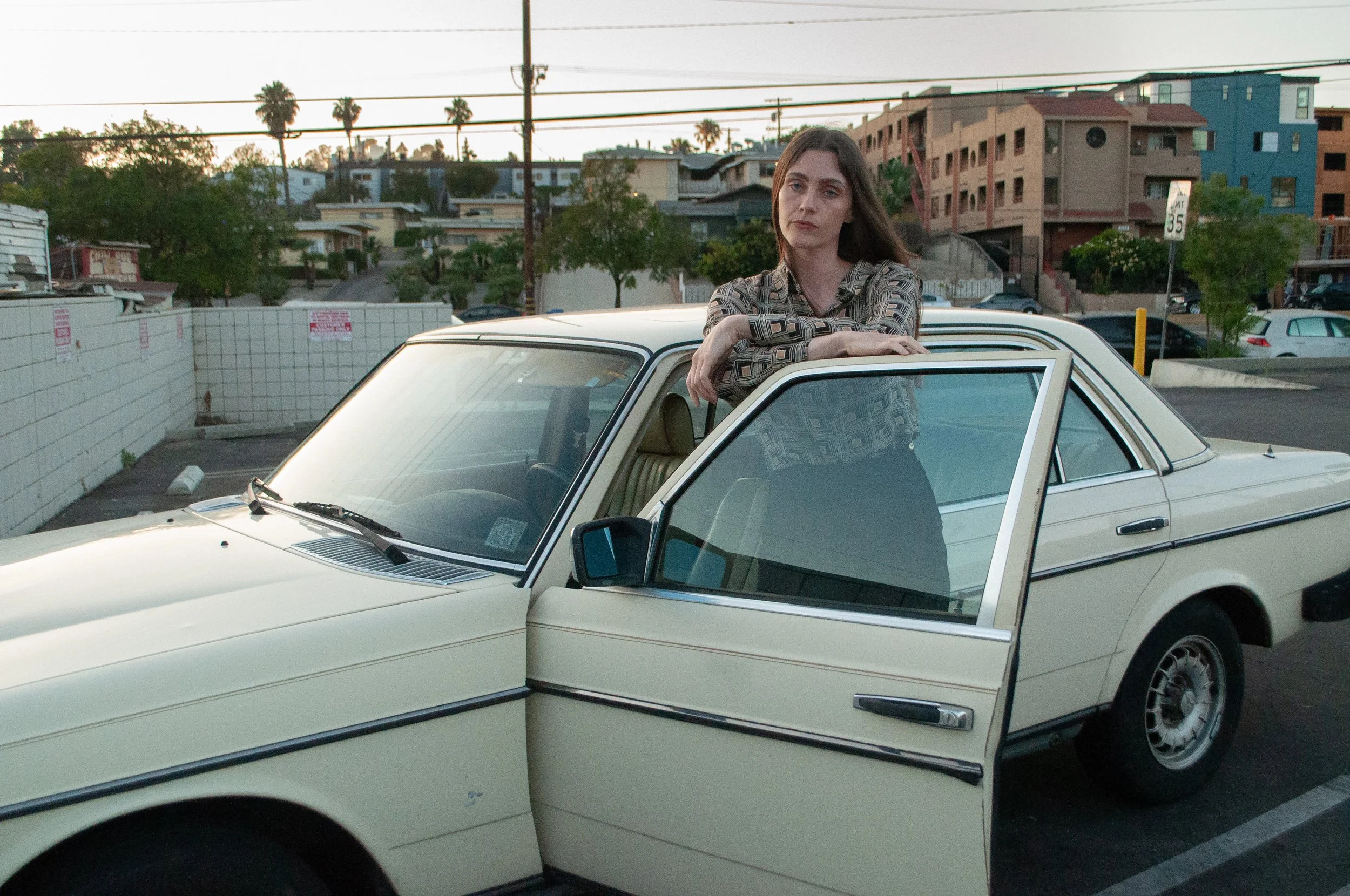
Allison Goldfarb with the ‘82 Mercedez. Photo by Kelly Darroch.
Many such tapes have been worn out between them while driving around LA, much of which inspired their record. A major one is Pulp… an example that was prompted by the Pulp sticker they almost immediately spotted on my laptop. Goldfarb expressed her worship for Jarvis Cocker, particularly his vocal delivery in their favorite song “Pink Glove”, and raved about the time when Cocker reposted a photo on his Instagram story of her and her friend in front of the Pulp marquee after a show. Funny enough, she actually denied the opportunity to meet him when their friends in the band Escape-ism opened on Pulp’s tour and invited them backstage. “No, that’s okay,” Goldfarb said to her friend who offered to introduce her to Cocker. “It was just like… I have nothing to say. I can’t. No.” Having said that, Jarvis Cocker, if you’re reading this, you two should probably meet one day. The conversation would not be dull. But in terms of their record specifically, Paycheque has coined “It’s So Obvious” as their most Pulp-esque song because when they made it, they thought “This is our Britpop song!”
More so than Pulp, the album was heavily inspired by Los Angeles and the general experience of living there for the last six years. The bulk of the record was created after the fires in LA, an event that the pair experienced firsthand as well as many close friends of theirs. Goldfarb’s car melted during the Eaton fire, friends of theirs lost homes, and since they lived in the foothills next to Altadena, they were required to evacuate their home (and yes, the synth collection was the first thing packed and ready to go). They also had stables in their backyard that served as their recording studio space and a painting studio for their friend. “There were different stables for different horses, which were us,” Goldfarb remarked with a grin. Alas, the roofs of these stables blew off and landed on their roommates’ car. Through all of the tumult, the two felt this collective sense of “what is LA” during and after. But with that collectivity, they found beauty in the support that the community offered one another during such a trying and surreal moment. While the lyrics may not directly cite or describe said events, they ushered in a swell of general lyrical inspiration for the record.
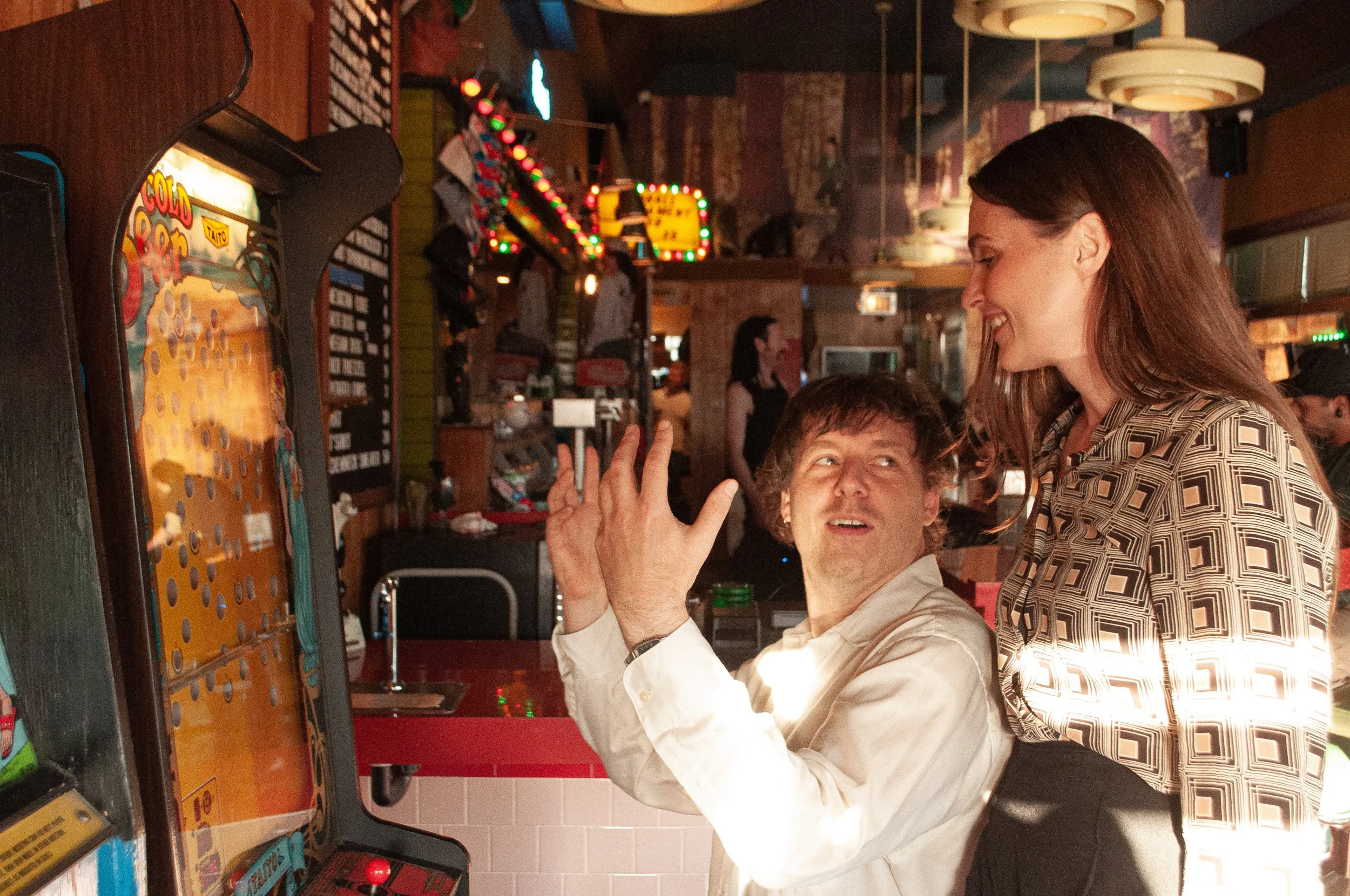
Paycheque playing “Ice Cold Beer” arcade game. Photo by Kelly Darroch.
Given that they were both born outside of LA, I thought there might be an element of the album they considered either spiritually Canadian or a touch of St. Louis, but in short, there really isn’t. “I feel like the name is definitely the most Canadian thing about it,” said MacIntosh in reference to the Canadian spelling of Paycheque. For MacIntosh, the two primary Canadian influences on this record are his friend and collaborator Bernadino Femminielli and Québec Italo-Disco music, which is one of his favorite music cultures. As for St. Louis, Golfarb has found that the heart grows fonder for that city from a distance. In fact, she’s technically been professionally advised to maintain her distance after an astrocartography reader told her that it was one of the worst places she could live in. The two attested to this with some very specific car incidents to back it up.
While their hometowns may not have had a major effect on their writing, their love for watching (and making) films certainly did. Naturally, ideas were cultivated from some of their favorites, which is evident from the clear visual world that resides right under the surface of the album upon each listen. From Star 80 by Bob Fosse to Gregg Araki, their list of films that emulate their own sonic world runs deep. Hardcore by Paul Schrader was a major touchstone for them. “It has that kind of gritty, very tactile LA feeling, and just a lot of the shots in the movie are very inspiring,” said Goldfarb. “Lots of neon and driving around, there’s just a real sense of place in that movie.” The sexy, seductive psychedelic serpent girl of The Lair of the White Worm by Ken Russell is another favorite of Paycheque’s, as is all things, David Lynch. Lost Highway was actually the key visual reference for the “Temporary Love” music video, specifically Patricia Arquette’s face.
The film influence extends beyond just a visual one; even the filmmaking process itself lent a hand in the creative process. When Goldfarb is screenwriting, she describes it as watching a movie in her head and transcribing it. When it comes to songwriting, she sees it through a similar lens. Paycheque loves to bring the physical into songwriting – it’s a quality that Goldfarb loves to pick out in other songwriters, such as Jarvis Cocker with his often setting-based and character-driven writing style. “Music can make you feel like you’re in a movie sometimes,” said Goldfarb, “And y’know, we both love to watch an old movie.” MacIntosh got a kick out of that last bit.
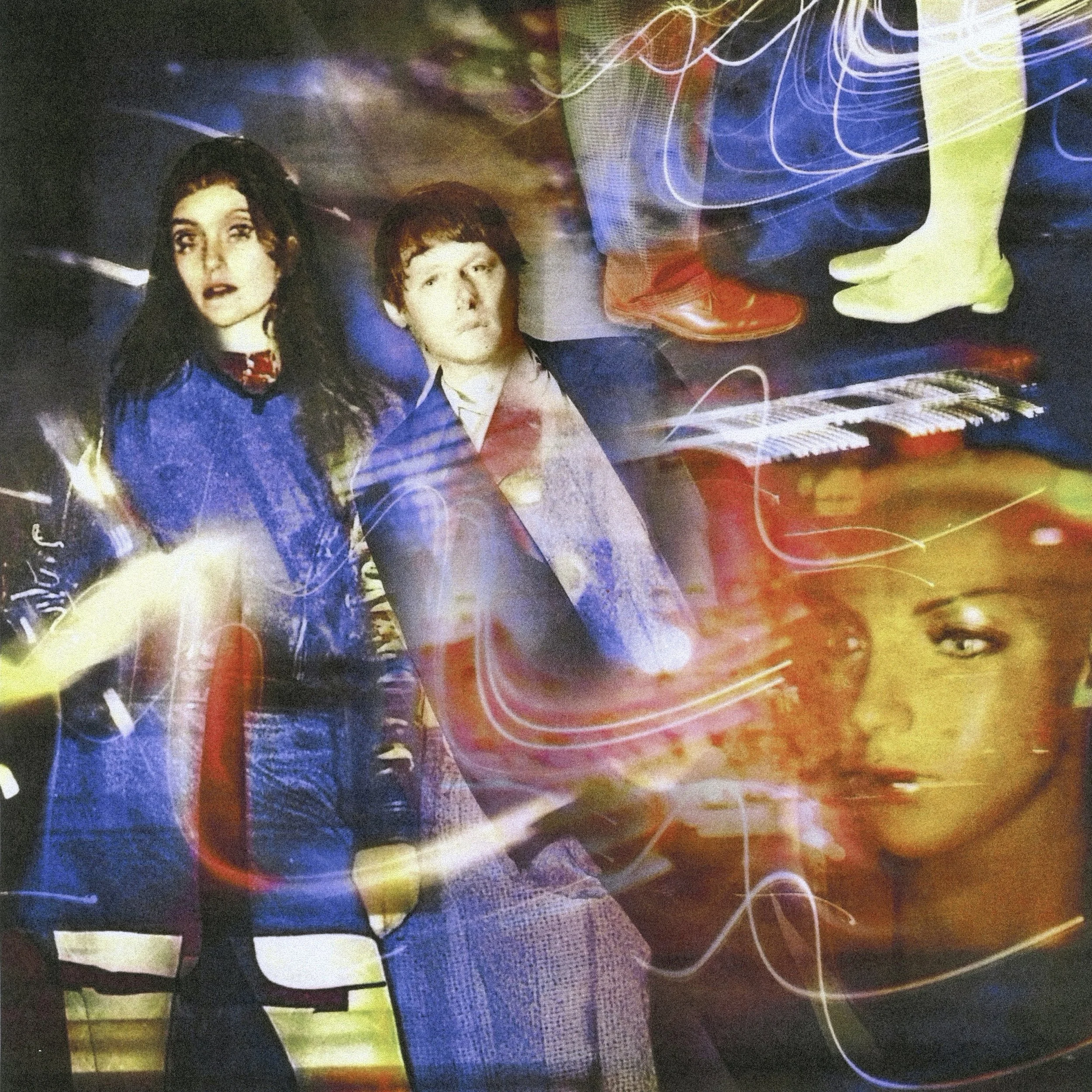
Paycheque album cover. Artwork by @skellyot.
The visual world of Paycheque is imagined from the album itself all the way to the album cover, and it’s what initially caught my eye when poring through a catalogue of upcoming releases. Originally, Goldfarb attempted to make the cover herself with overlays of stills she had from a Super 8 shoot, but the masterpiece that is their album cover was created by the artist Skellyot. After shooting some press photos for them, he messed around with the results and created an image that prompted Goldfarb to squeal at first sight. Skellyot, a fellow synthpop connoisseur, heard the record, understood it, and instinctively knew how to reflect it visually. They didn’t have him change a single thing from his first draft of it.
While the album cover creation happened briskly, the album rollout did not, considering it was three years long. It wasn’t a planned move; it’s just that a full-length album wasn’t planned from the get-go. The album was purely the natural result of a body of work that became too long for an EP. Some tracks took longer than others, like “Temporary Love,” which just nearly made the record. It was the first song in the album’s creation process; however, the duo couldn’t visualize the song’s full capacity until later in the process. “Petal Harp” was initially written in one week for a compilation record, but they loved it too much to let go.
“Camouflage” was the final one they wrote and the last one they finished, but it was also their current favorite of the album at the time we spoke. The song was birthed from experimenting with the Wavestation and Ensoniq, and MacIntosh’s love for classic 80s synthpop with a subtle reggae feel. Paycheque loves some “fake reggae” and wanted to bring it back since they don’t hear it much in more recent synthpop (plus they wanted their friend to add it to his playlist dedicated to fake reggae synthpop). “They’re afraid, we’re not afraid,” Goldfarb laughed. At their core, the duo just loves to throw in weird and curious noises. “If we’re not having fun, we’ll abandon something usually,” said MacIntosh.
Upon being interviewed, they were gearing up for their first official tour. Psyched and fueled with anticipation for the unknown, Paycheque is quite looking forward to seeing how the crowd responds, especially to songs like “Temporary Love” and “Heatwave.” It’s been a long road from the jamming in isolation during the pandemic with no grand plans, to getting to tour their debut album together. Being on the road with his other projects is something MacIntosh is plenty familiar with, so getting to relive these experiences side by side with Goldfarb is something he always thought would be especially cool. Or, as Goldfarb most memorably depicted it: “The prophecy being fulfilled at last.”
In a fairytale world, the evening would have ended with a few rounds on the vintage pinball machines and pictures in the analog photobooth, but instead it concluded with asphalt chalked hands in the O’Reilly’s parking lot as MacIntosh graciously helped change the tire of my car, sparing me from being stranded in Highland Park. Given that my car’s name is Laura Dern, the evening’s conclusion was its own prophecy in a way; I couldn’t have made it up if I tried: an approaching sunset, my slightly beat-up David Lynch car on the side of the road in LA, and Paycheque with their debonair automobile and trunk of tools there to swiftly save the day.
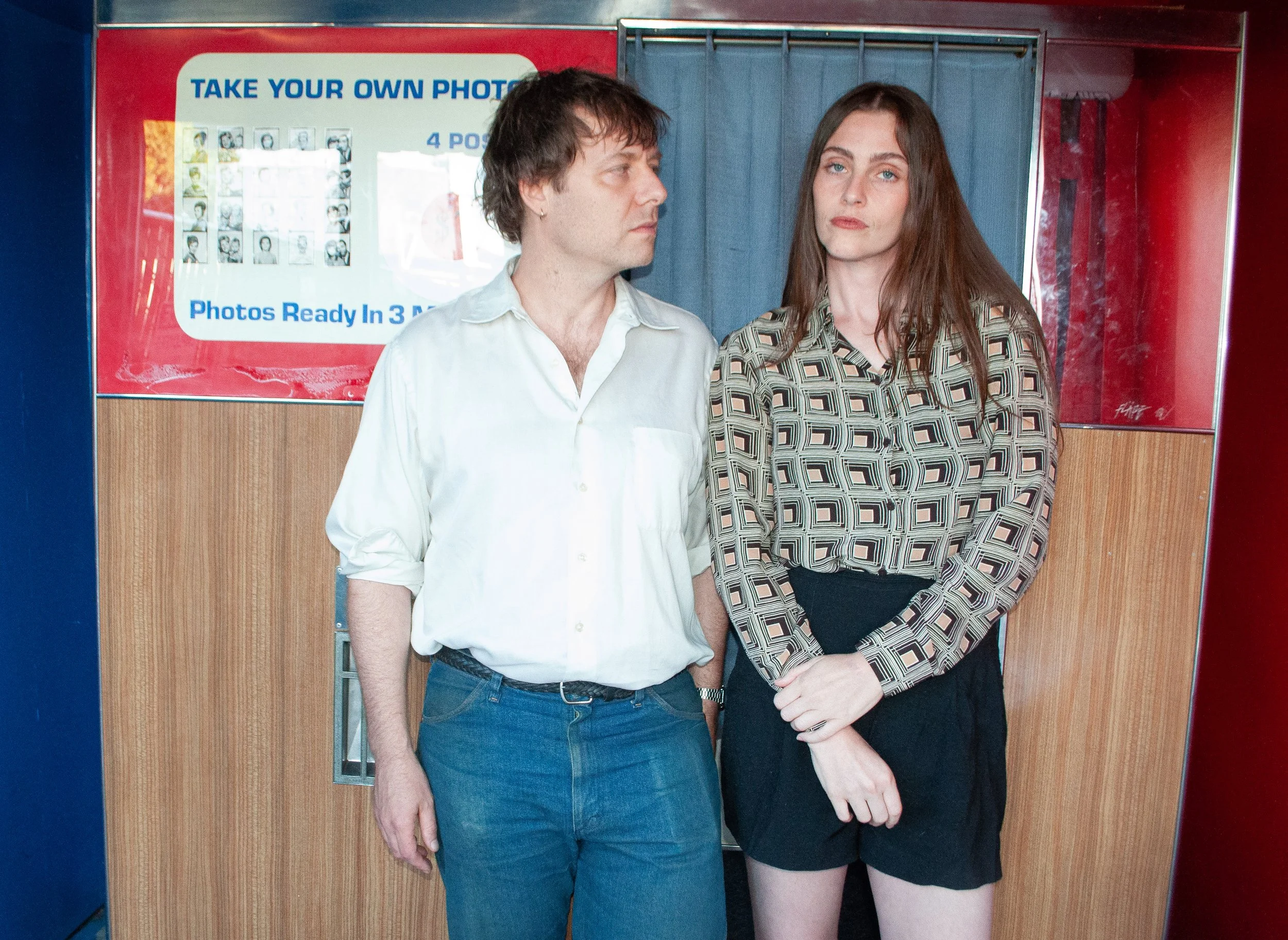
Paycheque standing in front of the photobooth. Photo by Kelly Darroch.
Paycheque is currently on tour. Check out @paychequemusique for more information on a city you can see them live in near you!