By Julia Krys
There are only certain stories capable of bringing audiences to theaters in droves. A blockbuster is not entirely defined by scale, but scale is something Christopher Nolan has mastered. His latest film, The Odyssey, may be the most ambitious expression of it yet.
It is no surprise that few filmmakers have attempted to adapt Homer's nearly 3,000-year-old epic. The story presents enormous production challenges: towering cyclopes, wrathful gods, vast oceans, and journeys that span years. The Odyssey could easily become a project where ambition exceeds execution. Yet Nolan understands how to harness colossal narratives.
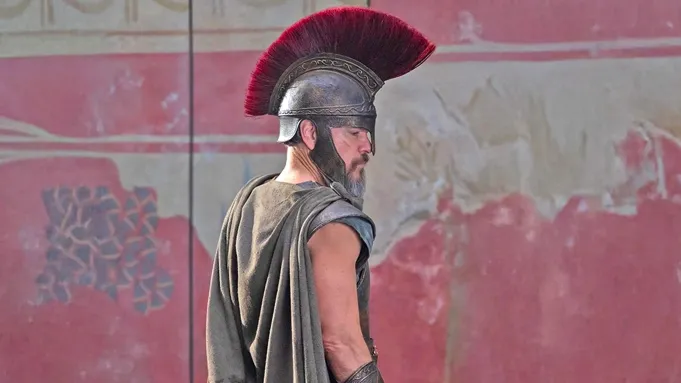
Matt Damon as Odysseus in Christopher Nolan's 'The Odyssey'; Courtesy of Universal via Deadline
In many ways, Nolan has already told his own version of an odyssey.
At its core, Interstellar (2014) is also the story of a man separated from his family, enduring impossible trials in the hope of returning home. Nolan himself discussed these similarities during an interview with Stephen Colbert prior to the film's release.
Whether trapped in the vacuum of space or stranded across the seas of ancient Greece, the emotional thread remains the same: love as a force of endurance. The desire to return home and the faith that those waiting for us still remain there have always been central themes in Nolan's work. In a mythical world ruled by merciless Gods, no crime goes unpunished. The Odyssey provides more of a mirror to society as it underscores the flawed nature of man, which in turn facilitates societal decay. This homecoming is imbued with repentance at every step.
The Odyssey feels less like Christopher Nolan adapting Homer and more like Christopher Nolan finally arriving at the story he has been telling his entire career. His passion for large-format filmmaking has culminated in The Odyssey becoming the first feature film shot entirely on IMAX 70mm cameras.
For those unfamiliar, IMAX filmmaking is one of the most demanding forms of production. These cameras are notoriously loud, cumbersome, expensive to transport, and capable of capturing only a few minutes of footage before requiring a reload. Nolan’s previous eight films utilized the format for select sequences, each one including an increasing amount of IMAX footage, with Oppenheimer featuring the most IMAX up until this point at about 40 minutes.
The epic proportions of its content could not be better suited for the cinematic vision Nolan has built his career on. The Odyssey is the first feature film to be captured entirely on IMAX. As a result, The Odyssey feels less like a technical flex and more like the culmination of decades of experimentation. Nolan's commitment to practical filmmaking and physical elements meant that he was redefining the limits to achieve monumental results. This film represents the apex of that pursuit.
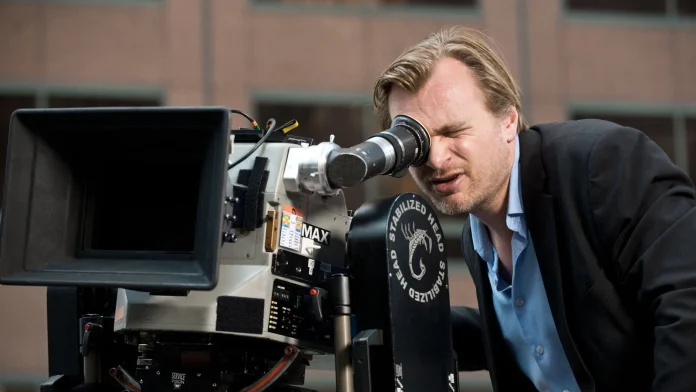
Christopher Nolan with an IMAX camera via VideoMaker
As I watched scenes unfold across rolling waters and mountaintops, I could not stop thinking about the hundreds of pounds of camera equipment that somehow made the journey alongside the cast and crew.
Throughout the film, I found myself marveling not only at what was on screen, but at the sheer physicality required to capture it. Every crashing wave and windswept cliff seemed to carry evidence of the crew's labor behind it.
Rather than distancing me from the story, that awareness deepened my appreciation for it. The effort required to bring The Odyssey to life mirrors the story itself: an arduous journey undertaken in pursuit of something extraordinary.
I often find myself critiquing runtime. Every minute in a theater should feel earned, not expected, and many modern blockbusters are bloated by stretches that test the audience's patience. The Odyssey provides a rare exception.
Its nearly three-hour runtime feels not only warranted but essential. The audience must feel the passage of time alongside Odysseus (played by Matt Damon). His longing, exhaustion, and determination can only resonate if we, too, experience the weight of the years spent trying to return home.
Perhaps the film's greatest accomplishment is that it makes myth feel immediate.
Upon release, online conversations quickly turned toward the film's textual accuracy. Naturally, classics enthusiasts have been eager to dissect Nolan's choices, from casting decisions to script adaptations. Yet this discourse feels entirely in keeping with the spirit of the source material itself.
Like the oral storytelling tradition that eventually brought Homer to paper, every retelling of The Odyssey arrives with its own interpretations, variations, and embellishments. Whether Nolan chooses to embrace or depart from the original text, each decision communicates something new to modern audiences.
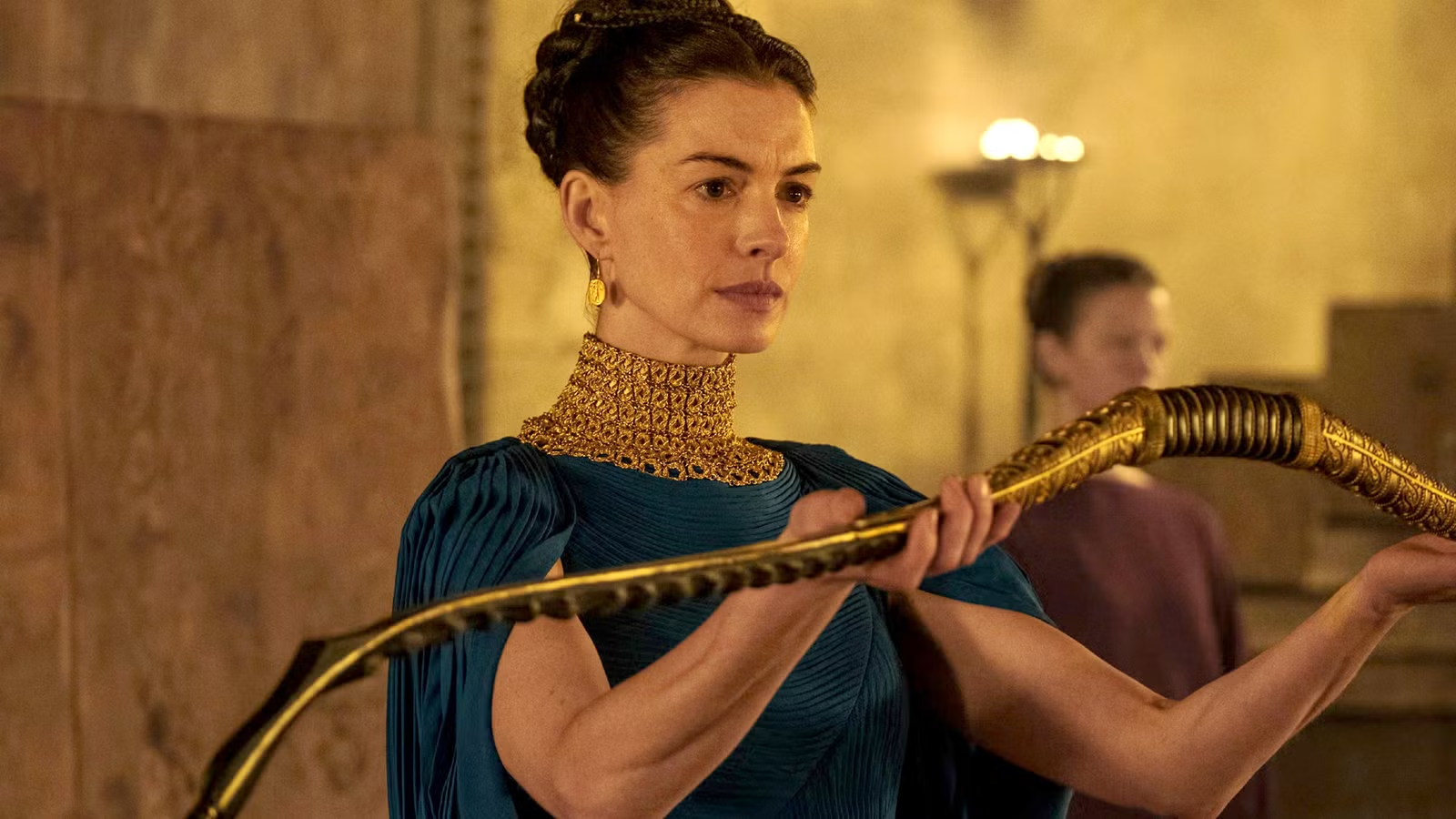
Anne Hathaway as Penelope; Courtesy of ScreenRant
These deviations ultimately accentuate themes that remain deeply relevant today, inviting viewers to reconsider ideas surrounding beauty, masculinity, corruption, power, and even contemporary society itself.
Through practical effects, real locations, and an unwavering commitment to physical filmmaking, Nolan creates a world that feels inhabited rather than imagined.
Most people approach The Odyssey with some degree of familiarity, having encountered the epic in school years earlier. At its best, Nolan's adaptation allows those memories to resurface, much in the same way that Odysseus himself must remember who he is to find his way home.
The result is a rare cinematic experience: an ancient myth rendered with such tangible reality that, for a few hours, audiences are once again willing to believe in gods, monsters, and impossible journeys.