By Natalie McCarty
“What makes Luis Valdez Luis Valdez is Luis Valdez”
Perhaps the most powerful thing art can do is not simply reflect who we are, but reveal who we have failed to see. Throughout history, some artists have documented their moment, while others have transformed the way a culture understands itself. Luis Valdez belongs to the rare group whose work did both.
With American Pachuco: The Legend of Luis Valdez, director David Alvarado delivers a powerful documentary about the legendary playwright, filmmaker, and activist. He creates a moving portrait of a man who spent his entire life insisting that Chicano stories had been essential chapters of the American experience all along.
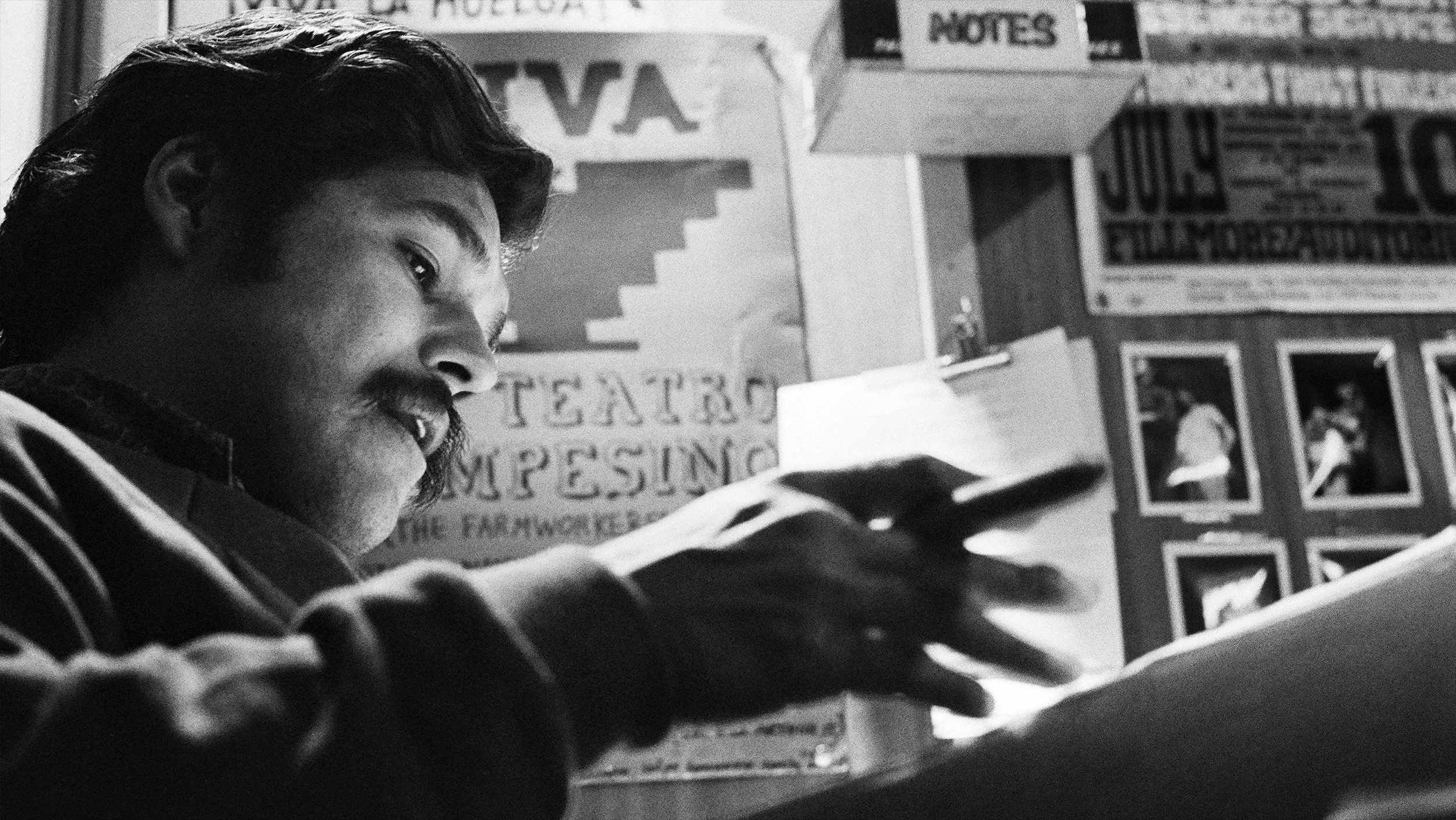
The battle Luis Valdez fought was not only about discrimination, but about what happens when generations of people contribute, sacrifice, create, and build a nation yet rarely see their humanity reflected in the stories that nation tells about itself. Valdez understood that invisibility could be its own form of erasure. If people are absent from the stories a society tells, they are often absent from the way that society imagines its future. His life's work became a direct challenge to that idea. Luis Valdez didn't just tell Chicano stories; he expanded the American story. And that is what makes American Pachuco: The Legend of Luis Valdez feel so meaningful at this particular moment.
Born in Delano, California, in 1940, the son of migrant farmworkers, Luis Valdez's journey represents one of the most powerful versions of the American dream. Through his journey from the fields of California to Broadway and Hollywood, Luis Valdez brought the stories that had been ignored into spaces where they could no longer be overlooked. The voices of farmworkers, the rhythms of Mexican American communities, the struggles of working people, and the complexity of living between cultures all became central elements of his artistic identity.
In 1965, Valdez left the San Francisco Mime Troupe to join César Chávez and the United Farm Workers movement, where he founded El Teatro Campesino. The theater company began as a form of political expression created for farmworkers and performed on flatbed trucks in the fields where those workers lived and labored. What made El Teatro Campesino revolutionary was that these performances were never detached from the realities around them. They were embedded within the movement itself. They used humor to expose injustice, satire to challenge power, and performance to remind people that their experiences mattered. Theater became a voice for people who had been denied one.
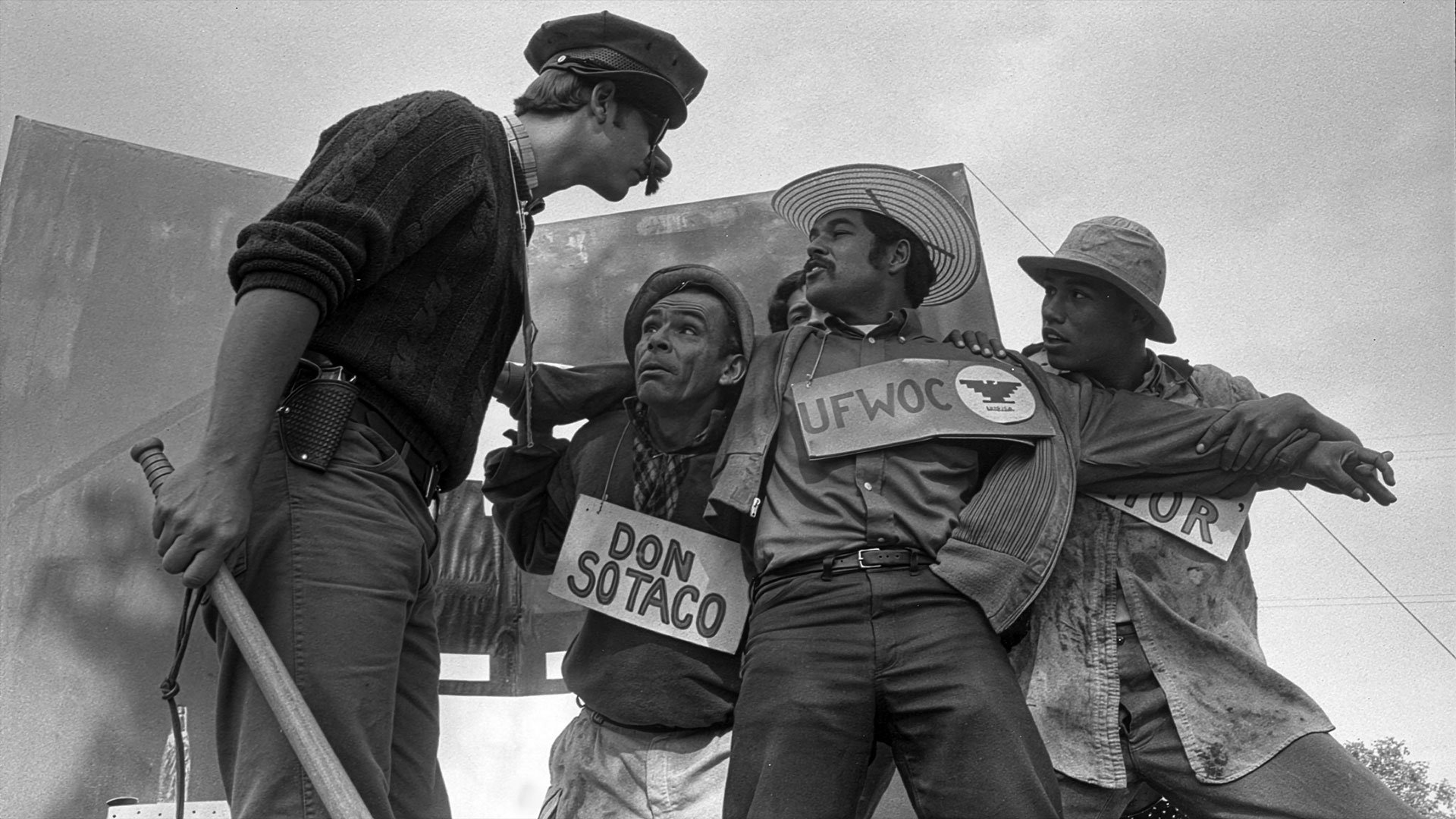
Courtesy of American Pachuco: The Legend of Luis Valdez (2026)
In the documentary, Dolores Huerta described Valdez as a “social arsonist,” someone who could ignite people, inspire action, and awaken a collective sense of possibility. It may be one of the most accurate descriptions of his artistic philosophy, for Valdez understood that artists have the ability, and perhaps the responsibility, to challenge the stories societies tell about themselves.
But one of the most beautiful aspects of Valdez's work is that he never allowed activism to erase joy. Too often, stories about marginalized communities are framed only through struggle and suffering, but Valdez understood something much deeper: people are not defined only by what they endure. They are defined by how they love, laugh, dream, celebrate, create, and imagine. He refused to reduce people to symbols or political arguments. His work embraced the full humanity of Chicano communities, creating characters who could be proud and uncertain, rebellious and loving, political and joyful all at once.
David Alvarado's documentary captures this spirit with remarkable energy. American Pachuco does not treat Luis Valdez like a figure preserved behind glass, but presents him as a living force, a creative spark that continues to influence generations of artists and activists. Through vibrant archival footage, imaginative editing, restored historical material, and interviews with collaborators including Edward James Olmos, Linda Ronstadt, and Cheech Marin, Alvarado creates a film that moves with the same passion and momentum as its subject.
The documentary understands that Valdez's story is not simply about what he accomplished, but about what he made possible.
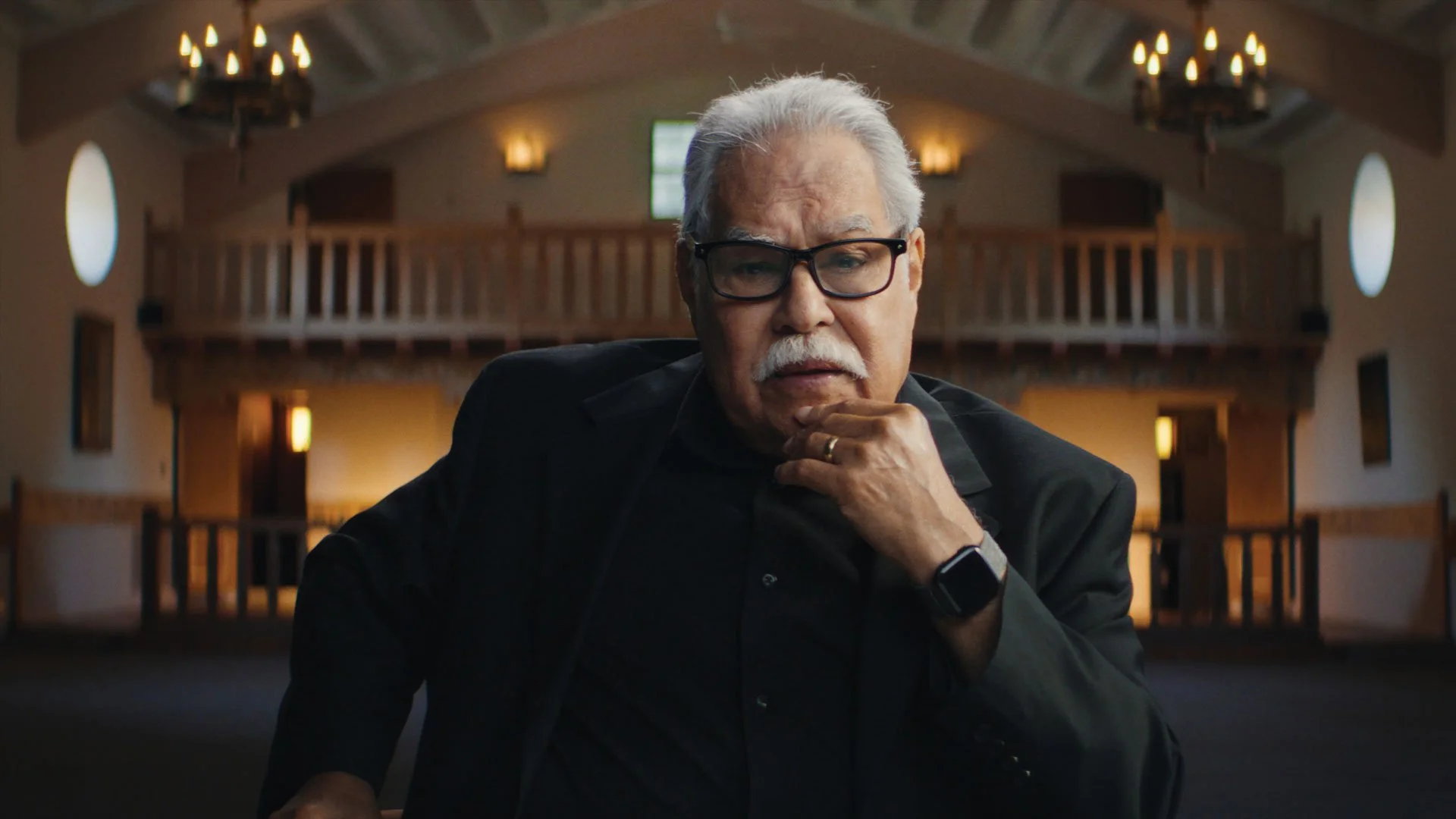
Courtesy of American Pachuco: The Legend of Luis Valdez (2026)
The accomplishments of Luis Valdez are remarkable by any measure. He became the first Chicano playwright to bring a work to Broadway with Zoot Suit, a groundbreaking achievement that challenged mainstream theater to recognize a story it had long ignored. Following its sold-out Los Angeles run, the play made its New York premiere in 1979. He later wrote and directed La Bamba, the 1987 cultural phenomenon that introduced millions of viewers to the life and family of musician Ritchie Valens and became the first Hollywood blockbuster centered on a Hispanic family's experience. Both Zoot Suit and La Bamba were later selected by the Library of Congress for preservation in the National Film Registry, recognizing their lasting importance to American culture.
Before Zoot Suit and La Bamba, Mexican American stories were too often filtered through someone else's imagination. They were reduced to stereotypes, side characters, historical footnotes, or cultural curiosities. Valdez challenged that limitation by creating stories where Mexican American characters were allowed to be everything audiences had always expected from other communities: complex, flawed, funny, ambitious, romantic, and fully human.
Valdez has always had the extraordinary power to connect audiences to his productions because they hinged on a recognizable humanity. By telling deeply specific stories, he created something that could reach anyone.
There is also something beautifully circular about David Alvarado being the filmmaker to tell this story. Alvarado has shared that he was a young filmmaker when he first heard Luis Valdez speak, and that experience changed his understanding of what a creative life could look like. Two decades later, he created American Pachuco as a way of passing that inspiration forward.
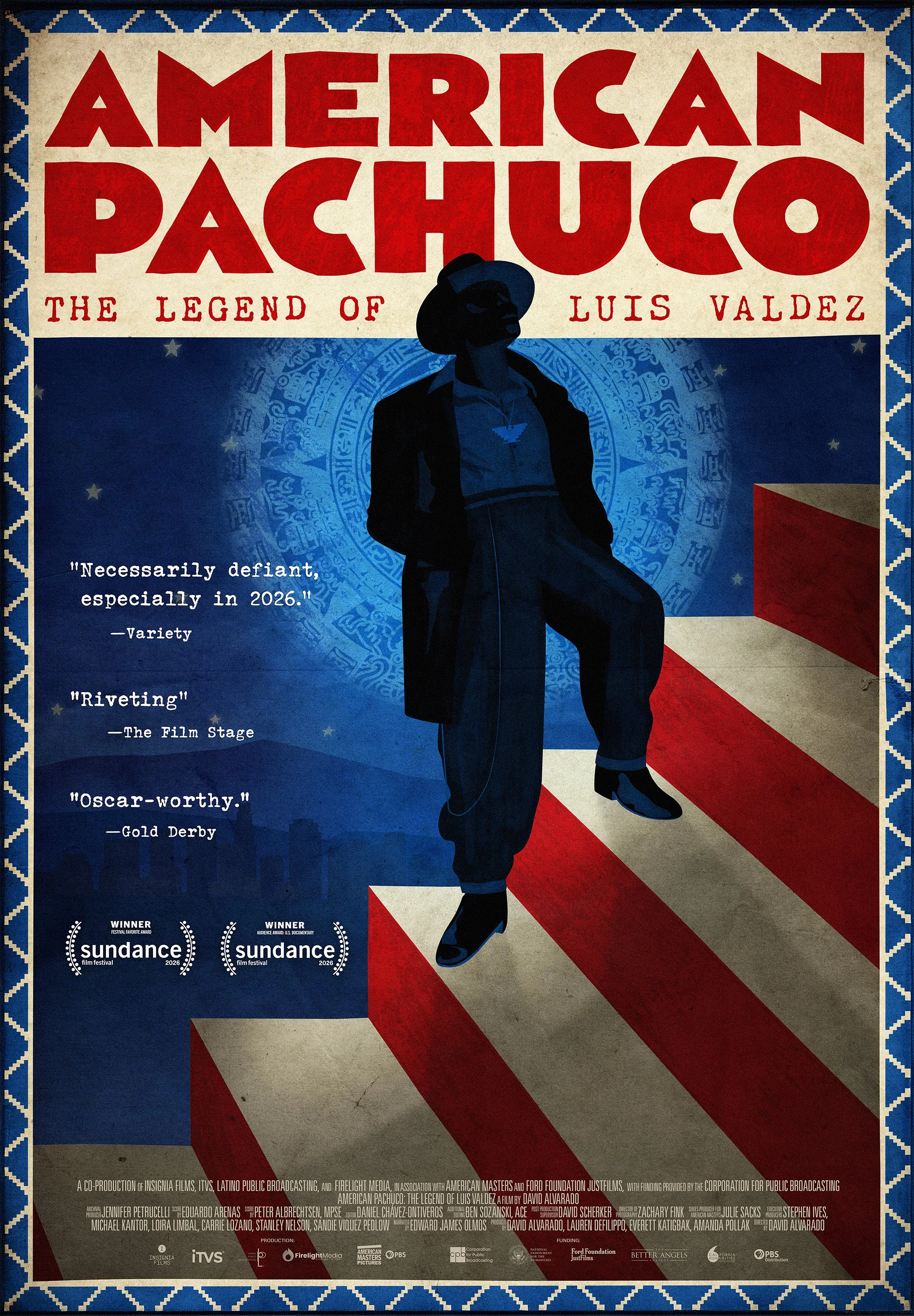
Courtesy of American Pachuco: The Legend of Luis Valdez (2026)
The documentary becomes a continuation of the very legacy it celebrates: one artist expanding another person's imagination, and that expanded imagination creating something new for the next generation. Alvarado is not simply documenting the impact of Luis Valdez; he is an example of that impact.
That is how culture survives. One person tells a story, causing someone else to realize they are allowed to tell theirs. And suddenly, the possibilities become larger.
As conversations surrounding immigration, Latino identity, and migrant workers continue across the country, American Pachuco reminds audiences of a truth that should never have been controversial: Latino communities have always been central to the American experience. Farmworkers remain the backbone of the nation's food system. Generations of Latino Americans have shaped America's economy, language, music, art, and culture. They have built communities, industries, and traditions that define the country.
They have never been outsiders looking in. They have always been the backbone of our nation.
Luis Valdez has spent his life proving that stories have the power to change what a nation sees when it looks at itself. And thanks to David Alvarado, a new generation has the opportunity to see exactly what he saw all along.