Face Fatigue in Hollywood
By Zara Dosanjh
When the trailer for a brand-new, star-studded film drops, audience anticipation and media buzz are cut with a collective sigh.
The same names, the same casting, and eerily, the same faces govern the big screen. Talent is an increasingly nepotistic vacuum, the most exclusive of tables where big names and familiar faces pack the seats. Though this is far from a new Hollywood phenomenon – star-power has ruled the big screen since the age of silent cinema and Clara Bow – there’s a weighty difference in 2026. The talent pool is oversaturated, films are even more commercial, and the parasocial thread between fan and celebrity has unravelled exponentially.
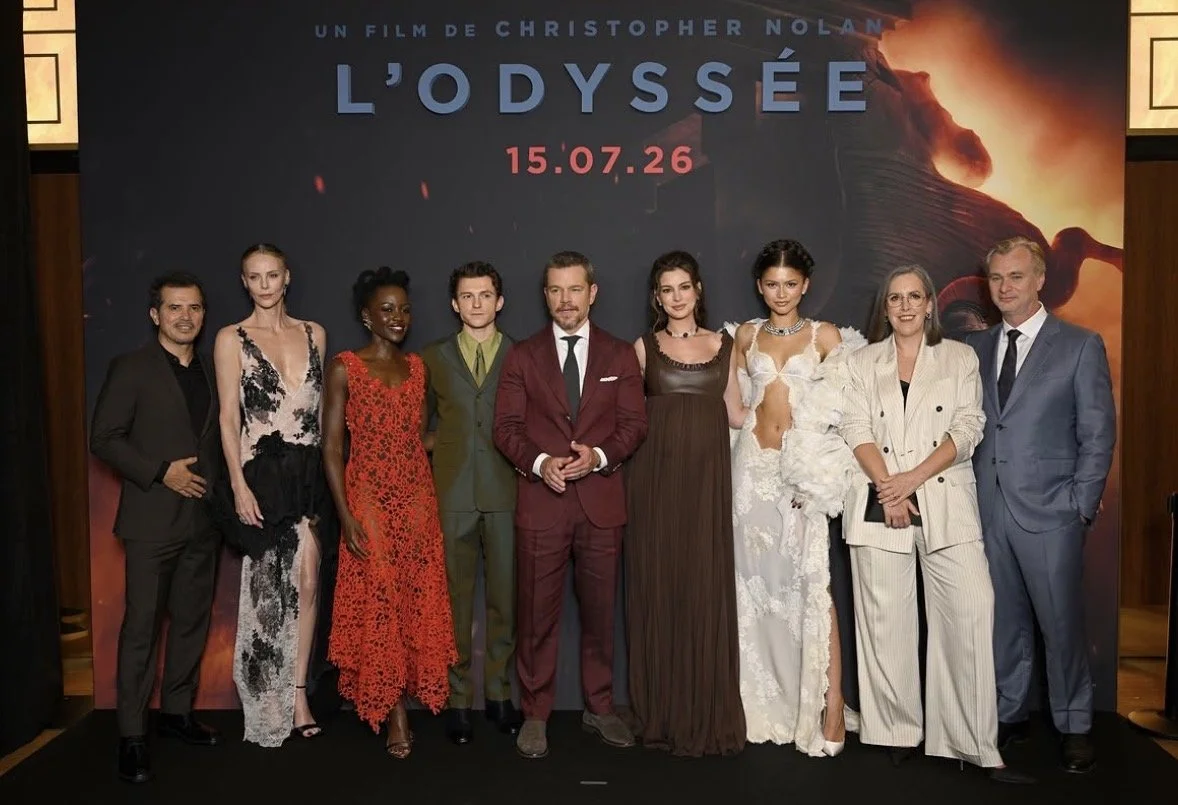
A key example is Hollywood’s hottest married it-couple, Zendaya and Tom Holland. They’ve taken a generational run with Spider-Man: Brand New Day and The Odyssey, which points to undeniable talent, charisma, and star power on a historic level. But they also undoubtedly fall into the category of actors who are in everything, everywhere, all the time. It begs the question: why are casting directors and producers so afraid of outsourcing their talent?
From keeping tabs on Zendaya’s latest red-carpet looks to viral memes produced by quietly methodical press runs, films today are essentially big and better phone screens to watch our favourite celebrities in full voyeuristic IMAX glory. Hollywood casting is a double-edged sword: although we might feel fatigued by seeing the same faces in everything, we also can’t get enough of these stars, from Anne Hathaway’s stylish baby bump to Robert Pattinson’s wry millennialism. We feel like we know our favourite celebrities, and there’s an element of parasocial pride seeing them cast yet again.
Interestingly, recent cinematic and small-screen hits Obsession, Off Campus and Heated Rivalry all have one striking thing in common: the attached stars were relative unknowns in the industry. Talent channelled through the vessel of an unfamiliar face is raw and refreshing. In the case of Obsession, we're not watching Robert Pattinson or Zendaya play out trouble in paradise, but Nikki and Bear, characters that feel whole and performances that feel real and detached from celebrity magnetism. We're met with characters first and actors second. Hollywood might have a new bandwagon to jump on: invest in unknown talent again. Not only is it more interesting for audiences, but we're tapping into talent that deserves to be on the map just as much.
New faces onscreen are a breath of fresh air for another reason; they haven’t yet fallen to the plight of Instagram face. Hollywood is fixed in a vicious plastic surgery cycle. Filler is commonplace, while the biggest stars undergo the knife and get away with expressionless, Botox-saturated performances because of the star power that’s afforded to them. As New York dermatologist Dr David A Colbert told The Guardian: “It’s almost become standard that the face doesn’t move as much as it used to.” It threatens the art of acting, with the big screen becoming a projection of venomous beauty standards and false intimacy with celebrity over what it should be – quite simply a place for good film. The online criticism of actors’ looks and performances is malicious and rooted in misogyny (see the speculation of Anne Hathaway’s looks, for instance. In no way does the pressure to look a certain way start and end with celebrity. But it’s a clear signpost for the endemic facing Hollywood right now: not only are we looking at the same people, but people who look the same.
Maybe this is just what happens when filmmaking becomes an over-commercialised, money-making process. But if we’ve learned anything from the recent pop culture blow-ups, risk-taking in casting has the potential to grant the most success these days. Young talent needs to be invested in more than ever.
In her New Yorker essay “Our Plastic-Surgery Nightmare,” Jia Tolentino writes: “The internet casually scrambles basic ideas of personhood, reframing people as commodities and stripping us for parts.” Hollywood is guilty of reframing people as commodities too, and while repeatedly casting stars and plastic surgery isn’t news, coupled with the rise of GLP-1s and filler, the face in 2026 has become a poignant battleground of fast-turning trends and undying admiration and aspiration. The people on our screens are unchanging and uniform, and unfortunately present a neat indication of culture.