By Natalie McCarty
Looking to make your life feel more cinematic? Light a candle, let the lights down low, pour a glass of wine (or make a midnight margarita), and dust off that old Mazzy Star record on your shelf.
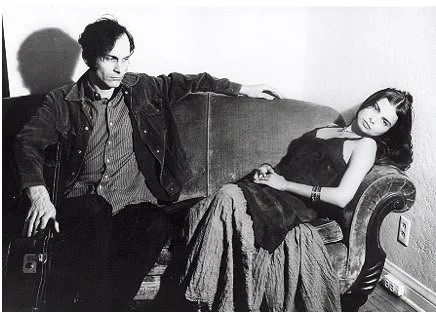
Few bands feel as tied to a particular kind of ’90s romanticism as Mazzy Star. Think the sisters from Practical Magic, the feeling of Gilmore Girls, slip dresses with cardigans, bedrooms full of incense, and romantic encounters that end in some epic transformation. For the witchy girls, and anyone who’s ever lived on the East Coast, “Fade Into You” is practically synonymous with a mysterious girl who has excellent taste and a questionable attachment style.
This conjured image is the essence of Mazzy Star itself. The internet has claimed their sound as the unofficial soundtrack to emotionally unavailable men, velvet wardrobes, and the whimsigoth revival, which, to me, couldn’t possibly make any more sense. Few bands sound quite so much like falling in love with someone you can’t quite have.
But there’s more to Mazzy Star than the aesthetic their music has come to represent. Long before whimsigoth had a name, Hope Sandoval and David Roback were building a sound that would outlast the decade that produced it. The look might be having a moment again, but the music was never just a trend.
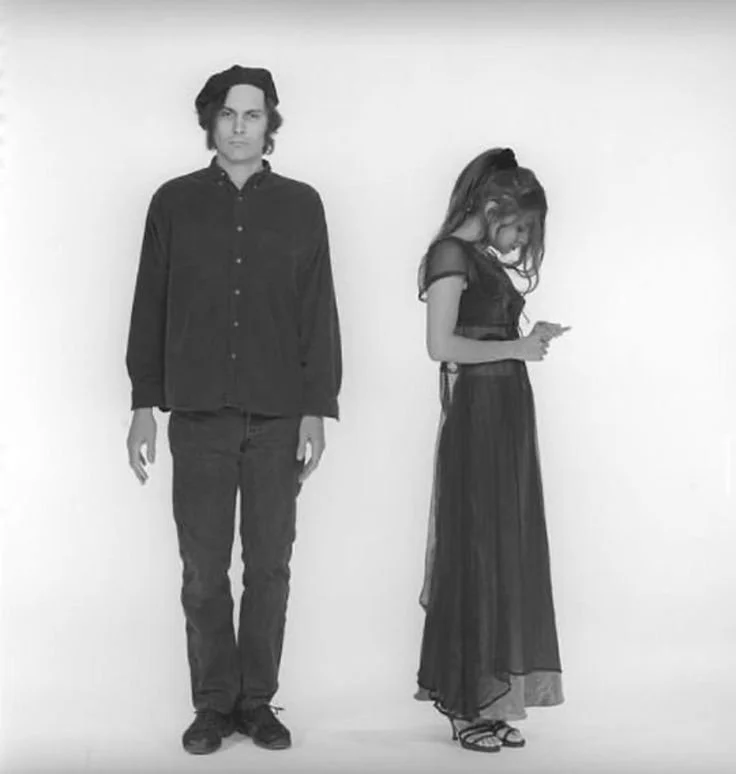
Formed in Los Angeles in the late 1980s, Mazzy Star grew out of the creative partnership between vocalist Hope Sandoval and guitarist David Roback. Their music drew on psychedelic rock, folk, and blues, creating a sound that didn't fit comfortably into the grunge movement taking over rock at the time. While plenty of their contemporaries leaned into distortion, aggression, and explosive choruses, Mazzy Star moved at its own pace. The guitars seemed to drift rather than drive the songs forward, and Sandoval sang as though she were letting the listener eavesdrop on something private.
Sandoval and Roback bore Mazzy Star from different musical histories, and the meeting of those influences is a big part of what made their work so distinctive.
Sandoval grew up in East Los Angeles in a Mexican-American family, surrounded by a range of music at home. Her mother listened to Spanish-language music, her sister loved country, and her father listened to big-band music and jazz. As a teenager, Sandoval became interested in the Rolling Stones and was drawn to the alternative music scene developing around Los Angeles. Before Mazzy Star, she formed the acoustic folk duo Going Home with her friend Sylvia Gomez. The pair recorded music with Roback, who was already an established figure in the city's underground scene. Eventually, when Roback's band Opal lost its vocalist Kendra Smith, he asked Sandoval to join. Opal gradually became Mazzy Star.
Roback's path was different. He had been part of the Paisley Underground, the Los Angeles music scene that drew on the psychedelic sounds of the 1960s, and had played in bands including Rain Parade and Opal. He was interested in art and had spent time pursuing the New York art scene before music became his primary focus. His musical touchstones included the Beatles, Jimi Hendrix, Syd Barrett, Patti Smith, and the Velvet Underground. He preferred working outside the pressures of whatever was popular at the time, following his own instincts rather than trying to keep up with contemporary trends.
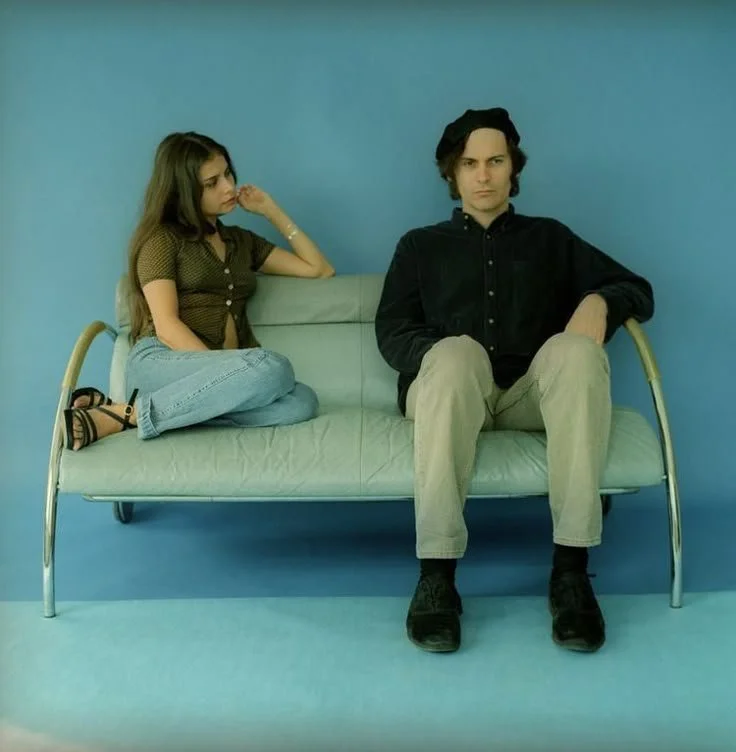
Sandoval and Roback didn't enter their partnership with identical tastes. Sandoval was drawn to more contemporary music and the Rolling Stones, while Roback had a deeper connection to older psychedelic and experimental sounds. Their collaboration brought those worlds together. His arrangements gave her voice a setting that could be hypnotic without becoming weightless, while her songwriting and delivery brought a human intimacy to his expansive guitar work.
There was a personal relationship between them, too. Sandoval and Roback were romantically involved, and their relationship became part of the history surrounding Mazzy Star. They eventually went their separate ways romantically, but their creative partnership continued. Their story adds another dimension to the music, particularly given how often the songs explore desire, distance, and the difficulty of truly knowing another person. Still, it's worth resisting the urge to treat every lyric as a clue about their relationship. The music is compelling partly because it leaves so much open to interpretation.
Even at its most melancholic, Mazzy Star's music retained a certain warmth. You can hear that balance throughout the band's catalog, from the early album She Hangs Brightly to So Tonight That I Might See, released in 1993. Songs like “Halah” and “Blue Light” unfold slowly, allowing the guitars and vocals to establish a mood rather than rushing toward a big payoff. “Into Dust” is especially striking in its simplicity, with its sparse arrangement leaving Sandoval's voice almost exposed.
Then, of course, there's the penultimate “Fade Into You,” the song that has followed Mazzy Star across generations.
Released in 1993, the track became the band's defining hit, reaching audiences far beyond the alternative music scene. Its guitar melody is instantly recognizable, but the song's emotional ambiguity is what keeps it interesting. Sandoval sings about wanting to reach someone who remains just out of reach. The longing feels romantic, but there's this impossible distance that cannot be closed within it, too. The person at the center of the song never becomes fully knowable.
That is a big part of why the song continues to work in so many different contexts. It can soundtrack a love story, a breakup, a late-night drive, or a memory that feels better in retrospect than it did at the time. I want it to be my wedding song, and yet I’ve spent many years crying over it. There are just no words to describe the feeling it elicits; it’s purely the accompaniment sound to the human experience.

Mazzy Star's influence can be heard in the broader landscape of dream pop and alternative music that followed. Artists working in similarly hazy, melancholic territory have continued to explore that space, although the lineage of dream pop is much wider than any one band. Mazzy Star's particular contribution was making intimacy feel expansive, as though a song could be deeply personal and still belong to an entire world.
That sonic world they built is part of why the band fits so naturally into the current interest in whimsigoth.
The term whimsigoth is relatively new as an internet aesthetic label, but the visual and cultural ingredients it describes have been around for decades. The style pulls together gothic darkness and bohemian softness: flowing dresses, velvet, dark florals, silver jewelry, celestial prints, candles, old furniture, and an interest in witchcraft and the supernatural. Its present-day revival draws heavily on the fashion, music, television, and films of the late ’80s and ’90s.
Whimsigoth is often treated as a visual trend, something that can be recreated through the right clothes, makeup, decor, and carefully arranged photographs. Music gives that look another dimension; it suggests what it feels like to inhabit that world rather than just what it looks like from the outside.
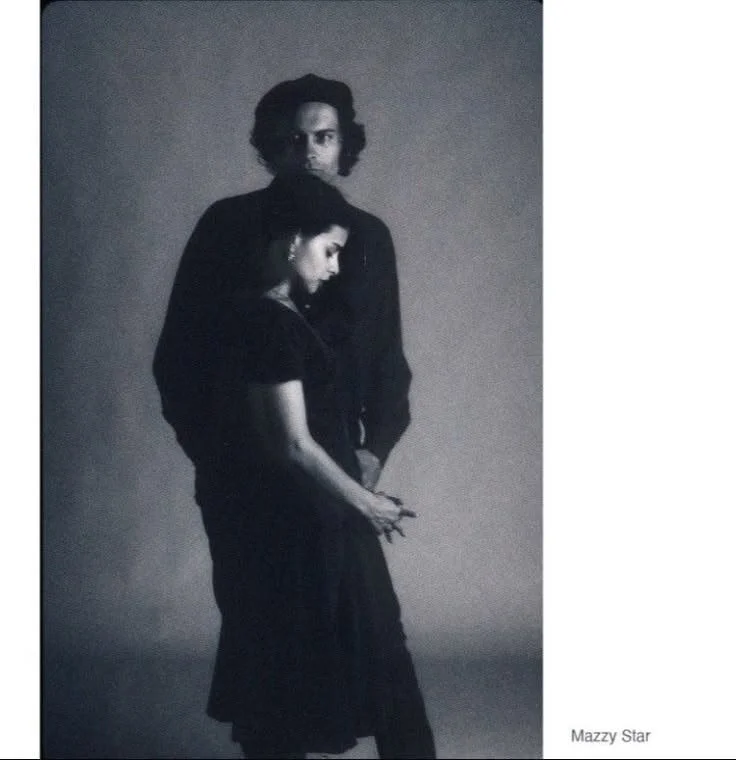
Mazzy Star's songs have that quality. They sound intimate and a little otherworldly, but they never fully leave reality behind. Even when the music feels dreamlike, it is grounded in ordinary human experiences that are difficult to explain. That combination of romanticism and emotional ambiguity is what connects the band to the sensibility behind whimsigoth.
The current whimsigoth revival is, in some ways, an attempt to reconnect with a version of the ’90s that allowed room for mystery, eccentricity, and a more unconventional kind of femininity. Mazzy Star's music offers more than a convenient soundtrack for that nostalgia. It provides a reminder that these sensibilities existed beyond fashion and film, and that they were being explored by musicians who were developing their own language long before the internet gave the aesthetic a name.