
By Sadie Jane Mayhew
The blue wave, or “tsunami,” as many reporters call it, that swept the country last night sends an unmistakable message: voters still have the power to change the political landscape. In a widespread repudiation of President Donald Trump and his administration, Democrats reclaimed control of both chambers of Congress, flipped several traditionally Republican Senate seats, and made historic gains in state-level elections across the country.
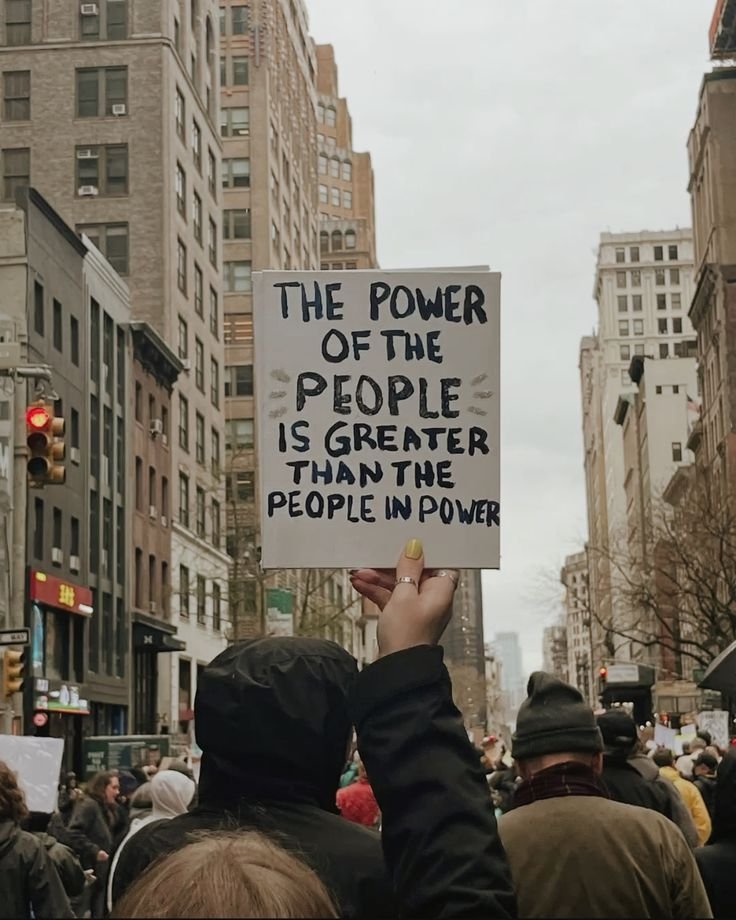
Sourced through Pinterest.
MAJOR DEMOCRATIC VICTORIES AND HISTORIC MILESTONES
Democrats retake Congress. Democrats won control of both the Senate and House of Representatives, fundamentally shifting the balance of power in Washington and creating a stronger check on the Trump administration.
Keisha Lance Bottoms wins Georgia. Bottoms became the first Black woman elected governor of any U.S. state and Georgia's first female governor. Her victory is particularly significant following Stacey Abrams' two unsuccessful gubernatorial campaigns, which helped build Georgia's modern Democratic coalition and put the state at the center of national politics.
Deb Haaland wins New Mexico. Haaland becomes the first Native American woman elected governor of a U.S. state, marking an extraordinary milestone for Indigenous representation in American politics.
Kansas elects a Democratic senator for the first time in nearly a century. A remarkable breakthrough in one of the country's most reliably Republican states.
Iowa and Ohio flip. Democrats flipped Senate seats in both states, while Rob Sand won the Iowa governorship and Amy Acton won in Ohio, ending Republican control of both governors' offices.
North Carolina and South Carolina flip Senate seats. Democratic victories in both states represent significant breakthroughs in two traditionally Republican strongholds.
Texas delivers one of the biggest shocks of the election. James Talarico, a progressive Christian and former teacher, defeated Republican Ken Paxton to win a U.S. Senate seat, the first Democrat to win a Texas Senate race since 1988. Gina Hinojosa also defeated incumbent Greg Abbott, becoming Texas' first Latina governor. Democrats made additional historic gains in statewide offices and the state legislature. In a state long considered one of the strongest Republican strongholds in the country, these victories represent a seismic political shift.
Abdul El-Sayed wins Michigan's Senate race. A physician, epidemiologist, academic and former public health administrator, El-Sayed becomes the first Muslim elected to the U.S. Senate. His victory is also a major win for the progressive wing of the Democratic Party.
Annie Andrews wins South Carolina. The pediatrician became the first woman elected to represent South Carolina in the U.S. Senate. Her victory also marks the first Democratic Senate win in the state in 28 years.
Peggy Flanagan wins Minnesota's Senate race. Flanagan becomes the first Native American woman elected to the U.S. Senate, another groundbreaking moment for Indigenous representation.
Chris Pappas wins New Hampshire's Senate race. Pappas becomes the first openly gay man elected to the U.S. Senate.
David Crowley wins Wisconsin's governorship. Crowley becomes Wisconsin's first Black governor.
Amy Klobuchar wins Minnesota's governorship. Klobuchar becomes Minnesota's first woman governor.
Amy Acton wins Ohio's governorship. Acton became the first woman elected governor of Ohio and the state's first Jewish governor. (Nancy Hollister briefly served as governor in 1998, but was not elected to the office.)
Xavier Becerra wins California's governorship. Becerra becomes the first Latino elected governor of California. The last Latino to hold the office was Romualdo Pacheco in 1875.
Gina Hinojosa wins Texas. Hinojosa becomes the state's first Latina governor and only its third woman to hold the office.
Other historical nods outside of the democratic blue wave sweep were that Byron Donalds became Florida's first Black governor, and Marsha Blackburn became Tennessee's first woman governor.

Sourced through Pinterest.
THE BIGGER PICTURE
Taken together, these victories represent an extraordinary nationwide shift toward Democrats and a clear rebuke of the Trump administration. Voters have expressed deep dissatisfaction with the direction of the country, with the cost of living, the war in Iran, and concerns about government corruption among the major issues driving the election.
The results may also create renewed momentum around progressive priorities, including ending the war in Iran, expanding access to healthcare, dismantling or fundamentally reforming ICE, protecting human rights, strengthening environmental protections and reconsidering American involvement in global conflicts.
There is, however, an important distinction between a Democratic victory and a uniformly progressive mandate. Not every Democrat elected last night shares the same positions on immigration, healthcare, foreign policy, or the environment, nor has every Democratic candidate shown a willingness to denounce Israel's actions in Gaza as genocide or oppose continued U.S. military support. The party's divisions on Palestine and Israel remain significant and should not be overlooked.
This was not an entirely progressive wave, but it was a substantial departure from the political red, right-wing and conservative landscape of recent years. It sends a very clear message that millions of voters are unhappy with the status quo and are willing to shift their support to demand something different.
These victories matter because they represent communities, identities and voices that have historically been excluded from the highest levels of American political power. And they remind us that the electorate, when mobilized, can change what American politics looks like in this second half of the decade.