“How Did You Get This Gig?”: The Replacement of Journalists With Influencers
By Katherine Mulinga
“How did you get this gig?” Kris Jenner asked Jake Shane at the 2026 Vanity Fair Oscars Party.
The question was brief, but the reaction to it was not. Online, it crystallized a broader anxiety about who belongs in media spaces — and who does not. More specifically, it exposed the growing substitution of journalists on red carpets and in press rooms with influencers and internet personalities.
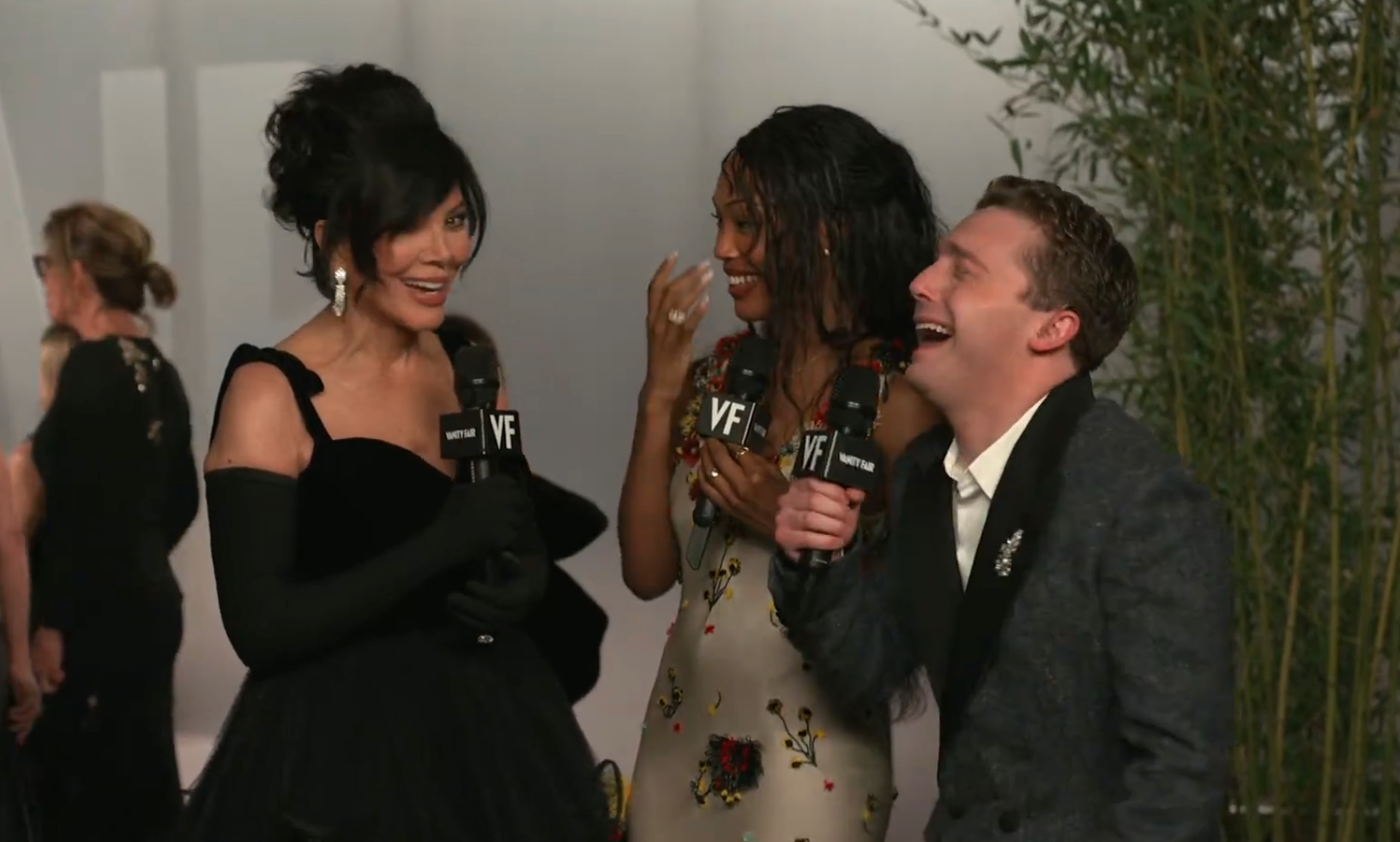
Credit: BuzzFeed
Some people argue that influencers are “stealing” journalists’ jobs. I do not. The more pressing problem is that media companies increasingly reward visibility over preparation, virality over reporting, and audience capture over journalistic rigor.
That is not an indictment of influencers as a category. Some are intelligent, adaptable, and deeply effective communicators. Emma Chamberlain, for example, showed visible growth across her Met Gala hosting appearances, demonstrating how quickly digital talent can sharpen with experience. Alex Cooper offers a different version of that trajectory. After rising through Barstool Sports and building Call Her Daddy into a media empire, she developed into a formidable interviewer and host. Digital creators can learn the skills. Some already have.
The issue is not whether influencers can succeed in journalism-adjacent roles. It is why so many media institutions now seem willing to confuse popularity with qualification.
According to Google, a journalist is someone who “researches, writes, edits, and reports news for print, broadcast, or online media.” An influencer, by contrast, is “an individual who leverages their online reputation, credibility, and authority on social media to shape the opinions and purchasing decisions of their followers.” The overlap is real, but the distinction is fundamental.
Journalism is rooted in public service. Influencing is rooted in persuasion, branding, and audience intimacy.
As someone who studied journalism in college, I do not believe formal education is what separates a journalist from everyone else. Great reporters and interviewers are not produced by degrees alone. Journalism can be learned through practice, observation, curiosity, and experience, but it is still a discipline!
Research is a discipline. Interviewing is a discipline. Knowing how to ask follow-up questions, verify information, navigate ethics, and distinguish what matters from what merely performs well online, well, that is discipline too.
A large following does not confer those instincts.
This matters even more because traditional journalism no longer holds the monopoly it once did. TikTok, X, Instagram, YouTube, and other platforms have become primary sources of information for millions of people, especially younger audiences. News now reaches the public through personalities as often as through institutions.
That shift has reconfigured audience expectations. People want speed, fluency, relatability, and voice. They are drawn to information that feels immediate and human rather than distant and institutional. At the same time, trust in traditional media has eroded, while trust in familiar online figures has, in many cases, deepened. Audiences feel they know their favorite influencers. They watch them daily, hear them speak casually from their homes, and follow the details of their routines, relationships, and opinions. That intimacy breeds loyalty. In modern media, loyalty is a form of power.
So yes, influencers make sense in these spaces. They understand attention better than many traditional media professionals do. They know how to pace content, shape a narrative, build a personal brand, and cultivate audience investment. What they often lack is the deeper architecture behind strong reporting: subject-matter depth, editorial discipline, institutional accountability, and the habit of pursuing substance beyond the immediate content cycle.
That deficit becomes especially visible in interviews. On red carpets, some influencers appear unfamiliar with the work, careers, or significance of the people they are speaking to. Questions stay thin. The exchange remains surface-level. The goal is not necessarily insight, but clipability.

Credit: Vogue
There is nothing wrong with entertainment. Red carpets have always left room for spectacle, charm, and unseriousness… but entertainment is not the same as preparedness.
That distinction matters because the divide between a journalist and an influencer is not just stylistic; it is a matter of professional orientation.
A journalist enters a conversation in service of the public: to clarify, contextualize, probe, and inform. An influencer often enters the same exchange, balancing additional incentives — brand maintenance, sponsorships, audience reaction, engagement metrics, and personal relevance. Those pressures do not make meaningful work impossible. But they do shape the work.
And that is where the tension lives.
Traditional journalism cannot afford to ignore what influencers do well. The polished, detached tone that once defined television and print no longer resonates with many younger audiences. People now gravitate toward voice, humor, intimacy, and emotional accessibility. Influencers succeed, in part, because they make audiences feel included rather than managed. Journalism can and should learn from that.
What it should not do is surrender its standards in the process. If every media space becomes organized around virality and entertainment value, journalism risks collapsing into performance. The danger is not that influencers exist within the ecosystem. The danger is that the industry increasingly treats attention as a substitute for rigor.
Some influencers are talented interviewers. Some may become exceptional journalists. But fame online should not, by itself, qualify anyone to occupy media spaces that require preparation, fluency, and responsibility.
The real issue is not inherently that influencers are entering the journalism space; it’s that journalism, as an industry, appears increasingly willing to dilute its own standards in exchange for reach.