How Women Will Save the Earth
On the feminization of plant-based eating and veganism
By Debra Murray
While scrolling through my TikTok feed, I came across a video of a young gym influencer reacting to a previous video of him getting tofu rather than a meat option in his bowl at a restaurant. Naturally, I scoured until I came across the original video. People in the comments were calling him “gay” for ordering tofu. He explained in a follow-up video that while he does eat meat, he thinks of tofu as an additional protein option and was surprised by the response to him simply eating a tofu bowl he ordered somewhere.
Currently, most of the plant-based eaters are women. Recent data from Psychology Today shows roughly 5–8% of women in the US and UK identify as vegetarian and 2–4% vegan, compared to 3–6% of men, with only 1–2% vegan. In the US, around 8% of women are vegetarians vs. roughly 2% of men.
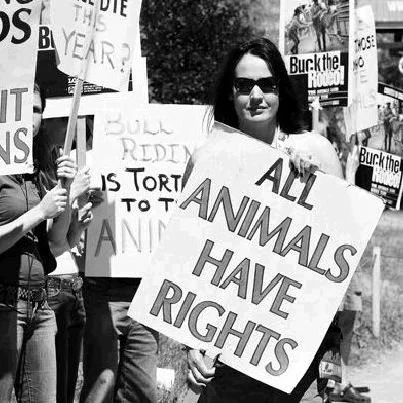
Choosing to avoid consuming or using animal products is a practice that has existed for a long time. Vegetarianism existed in Ancient Greece. The earliest reference to vegetarianism that has been preserved was written by Porphyrios, who lived from 234 to 305 A.D. Religions like Buddhism and Jainism promote no harm to living things, leading followers to avoid animal consumption as a moral choice. Tofu, a very versatile soy-based food, has existed for over 2,000 years. Now, it is common to choose to be vegan or vegetarian for a number of reasons, and in some areas, it is very accessible to still eat out or try new places with accommodating options.
Through advertising and a shift in societal expectations, the idea of meat being masculine was developed in the 20th century. The meat market is heavily advertised to men, creating the idea of “real men eat meat” and often contributing to the idea that meat is the only way to get real protein (it isn’t). From Carl’s Jr. and Arby’s ads depicting women in bikinis eating burgers to empowering meat eaters to consume meat using ideals of strength and power, most meat advertisements use patriarchal ideals to appeal to men.
In The Sexual Politics of Meat, Carol J. Adams wrote: “Language distances us from the reality of meat eating, thus reinforcing the symbolic meaning of meat eating, a symbolic meaning that is intrinsically patriarchal and male-oriented. Meat becomes a symbol for what is not seen but is always there–patriarchal control of animals and of language.”
This whole idea reinforces the burden on women to not eat meat due to moral or environmental reasons, while men order steak several nights a week. This idea is similar to household responsibilities, where historically it was considered a woman’s role to cook, clean, and raise children, while men worked.
While most meat eaters are likely not consuming meat with sexist ideals, it is interesting to see the parallels between the cruelty of the animal product industry and how society treats women. Female animals’ reproductive parts are abused within the dairy and poultry industry. The details are very graphic for what female cows, pigs, and chickens experience.
Are women expected to change their diets to benefit animals and the Earth, so men can continue to eat meat? Women are responsible for taking care of the Earth, while men are not required to make the same sacrifices.
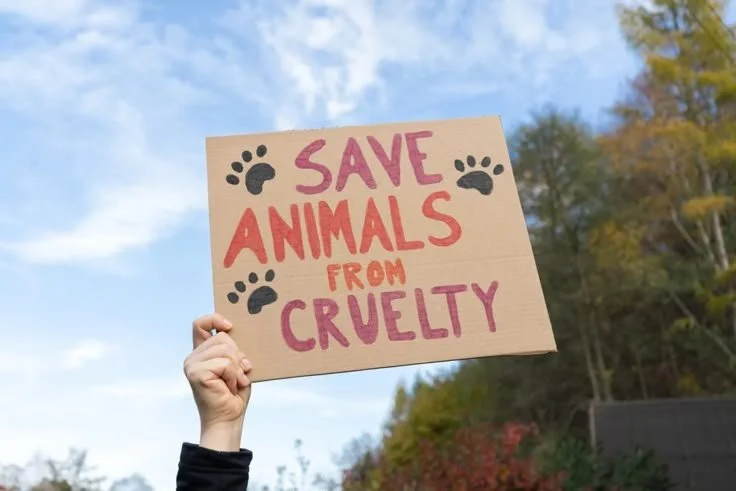
The meat industry is one of the biggest polluters in the world. Livestock production accounts for 14-to-18% of total global greenhouse gas emissions, including 32 percent of methane gas emissions worldwide, according to Stanford Woods Institute for the Environment. As climate change impacts become worse, women will be affected more than men. In an article shared by the United Nations, more women and girls will become impoverished as a result of climate change, and in many regions, women are responsible for securing water and food – a task that will become increasingly difficult in places that live directly off of natural resources.
Leah Thomas, an intersectional ecofeminist and author, wrote an article for Teen Vogue that so eloquently explains the relationship between women and nature. Thomas also shares a series of video diaries that dive deeper into the idea of these relationships and the overarching symbolism seen within nature. From something that feels very obvious as “Mother Nature” to explaining how gendered the idea of gardening versus farming is, she creates very quick videos explaining how ecofeminism is entangled into a variety of ideas.
“We should care about the protection of people as much as we care about the protection of our planet—to me, these fights are the same,” Thomas writes in her book titled ‘The Intersectional Environmentalist: How to Dismantle Systems of Oppression to Protect People + Planet’.
The 900 words you’ve read have just scratched the surface of such a complex idea. As someone who hasn’t eaten meat in years and considers myself to be a very informed person, I learned a lot about factors in why people are such die-hard meat eaters and how being a feminist and environmentalist are such similar ideals. I would really recommend reading ‘The Intersectional Environmentalist: How to Dismantle Systems of Oppression to Protect People + Planet’ by Leah Thomas and ‘The Sexual Politics of Meat’ by Carol J. Adams if you’re interested in exploring these ideas any further.
Pew Research reports that women are also more concerned about climate change than men are… so if women eat less meat and are more concerned about the planet than men, does the question suddenly become: Are women the key to saving the planet?
The bottom line is: the patriarchy harms the Earth itself and the women and men of all species surviving on it.