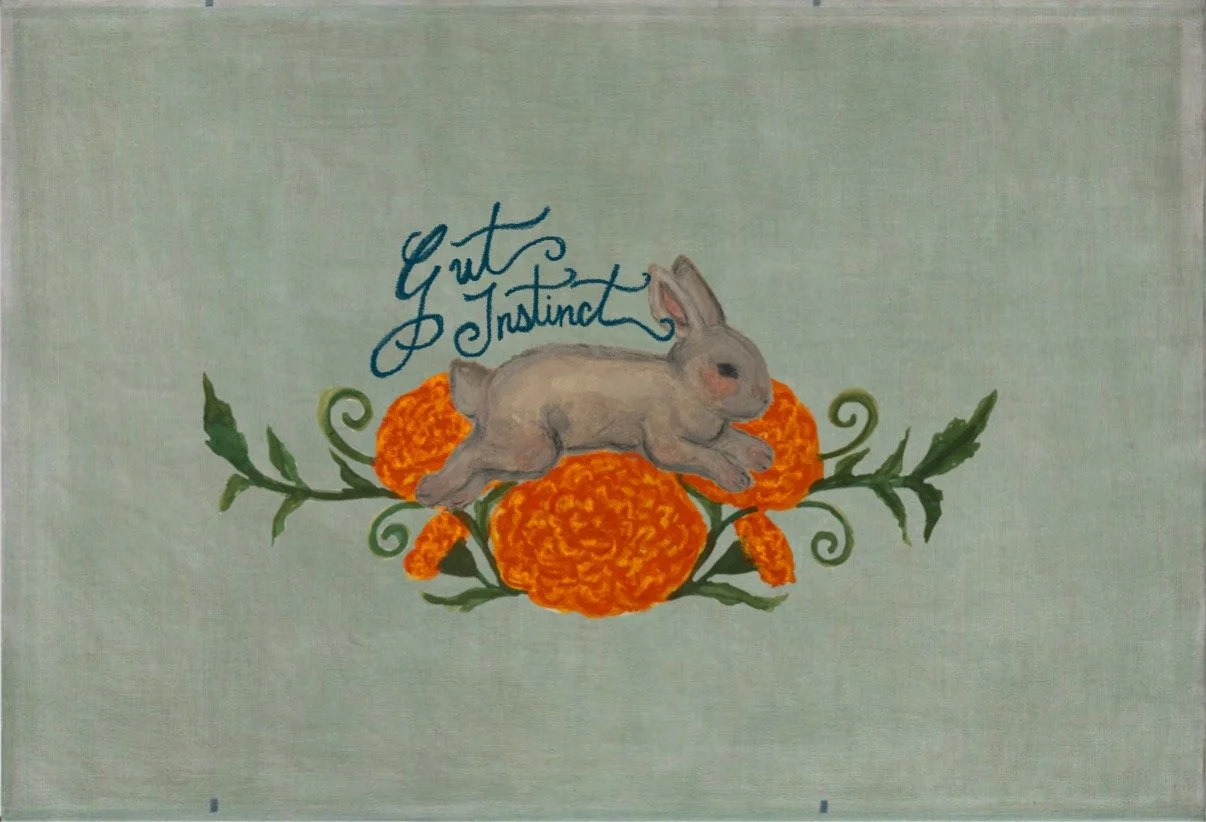
I Am My Mother’s Daughter: The Biology of Maternal Intuition
By Natalie McCarty
I catch myself doing something so familiar, speaking in a way that could only come from my mother’s influence, and I think, oh, I really am my mother’s daughter.
I see her in the architecture of my reactions, not simply in our mirrored features, but in the embodied way we navigate the world, in patterns of attention and instinct that feel both familiar and inexplicable.
Modern science is beginning to sketch the outlines of what poets and philosophers have long intuited: that mothers and children are linked not only by genes but by shared physiology shaped before birth, a kind of biological memory of experience.

Sourced through Pinterest
The emerging field of epigenetics has shown that maternal environments, including emotional states, can leave chemical signatures on DNA that influence how genes are expressed in offspring, particularly in systems that regulate stress and neural development.
Large human studies have found that maternal exposure to stress, anxiety, and depressive symptoms during pregnancy can be associated with methylation changes in genes such as NR3C1, which regulates the glucocorticoid receptor involved in the body’s stress response, and BDNF, a gene critical for neuronal growth and plasticity. These changes have been observed in placental tissue and newborn samples at birth, suggesting that aspects of a mother’s internal world can leave measurable traces in the earliest biology of a child’s nervous system.
What we often call maternal intuition—that sense of inner vigilance, of knowing what is coming, of reacting before reasoning has fully caught up—may be part of this deeply interwoven biology. Researchers like Rachel Yehuda, who studies intergenerational trauma and epigenetics, describe these biological echoes not as genetic determinism but as epigenetic legacies, shifts in gene regulation that reflect lived experiences across generations.
In this framework, biology becomes less like a fixed blueprint and more like a responsive manuscript, constantly edited by environment and experience.
Animal studies (though I disagree with the practice of them) reinforce this idea of embodied inheritance. In rodent models, when pregnant females experience chronic stress, their offspring and even subsequent generations can show measurable changes in stress-response systems and neural regulation. Some research has observed altered methylation patterns in genes such as Nr3c1 and Bdnf following early life stress, patterns that correlate with shifts in behavior and hormone regulation across generations.
None of this suggests that we literally remember our mothers’ lives. Intergenerational influence is not memory in the narrative sense, nor is it a mystical inheritance of emotions or events. It is something more biological: a physiological echo of experience that subtly calibrates how the nervous system learns to interpret the world.
Neuroscientists are particularly interested in how maternal signals—hormonal, immunological, and metabolic—cross the placental interface during pregnancy and influence the development of the hypothalamic-pituitary-adrenal axis, the central system that regulates stress responses throughout life.
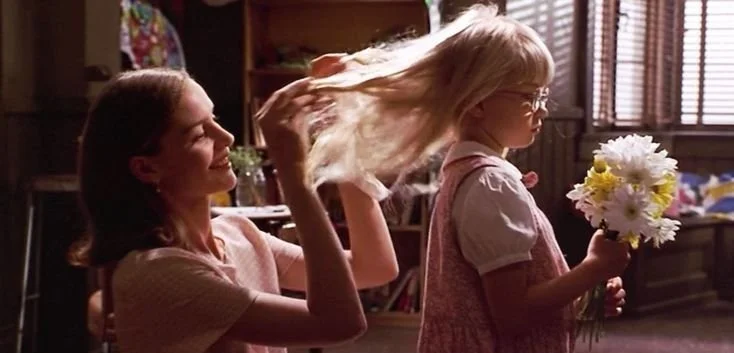
Sourced through Pinterest
Across cultures and centuries, long before DNA methylation or epigenetic regulation were understood, people spoke of something similar in simpler language. A mother’s instinct. A mother knowing when something is wrong before it is spoken aloud. An embodied attunement between generations.
Anthropologists often describe maternal intuition as a form of tacit knowledge: an understanding built through relational awareness, bodily sensitivity, and deep familiarity. What science now suggests is that some of that attunement may begin even earlier than we imagined, embedded not only in relationships but in the biological systems that mothers and children briefly share.
And now, research is beginning to show how some of those patterns might be rooted in the very structure of developing nervous systems.
So when I notice those small, familiar moments—those shared rhythms or mirrored idiosyncrasies—I do not see them only as coincidence or imitation. I see them as part of a longer conversation happening between my maternal lineage.
I am not just a singular self but a point along a long string of women, my mother’s mannerisms embedded in me not by conscious mimicry but through layers of biological memory and relational attunement.
And in those nearly imperceptible moments, when something I say or do feels unmistakably hers, I recognize the pulse of being her daughter and the extraordinary, almost mysterious way life passes through women, shaping who we become long before we begin to understand it.