Clock In, Babe: 'Forbidden Fruits' Is One Hell of a Shift
By Natalie McCarty
“My job doesn’t define me; my hotness and my personality do.”
There’s a very specific kind of chaos that exists between fluorescent-lit retail purgatory and teenage girlhood at its most unhinged, and Forbidden Fruits revels in it.
Courtesy of IFC Films
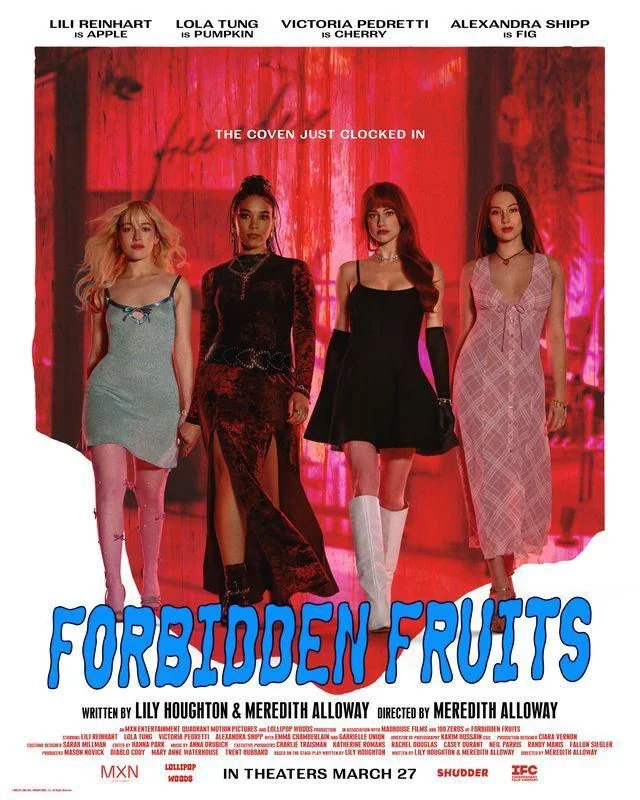
Set inside a mall clothing store called Free Eden, the film follows a trio of retail workers—Apple (Lili Reinhart), Cherry (Victoria Pedretti), and Fig (Alexandra Shipp)—who secretly operate as a witchy femme unit. Their dynamic shifts when a new hire named Pumpkin (Lola Tung) threatens to destabilize the balance they’ve built in Paradise.
Marking the feature debut of director Meredith Alloway, Forbidden Fruits pulls from the past, distorts it, and returns it glittered with lingo that could only capture a Gen Z girl’s heart. It channels The Craft’s coven-like sisterhood, Mean Girls’ sharp female social hierarchies, Scream Queens’ self-aware genre play, and just a touch of Fast Times at Ridgemont High’s voyeuristic coming-of-age-in-a-mall energy. The result is knowingly absurd, yet entirely intentional.
Beneath the glossy, candy-coated chaos, Forbidden Fruits quietly skewers something sharper: the transactional nature of identity. Here, femininity feels curated, performed, and sold back to you, like a perfectly folded outfit on a sales floor. In a world of uniforms, both literal and social, who you are can start to feel like just another role you fill.
Courtesy of IFC Films
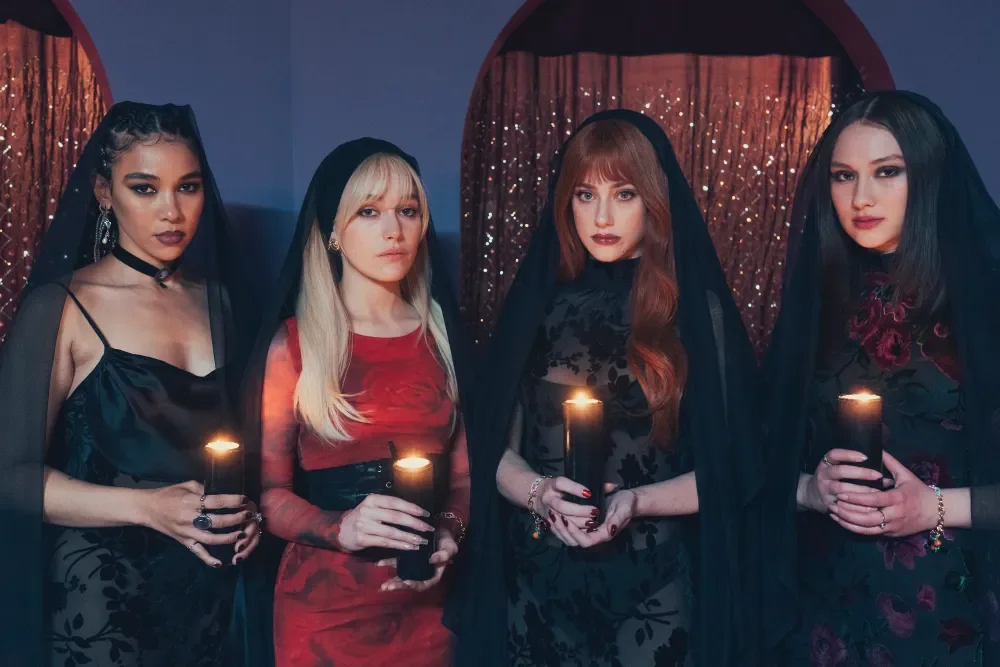
The casting is where Forbidden Fruits really locks in. Victoria Pedretti thrives in off-kilter, slightly unhinged roles that demand both commitment and control. She’s deeply multifaceted, using that elasticity to anchor even the film’s most heightened moments. Lili Reinhart channels the earnest magnetism that made her early Riverdale work so compelling, layering it with precision that feels pulled straight from the current cultural moment. She’s also channeling a little Whitney Leavitt here, I feel. Lola Tung brings essential heart, her naturalism cutting clean through the stylization to give the film a grounding emotional core. Alexandra Shipp delivers some of the movie’s best comedic timing. It’s a terrific ensemble all around.
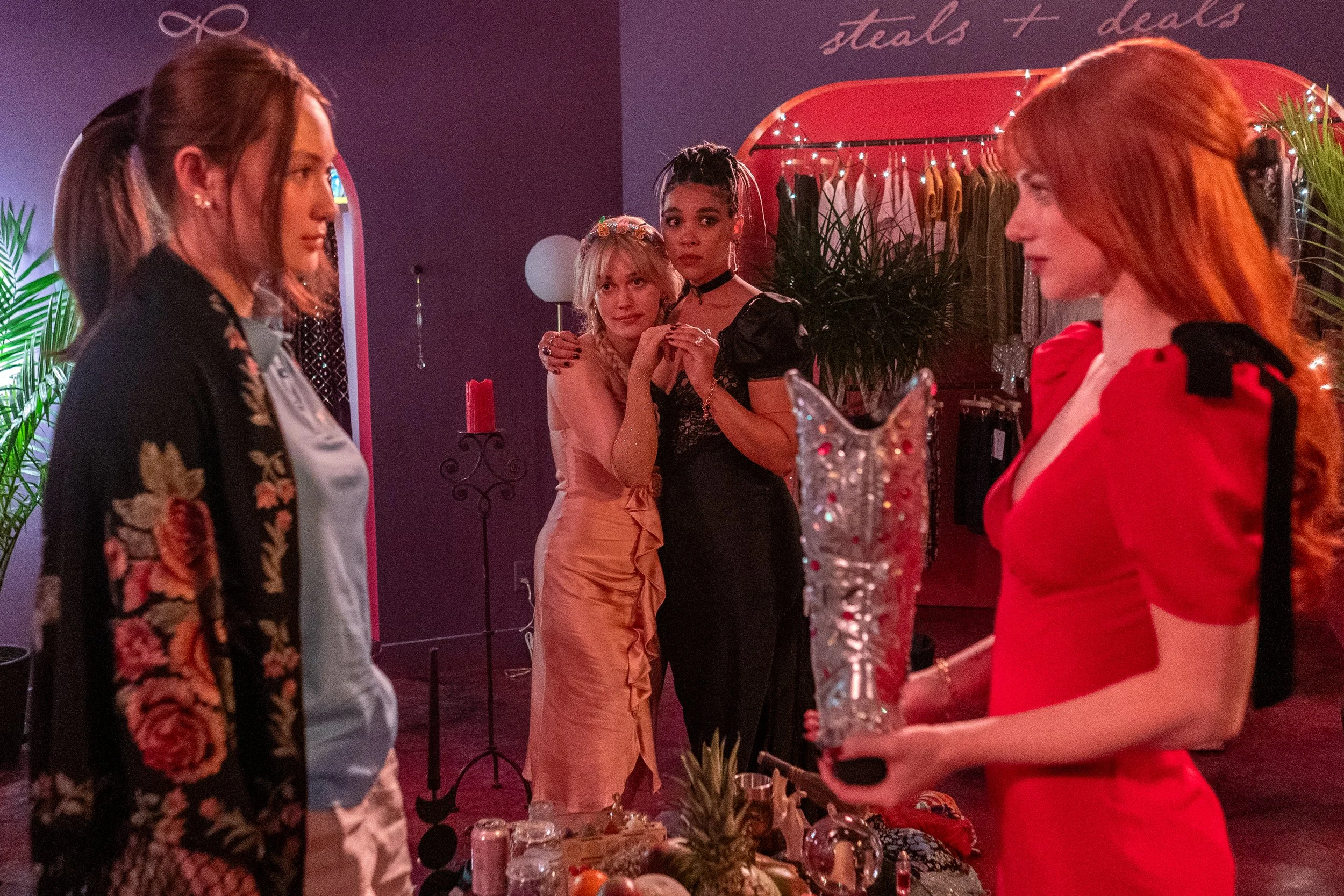
Tonally, Forbidden Fruits is unapologetically camp, and its success hinges on commitment. Every performance plays it just seriously enough to keep the absurdity from collapsing in on itself. The film understands that a spiral in the stockroom can feel just as cinematic as a final girl chase scene, and it leans into that with confidence.
Courtesy of IFC Films
Adapted from Lily Houghton’s stage play and produced by Diablo Cody, the film carries a DNA that feels both theatrical and sharply attuned to feminine interiority. It’s easy to imagine Forbidden Fruits finding a second life as a cult favorite.
For audiences who loved Lisa Frankenstein and Booksmart, this will be your thing. It’s not trying to be everything for everyone, and that’s exactly why it works. It’s standing on its own ledge.
So consider this your cue: clock in! It’s a fun shift, babe.