I’m Sorry, But We Have to Talk About the Skinniness Epidemic
On the politics of femininity and the aesthetic of numbness
By Sadie Jane Mayhew
It seems like somewhere along the way in the past year, women’s strength has stopped being ‘fashionable.’
Not everywhere, and surely not for every woman. But culturally, something has shifted quickly. As quickly as we’re seeing countless celebrities dropping weight. Generally, young women are still encouraged to be ambitious, successful, empowered through words and affirmations, but that isn’t quite what’s reflecting when we’re seeing nearly emaciated and tired-looking women everywhere.
Amidst a recession, war, wealth gap, and living at the end of an evil empire. There’s a new trending aesthetic on the rise: I call it the aesthetic of numbness.
On many influencers’ posts, you’ll see the blue search on TikTok being “hollow eyes makeup look,” or “tired girl makeup look,” or “sunken eyes makeup,” so on and so forth. These tutorials teach you how to mimic exhaustion basically: under-eye shadows deepened instead of being concealed, cheekbones sharpened, and buccal fat non-existent to create the illusion of fragility and thinness. The “tired girl” aesthetic elevates emotional fatigue into a visual language.
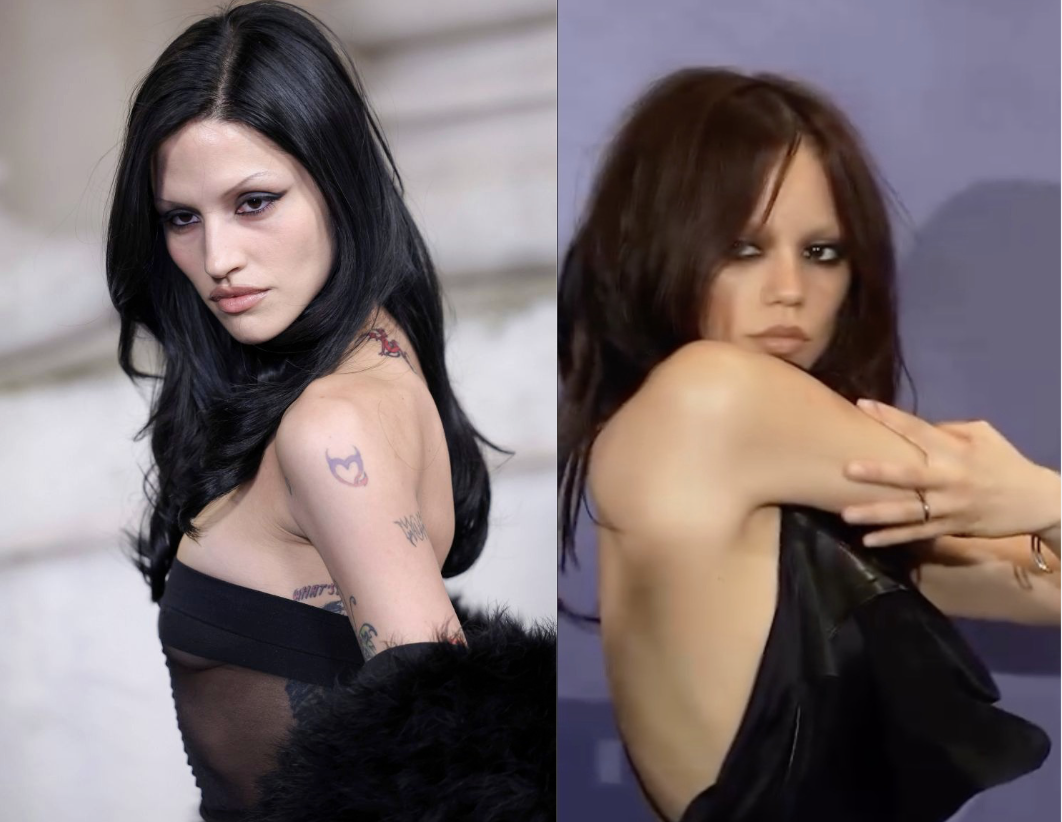
Sourced through Pinterest
I want to put out a disclaimer right now that this is not a dig on Gabriette or Jenna Ortega. I like both of these people, but they are two prominent and key inspirations, along with celebrities like Zoë Kravitz, Anya Taylor-Joy, and Mia Goth, who are used in this aesthetic trend for many young women. Similarly to how a character like Angelina Jolie’s character in Girl, Interrupted is used for aesthetic inspiration or body goals as well.

Still from Girl, Interrupted (1999)
What’s the difference between this and 90’s heroin chic? Well, that trend’s name is already toxic enough, but this is more than just a grunge look. We have to look at the timing of all this culturally and politically. We’re at war as a country, we can’t afford food, and the ultra-rich and wealthy are cosplaying poor. It’s a mockery on one end, and propaganda to make us participate in a fashion trend that is disguised as grungy delicacy, not blatant weakness.
At first glance, it reads like just another fleeting internet micro-trend. Look closer, though, and the aesthetic is everywhere—on red carpets, across runways, and throughout influencer feeds. Fashion data points to a resurgence of ultra-thin silhouettes after years of body-diversity rhetoric. The pendulum is swinging back toward extreme slenderness, echoing the cyclical nature of beauty standards—especially in Hollywood, where this shift is being most visibly staged.
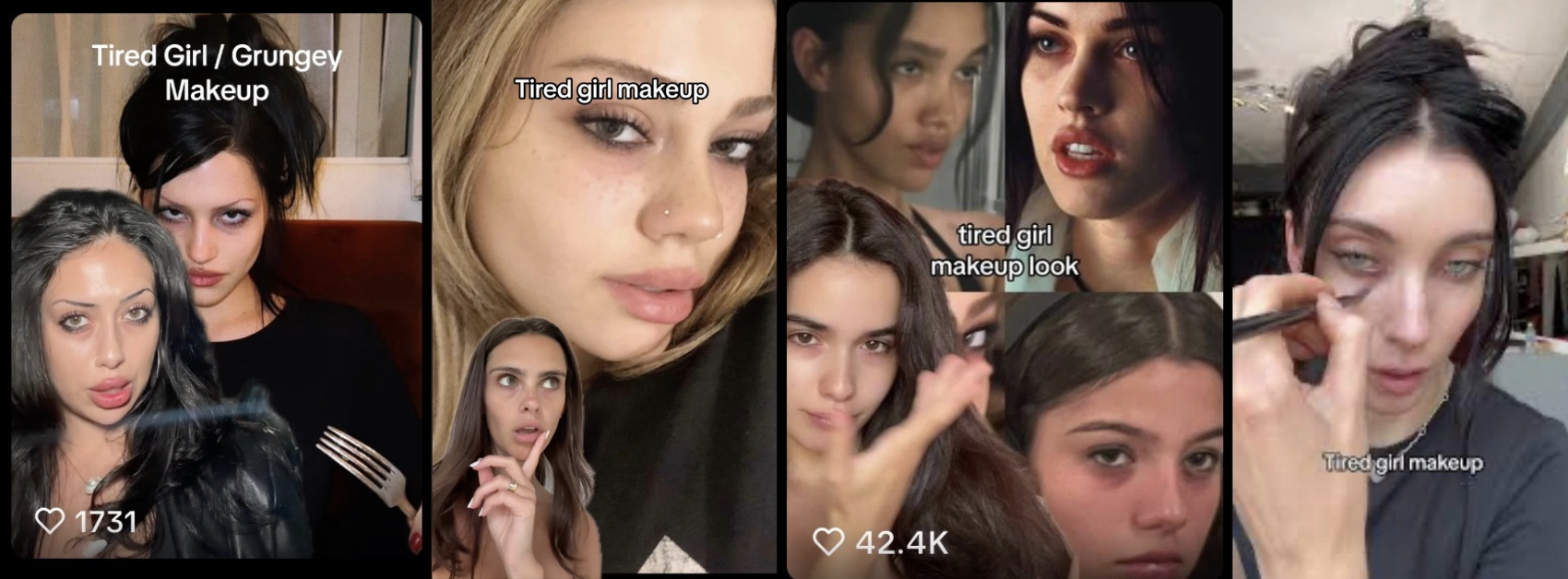
Sourced through TikTok
At first, it’s tempting to see this as something liberating—an embrace of features once criticized (dark circles, hollow eyes, sharp cheekbones). A rejection of the pressure to conceal or “correct” what the industry long framed as flaws. I felt that pull too. There was something validating about seeing traits like sanpaku eyes, fine lines, and naturally sunken cheeks reflected back without apology.
But then I had to ask myself why I look this way in the first place.
I’m hungry because I can’t afford to eat enough. I’m drained mentally and emotionally from the endless day-to-day horrors. And we’re normalizing this look that suddenly so many women are taking on, overlooking the underlying conditions that produce it.
At the same time, the larger truth (especially for many celebrities) is that this look isn’t incidental, it’s constructed. Procedures like buccal fat removal hollow out the face to mimic that gauntness. Makeup techniques exaggerate under-eye darkness to suggest sleeplessness. What reads as raw or unfiltered is often carefully engineered.
And that tension—between what’s real and what’s performed—is what makes this “trend” far more serious and something worth immediate questioning.
The Skinniness Epidemic in 2026
Meanwhile, a new kind of thinness is quietly reshaping the cultural landscape. The rise of pharmaceutical weight-loss treatments like Ozempic and other GLP-1 drugs has transformed weight loss into something faster, more discreet, and more medically legitimized. Celebrity bodies appear to be shrinking at the same moment these medications become culturally ubiquitous.
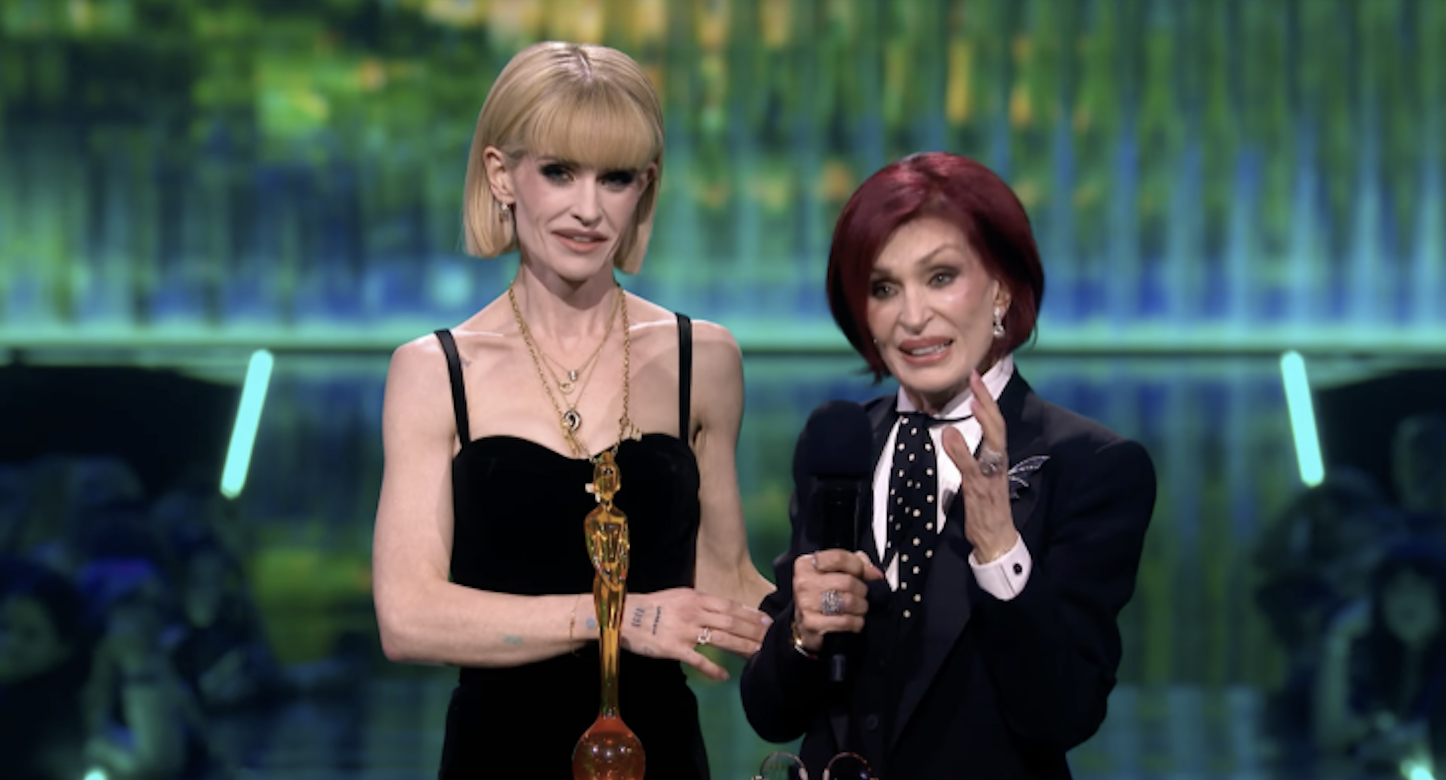
Kelly and Sharon Osborne, 2026.
The aesthetic emerging from this moment isn’t the athletic strength culture pushed by early-2010s wellness marketing — the “strong is the new skinny” era of gym culture and protein shakes. Instead, today’s ideal feels smaller, softer, and more fragile.
And it’s happening everywhere at once.
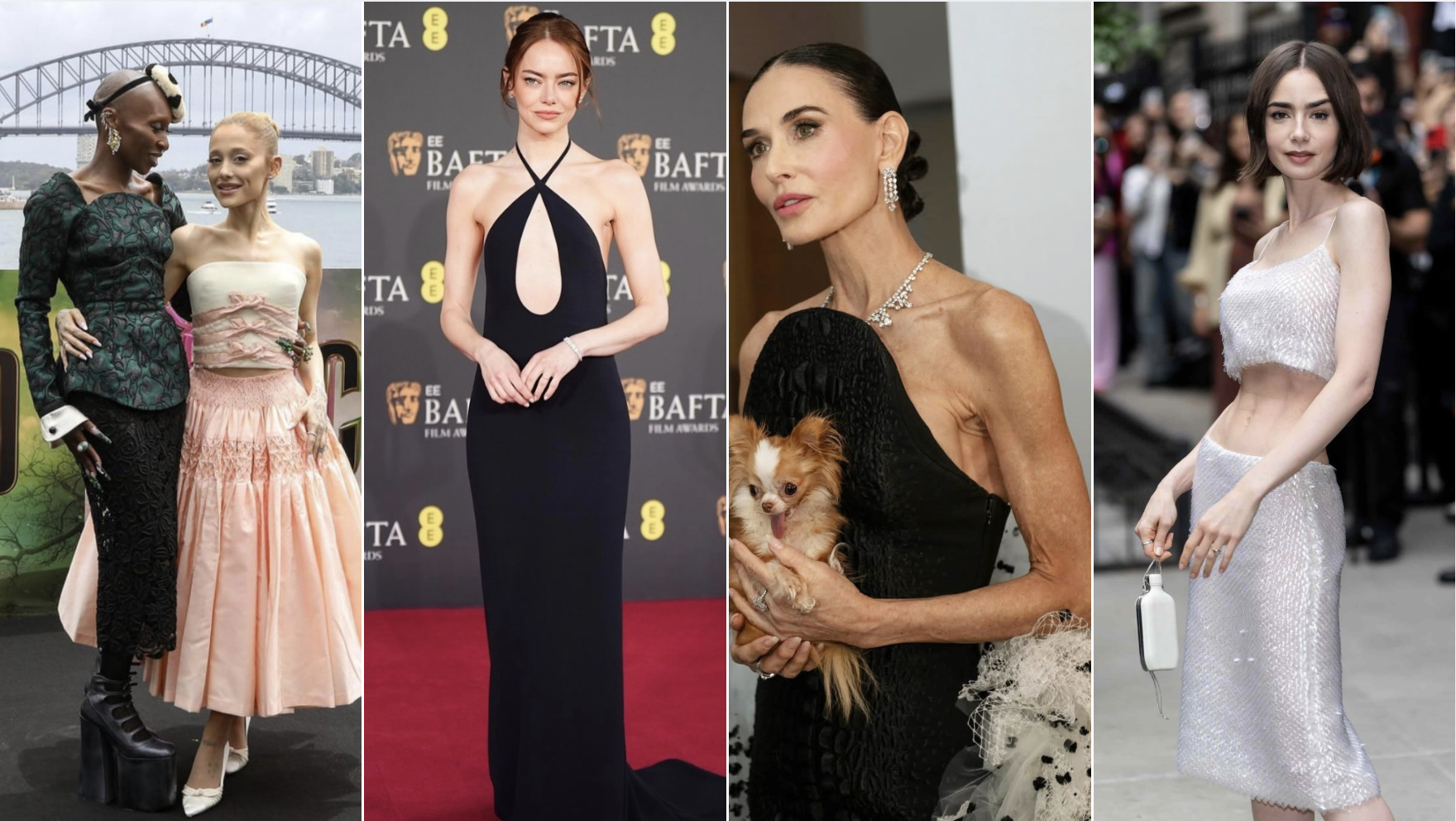
Sourced through Pinterest
Scrolling through social media, you’ll see the same body replicated endlessly: extremely thin silhouettes on red carpets, dramatic celebrity weight-loss headlines, runway models returning to narrow frames even more drastic and shocking compared to the 90s “heroin chic” or 2000s low-rise jeans and tabloid body shaming era.
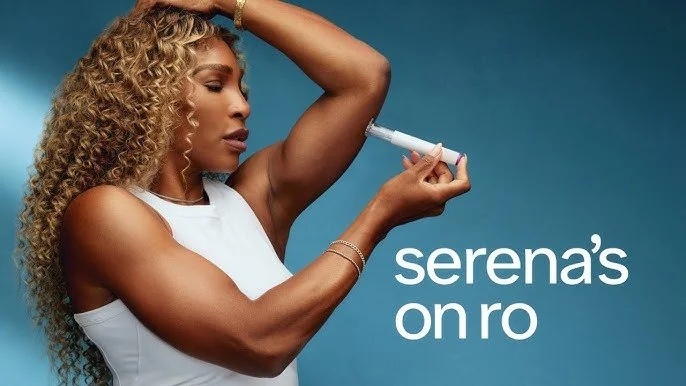
Credit: Ro
Even more shocking is making Serena Williams the face of a weight-loss drug company, Ro. Yes, the woman who has been the epitome of women’s sports for decades. The woman athlete who has four Olympic Gold medals and twenty-three Grand Slam titles. One of the most recognizable and famous women athletes around the globe is promoting… weight loss drugs.
It gives me no pleasure in talking about other women’s bodies. But at some point of seeing this repeatedly pushed in our faces, you have to ask… what the hell is going on??
This creates some kind of subliminal messaging. When the same body type appears across films, television, advertising, and fashion campaigns, without acknowledging it or pointing out the obvious elephant in the room here, it stops feeling like a coincidence or one-off and starts feeling like a rule or standard for women on how they should look today.
For young women and impressionable girls growing up inside that media ecosystem, the message has become difficult to ignore.
History of Thinness in Feminist Politics
Extreme dieting culture has never been just about aesthetics. Historians and sociologists have long argued that modern fatphobia and diet culture are tied to larger systems of power — including colonialism, racial hierarchies, and patriarchal expectations about women’s bodies. Scholars like sociologist Sabrina Strings have written about how Western beauty standards historically framed thinness as a marker of discipline, civility, and moral superiority, which were ideals that were often contrasted against racialized stereotypes about excess or lack of control.
In other words, thinness became moralized. And moralized bodies are easy to police.
Throughout the 20th century, waves of intense diet culture often emerged during moments when women were gaining social or political power. The flapper era of the 1920s, the rise of second-wave feminism in the 1970s, and the late-1990s supermodel era all coincided with renewed cultural pressure around body size. The message was rarely explicit, but the pattern is hard to miss: as women expanded their roles in public life, the beauty ideal often shrank.
It’s been said that smaller bodies take up less space, appear more controlled, and are easier to discipline. If you’re not eating enough, you can’t fight back. You can't even think for yourself. You isolate too.
One of the many symptoms of GLP-1 that doctors are noticing is isolation, less care about activities, or motivation. Vox recently wrote an article about this, saying in one section that a clinical psychologist interviewed in the article noticed several patients on GLP-1 drugs describing a similar feeling: not sadness or depression, but a “missing spark.” People say they care less about goals, socializing, or hobbies.
The physiological reality of extreme dieting tells a different story. Nutrition scientists have long documented the effects of prolonged caloric restriction: fatigue, brain fog, irritability, slowed cognition, hormonal disruption, and weakened immune systems. When your body is deprived of adequate energy, it becomes slower and more fragile over time.
Which brings us back to this whole trend in the skinny epidemic. It’s not a sad girl, it's a numb girl. And that’s almost worse. They don’t want us to feel. At all. They don’t want us to care about the state of the world. They don’t want us to fight.
I instinctively and subconsciously knew this back in 2024. When Trump was re-elected in November 2024, something shifted in me. The next day, I picked up weights for the first time in my life. I had zero interest in working out before, but something clicked: ‘I need to get strong,’ I said to myself. And being aware of media, filmmakers, fashion, and fans idealising malnourished celebrities and what that means culturally, the best counteractive response is to eat more. Don’t give in to what they’re trying to do.
I know we’re living in a near-famine in this poor economy. America is basically poisoning us, and tariffs make buying groceries a financial strain and worry for so many of us. I’ve written several articles related to food, gluttony, tariffs, and financial struggles around affording to eat now. But if you can afford enough to eat, and eat well too, please do.
Now’s the time to nourish ourselves more than ever so that we can’t be controlled or show how easily persuaded we are to change our bodies like that. Wake up, wake up, wake up!
In that sense, the aesthetic of fragility isn’t just visual, but physical.
None of this means that individual women pursuing weight loss are consciously participating in some grand political project. Bodies are deeply personal, and health decisions are complex. But cultural patterns matter, especially when they appear on a mass scale.
I am not standing on a stage telling people what the ideal, healthy body should look like either. I am not a dietician, medical doctor, or health expert. And there is NO ideal or one kind of healthy body type either. Healthy bodies all look different and are defined as healthy to you and your medical care practitioners in your own right. So many women are naturally thin and I’d feel guilt in not addressing it.
The point that I’m making is not saying “thinness” is inherently bad. Suppressed eating, diet pills/injections, and rapid weight loss are the subjects for concern here, and what participating in that means culturally and politically.
But the truth is, typical beauty standards, whether momentarily trending or sticking around for some time, shape behavior. The makeup and dieting looks that are dominating today go hand in hand.
They romanticize looking and being slow, delicate, tired. And when those standards reward smallness, quietness, and emotional restraint, they subtly shape what femininity is supposed to look like these days, and it’s so wrong!
The irony is that women today are exercising enormous cultural power, which coincided with the utterly perfect timing of this trend, trying to wash it over. Remember, more women are leading political movements today than ever before; women are shaping entire industries, dominating cultural production in ways previous generations fought hard to make possible.
Yet the aesthetic circulating through fashion and celebrity culture often suggests the opposite: a version of femininity that appears delicate, muted, and emotionally contained.
Diet Culture and How It Fuels White Supremacy and Right Wing Philosophy
There is plenty of research out there that shows us how diet culture is often rooted in racism and is directly linked to supporting white supremacy. Diet culture is also a very popular movement in right-wing philosophies.
A lot of people influenced by the skinny-epidemic trend or participating in extreme forms of dieting may not be aware of this because they don’t know the context.
Diet culture refers to a system of beliefs that prioritizes thinness and appearance over overall health and well-being, often promoting weight loss at any cost. It shows up in everyday behaviors and messaging, labeling foods as “good” or “bad,” promoting restrictive diets and cleanses, celebrating weight loss, and encouraging guilt or shame around eating. This pervasive cultural pressure can harm mental health, lower self-esteem, and increase the risk of disordered eating behaviors such as restricting, bingeing, or purging.
Research also argues that diet culture and fatphobia have historical roots in racism and colonialism. During the trans-Atlantic slave trade, European colonists framed thinness as a sign of discipline and moral superiority while portraying Black people as gluttonous or lacking self-control. Over time, these stereotypes helped link body size to racial hierarchies, reinforcing social power structures that privileged thinness and “self-restraint.” Today, the legacy of these beliefs continues through weight stigma, beauty standards that favor thin bodies aligned with White norms, and systems that give social and economic advantages to thin people. Challenging diet culture and embracing body diversity are presented as ways to counter these harmful historical and social dynamics.
The political dimension of beauty standards is difficult to ignore. Journalist and author Arabelle Sicardi argues that today’s renewed fixation on ultra-thin bodies and hyper-traditional femininity mirrors a broader cultural shift toward conservative gender ideals. In her book, The House of Beauty: Lessons from the Image Industry, Sicardi suggests that these aesthetics often act as shorthand for the roles women have historically been expected to occupy: quiet, disciplined, domestic. She says that beauty has long functioned as a form of social signaling, which is a way of demonstrating respectability, conformity, and belonging within systems that reward certain bodies and behaviors over others. In this sense, beauty culture can also become a powerful distraction from an endless cycle of products, flaws, and self-correction that keeps women focused inward on perfecting themselves rather than outward on collective power. When so much cultural energy is spent managing appearance, there is far less left for questioning the systems that shape it.
The far right has also historically weaponized thinness to radicalize women and teen girls, promoting a “body fascism” that links slender bodies to morality, femininity, and white supremacy. Thinness is framed as a moral and racial imperative, policing women—especially white women—into ideals of delicacy, self-discipline, and domestic virtue, while denigrating fatness and linking it historically to Blackness and supposed moral weakness. Online and social media communities normalize extreme diets and restrictive eating, creating vulnerability to far-right ideology by combining disordered eating with messages about traditional gender roles, racial hierarchy, and ideological conformity. This somewhat elusive but pervasive messaging reinforces dominance, control over women’s autonomy, and embeds extremist ideas within mainstream culture.
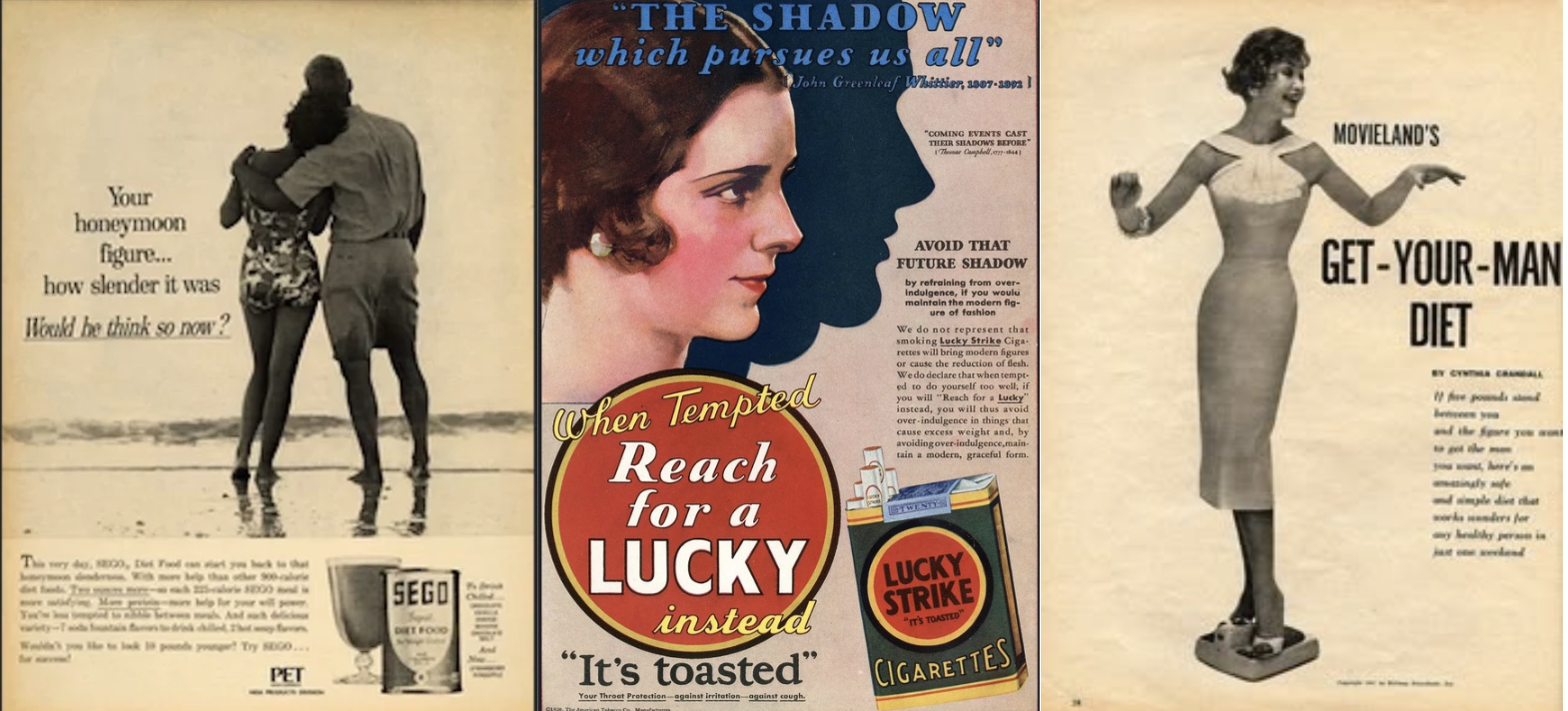
Sourced through Pinterest
Furthermore, a study shows “upward resistance” to diet culture, which describes how marginalized groups challenge the authority and social privileges of dominant groups. Unlike stigma resistance, which focuses on coping with discrimination, upward resistance actively rejects the racial, gendered, and class-based power structures that maintain inequality and social hierarchy.
Maybe this is simply another cycle in the long history of beauty trends, or perhaps it’s literally the obvious and doesn't need much more retrospection and analysis than we’ve taken here. It reflects something deeper about the cultural moment we’re living in—one defined by burnout, economic instability, digital hyper-visibility, and endless comparison.
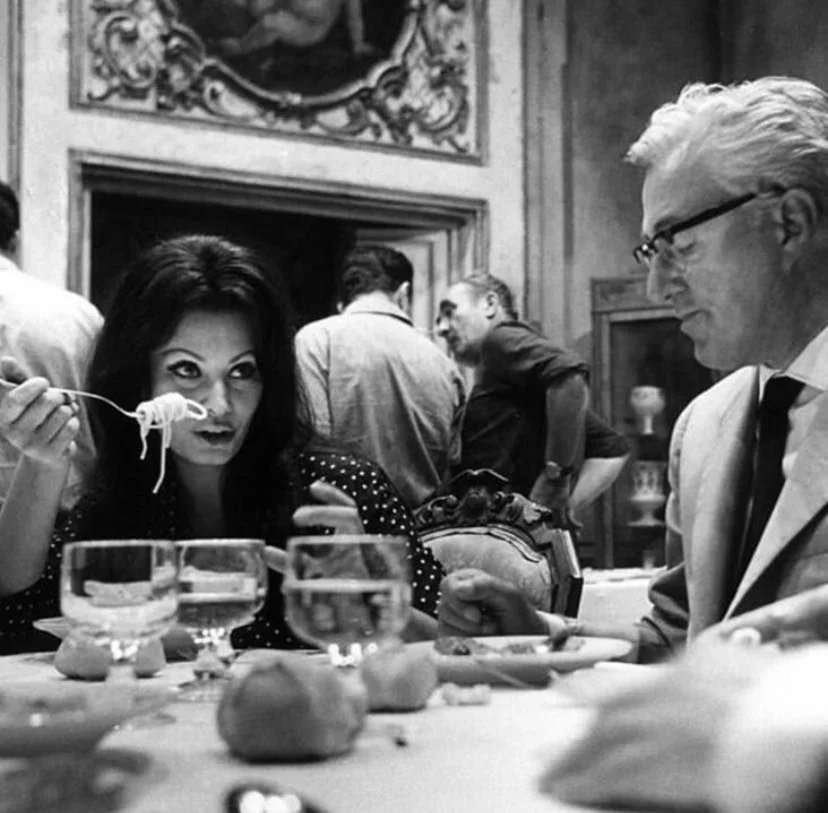
Sourced through Pinterest
When the world feels overwhelming, numbness can become normal. And that can become popular. And therefore embracing it as its own aesthetic. But we need to be careful what kind of message we're sending.
If women still believe that empowerment is the message of our era, it’s worth asking a simple question: Why does the ideal woman suddenly look and act so quiet?