
Sex, Cars, and the Technological Body: 30 Years of Cronenberg’s 'Crash'
By Zoe CN Smith
A camera pans across an aircraft hangar. A blonde woman slowly takes her clothes off. She’s beautiful and cold— the classic Hitchcock type— and her expression is unreadable. As she bends over the side of the plane, the camera moves closer. Skin against metal. A man’s hands moving down and across her shoulders. Later, she’ll tell her husband the encounter left her empty. This is the opening sequence of Crash (1996), a film centred on an unnerving premise: what happens when ordinary sensation isn’t enough? In our era of overstimulation thirty years later, it’s a question which feels uncannily prophetic.
With the tagline ‘the most controversial film you will ever see’ emblazoned across posters, it was hardly surprising that it would see outrage on its debut. Based on the 1973 novel by J.G. Ballard and directed by David Cronenberg, Crash was once declared to be so ‘beyond the bounds of depravity’ that it was banned by the UK authorities, and caused outrage when it won the Special Jury Prize at the 49th Cannes Film Festival. The plot is as follows: James and Catherine Ballard are struggling with sexual fulfilment. After James has a near-death experience in a car collision, the couple finds themselves awakened to a new, violent sexuality through a group of car-crash fetishists led by the enigmatic Vaughn, a figure obsessed with staging famous celebrity car accidents. Soon, sex, technology, and violence converge, as each character becomes fixated on fucking their way to a literal petite morte.
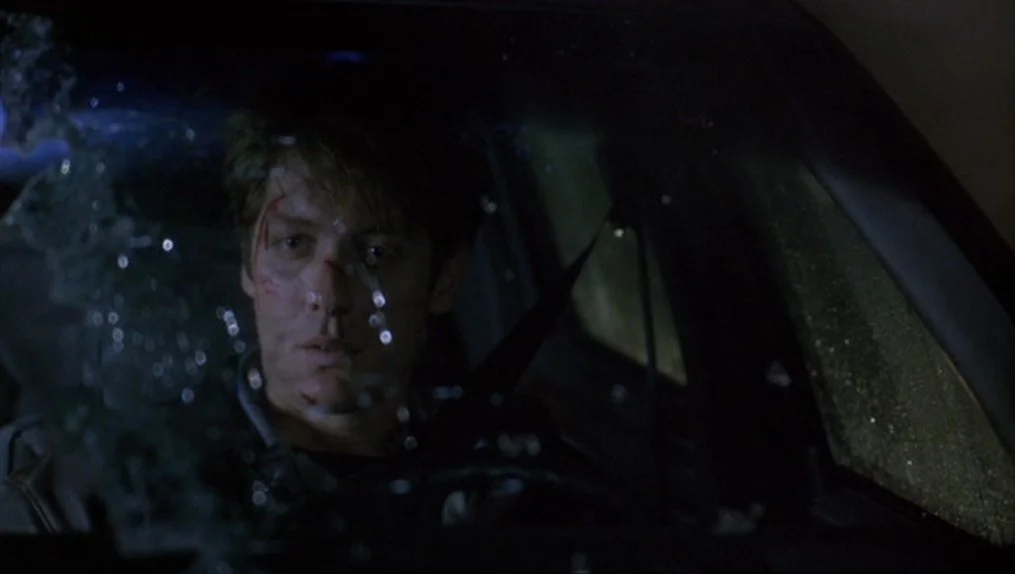
Still from Crash (1996)
Beyond the Trauma Plot
More typical dramas would look to dissect the interior lives of their characters, or unpack the emotional complexity of their fetish. Refreshingly, Cronenberg isn’t interested in anything as simple or banal as a psychological explanation. Whilst the concept of trauma reverberates across events in Crash, much remains unexplained to the viewer. At the site of James’ initial collision, we cut between the bare breast of Dr Helen Remington (accidentally revealed as she tears off her seatbelt), the inert, bloodied body of her husband stuck in James’ windshield, and James’ transfixed gaze on Helen. Both James and Helen are not only aroused by the damage to their bodies, but they’re electrified by the feeling. As Parul Sehgal writes in her article ‘Against The Trauma Plot’, ‘the trauma plot flattens, distorts, reduces character to symptom, and, in turn, instructs and insists upon its moral authority.’ In refusing to present a definitive traumatic explanation for his protagonist, Cronenberg resists casting any moral judgement, and instead suggests the possibility of James’ alienation as a systemic product. Against the backdrop of the impending end of the century, James and Helen’s eroticised accident becomes as much a portrait of them as individuals as it does a manifestation of the death drive itself.
Unable to emote conventionally, trauma for these characters is expressed through its physical manifestations– purple bruises and bodies reshaped by high-speed impact. In a 2020 interview, Cronenberg notes his decision to ‘use bruise colors for the costumes’ to signify ‘very bruised people trying to recover some kind of life’. These are humans born from the technological advancements of the late 90s: capitalistic, minimalistic, and anaesthetised by an internet expanding into mainstream usage. It’s easy to forget in this era of internet convenience the novel and terrifying possibilities the internet offered up to audiences at its inception. At a time when people had to rely on a variety of different media to constitute research or entertainment, the introduction of the internet provided unprecedented and unregulated access to a digital wild west: a place where you could chat anonymously, and the difference between the URL of a porn site and the American Girl website was a typo. Today, the internet shapes economies, commodifies sex lives, and even live-streams violence to a global network of voyeurs. Crash anticipates this desensitised landscape decades earlier, and offers an unexpected solution. If we live in an era where technological acceleration is reshaping what it means to be human, Cronenberg shows us what happens when you embrace it: the possibility that we can recover a new, changed form of humanity via rehabilitating the body through technological and sexual extremity.
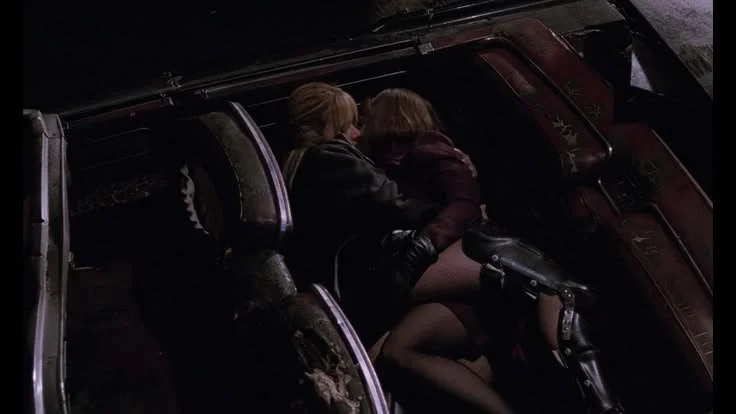
Still from Crash (1996)
Auto-erotic Impact
As such, Crash is a film that is, and isn’t, about sex. For whilst sex is everywhere throughout the film– in cars, on balconies, graphic, explicit, however else you want to describe it – the film suggests that this kind of reproduction is closer to the manufacturing of the cars our characters obsess over. These are mechanical bodies interfacing with one another, requiring the external stimulus of the threat of near-death to bring themselves to climax. The alienation of these individuals is so total that traumatic collisions are not just the vehicle enabling them to access authentic desire and intense sensation, but it’s the only means by which any kind of interpersonal connection becomes possible. Consequently, it’s the mechanical body, not the human body, which possesses the most erotic potential. This is communicated through Cronenberg’s many visual innuendos, from James’ fingers running along a deep tear in the body of a car, to the scene where the car-crash fetishists masturbate each other whilst watching a crash in a road safety video– a tape we can infer is their equivalent of pornography. Here, we can draw comparisons between the staged car-crash demo as a simulation of a trauma, and pornography as a simulation of sexual fulfilment. Stripped of any recognisably human or emotional, like sex, trauma becomes another product capable of being commodified and repurposed for pleasure. Here, stimulation and simulation are brought together to represent the limits of manufactured sensation and desire at its most consumerist. It’s not accidental that J. G. Ballard has described Crash as ‘the first pornographic novel based on technology’.
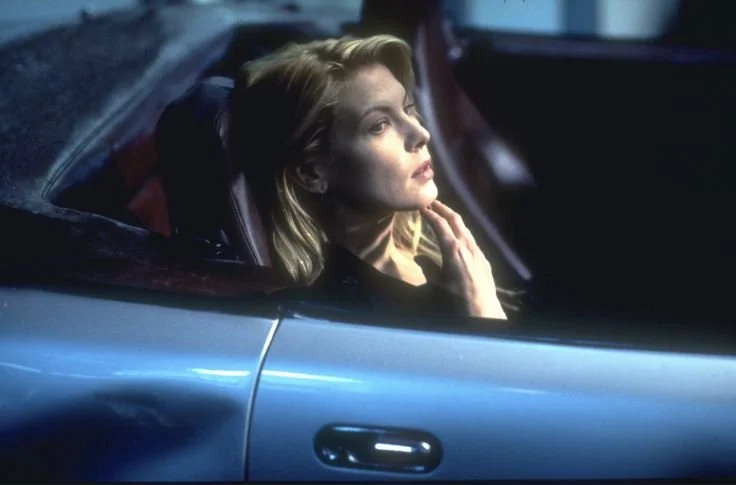
Still from Crash (1996)
The Age of Soft Machines
To watch Crash on its thirtieth anniversary is to see the hallmarks of our contemporary era rearing up to collide with us, head-on. If Cronenberg and Ballard had imagined a melding of hard technology and flesh, today its merger would be the meeting of human and algorithmic assistants. Like the protagonists in Crash, we too live in an era of desensitisation. The speed of social trend cycles, and our sheer exposure to violent media has numbed us to genuine horror. How can a photojournalist's picture of a war disturb us when we’re assailed with thousands of shocking images daily on our algorithms, reposted and edited into posts and videos? And in an age of AI, how can we even tell if they’re real? Online, you’ll see bots pushing their digital pornography and the reposted clip of a live-streamed murder of a public figure within the same scroll. Looksmaxxing bros bonesmash and reshape their faces to please the gods of the algorithmic machine. Users on X ask Grok to undress women and morph their bodies into images of sexual availability. Violence, porn, and advertising merge into this great category of product we call ‘content’, which some might even go as far as to call ‘entertainment’, or ‘culture’.
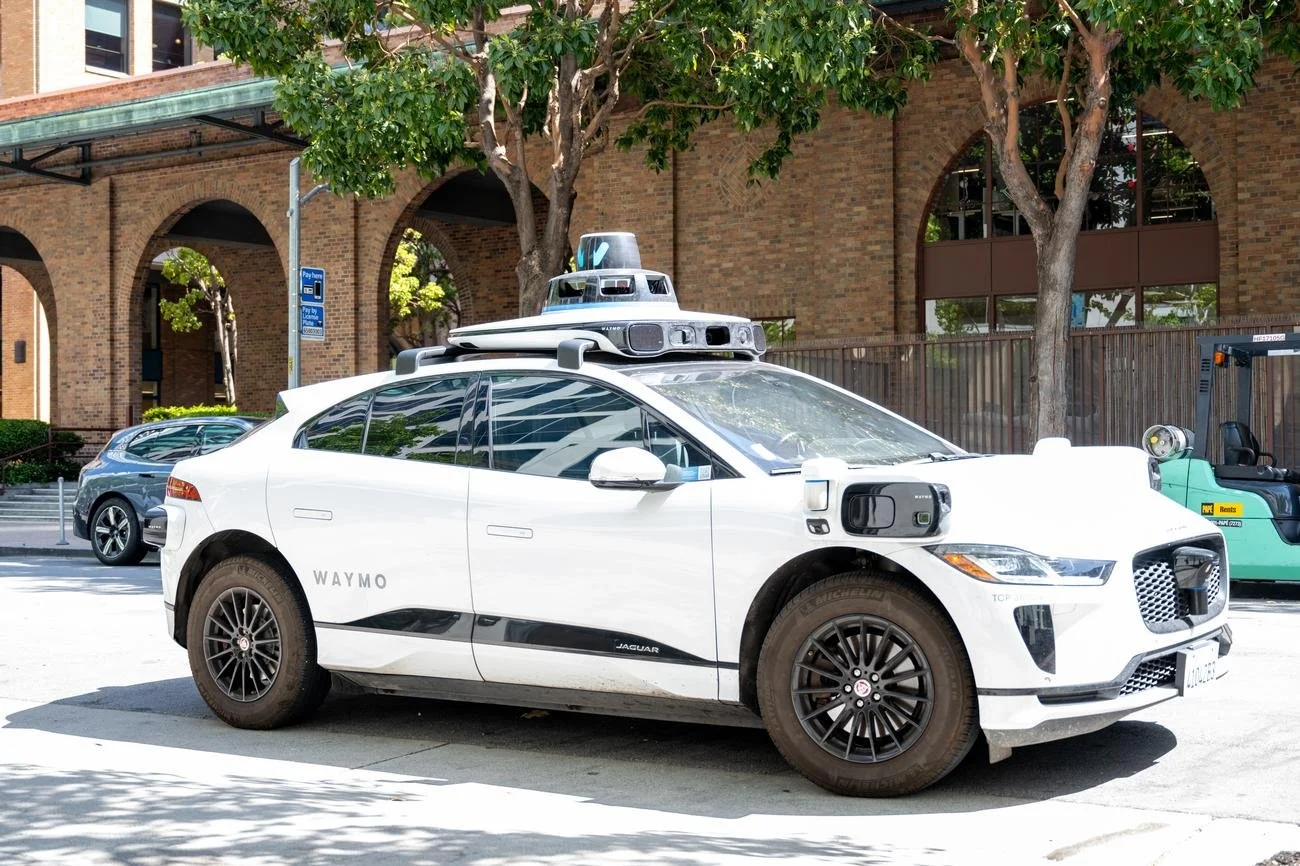
Credit: East Bay Times
But if the thrill and danger of speeding cars in Crash symbolised a prevailing feeling of technological edge and existentialism of the late 90s, then our era’s emblem of technological anxiety is the self-driving Waymo— superficially sanitised, and surprisingly mundane. Far from the cool mechanical aesthetic of Crash, or the sexy cyberpunk films of the late 90s (think The Matrix, Strange Days, or Ghost in the Shell), today’s aesthetics of the future are surprisingly ordinary. Just as Waymo looks no more futuristic than an undercover police car, our AI platforms look no different to landing page search engines or chat rooms, all rounded with sans-serif font, simplistic icons, and an amicable tone. Today, technology has a distinctively human face. We talk about AI as anthropomorphised agents, as AI platforms look to teach their models ethics and curate guidelines around how to converse with people. If Crash is a film about humans becoming more technological, we’re looking at a growing exercise in technology shaped to seem human. Beyond efforts to animate the ghost in the shell, the thrilling pursuit of sensation has been dulled by friendly programmed interfaces. If the AI never talks back and the Waymo doesn’t deviate, Crash is a liberating reminder that there are alternate ways of existing. For some, it might be logging off completely. For others, it's driving down a highway with a foot rammed against the accelerator.
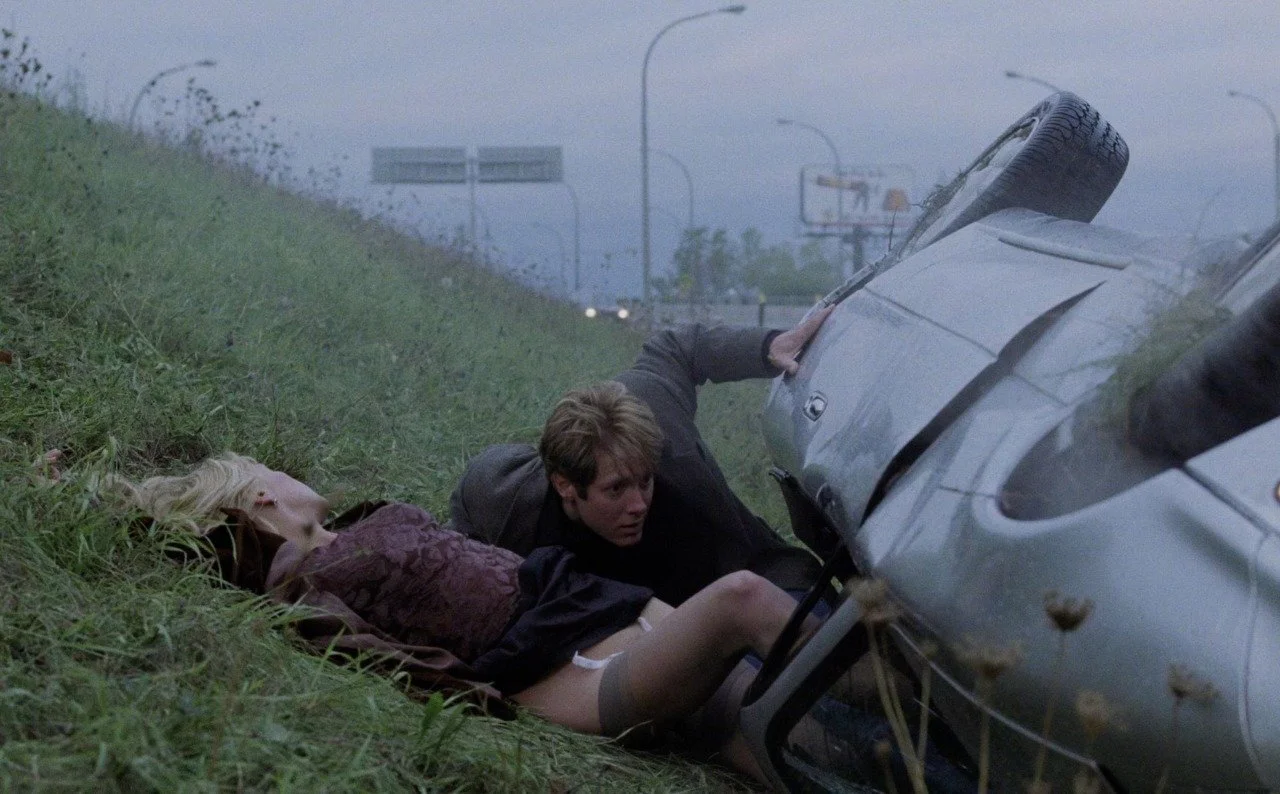
Still from Crash (1996)