By Stella Speridon-Violet
I love to go out—any excuse to get together with my friends helps nurture my inner social butterfly—but lately, we’ve been kind of friend-isolating. Meaning, we’ve been enjoying each other’s company at each other’s apartments and houses rather than hitting the town.
I never thought I’d be that person who’d prefer drinking and dancing at home with my friends, but house parties could never be more in!
Our favorite bars now have lines out the door; it’s humid as hell outside, and any cover over $5 for a local club is not worth it.
I continually catch myself saying, “the pregame was the best part of tonight,” and my friends almost always agree when we do make it out of the house.
Seeing people I cannot stand in a room where we all paid $20 to see the same DJ’s play the same music has become a routine habit I’m slowly trying to break. And I know it’s not just me. I mean, I’ve seen people in my community post about how the once cool, yet slightly overhyped bars downtown have become too expensive and pretentious, and just not worth their time.
So where does everyone go when everything feels boring, and what can we do to make going out worth it again?
Sourced through Pinterest
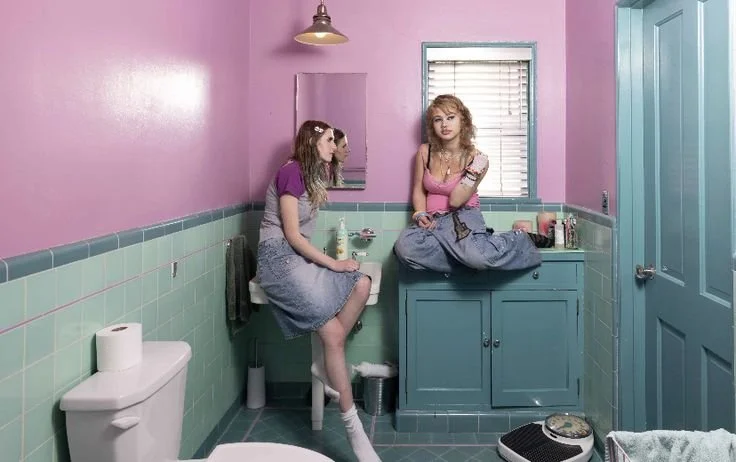
In general, going out is a nightmare. There is something particularly bleak about spending 45 minutes getting ready, 15 minutes waiting for an Uber, another 20-45 minutes standing in line and $40 before you’ve even had a drink, only to find yourself standing in a room wondering if you could be having more fun somewhere else.
And usually, the answer is yes.
At home, I can play whatever music I want. I can wear something ridiculous without worrying about whether I look out of place. I can invite the people I actually want to see, drink something that doesn't cost $17, and dance like an idiot without wondering whether the guy standing next to me is secretly recording.
Nobody is checking the room to see who's there. Nobody is pretending to have fun because the DJ is supposed to be good. Nobody has to shout directly into my ear for an hour just to tell me something that could have been a text.
It's not that I don't like going out; I love the electricity of being in a room full of strangers, the possibility of meeting someone interesting, and the feeling that a completely ordinary night could turn into a story I'll be telling for years. I love getting dressed up for no reason and running into people I haven't seen in months. I love a dance floor that actually makes me want to dance!
But lately, it feels like the promise of a good night is doing more work than the night itself.
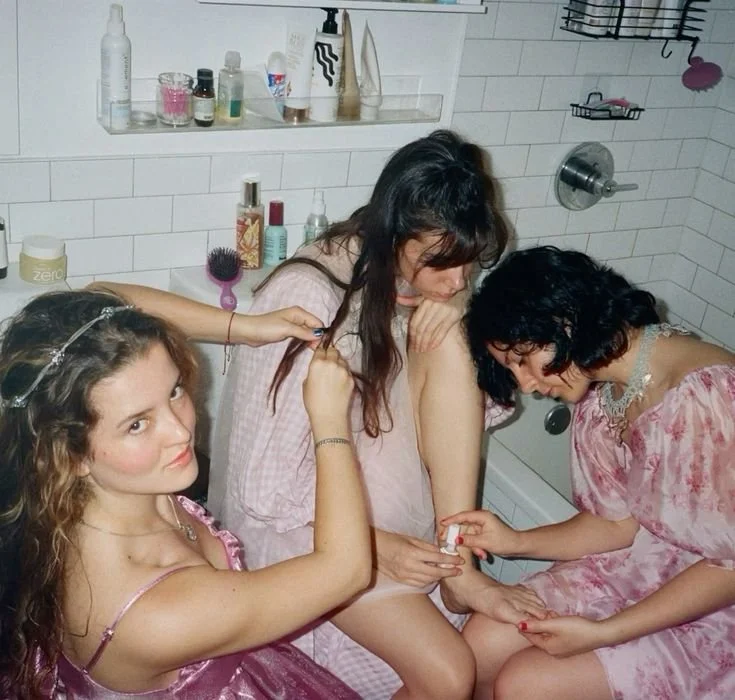
The pregame has become the main event because it's the one part of the evening that still feels like ours. It's spontaneous, inexpensive, and mostly free of the expectations that come with going somewhere everyone insists is cool.
Perhaps the point here is that when the actual destination becomes less fun than the gathering that precedes it, it's worth asking what we're paying for in the first place.
Sourced through Pinterest
Going out has always cost money. I'm not delusional enough to think that bars should operate out of the goodness of their hearts, or that DJs, bartenders, and artists should work for free. But there is a difference between paying for an experience and paying for the privilege of being vaguely disappointed by one.
However, what a night out has not always been is the feeling like a series of little transactions. From the cover charge and the overpriced drink to the Uber surge—and the late-night DoorDash order you will probably forget about until the next morning when you find it still on your porch—all of this would be a little easier to stomach if the experience justified the expense. But when you're paying to stand in a crowded room listening to the same songs you heard at the last three places you went, it starts to feel like you're funding a lifestyle rather than enjoying one.
Then there's the social politics of it all! Certain places develop a reputation as the place to be, and suddenly everyone wants to be there, ultimately altering the experience.
Maybe I'm just getting older, but I'm increasingly uninterested in spending my night trying to prove that I'm having a good one. I just want to enjoy my time!
And, if I'm being honest, some of the best nights I've had recently would make incredibly boring Instagram stories.
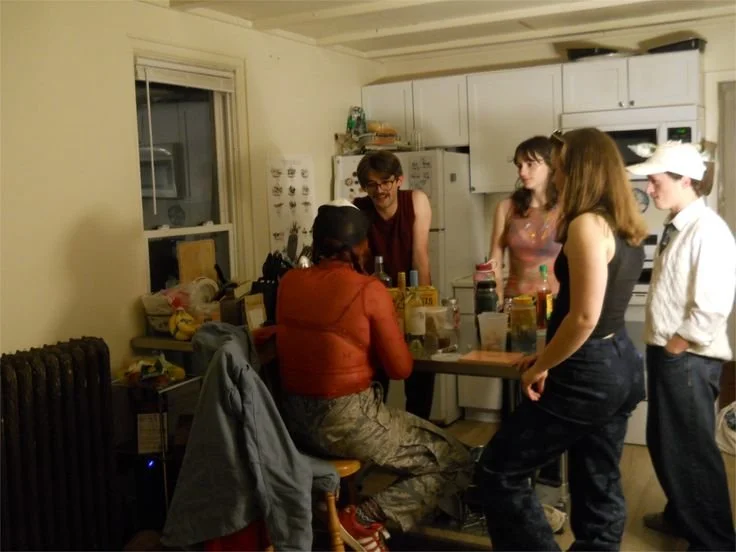
There's no aesthetic to a bunch of your friends sitting on someone's kitchen floor, passing around a bottle of something cheap and arguing over what song to play next. There's no exclusive guest list or perfectly lit photo booth, but there is something real about it that seems to be missing from the places we're supposedly desperate to get into.
I do wonder whether this is a natural consequence of getting older. Maybe when you're 21, going out feels like an endless string of possibilities, and by 23, you've been to enough bars to recognize every new place seems to offer a variation of something we've already done.
There's a certain comfort in familiarity, but too much of it can make everything feel stagnant.
Maybe that's why house parties have become so appealing. They're unpredictable in a way that a carefully curated nightlife experience often isn't. Someone brings a friend you've never met or puts on a song you forgot you loved. Conversation can last until three in the morning, and with meaning. You end up somewhere unexpected because the night has taken on a life of its own.
Of course, there's a risk of romanticizing the house party, too. Seeing the same five friends in the same living room every weekend isn't exactly the stuff of cinematic coming-of-age films. Eventually, even the living room starts to feel like a bar you've been to a hundred times.
Which brings me back to the original question: Is everything just boring now, or have we stopped giving ourselves opportunities to be surprised?
Sourced through Pinterest
I don't think the answer is to stop going out entirely. I refuse to believe that our early twenties are destined to be a series of nights spent scrolling on my couch, watching everyone else do something more interesting.
But I do think we need to be more intentional about where we spend our time.
For starters, I want to go places because something is happening there, not because everyone else has decided it's the place to be.
Give me a tiny venue with a local band I've never heard of. Give me a dive bar with a jukebox, a themed party thrown by someone with questionable taste, or a dance floor where nobody seems to care what anyone else thinks.
I want to discover places before they become impossible to get into. I want to support local artists and DJs who are doing something different. I want to stumble into a night that wasn't meticulously planned in a group chat three weeks in advance. And I want to stop treating every night out like an investment that needs to produce a return. Not every evening has to be legendary. Not every party needs to introduce me to the love of my life or result in a story worth telling.
Sometimes you go somewhere, have a mediocre time, and go home. That's fine! But I don't want mediocrity to become the default.
More than anything, I want nightlife to feel communal again. Less about exclusivity and more about participation, and certainly less about who managed to get in and more about what happened once everyone was there.
The truth is, a good night out has never really been about the venue. It's about the people you're with, the music you hear, the conversations you have, and the small, inexplicable moments that make you feel glad you left your house.
I still want to get dressed up and go dancing. I still want to meet strangers and stay out later than I planned. I still want the kind of night that makes the next morning feel like a small price to pay. I just don't want to pay $20 for the privilege of standing around waiting for it to happen.
Until then, I'll probably be at someone's apartment, drinking something cheap, taking over the aux, and insisting that we should all go out soon. And maybe we will!