By Alivia Stonier
Outside a courthouse, strangers gather to support a person accused of murder, while online communities dissect surveillance footage, courtroom appearances, and seemingly insignificant details in search of clues.
On social media and Reddit, self-appointed investigators debate what a person's clothing, a trip to CVS, or a single comment might reveal about a case they have no personal connection to, often long before the people involved have even had their day in court.
Click into your news or social media feed anywhere, at any time, and it is easy to understand how quickly a case can swallow you whole.
It is no secret that America has an infatuation with true crime, an obsession that especially resonates with women. Pew Research Center shows that 44% of female podcast listeners regularly tune into true-crime podcasts, compared with just 23% of male listeners, while YouGov has also found that 61% of women consume true-crime content, compared with 52% of men. America's fascination with crime itself is not new, but the way we consume these stories has fundamentally changed, and that change has transformed true crime from something we simply watch into something we increasingly participate in.
That participation is where the danger lies.
We are no longer simply reading about a crime in the newspaper or watching a report on the evening news. Instead, we are spoon-fed court documents, body-camera footage, interrogation videos, social media posts, podcasts, documentaries, and endless online discussions that allow us to follow cases as if we were part of the investigation ourselves. This fascination has only continued to grow with the sensationalist coverage surrounding cases such as the Lindsay Clancy filicide trial, Luigi Mangione's alleged assassination of an insurance executive, and Bryan Kohberger's murders of the Idaho Four.

Courtesy of ABC7.
Part of what makes cases like these so compelling is that they contain elements of ordinary life that people can recognize in themselves. We can envision wanting to protect children, feeling frustrated with healthcare and insurance systems, or reveling in college life and enjoying a night out with friends. That such ordinary experiences might end in a pool of blood threatens the sense of safety and sanctity we attach to our everyday routines, and that familiarity gives the public something to hold onto even when the crimes themselves are anything but familiar.
Modern media only intensifies that attachment. Gone are the days when audiences had to parse through headlines to piece together a story. Now, more than ever, we can hear directly from people involved, watch body-camera footage as if we were there, follow courtroom proceedings, search through social media posts and listen to hours of podcasts breaking down every detail. Gossip has always been a chugging train, but modern media gives the public an up-close view it has never had before, offering a front-row seat to our collective morbid curiosity. The problem is that access can easily create the illusion of understanding.
We can form our own theories, search through court documents, watch interrogation footage, follow a case from the first headline to the final verdict and argue with strangers online about what we believe happened. The audience is increasingly given the tools to feel as though it can investigate a case independently, but access to information is not the same thing as understanding the information itself. A court document does not automatically provide the context surrounding it, and a viral clip or popular online theory can never replace the work of investigators, attorneys and journalists who have access to the full circumstances of a case.
At the same time, the enormous demand for true crime has created another problem: the increasingly fragile line between fact and entertainment. Data from Digital i shows that 15 of Netflix's top 20 most-watched documentary titles by reach in 2024 were true crime, up from just six in 2020. The numbers prove the hunger Americans have for these stories when they sit down at the end of the day looking for something to watch, and consumers are not the only ones paying attention. Streaming services are paying attention, too. People watch true crime, more true crime gets made and promoted, more people watch, and the cycle continues.
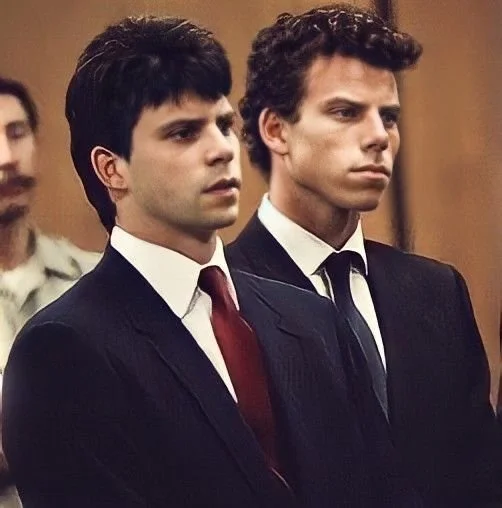
Not all of that content simply presents the facts. Alongside documentaries and reporting are dramatized series such as Monster, which presents real events through the lens of Ryan Murphy and Hollywood, creating a version of history that audiences can easily begin to treat as fact. The Menendez brothers are a particularly useful example of this confusion because their allegations of sexual abuse were not created by Ryan Murphy, but the way their story was dramatized and presented in Netflix's Monster can lead viewers to mistake creative interpretation and dramatic hypotheticals for established fact.
When viewers take dramatization at face value without fact-checking, their hunger for intrigue can begin filling gaps in the historical record with scenes, dialogue, and details they remember seeing on television rather than events they know actually occurred. Combine those creative decisions with the broader lack of media literacy presenting itself across the country, and the result is a dangerous environment in which true crime sits at the forefront of popular culture without the due diligence that journalists, investigators and other professionals are trained to bring to these cases. Perhaps the greatest consequence, however, is that the crime victim can become secondary to the story.
Their death becomes a documentary, their home becomes a location to explore, their photographs become thumbnails, and their final moments become a timeline that people can scroll through while sitting on their couch. We have to ask ourselves what happens when a human being's worst moment becomes another person's evening entertainment, particularly when audiences become so involved in a case that the people who actually lived through it, and especially those who did not survive it, begin to disappear behind the story being told about them.
This is also where the relationship between women and true crime becomes more complicated than simply saying women enjoy watching murder documentaries. Research has suggested that some women consume true crime as a way of understanding danger, recognizing warning signs, and learning how they might protect themselves from becoming victims. For some, it is not simply morbid curiosity but an attempt to understand how something terrible happens so that perhaps they can recognize it before it happens to them. There is something particularly strange about that relationship because we consume stories about violence partly because we are afraid of violence, while constantly consuming those stories can also keep violence at the forefront of our minds.
Sourced through Pinterest.
True crime undeniably can be educational, and America's fascination with it is not inherently the problem. The problem emerges when education gives way to entertainment, curiosity turns into participation, and access to information convinces audiences that they have ownership over someone else's tragedy.
Social media has made it possible for the everyday consumer to become part of the conversation surrounding a case before a trial has even ended, deciding who they believe, who they think is guilty, and which pieces of information matter most. In doing so, we can turn real people into characters and real cases into storylines that we follow from a smartphone, often without understanding the full circumstances of what actually happened.
America's obsession with true crime has therefore become something bigger than an interest in crime itself. It has become a form of participation in which the audience is no longer standing completely outside the story but is instead helping shape the way that story is discussed, remembered, and sometimes even understood.
The next time you sit down to watch a case unfold, it is worth asking yourself what exactly you are learning through that consumption. Think about what may have been left out, what may have been dramatized, and whether you are actually learning about a case or simply consuming someone else's tragedy. True crime is not inherently the problem, but the way we consume it, and the way we allow entertainment, speculation, and participation to blur the line between fact and fiction, can become something much more dangerous than the documentary we decided to watch at the end of the day.