John Early Is The Perfect Ingenue in 'Maddie's Secret'
By Julia Krys
John Early stars in, wrote, and produced his directorial debut, Maddie’s Secret, and it’s only appropriate that Early did it all. This overachievement follows suit with the titular role, Maddie (played by Early), a dishwasher turned overnight online culinary star who truly aspires toward perfectionism. Early plays a sort of stereotypical positive and effortlessly pretty woman. Painted through the lens of L.A.’s content-heavy identity and overly aware absurdity, Maddie’s Secret delivers a new-age comedic melodrama.
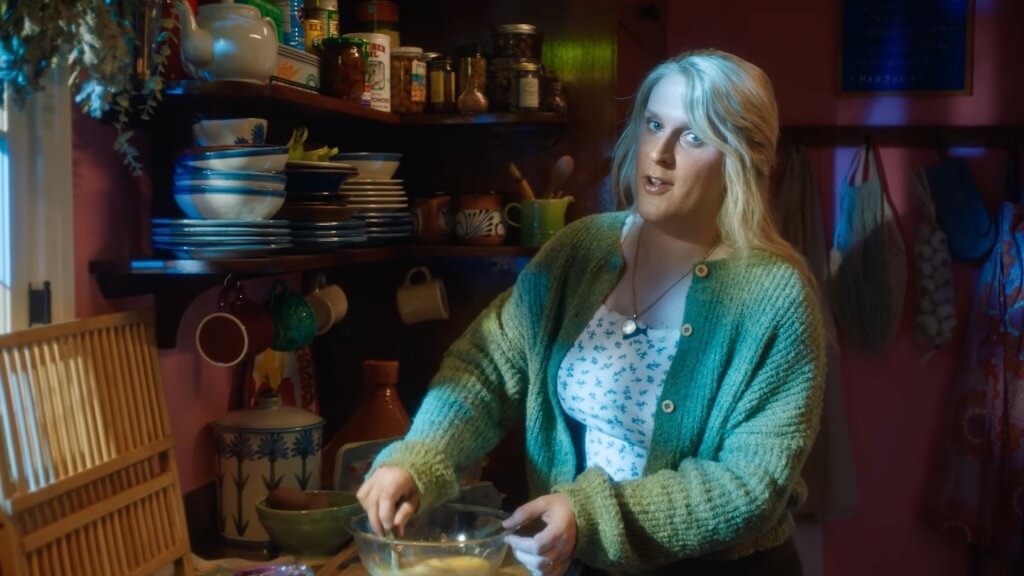
Maddie's Secret (2026); Courtesy of AV Club
The story beats lend themselves to classic rom-com genre tropes. This proves especially enjoyable in the context of L.A.’s content capital identity. Maddie serves her culinary expertise to the online landscape in a way that mirrors aspirations of becoming Hollywood’s next ingénue. As her digital presence takes off, she’s faced with the body-image issues that putting herself online drums up. This story may sound familiar to anyone who works in entertainment and has been pushed toward an on-screen social media presence for the sake of the evolving industry. For these reasons, the content itself spoke directly to an L.A. audience in a very engaging way. Certain beats felt made specifically for viewers living and working within this online content hub.
The script is baked (no pun intended) with laugh-out-loud moments. Achieving this level of levity in a movie theater is no small feat, especially as audiences grow increasingly divided around comedic content. Early successfully speaks directly to his intended audience without pandering to any other sensibilities. His brand of self-aware humor sings when placed in the context of characters who lack any self-awareness whatsoever. Kate Berlant and Vanessa Bayer (who play co-worker Deena and friend Julie, respectively) deliver on the promise of selling this lack of awareness. Their characters’ issues are on display for everyone except themselves.
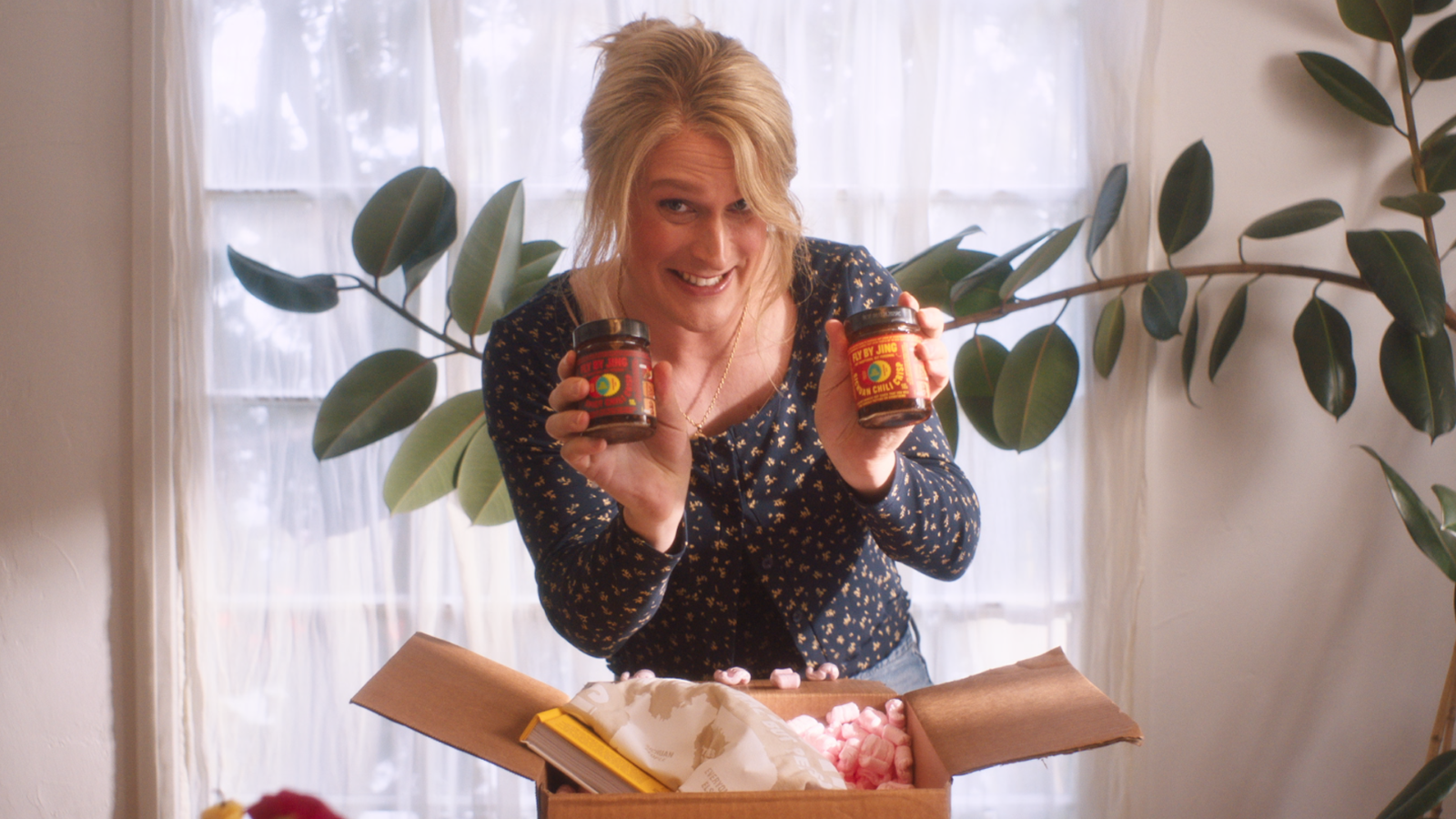
Maddie's Secret (2026); Courtesy of Magnolia Pictures
Another layer of this playful ignorance is added through Early’s gender-bent portrayal as Maddie. The writing pokes fun at this performance. When it comes time for Maddie to join her co-worker’s gay dance class, for example, she asks if they will accept “just some ally” like herself. This cognizant sensibility allows Millennial corniness to take flight. The audience remains in on the secret – both Maddie’s and the fact that these characters exist so ignorantly. It’s very common now to hear stories of mental health issues going hand in hand with online presence, but filtering that reality through the absurdist humor of a gender-swapped John Early genuinely living as a woman imbues it with meaning.
The movie persists in the thesis that it should not be taken seriously at any point, and this, of course, causes a conundrum when serious issues arise. At first, a level of distance is created so the viewer does not have to fully attach themselves to Maddie’s suffering. Instead, we revel in the troubled psychology of a chef struggling with food. It is this ultimate irony that the story thrives on.
Maddie’s secret is hidden in plain sight: she’s a chef with a troubled relationship to food. Framing this as a secret underlines the very perfectionism that threatens our protagonist’s life. The shame around imperfection drives her to allow people to see only an outer shell of herself – one that is controlled and methodical. The conflict here was never her career, which takes off almost instantaneously, but the belief system triggered by the stress of success. When the stakes are higher, it becomes much harder to define what is “perfect.”
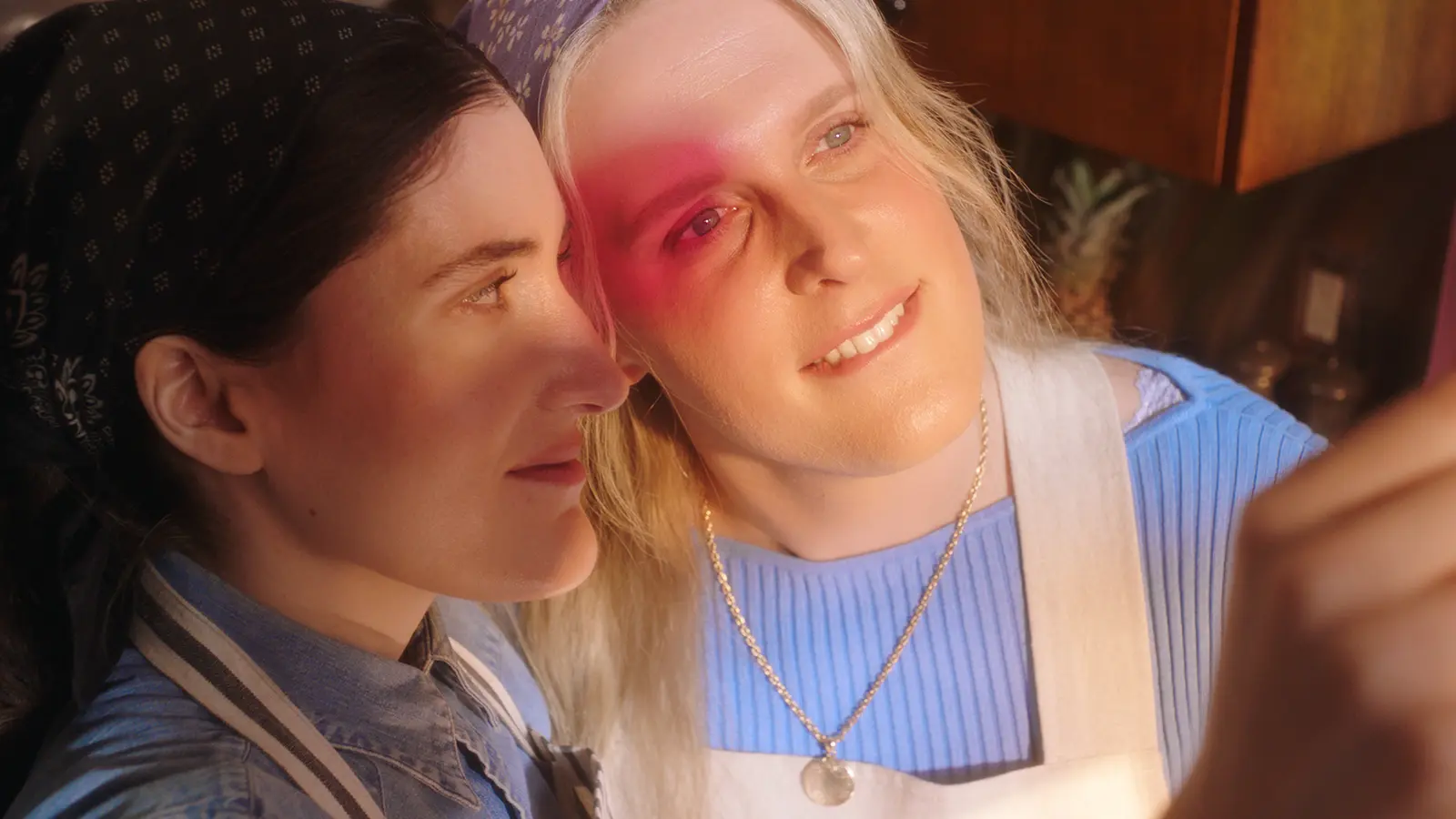
Maddie's Secret (2026); Courtesy of Sydney Film Festival
As her perfectionism is taken to higher and higher extremes, serious topics arise. It’s very difficult to achieve true loss or deep introspection while operating in a register of absurdist humor. Here, the story understandably teeters. Still, it leans on the genre tropes that guide viewers toward a sense of resolution. Wading into heavy subjects without accepting their full weight is a line Early toes, with varying success. Like Maddie herself, the film is most vulnerable when it stops trying to be perfect.