Judy Blank Delves into Emotional Duality and Trusting Your Gut
By Alivia Stonier
Judy Blank is an artist who is not afraid to mix vulnerability with childlike fun and explore the roots of who you truly are when going back into the influences that shaped you, and her latest album, Big Mood, released this past summer, is no exception.
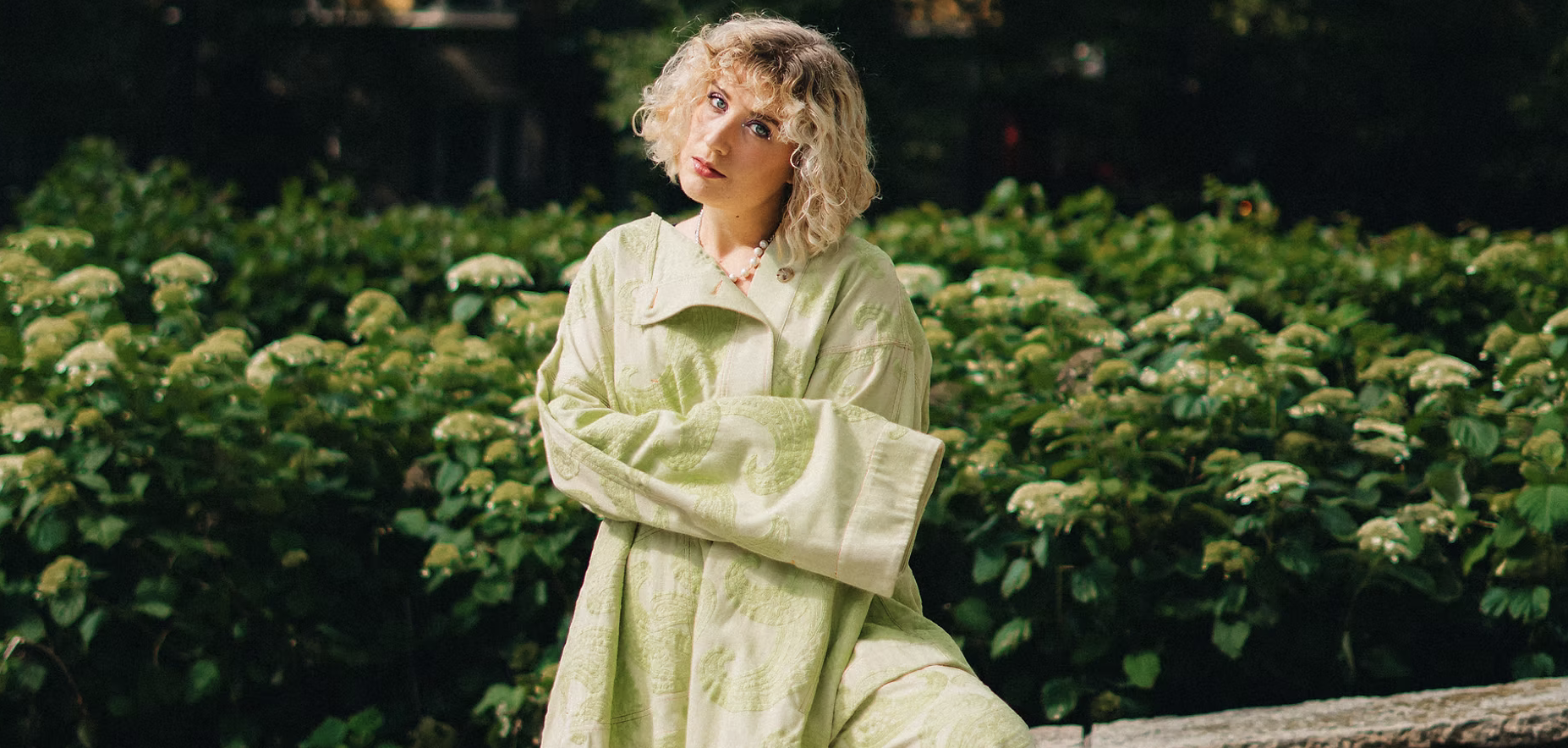
Image Provided by Judy Blank
To begin my interview with Blank, she opened up about these very roots that have cultivated into her present self: “I'm calling from the Netherlands right now, which is where I grew up. I grew up very rural, and I'm looking out on a horse and a donkey right now. I think because I grew up in such a small town, I was always looking for stimulation. I'm a super ADHD girl, and I always need something, and I was always super inspired by the movies that my dad and I watched. We would watch movies almost every night of the week, and their soundtracks were so awesome. They were mostly American music, and I really want it to be in the States. So I started playing piano as a way to kind of express myself. I immediately had the dream to write those songs in the States as well, or at least sing them for people over there.”
But her inspirations stretched beyond American cinema. “Me and my mom, we're kind of a wacky family, as in, my parents always had very old cars, and I was always a little embarrassed when my parents would pick me up from school, because it was always very obvious that they were my parents, you know? But, in one of those cars, we had a cassette player, and my mom had three tapes. One of them was an ABBA tape, which is to this day still one of my favorite bands. And I think they were really big in making me want to write bangers and just songs that stick, and they're so melodic; that was a big inspiration. And then the Orange Tracy Chapman album—that one really hit me, even though I didn't even really speak English, but I guess I could just feel her pain. That's the ultimate singer-songwriter record, and then she had a Chicago cassette. So those were some of the early influences that really made me feel things and made me want to do that too.”
“In terms of movies, I just love the movies that transported me. So it's kind of funny, but the Forrest Gump classic just really made me want to be in the US, and also the Shrek soundtrack. There are so many incredible songs on the first Shrek motion picture soundtrack, and I didn't even listen to albums at the time, but all those songs were so good, and they really made me want to sing them and want to explore music.”
Despite having such light influences at times, like Shrek, there are still a lot of layers to be found beneath the surface, and when talking about this balance between lightness and the weight of experiences like heartbreak, Mood had this to say:
“With Big Mood, I was able to take so much time. I'm probably never going to make an album like that with so much time and effort put into every song, because I would just have an idea, and I would go into the studio barely having finished a song, and I would go in blind and just try something out. Usually, you don't really have that luxury, but at that point in time, I had no label, and I had no deadline. So I just started. And I think around the time that I was making the record, which was over a time span of maybe four years, that I was collecting songs and recording them, I really worked through a lot of feelings. Part of it was that it was the pandemic, but also I was just trying to grow up and trying to find my place in the world. A couple of people around me died kind of randomly, and that really made me think about, ‘Wow, time is going really fast. Am I doing the right things with my life?’ Also, I was learning a lot about my own insecurities and where they stemmed from, because I have just battled with a lot of body image issues throughout my life. And that was the first time I really explored why. Where is this coming from, and why is this so prevalent in my life? I think that freedom to explore all those themes and learning to not be [ashamed] about them, about feeling those feelings, really made it an interesting time in my life and an interesting album. I feel like it's the first time I'm truly vulnerable in my songwriting.”
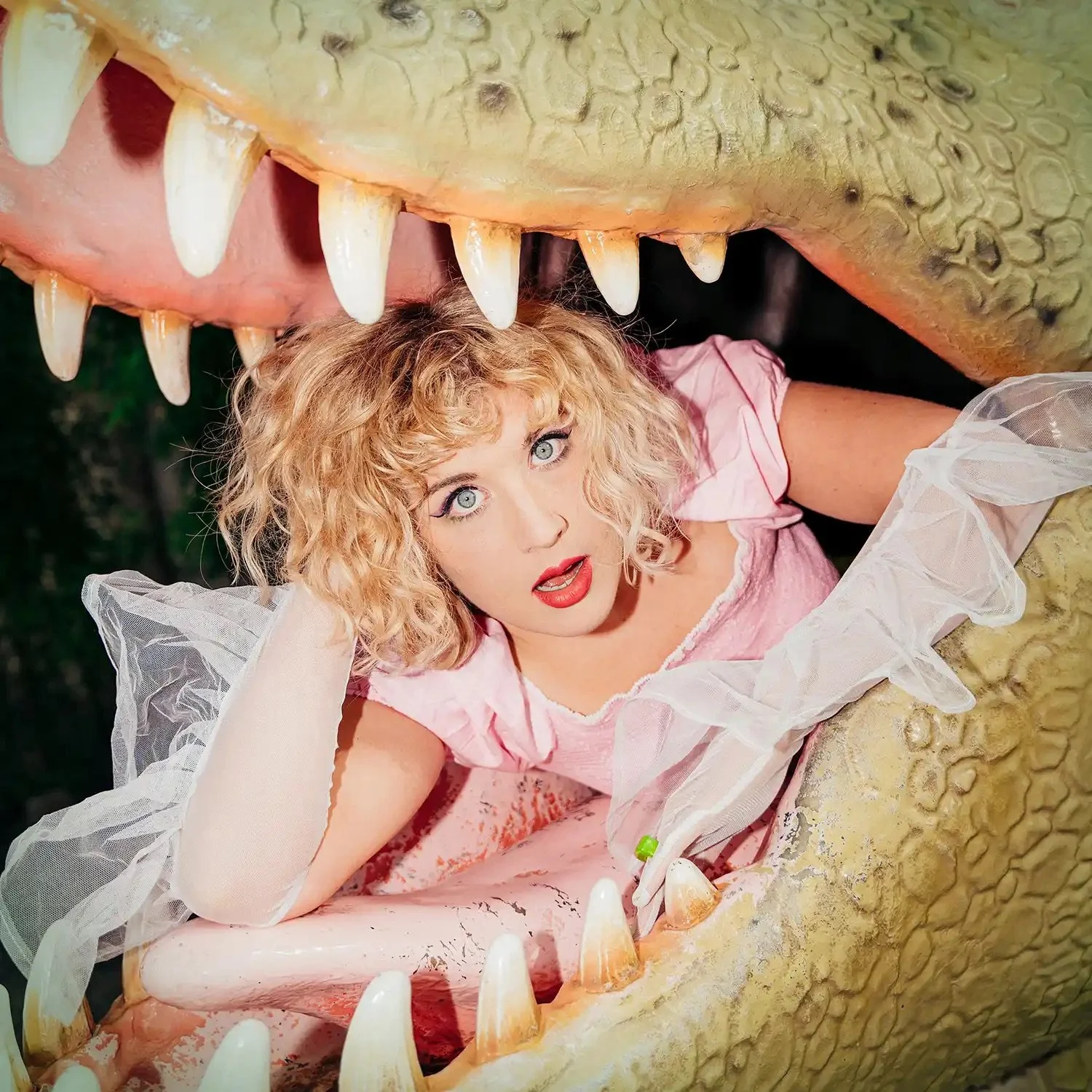
Image Provided by Judy Blank
When asked how her relationship with the music had changed on this record, especially given that it was worked on over the span of multiple years, the artist opened up about this evolution.
‘When I was recording [the album], I was so fiery, and I was like, “I'm going to make this record, and it's going to be the best record ever. And I want to tour the US, and I want to move across the country or across the world to do this.’ And then in the middle of the album process, I actually got burnt out, actually burnt out to the point where I could not function anymore and where I did not feel any joy. So I paused the album recordings, and I put out a different EP because I wasn't feeling Big Mood anymore at that point. I released an EP called Saddies, and those were songs I wrote kind of in my recovery from that. Something really changed when I lost all interest in anything because I kind of stopped caring in a healthy way. I think pre-Big Mood, my relationship with my art and myself, and what I was doing, and my urge to prove myself with my quest for validation was so prevalent, and it was almost more important than the music I made.”
“After I got depressed and burnt out, I noticed that the songs I was writing were way more honest and blunt than my previous stuff, and were just resonating with people way more. That really helped me take the ego out of it, and it gave me my purpose back because at first I was like, what's the point in putting out music? Nobody cares. Um, and yeah, it's not working. And then when I stopped caring, other people started caring because I noticed that it wasn't really about me and that the songs I write are just vessels for other people to feel their feelings better and to place their emotions, which is so hard when you're young. That helped so much to kind of find back the fun that I used to have. It really gave me a new perspective on why I do music.”
When discussing the EP that came out of this period of burnout, the topic of balancing lightness with dark came back to the surface. “Saddies was an EP with pretty sad songs on it, but I couldn't make it sound sad and then also make it look sad. Like, ‘I have an album about depression, and now I'm going to market it; it is in black and white and looks sad on the cover.’ I did the opposite. I use all pastel colors, and I used a bunch of party favors in the photo shoot and in the artwork that I did for that, and my artwork was the opposite of what the music sounded like. It was way more quirky and fun, and I think that helped get the message across… I've since been finding the juxtapositions and things. So, “Killing Time” is actually a pretty serious topic, but I'm not going to make it sound like a sad song because that would be too much. So I tried to do one thing at a time. “Dinosaurs” is a song about climate change, but it has the funniest movie music video I've ever made for it, and it's probably the most playful song on the record with some of the most serious themes. I think it's something that keeps me busy and that keeps me entertained while having fun in the process, and to maybe get a message across to people that wouldn't usually listen.”
One of the most prevalent themes on the record, which is touched upon in the opening track “Killing Time,” is grappling with body image, which is something especially young women on social media can resonate with when feeling like youth is being prioritized and every post you make is under a microscope. But especially when a large facet of your job is to be in the public eye and build a following.
“It's something that I really have been struggling with for a long time, because if you think about it, everyone has a good day and a bad day, right? But if you're on stage, it doesn't matter if your day is good or bad. People are going to take pictures, people are going to want to be entertained by you, and people are going to see you. And if they saw you last time on a good day and now they see you on a bad day, or you ate a pizza the night before and you feel really bloated and you can see it in the pictures. It's just frustrating. That is something I really had to learn to overcome, that my personal value is not tied to what I look like on stage, and that my songs are not devalued. If I weigh a couple pounds more than I did a couple of months ago, that doesn't change the meaning of my songs or the purpose of my work… Our society definitely has toxic things that they're trying to force upon us, and it's all for capitalism. It's all because everybody's trying to make money; that is something to keep in mind, that our quest for perfection and for being the healthiest we've ever been, or the thinnest we've ever been, is filling the pockets of other people. And that really is a good perspective to have, that maybe you accepting your imperfections is an act of rebellion.
When asked what it's like blending together personal topics with broader ones like climate change and our political landscape, Blank opened up about the risks involved.
“As an immigrant right now because I’m Dutch, living in the US, I have a visa that needs to be renewed. There are things that I would like to say that I can't say, because that would be compromising my own safety in certain ways right now. I do have an opinion about things, and I just try to phrase things in the most positive way possible instead of pointing fingers… It’s kind of a songwriting thing, but also just how I have to live my life.”
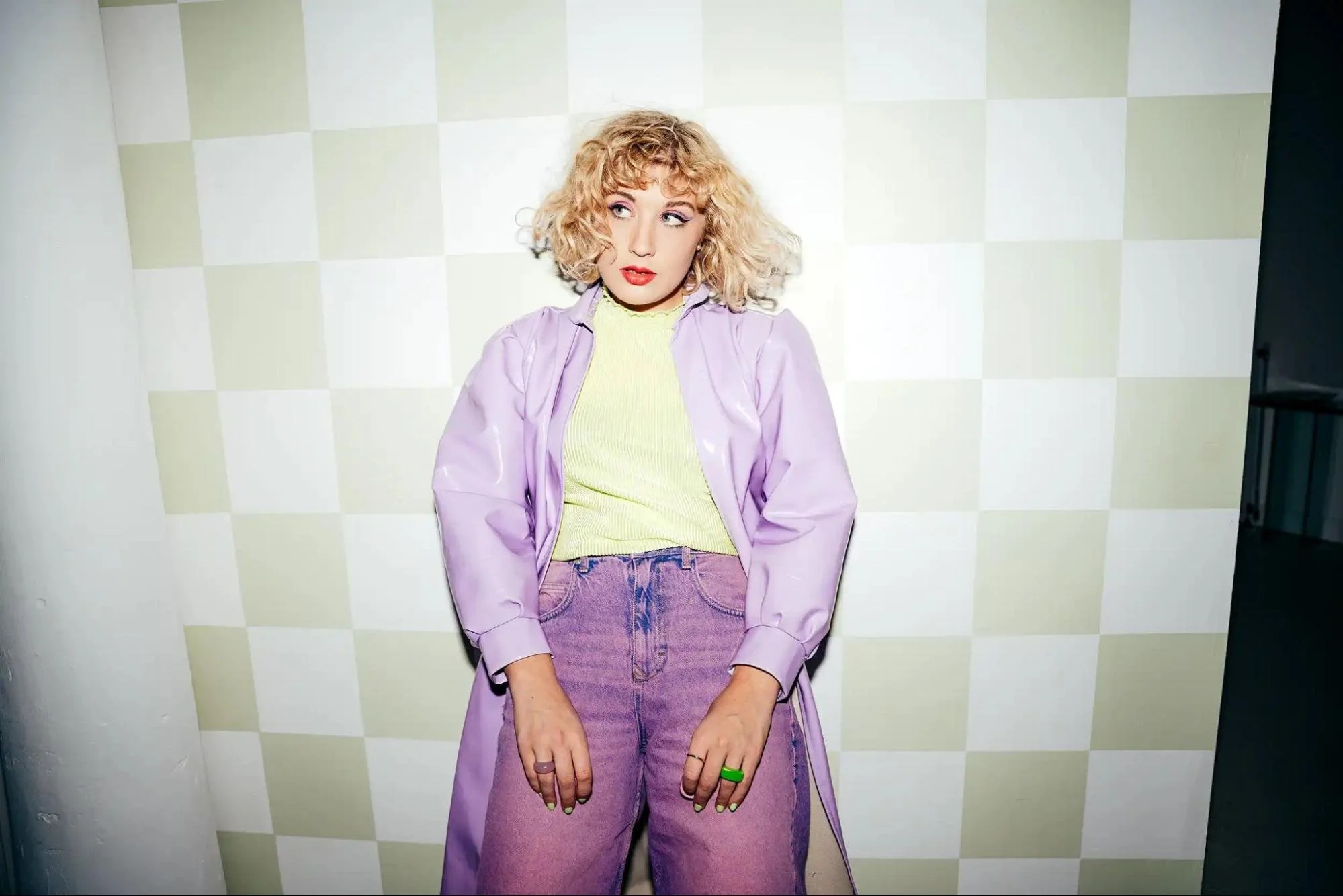
Image Provided by Judy Blank
Despite some of the censorship that has to go on because of our current political climate, the artist has still found ways to be able to express herself and, in those moments, discover things for herself.
“I think one of my favorite tracks to write was probably “No Thank You,” because it's so personal. I think even though I love writing, like the bops and songs like "Toy Heart" that were written in three parts of the world, because I wrote a little bit in the Netherlands, and then a little bit in Mexico, and then I finished it in California, which is super cool. It was like a travel song, but I think the intimate songs that I write alone in my room on my guitar are the ones that really matter the most personally and that are always personal epiphanies, like, ‘Wow, that is how I feel about that. I've been wondering how I feel about that, and it's a feeling I haven't been able to place. Sometimes I feel like when I'm hyper-focused on writing a song, it's almost like my subconscious knows more than what I can express. Then the song is done, and I look back, and all of a sudden I understand myself a little better.”
“I feel like the vulnerability is more in the songwriting than in the recording process. So whenever I write the song, I feel kind of naked, and I am super vulnerable. But the second I started recording, I was there for the fun. I'm able to write something serious and then dress it up in a fun way. When I'm recording something, I'm not really overthinking what the song is about that much. But sometimes I will redo a vocal take, and then it'll hit me again what I wrote the song about, and then I'll get emotional again.”
Moving away from talking about the lyrical discovery and instead talking about some of the fun that production allows on a sonic level in contrast to this emotional upheaval, Blank revealed that one of her close friends, Roy, who helped produce the record, turned the studio into a “playground.”
“He really pushed me to trust my own instincts and my own melodic choices. And because his studio was laid out like a total playground, I feel like I really got in touch with my inner child that actually learned how to play again; that is kind of what you hear on the record. It's just us trying out a million different things over and over again.”
When it comes to the actual synth sound, she revealed that a lot of that was done on a Juno. “It's this nineteen-eighties super cool machine. One day, I just showed up to the studio; we had another day planned… I was in this spacey dream world. Before I knew it, two hours had passed, and I was obsessed with this thing. I'd wasted two hours of my studio time just being lost in the music, lost in the sauce, and it was so cool to then actually record that Juno on the record.”
Given that the artist has previously been allowed to work on her own timeline, I wondered what it was like transitioning into working with a label and instead learning how to navigate a set structure.
“When I was dreaming of this career, I was not thinking that most of what I would do would not be playing songs or writing songs, but it would be editing TikToks and just emailing venues and making sure my lyrics are uploaded correctly, or fixing things and ordering merch. All stuff that has nothing to do with music. But it has to happen, and no one else is doing it for me. So I'm honestly still learning to refine that balance because for the longest time, it was my dream to be signed to a big label like Rounder Records, and now I kind of need to find how I can be the artist and the musician again… I'm glad I found my brand, and that Rounder really helped me amplify it. But I think a lot of people underestimate how much time of being a musician goes to not playing your instrument. Sometimes I'll make a video, or I'll play something on the internet, and I feel like no one listens to it. And then I'll be at a show six months after that, and someone says, 'Can you play that little song you played on your Instagram Live a couple of months ago? Yeah, it went something like this, or it was about that,’ and it'll be some deep cut that never even made a record. So music has a power to poke through in places that you can't see. And I think that's the true power. You never know what a song means in someone's life, or when a song can give someone hope that pulls them off the ledge.”
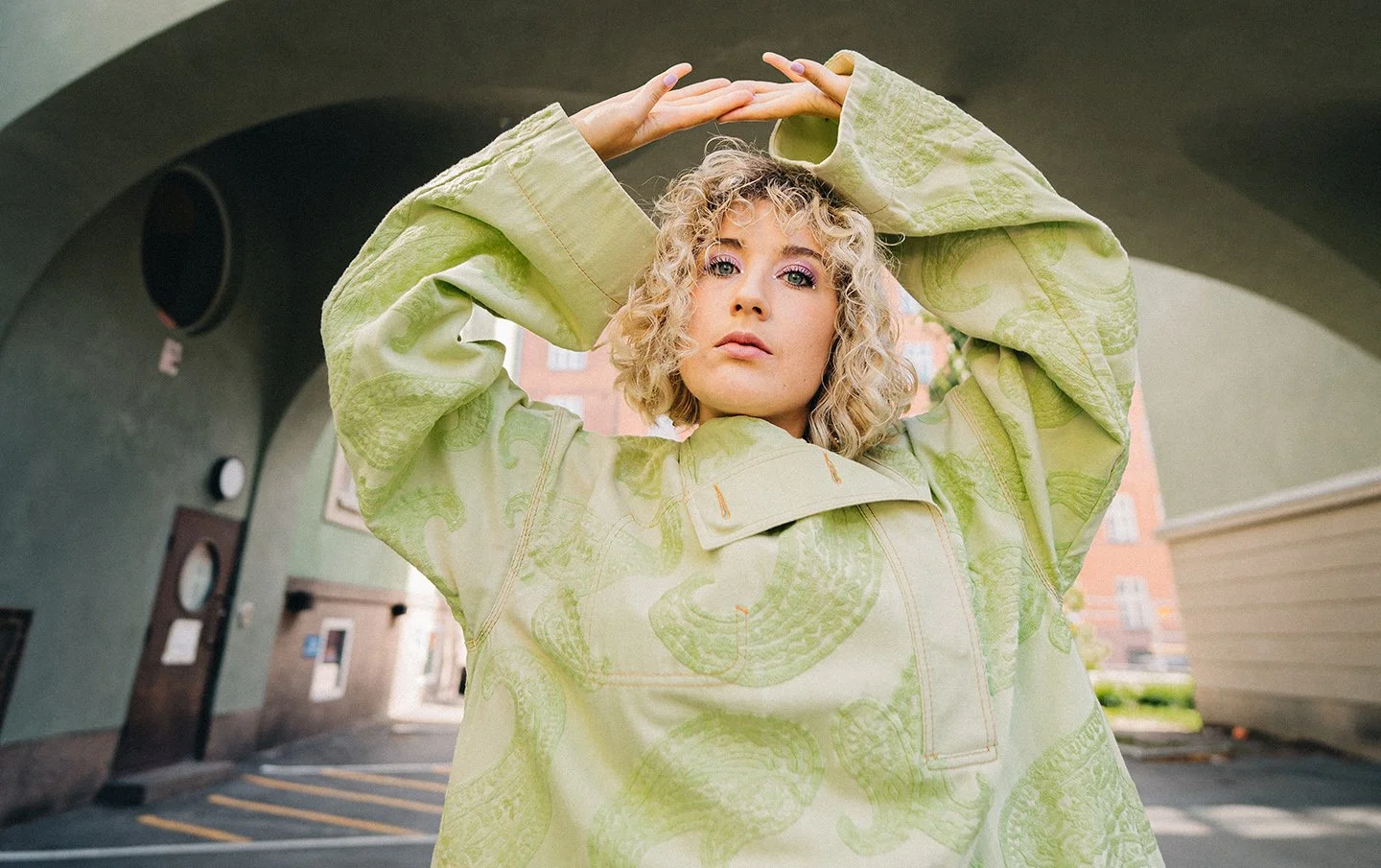
Image Provided by Judy Blank
Given that being an artist takes so much work beyond just the music and the musician had already been dealing with such an intense level of burnout. When opening up about what it was like to come out of that place, the artist revealed how she had gotten there.
“I actually said no to a lot of things, and ‘no’ was kind of a magic word that I'd never really learned how to say… It brought me a lot. I really listened to my gut, and I went to Mexico. I put out the first song of Saddies and said, ‘Peace out, I'm going to go to Mexico.’ There, I found a whole new love for music, and I actually got invited to play this music festival in Mexico. I had to travel to a different state for it, but for the first time in a long time, I felt truly excited for something again, and I started looking for things that really made me happy and gave me a feeling of excitement. That is kind of the compass I found after my burnout… Even if it doesn't pay, or even if it is kind of out of the way or something, I will still do it because my gut feeling said yes. Excitement. I really have to chase those highs. But if my gut says, I don't know. I don't know if I want to open for this artist or if this is really sparking my joy right now. I've just gotten a little better at saying no to certain things that can be so important…usually for every no, you get something else in return, whether it's rest or it's a different opportunity.”
It's clear that the artist is following her heart and what truly brings her joy, which is able to resonates with her audience as well. It's through listening to her instincts and staying true to herself that she will be able to continue to thrive in a way that feels authentic.
“I'm always going to change up the kind of music I make, and especially now that I feel like I can trust what I make. I used to not really be able to trust it because I just thought that I was a fraud. Honestly, I wasn't amazing at making music. I could write songs, but I didn't have an idea of how to produce a record. Now I do, because I've done it a couple of times, and I know how to vocalize my thoughts and my wishes. But I think for my next [project], it can go in so many different directions. I think I'm going to make two projects. One will just kind of be an indie pop/indie folk record with the songs that are on my heart, kind of blunt and conversational along the lines of Big Mood, but maybe a little more poppy. And there's another part of me that really wants to make music in Spanish, because I feel like it's important right now, and I speak Spanish. I feel super close to the culture because of my adventures in Mexico and how much time I spent there.”
She also touched on what she hopes people are ultimately able to gain from listening to her work.
“I really hope that everyone listening to my music will feel supported in their own wackiness and will feel that it's okay to not be perfect, that it's okay to not be a picture in a magazine, that it's okay to just exist with all human emotions that are part of the human experience, and that you're not wrong for that. You're not wrong for feeling things. And if I can do that, if I can give people a little bit of comfort in that, then my mission is complete.”
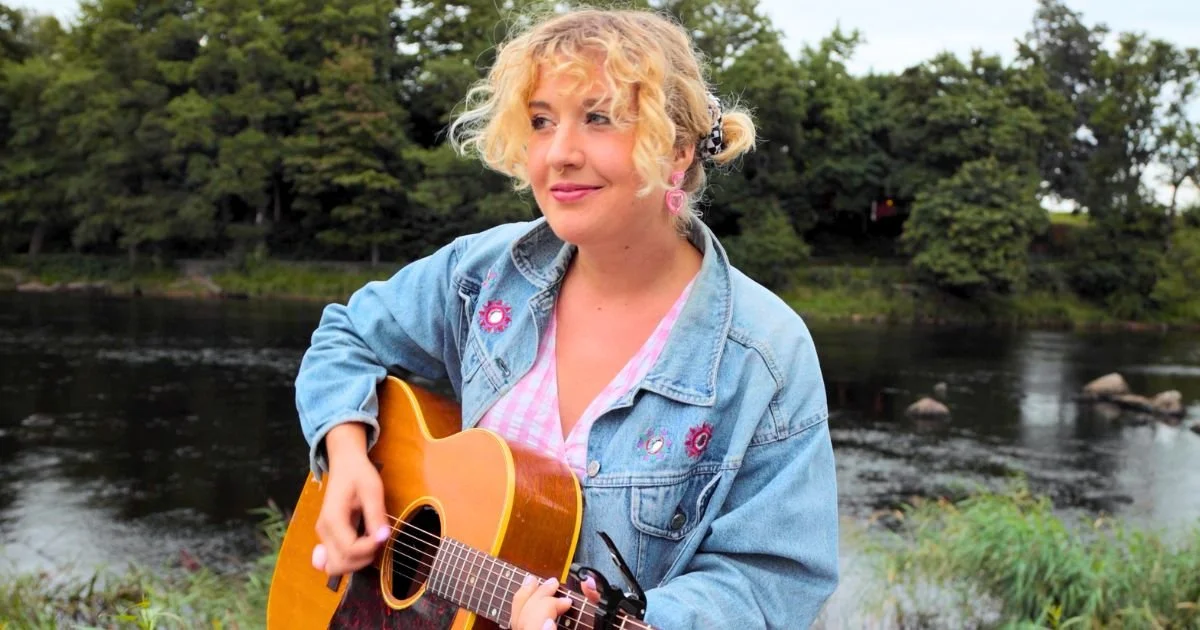
The record truly resonated with me and was why I felt compelled to have this conversation with Judy Blank. Fans will have more songs to hopefully find themselves within in the future. Currently, the most recent project from Blank is a series of Christmas covers that are perfect for the holiday season. But all of her work acts as a reminder to love yourself and the people around you for who you are, especially at such a time of division in our culture.