By Danielle Carnivele
What if I told you that the catalyst of rock n’ roll was the family scapegoat? Defiance is no stranger to the realm of rock, but questioning why that defiance was acted upon creates a new understanding of what causes rebellion. Lou Reed, founder of The Velvet Underground, is a prime example of how being misunderstood becomes the impetus of your identity.
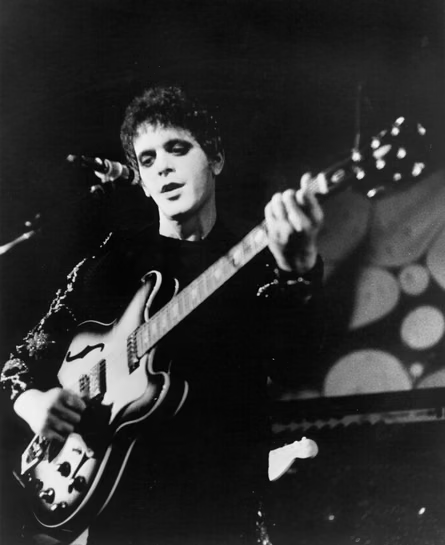
Lou Reed playing in 1970; Credit: Michael Ochs.
Your family is your first introduction to the world. Before you have the independence or experience to develop your own understanding of yourself, the people raising you are helping establish what you believe is acceptable, what is unacceptable, what makes someone good, and what makes someone bad.
Being raised with the belief that there is something deeply wrong with you eventually makes you question why that very thing is considered bad, leading you to question the stigmas of what is considered bad in this world. Mental health is one topic falsely stigmatized for decades with a negative connotation that something is “wrong with you” that needs to be fixed. In the 1950s, when psychiatric knowledge was less advanced, symptoms of anxiety, panic attacks, and thoughts of homosexuality were just a few of the conditions that warranted electroshock therapy (ECT), and that’s exactly what Lou Reed experienced at just seventeen.
Lou was described as a temperamental child, often experiencing tantrums and being “difficult”, according to his sister’s standards. Being the problem child in the household caused Lou to be the emotional bearer for the family’s problems. He was even blamed by his grandmother when his mother developed breast cancer. Being the center for emotional dumping, Lou internalized these feelings. This caused him to endure panic attacks and debilitating anxiety, leaving him paralyzed by the belief that he is the common denominator when something terrible happens. As psychology now suggests, often difficult children are rebelling against their environment, or in other terms, the call is coming from inside the house.
Lou Reed’s family came from a Russian Jewish background, and his father immigrated to America when Nazi invasions began in the Second World War. His father, Sidney, has a disciplined background and is described by Lou as being controlling and tyrannical. Especially growing up during the automotive boom in New York at the time, when the city was transitioning to a more fast paced economy. There was a need to maintain the stigmatized belief of what’s “right and wrong” by the previous generations that were no longer sustainable in this progressive age.
Teenagers get a reputation for defiance as a negative side effect to hormones and growing pains towards adulthood, but it’s only recently that those “growing pains” are being questioned as to why teens rebel. Defiance is usually the demand of questioning why something is wrong, and rock n’ roll is where those beliefs resonate. Embracing the dark parts of our psyche instead of condemning or changing those qualities is how we find our place in the world. Music carves out that space for acceptance.
Lou Reed used music to shine light upon the darkness of the world, highlighting firsthand experiences of drug use, provocation, and sexual ambiguity. At sixteen, Lou Reed founded a doo-wop band, “The Shades”, and found a sense of social belonging. Music allowed Reed to have an outlet for his internal world. He found acceptance in being different; however, that uniqueness is also what his family feared.
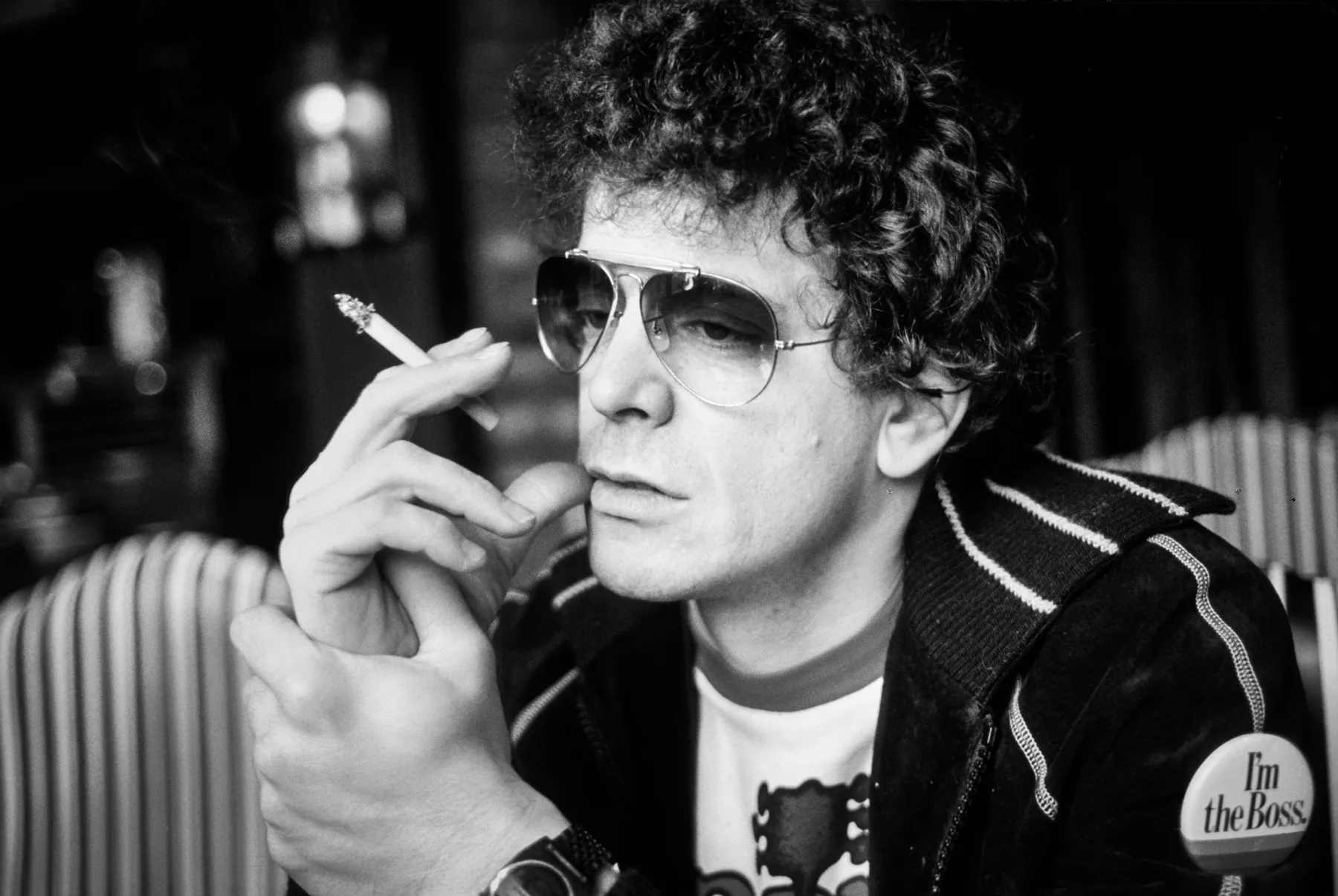
Courtesy of Getty Images.
Being a Semitic Jew in New York during the 60s instilled fear in Lou’s father and the anti-semitic stigmas that circulated at the time. Being Jewish was considered being an outsider, so Lou’s father did everything in his power to preserve and control his family’s acceptance in society. This led to changing the family name from Rabinowitz to Reed. The fear of being different haunted his father, and Lou’s defiance and mental struggles led to the family seeking out psychiatric help, which brought them to the solution of electroshock therapy.
Of course, sometimes a young person really does need intervention, treatment, or boundaries. Those things aren’t inherently incompatible with understanding them, but when the desire to control someone’s behavior takes precedence over understanding their distress, the intervention itself can become another source of distress. In Lou Reed’s case, there’s a particularly disturbing historical dimension to consider.
At the time he received electroconvulsive therapy as an adolescent, homosexuality was heavily stigmatized, and some psychiatric practices were shaped by the belief that nonconforming sexuality was pathological. Although his sister argues that Lou’s sexuality was irrelevant to their parents’ decision to seek out this form of treatment, it raises the question of who gets to decide what a normal, healthy person looks like, and what happens to those who do not fit that image.
Being difficult is often synonymous with being misunderstood. Even today, many recovery centers for minors profit off the family’s desperation and vulnerability to “fix” their child without considering the child’s needs. Parents and professionals fail to understand the child before deciding who they are. Even today, many teens- including myself- are plagued by their sense of wrongness and their fear of being sent away to a psychiatric center for “help”.
Not feeling seen or heard by the people who care for you can feel extremely isolating, and there’s a sense of distrust that follows. We learn to internalize our struggles out of fear that our illness will be weaponized against us. We are shamed into believing our wrongness is a biological flaw instead of an environmental one, which is why these treatments cause more harm than good.
In Lou Reed’s case, he underwent multiple sessions of electroshock therapy over the course of several months at Rockland State Hospital. In his book, Please Kill Me: An Oral History of Punk, he describes the experience in detail of having a tube shoved down his throat to prevent swallowing his own tongue as they shot electrodes into his head. He describes the effect as “that you lose your memory and become a vegetable. You can’t read a book because you get to page 17 and have to go right back to page one again.” According to Reed, the experience left him with prolonged memory issues and an inability to feel joy for years, as well as a lifetime of resentment and bitterness towards the system and his parents.
After being discharged from the psychiatric hospital, Lou enrolled himself in NYU to study poetry, but instead continued to struggle with acceptance within himself. His anxiety debilitated him, making it impossible for him to attend classes, and he soon transferred to Syracuse. Shortly after, Lou briefly joined the army reserves, and while some argue it was a way to appease his parents, others claim it was another act of defiance; after just three months in, Lou pointed an unloaded rifle at his commanding officer, resulting in immediate expulsion. He wanted to remain in music, and aimed to break the rules as flamboyantly as needed. He moved to New York City and began working odd jobs that gained him studio experience.
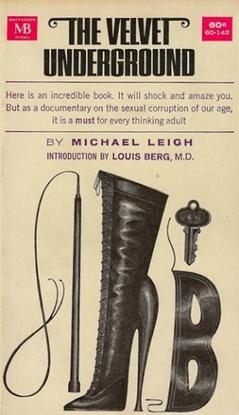
The cover of the book, “The Velvet Underground”, from which the band gained inspiration for their name; Via Wikipedia.
Unable to escape the darkness within him, Lou found refuge in the underground music scene. He sought out other artists who shared an appetite for more experimental forms, which eventually led to him forming The Velvet Underground. The name was plucked from a paperback about sexual subcultures, a sign of the transgressive angle they intended to pursue. Their raw, controversial aura attracted none other than Andy Warhol, who ran an underground scene of artists.
The Velvet Underground didn’t simply sing about uncomplicated romance or the familiar fantasies of mainstream pop music. Their early work explored people and experiences that much of popular culture preferred to keep at the margins. The band’s 1967 debut album, The Velvet Underground & Nico, presented songs such as Heroin and I’m Waiting for the Man that explored drug use in ways that were unsettling and unconventional for mainstream music at the time. What makes this interesting isn’t simply that the subject matter was controversial; it’s that Reed’s writing invited listeners into worlds they might otherwise have encountered only through stereotypes, sensationalism, or moral condemnation.
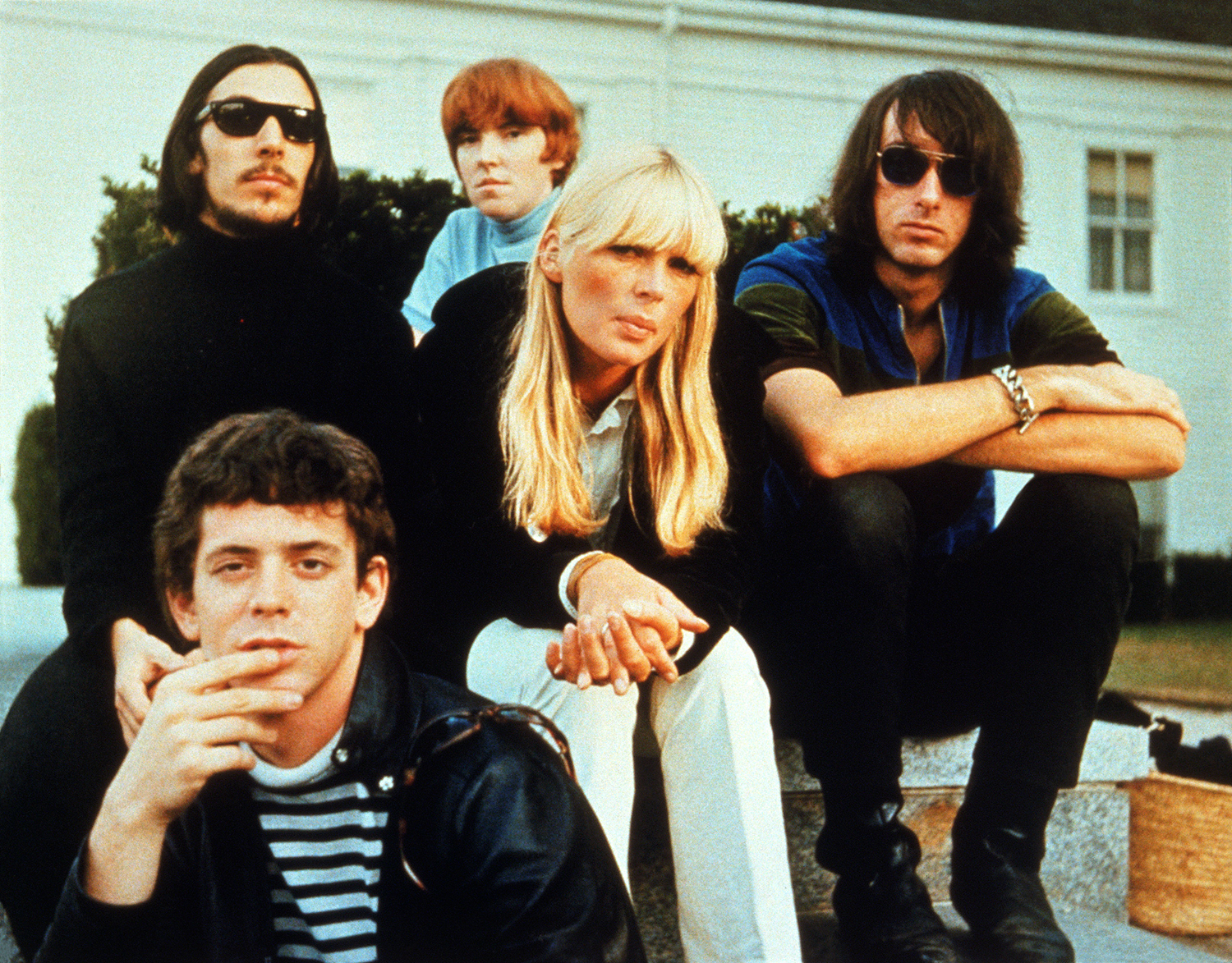
The Velvet Underground and Nico (left to right: Lou Reed, X, Moe Tucker, Nico); Sourced through Pinterest.
Take Heroin, for example; the song doesn’t present drug use as a simple morality tale in which a bad person makes bad choices and receives an obvious punishment. It immerses the listener in a complicated experience, capturing the pull of intoxication alongside the instability and danger associated with it. That doesn’t make heroin use harmless, and it doesn’t mean the song endorses addiction. The song approaches its subject differently from a straightforward warning about immoral behavior; it makes the listener sit with an experience that cannot be fully understood through the label “bad”. The band encourages discernment in the difference between depicting something society condemns and asking the listener to understand the person experiencing it.
The Velvet Underground’s music made room for precisely that kind of uncomfortable encounter. Their cultural significance wasn’t simply that their music touched on taboo subjects. It was that they helped expand the range of experiences rock music could explore, influencing artists who followed.
Although the band did not have immediate success, selling only a few thousand albums upon its release, every one of those buyers started a band. The controversial topics of The Velvet Underground became a beacon for the outsiders who were often made to feel wrong and misunderstood. Rock n’ roll doesn’t necessarily make the world understand the artist. Sometimes, it allows the artist to stop asking the world for permission to exist. Their legacy left an imprint on rock legends for generations, inspiring bands such as The Rollingstones, The Strokes, and David Bowie all credit influence to the work of The Velvet Underground.
Part of what makes rock n’ roll so endearing is that it gives a voice to the people who don’t fit neatly into the world around them, to the experiences we’re taught not to talk about, and to the parts of ourselves we’re afraid others won’t understand. Lou Reed never needed to make his subjects comfortable; he made them impossible to ignore. Not every person society rejects is misunderstood, but it’s important to look beyond the label before deciding who someone is. Sometimes the people we are taught to fear or dismiss are the very people who help us understand ourselves a little better.