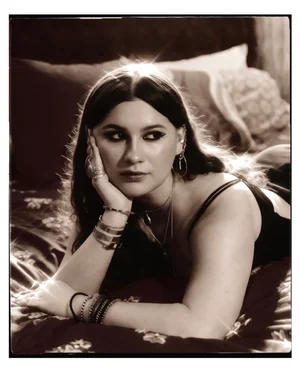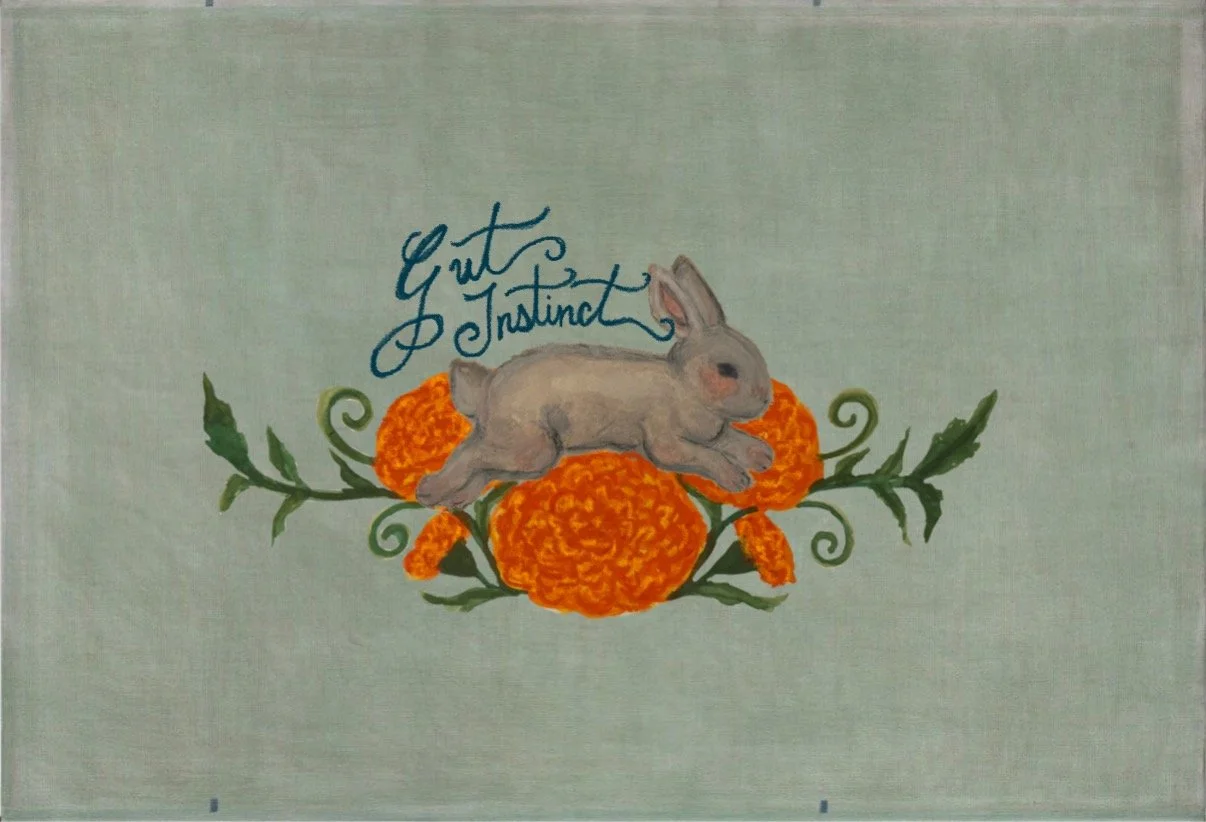
By Madelyn May
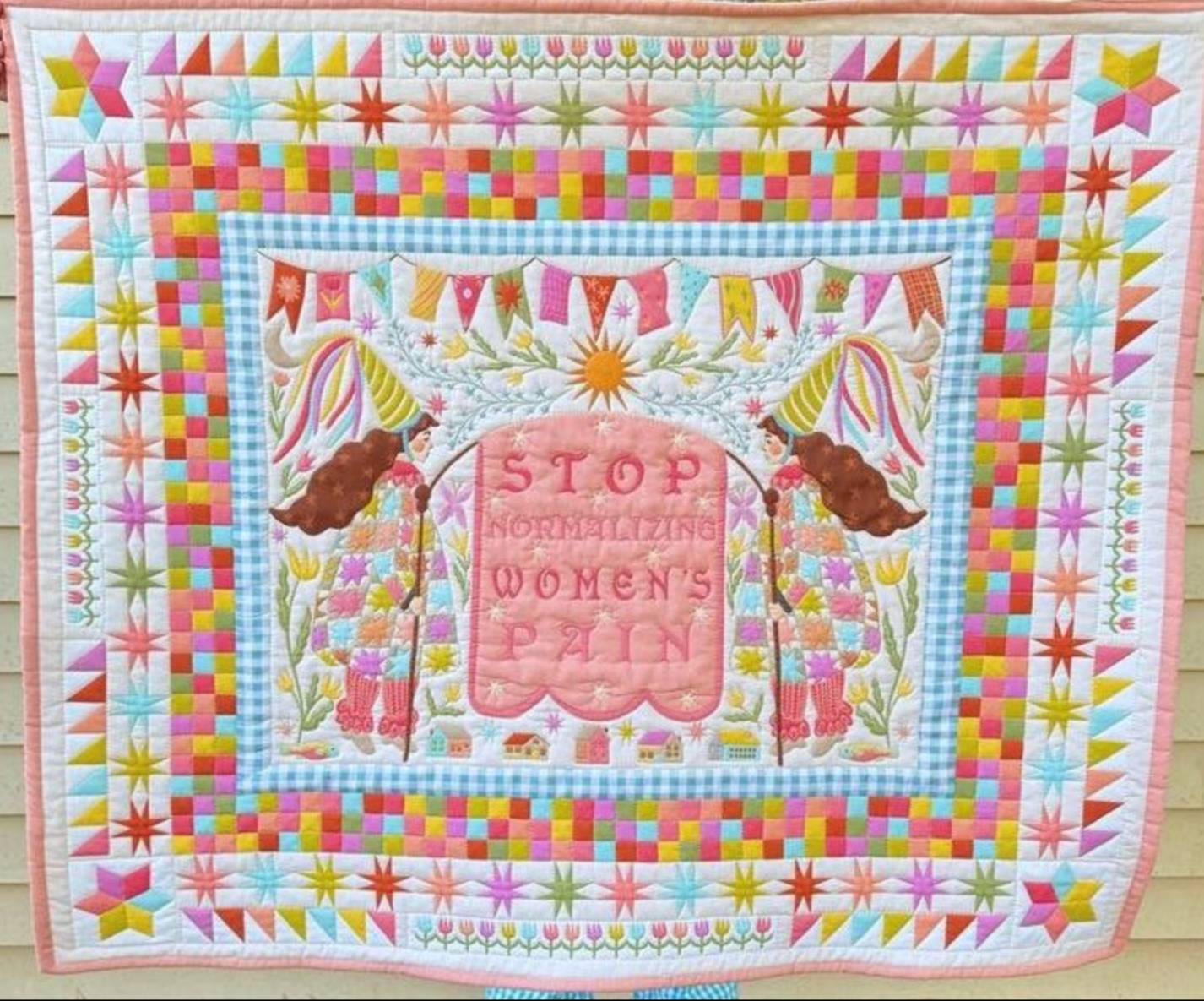
‘Stop Normalizing Women’s Pain’ by Lindsey Faith.
What does it mean to have a flare? To me, it’s about your attention and what demands it. It means missing parts of your life that don’t scream as loud or as severely. It means dropping whatever you are doing, leaving the function early, running, screaming in a towel and a robe from the house on fire to be hosed down somewhere safe.
The Illuminating Endometriosis exhibit by F.L.A.R.E. was the closest I’ve found to feeling like someone was gently cooling me down with a compress, like the way my mother used to do when I was lying in the bathroom tiles, sweating and shaking, having an endo flare without knowing it.
F.L.A.R.E., which stands for Flourish in Life through Art and Resources for Endometriosis, held their Inaugural Exhibition Event in New York City over three days at the Sixth Floor Loft.
One of my biggest takeaways from the exhibition was just how much everyone could agree that the overarching emotional feeling endometriosis produces is isolation. Resources are often sparse and knowledge from professionals varies in quality greatly. Most people wanting to gain an understanding of the disease find it through people they meet through the grapevine, online, and in real life.
Annabelle is the sister of my coworker, Aggie, and she runs the endometriosis support group EndoBeginnings; her sisterhood, guidance, honesty, and knowledge helped me through my recent incision surgery from the prep to where I am now, about three months post-op. Through her, I received two tickets to the panels and art exhibit at F.L.A.R.E.
This creative sanctuary seamlessly weaves artistic expression, personal testimony, medical understanding, and public awareness together to confront the realities of endometriosis. Within this haven, creators, storytellers, and those enduring persistent conditions can give voice to, record, and re-examine the profound experiences that so frequently go unnoticed.
The artwork was able to describe things I have seldom found the correct words for. The panels were filled with women who understand the struggle and love their fellow endo warriors to the point of invention, attempting to find a way to live with this disease. That seems to be the basis for this ongoing movement: women supporting and inventing the solutions; it’s the most romantic form of love.
More than thirty creators spanning twelve nations shared their work across ceramics, paint, fiber arts, photography, printmaking, and assemblage—capturing the profound reality of dwelling within a physical form that society perpetually doubts.
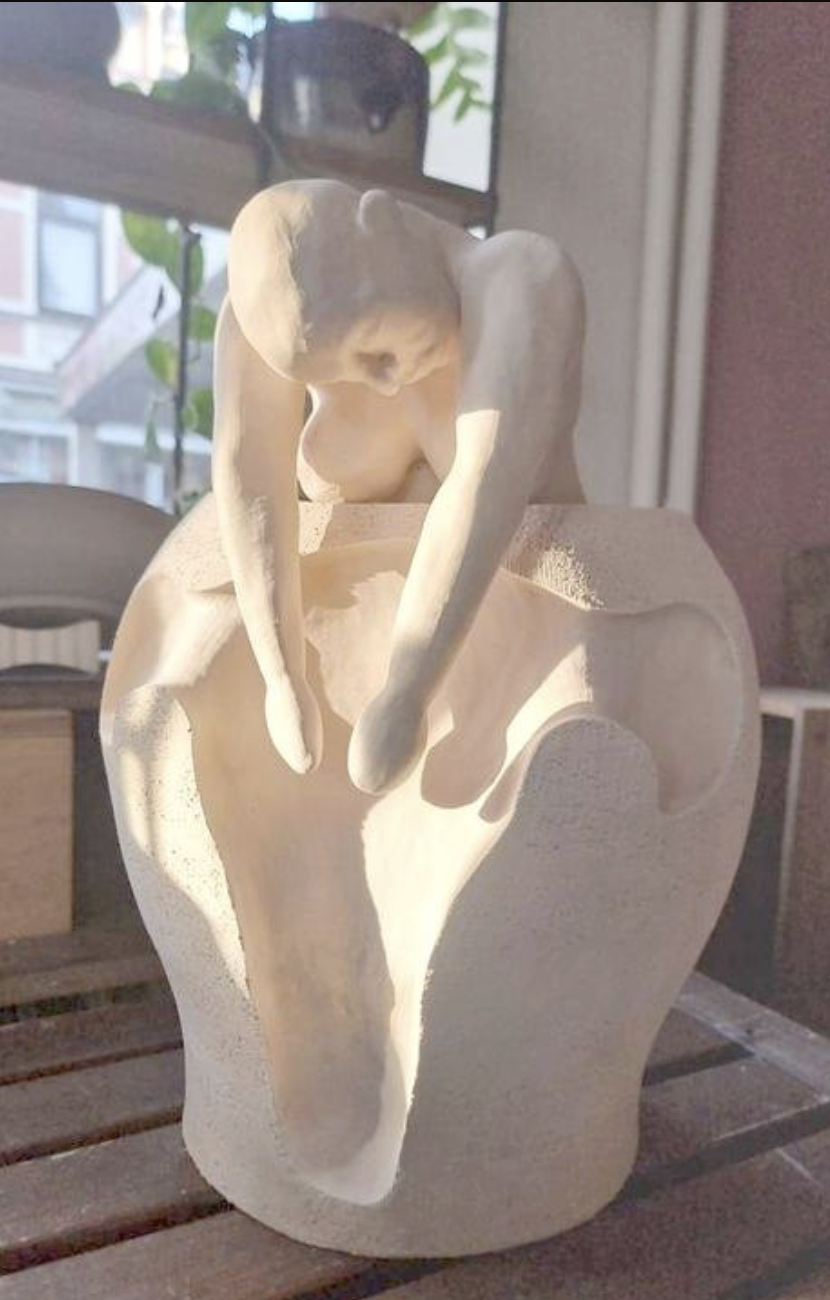
‘La Dolores’ by Laura Solar.
One of the most alluring was La Dolores, created by Laura Solar, which featured a figure bent over a pot with a carving of a uterus. When Solar moved the figure up and down, an eerie moaning emitted from the piece. This is how the panels began on Saturday, with a noise too familiar to women struggling with this disease. A song like a siren and a feeling like a flare that demands to be noticed. Several women looked around the room, many of them sitting with their boyfriends like I was.
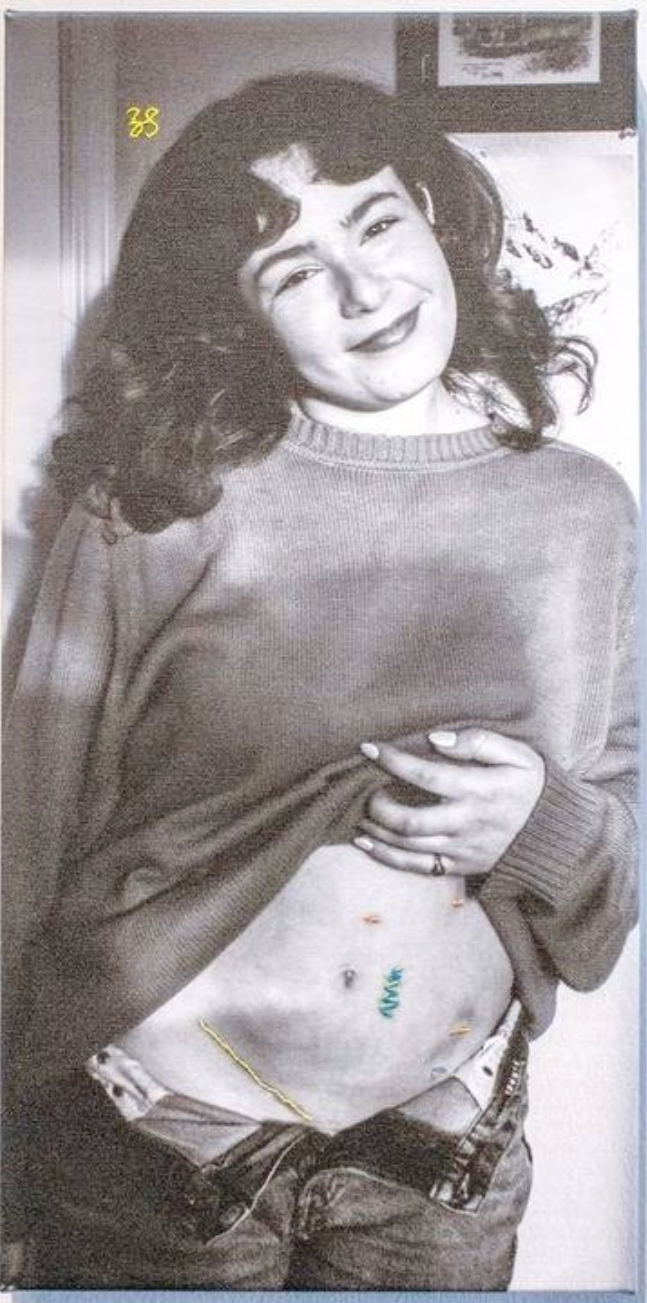
‘You Got Your Color Back’ by Zoe Schumacher.
As I looked down at my own scars, little proofs of pain but also little proofs of courage, I raised my head to see You Got Your Color Back by Zoe Schumacher, and something in me went, ‘Aha! That’s me!’ Schumacher manages brilliantly to demonstrate the strange afterlife of this surgery, that post-op euphoria. It’s disorienting joy, a brightness threaded with exhaustion, the first green shoots after a long winter, challenged by the tender knowledge that a lot has been endured and will continue to be. This surgery gives you an answer, a diagnosis, which brings a certain peace, but it also brings with it the understanding that the condition is chronic and this is life now.
The keynote speeches were led by Dr. Chandra Spring-Robinson, a gynecologic and robotic surgeon, and Savannah Regensburger, a nutritionist and researcher. The artist panel included exhibiting artists Kyung Jeon-Miranda and KYRIANNA, founder of Our Daughters, Kara O'Malley, and director of the upcoming FLARE documentary, Amanda Fuller.
What I found most striking from my conversations throughout the weekend was how individual experiences are never just relegated to you but are always a part of a greater collective whole. Hearing someone articulate an ache that’s tugged at you for the better half of your life, or seeing an image that makes visible something you had previously thought private. Pain is one of the most intensely personal experiences one can endure, but it seldom is a solitary one. Sharing it doesn’t take away your individual experience, or make it hurt less, but by changing the conditions under which you live with it, pain is given a language, some distance, and witnesses.
This is what makes spaces like F.L.A.R.E. so valuable! For so long, any malady affecting mostly women, like endometriosis, required women to become their own advocates, researchers, historians, doctors. We collect fragments of information from strangers on the internet, from friends of friends, from snippets of recognition. We must build our own maps because the existing ones are practically non-existent. One of the most affecting aspects of my life post-surgery is how many women have reached out to me privately and asked for advice. One of them I even referred to my doctors, and she got her surgery two months after mine. The goal should be to make those maps a little easier for the next person to follow.
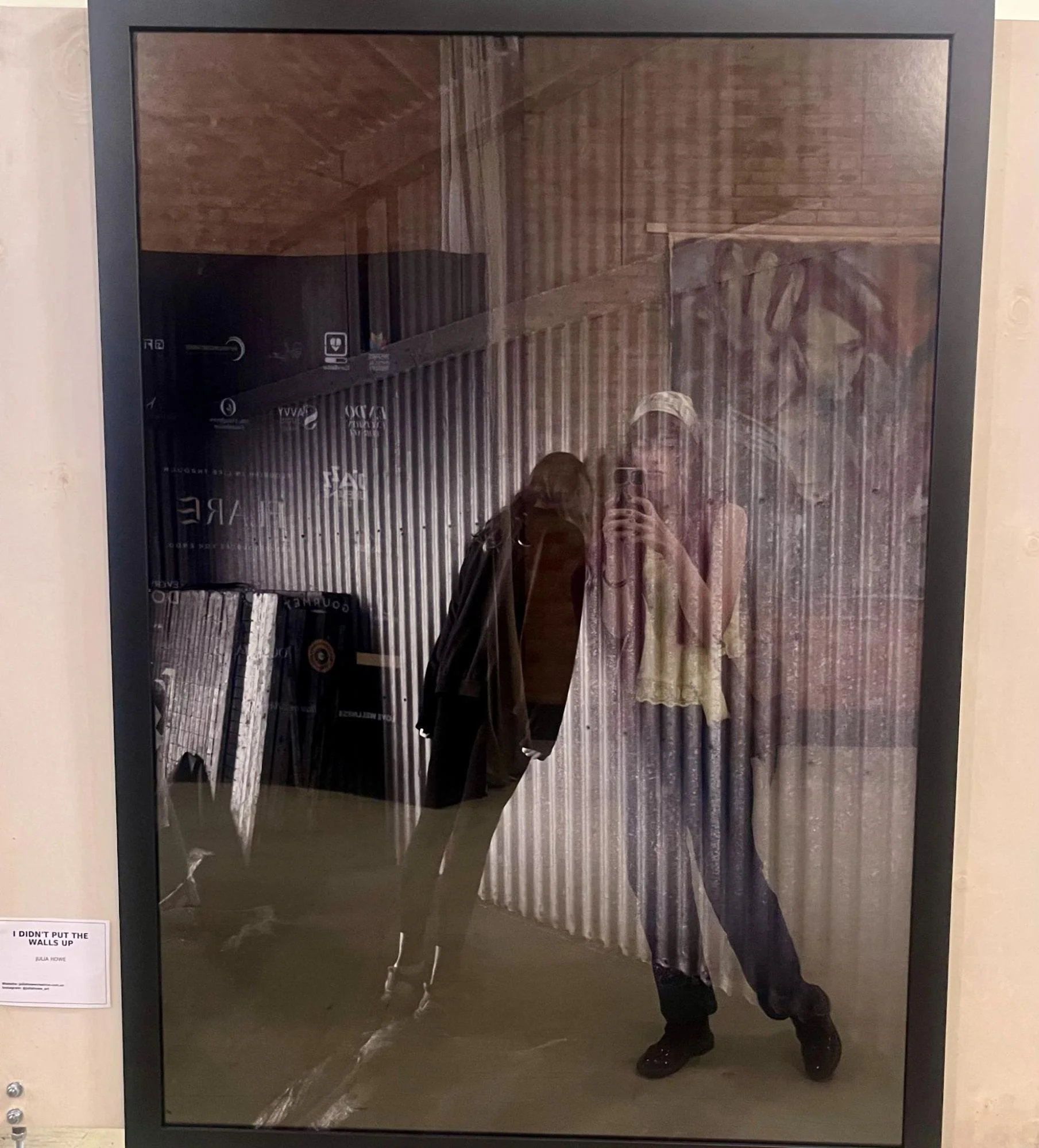
Madelyn May with ‘I Didn’t Put Up the Walls’ by Julia Howe.
I feel a beautiful sense of achievement in this kind of sisterhood. We shouldn’t be required to turn our pain into something tangible, something artistic, and pretend there’s a silver lining to living with a chronic illness. But I do think making something useful out of what has been endured is valuable.
I know a flare will still demand my attention. There are days when I feel I cannot shoulder anyone else’s needs but my own. Days I have to cancel plans, or leave early, or spend the afternoon cocooned under a heating blanket.
But it is such a relief to know I’m not alone.