Malcolm X – A Voice for Justice, Then and Now
By Natalie McCarty
“If you’re not ready to die for it, put the word ‘freedom’ out of your vocabulary.” - Malcolm X

Sourced through Pinterest
Few voices in history have burned as brightly as Malcolm X’s. His words travel across generations, refusing to be silenced, igniting the fight for justice today, and demanding a future still unfinished.
Born Malcolm Little in 1925, he grew up under the weight of systemic racism, personal loss, and a society determined to silence him. His father, a preacher and activist, died under suspicious circumstances, and his mother was institutionalized when he was still a child. Yet rather than letting tragedy define him, Malcolm transformed pain into purpose, becoming one of the most uncompromising voices for Black liberation in American history.
In 1946, Malcolm was arrested for picking up a stolen watch he had left at a shop for repairs. By February, he began serving a sentence of eight to ten years at Charlestown State Prison for larceny and breaking and entering. It was there that prison became the crucible of his transformation.
Behind bars, he read voraciously, devouring history, philosophy, and the teachings of the Nation of Islam. He emerged not just as a leader but as a force whose voice electrified audiences, challenging complacency and demanding justice.
“Power in defense of freedom is greater than power in pursuit of oppression,” he declared. “You can’t separate peace from freedom because no one can be at peace unless he has his freedom.”
While some civil rights leaders asked for patience, Malcolm rejected passivity and demanded action. Where others preached integration, he preached Black pride, self-determination, and the right to defend oneself. “A man who stands for nothing will fall for anything,” he said, “and the future belongs to those who prepare for it today.”
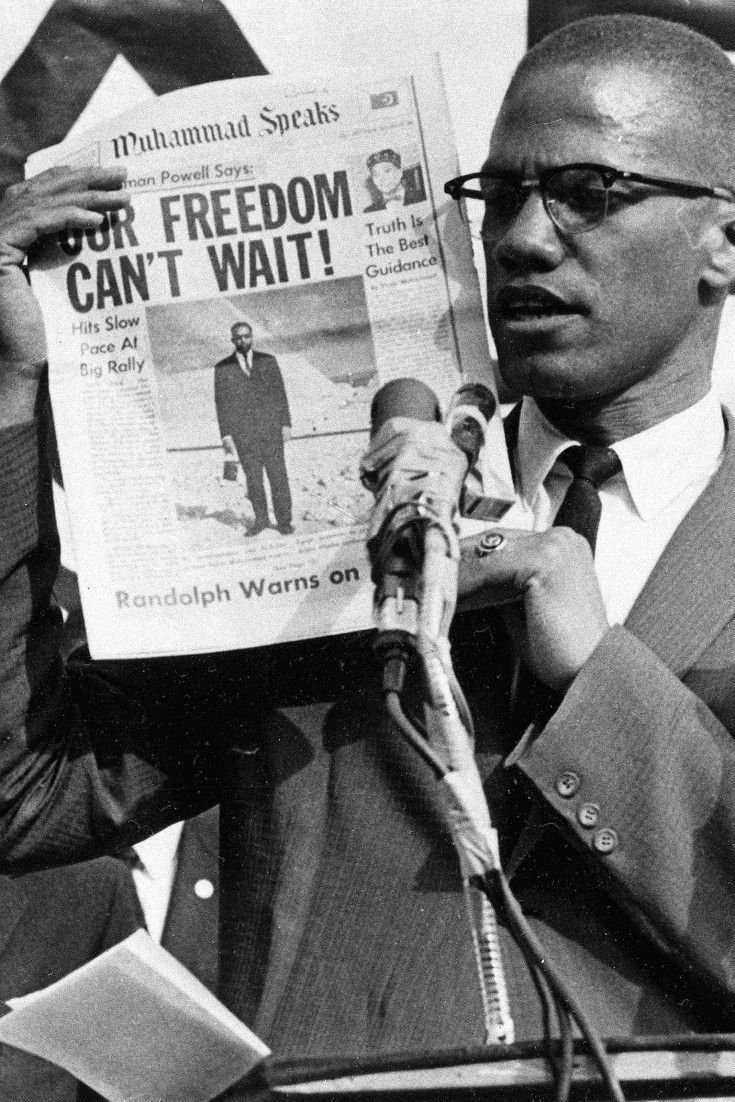
Sourced through Pinterest
In 1964, a pilgrimage to Mecca expanded his vision. Witnessing Muslims of all races worship together convinced him that unity across color and culture was possible, but justice at home could not be compromised. “We declare our right on this earth…to be a human being, to be respected as a human being, to be given the rights of a human being in this society, on this earth, in this day, which we intend to bring into existence by any means necessary,” he said. “I believe in human beings, and that all human beings should be respected as such, regardless of their color.” His ideology was rooted in self-knowledge, self-respect, and direct action. “Nobody can give you freedom. Nobody can give you equality or justice or anything. If you’re a man, you take it.”
Assassinated at 39 in 1965, Malcolm X’s life was cut tragically short, yet his ideas remain urgent. From police violence to voter suppression, from economic disparity to systemic racism, the fight he championed continues.
“The future belongs to those who prepare for it today,” he said. “Education is the passport to the future, for tomorrow belongs to those who prepare for it today. We’ve got to start thinking about living for today, because we are not promised tomorrow.” His life teaches that courage, conviction, and relentless effort are essential to change.
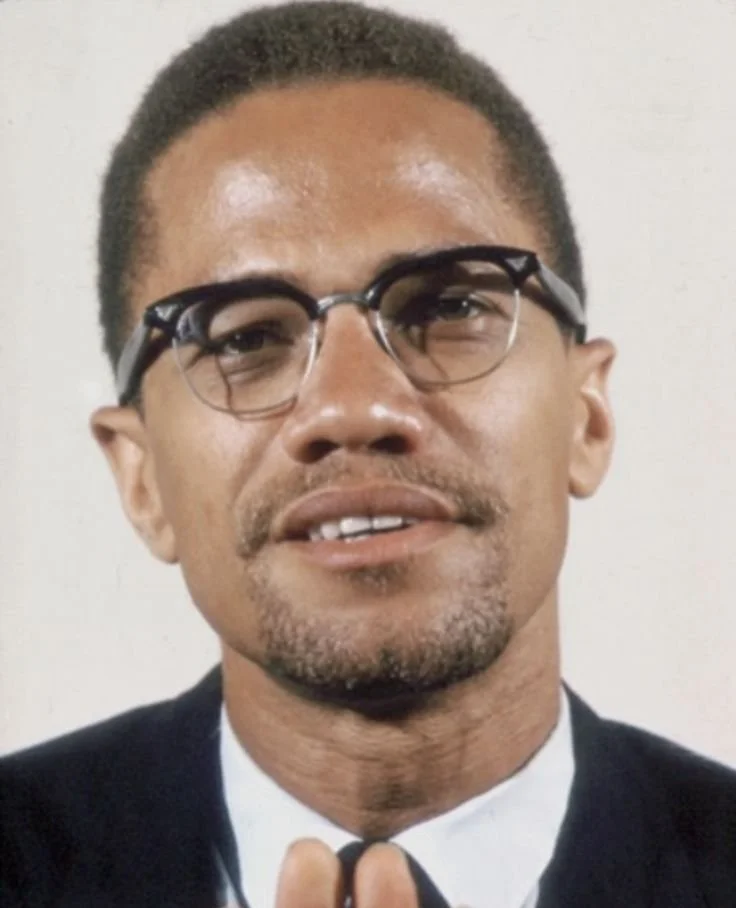
Sourced through Pinterest
Silence is compliance, complacency is surrender. “I’m for truth, no matter who tells it. I’m for justice, no matter who it’s for or against. You don’t have to be a man to fight for freedom. All you have to do is to be an intelligent human being.”
Malcolm X’s life was a manifesto and a guiding force in reminding us that fighting oppression, demanding justice, and living with uncompromising integrity are more urgent than ever. The world only changes when we refuse to wait, and the work of every generation is to continue that fight. Speak up. Organize. Vote. Challenge injustice wherever it hides.
The fight Malcolm X began is far from over, and it lives in all of us willing to stand for freedom from oppression.