The age-old question: Is he your partner, your person, your forever plus-one… or just someone who earned the title without taking on the role?
By Natalie McCarty
For context, I just concluded what has to be my fortieth-or-something rewatch of Sex and the City.
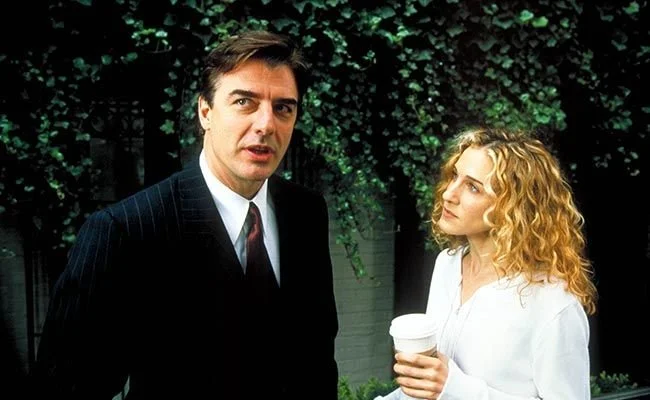
Sex and the City (1998)
Though I couldn't possibly be happier in my own relationship now, this rewatch was framed utterly differently than the last. Maybe it was the perspective, the experience, or the life partner gained since then. I was watching it through an entirely different lens.
Sure, I've had boyfriends before, and so have my friends… but something feels different and new in the media and even within the circles I keep. Blame it on Love Island, or maybe it was because of the glass of wine, but I couldn't help but wonder: When did we decide that having a boyfriend meant you had someone to lean on?
The two aren't nearly as synonymous as we've made them out to be.
And maybe that's because we've spent so much time celebrating the beginning of relationships that we forget to examine what happens after. The butterflies. The first dates. The "let's only see each other" conversation. The moment you finally get to say, "my boyfriend."
Yes, those moments are exciting, but they tell you very little about how someone will love you when you're sick. Or when you're grieving. Or overwhelmed. Or even when the relationship becomes inconvenient, or simply no longer new.

Sex and the City (1998)
Somewhere along the way, "Do you have a boyfriend?" became shorthand for a much bigger question: Are you loved? Are you supported? Do you belong to someone, and does someone belong to you?
As a society, we have folded companionship, emotional security, reliability, and partnership into a single title, as though checking one box automatically checked the others. Hello!! It doesn't.
A boyfriend is a relationship category. A partner is a relationship dynamic.
One describes what someone is to you. The other describes how they move through life with you.
The distinction matters because we've become remarkably preoccupied with relationship status while paying surprisingly little attention to relationship function. We celebrate the milestone of becoming "official" or "exclusive," but we spend far less time asking what that relationship actually consists of once the novelty wears off.
You need to wake up and ask yourself (Kayda, I'm looking at you): Does this person make your life easier or more difficult? Are they curious about your inner world? Do they notice when you're overwhelmed before you have to explain yourself? Can you rely on them when life stops being romantic?

Love Island (2026)
I’ve been watching Love Island too for the past several weeks, and for everyone other than Brinity, I simply want to yell at them, “When did we become so chill that we barely know someone and we're already calling them our partner? Do you even know their birthday? What's their middle name? Their biggest fear? The story that shaped them?”
Let's be serious: two dates, two weeks, even a few months, are not enough to know the marrow of someone's soul.
What's striking is how often we use romantic partnership as a proxy for emotional fulfillment. Being single is still spoken about as though it represents an absence, while being coupled is assumed to represent abundance. Yet anyone who has spent enough time around other people's relationships knows how unreliable those assumptions are.
There are people who sleep next to someone every night and still feel profoundly alone. There are people who live by themselves and rarely experience loneliness because they're surrounded by relationships built on reciprocity, consistency, and care.
The difference, of course, isn't whether they're dating; it's whether they're supported.
I wonder if part of the confusion comes from how we've narrowed our understanding of partnership itself. We've made romance responsible for needs that were once distributed across families, neighborhoods, friendships, and communities.
Today, we're expected to find one person who is simultaneously our lover, confidant, therapist, emergency contact, travel companion, co-parent, financial teammate, and best friend. It's no wonder we mistake acquiring a boyfriend for solving loneliness. We've been taught that one naturally leads to the other.
But relationships don't transform simply because they've become exclusive. Partnership isn't exclusivity; it's participation (and so much more). It's feeling considered, not just desired.
Partnership is rarely found in the grand gestures we expect romance to provide. More often, it exists in the small, almost invisible ways someone integrates themselves into your life. It's remembering how you take your coffee. It's knowing when your silence means you need space and when it means you need someone to stay. It's making room for your dreams without treating them as an inconvenience. It's not someone completing your life; it's someone who willingly involves themselves in it.
And perhaps that's why so many people stay in relationships that look successful from the outside but feel strangely hollow from within. They've achieved the social milestone without experiencing the emotional reality it promises.
We've become fluent in the optics of intimacy. We know how to announce anniversaries, post vacation photos, soft-launch relationships, and curate evidence that someone has chosen us. However, we're less fluent in recognizing whether someone is actually showing up for us in our lives. Truth is, no one else can really measure that for you.
And if your best friend answers on the first ring, your sister drives across town without asking questions, your neighbor waters your plants while you're away, and you've built a life filled with people who consistently show up… Who's to say you aren't already in one of the healthiest relationships of your life?

Sex and the City (2008)
So maybe the better question isn't, Do you have a boyfriend? Maybe it's, Who is partnering with you through your life?
Because just because you have a boyfriend doesn't mean you have a partner. And just because you're single doesn't mean you don't have a relationship.
Your boyfriend may keep you company, but does he share in your life? Do you share one together? Let a girl know!