By Kianna Amaya
Look on social media for any length of time, and you’ll come across many posts about ways to “improve” yourself and, ultimately, your life. On TikTok, you can stumble upon a rabbit hole of videos about how to optimize your sleep, become as productive as possible, or achieve facial balance or the right combination of supplements to achieve optimal health. Of course, alongside many of those videos are links to the exact products, courses, books, or wearable devices to buy.

Sourced from The Cut
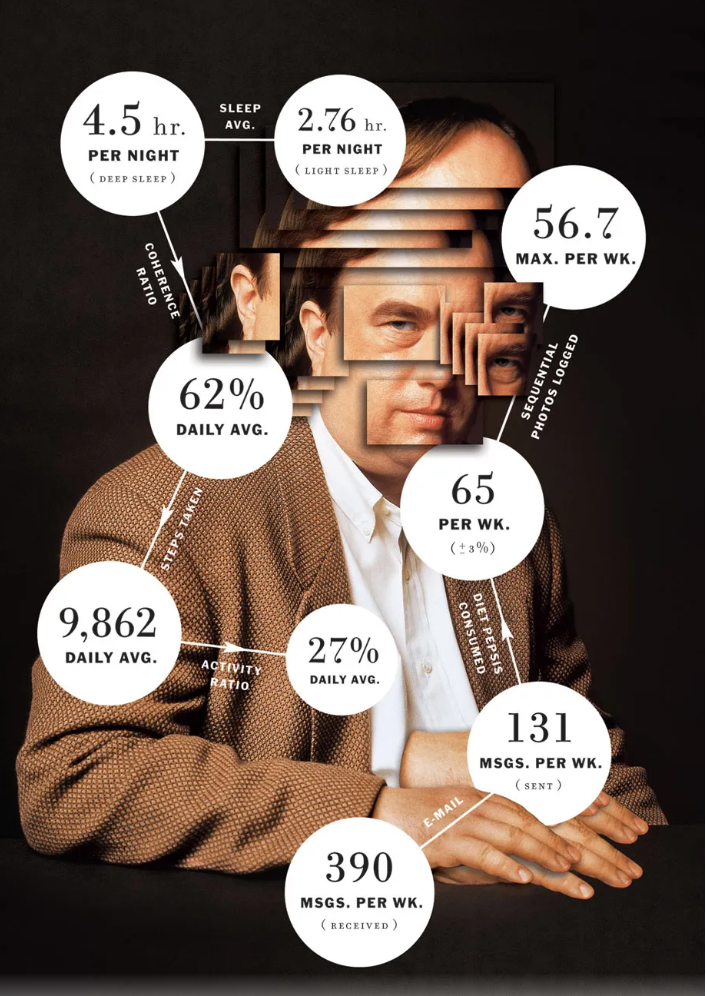
This is self-optimization, the perpetual process of using tools and techniques to improve oneself in various aspects of one's life. The goal is to reach the “optimal” state or to reach the pinnacle of one's potential. With self-optimization, one often tries to treat self-improvement as an objective, scientific process by which one quantifies oneself. Think of apps and spreadsheets to track actions from sleep to walking to macros to emotions to social interaction. In an academic paper by Nehring and Röcke, the authors aptly refer to self-optimization as a permanent struggle and a promise. The promise: a perfected life. The permanent struggle: no matter how hard you reach for that perfection, it is not possible.
On its face, self-improvement, working on yourself, is a positive pursuit. Becoming more active, working on your mental health, and having hobbies are reasonable goals and effective ways to create a more fulfilling life. But in the age of the internet and social media, self-improvement has increasingly warped into perpetual self-optimization.
Sourced from Never Done with Fun
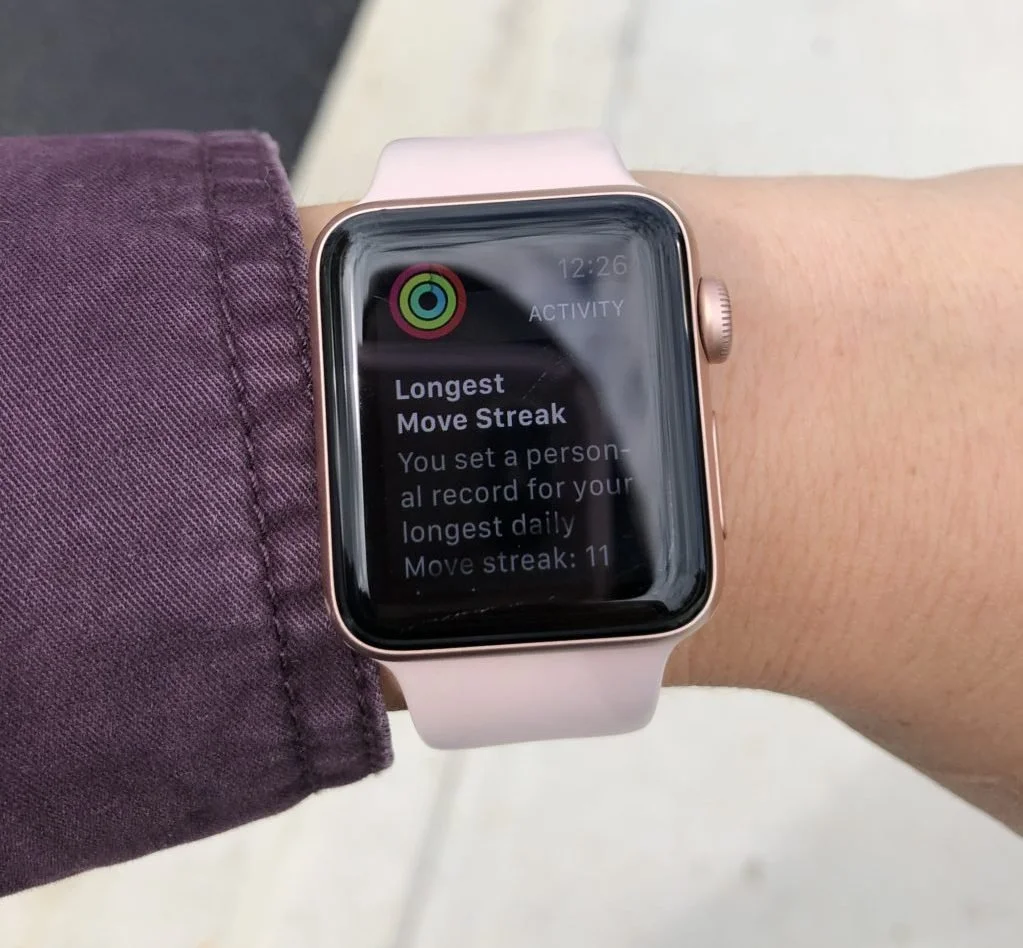
Self-optimization grew in popularity thanks to the internet and modern technology such as wearable devices (Fitbit, Apple Watch, etc.) and self-tracking apps. These technologies give us the ability to track biometrics and other aspects of our lives with ease. One of the earliest examples is life-hacking, a subset of self-optimization. The term life-hacking was coined by tech journalist Danny O’Brien in 2004, originally referring to how programmers automated their work to optimize their productivity. It expanded to encompass a range of behaviors aimed at creating the most ease in a person’s life. Then self-optimization comes along, turning those who practice it into “the quantified self,” in which everything is distilled into metrics. Life cannot just be lived but measured and analyzed.
Sourced from Vanity Fair
Self-optimization is prevalent on the internet at large. Whether you agree with it or criticize it, you almost can't escape it. For looksmaxxing, the first person I think of is Clavicular, a popular looksmaxxing content creator, who has gone viral for several reasons but is well known for his content that focuses heavily on optimizing appearance through extreme means. He engages in many different methods to looksmaxx including bone smashing, extreme weight loss, and cosmetic surgeries to achieve “ideal” facial ratios.
One of the most recent examples is Steve Bartlett, host of The Diary of a CEO, who said that a few glasses of wine ruined his life for three days. These glasses of wine supposedly ruined his sleep score and prevented him from recording his podcast and working out. This sparked a ton of online discourse about how health optimization can strip away the joys of life and leave little room for spontaneity.
I also found an example from ten years ago, where a guy tries to “engineer” love. In a Medium article, Sebastian Stadil wrote about going on 150 dates in four months. He created an app to automate his matches on dating apps. He created a rigorous dating process to make dating as efficient as possible. Even writing down observations about dates in spreadsheets to keep up. The article is full of phrases like “conversion rates” and “hack the system.”
There’s even a website called Quantified Self, which proclaims to help people obtain self-knowledge through numbers. Under the Show&Tell section, there are tons of people sharing how to more deeply track several aspects of their lives, like a meditation tracker to measure mindfulness or a Life Satisfaction score that reflects personal and professional behaviors, using statistical analyses.
In Pacific Standard, Nikil Saval comments on self-optimization, saying, “Being alive is easier, it turns out, if you treat it like a job.” Philosopher and historian Michel Foucault describes this logic as the “entrepreneur of the self.” The entrepreneur of the self is an economic philosophical concept in which, under capitalism, we internalize business goals in our personal lives. We then distill ourselves into human capital that must be managed and analyzed using business metrics.
That is the core of the aim of self-optimization, treating oneself as a project requiring continual investment, management, and improvement. You can’t just sleep; you must optimize your sleep score and track it. You can’t just date; you must engineer it to find the one most efficiently. You can’t just put makeup on for your own happiness; you must work to obtain a prescribed type of beauty, the optimal kind.
As entrepreneurs of ourselves, we have internalized market-based values such as efficiency, competition, and performance, and they have become embedded in our everyday lives. In this view, self-optimization is the process of increasing human value and obtaining a successful life through capitalistic means. Self-optimization distorts how we view self-improvement and growth, reducing it to harsh, quantified goals that strip the life out of life. As Thomas Curran, a professor of psychology, said, “This is very much a reflection of mature capitalism, accelerated capitalism, whereby we've internalized the machine as being part of our own identity.”
If everything becomes something to measure and track. If every facet of one’s life is a score to be improved, what kind of quality of life does that leave us with? I view self-optimization as the process of distilling yourself down to a purely functional state, essentially trying to bypass humanness in the pursuit of perfection.
But the truth is, we are humans, not robots. There is no optimized version. We are complex beings. These rigid expectations will certainly lead to fatigue. The lack of flexibility that self-optimization allows is not something a human can withstand for long. The practice of improving oneself should be for true well-being and a fulfilling life, in which we can embrace the imperfections and “inefficiencies” within us and the world around us.
Sources:
https://journals.sagepub.com/doi/10.1177/00113921221146575#con2
https://www.theguardian.com/science/2019/apr/05/life-hacking-why-self-optimising-can-be-suboptimal
https://www.npr.org/2026/05/01/nx-s1-5795549/looksmaxxing-teen-boys-clavicular
https://medium.com/the-mission/looking-for-the-one-how-i-went-on-150-dates-in-4-months-bf43a095516c
https://psmag.com/economics/the-secret-history-of-life-hacking-self-optimization-78748/