Philosophy of a Fetish: The Disturbing Film Iceberg II
By Reese Carmen Villella
If you thought a porn actor having sex with the corpses of two parents and their child (who were killed in a murder-suicide after an unintentional incestuous orgy) was tough, I regret to inform you: you’re in for a rude awakening today.
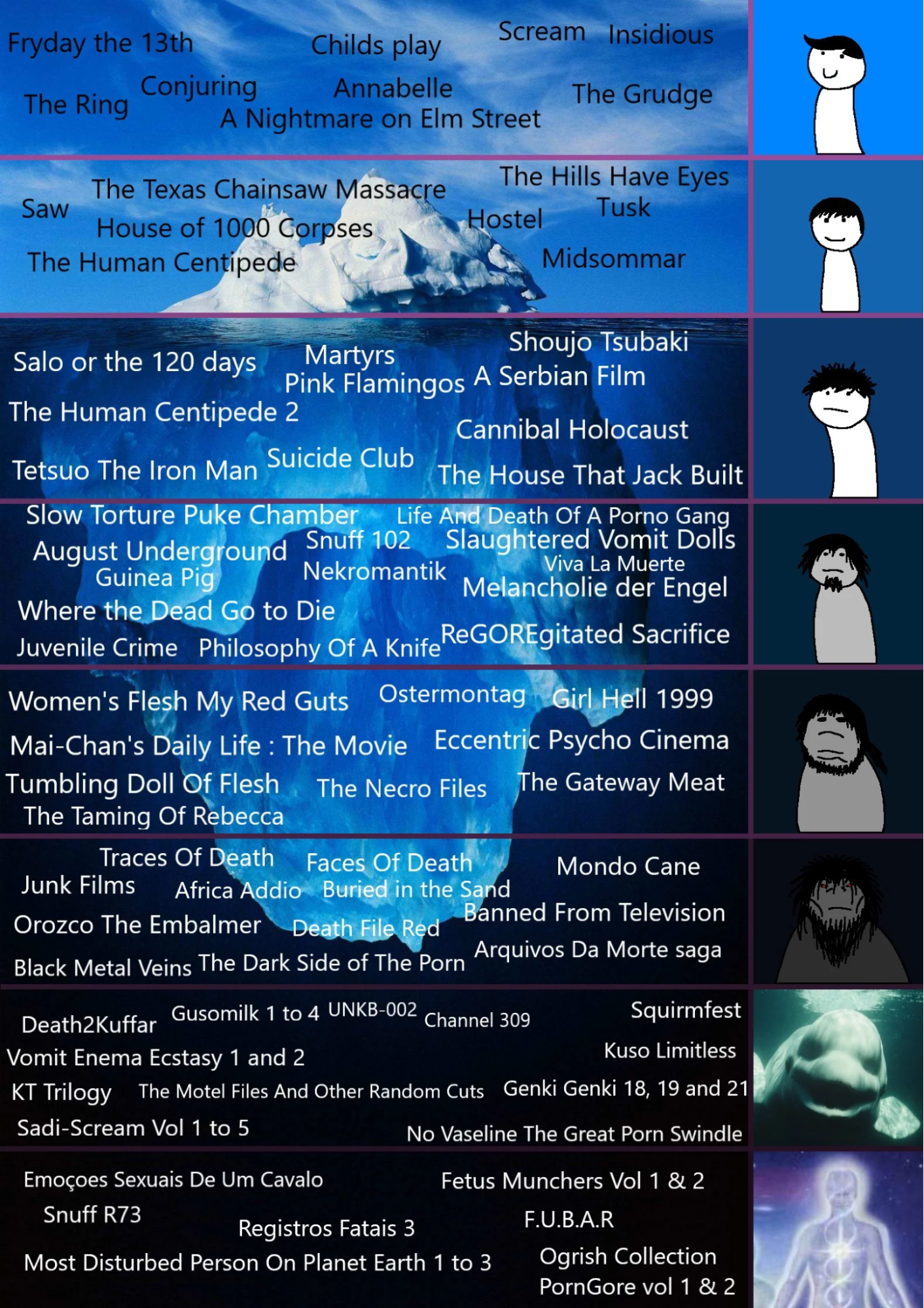
Sourced through Reddit
For those unfamiliar with the Disturbing Movie Iceberg, I recommend checking out Green Slop & Political Shit: The Disturbing Film Iceberg, my previous article on the subject. The TLDR is: there’s a tiered list of films that grow increasingly disturbing as you descend. In that earlier piece, I covered the first “beneath the water” tier -- movies that are unsettling and somewhat niche, but not the deepest or most extreme. That tier includes Salò, Martyrs, The House That Jack Built, Pink Flamingos, Cannibal Holocaust, and Tetsuo, all of which I’d already seen. It also includes Suicide Club, Shoko Tsubaki, Human Centipede 2, and A Serbian Film, which I watched for the first time for that article (that’s how much I love Gut Instinct Media).
This time, I might be in over my head. I’ve only seen three of the thirteen films listed, but I’m determined to watch them all and give them the reflection they (mostly) deserve.
Films I’ve Previously Seen
August Underground (2001)
Before the Ethel Cain song, there was the “film,” if you can even call it that. August Underground is a 70-minute visual assault, and I’m only talking about the cinematography. It’s so oversaturated and ugly that it feels like watching a 2020 deep-fried DeepTok. I firmly believe that if a film includes gore, it should at least be interesting, if not narratively meaningful. I’m a big fan of the Terrifier films; I’ll happily admit I watch them largely for the entertainment (although I’d argue there’s at least something going on there thematically). Gore can be fun, and it can be purposeful, but even with the most shocking films, narrative is what keeps people invested. Salò is profound, but I’m not exactly rushing to rewatch it. Terrifier, on the other hand, has a story, energy, and actual appeal beyond shock.
All this to say: there is almost nothing enjoyable about August Underground. The quality is atrocious, the gore is at best boring, and at worst, the kind of thing a basement-dwelling edgelord would fap to. The story is forgettable, and it lacks heart. You know what has heart? Saw. Terrifier. Hostel, for Christ’s sake. August Underground is a snooze fest with a couple of severed tits to pique the interest of the involuntarily celibate young men it caters to.
Fred Vogel did make one almost interesting film: Maskhead (2009). Maskhead follows Syl and Maddie, a lesbian couple who run a studio producing extreme fetish adult films. When I watched August Underground, I definitely wasn’t thinking, “Where’s the queer representation?” but then I saw a TikTok mentioning “depraved lesbians” in the logline, and I was sold. It’s far more interesting than August Underground and way more visually tolerable. It barely scratches the surface of the themes it’s reaching for, but I wasn’t expecting a profound take on violence in pornography anyway. There’s something there… not quite meaning, but a spark.
Guinea Pig (1985)
To be honest, I’m not entirely sure which Guinea Pig entry this refers to, since there are several. It’s likely referring to Guinea Pig Part 2: Flower of Flesh and Blood (also the namesake of a Nicole Dollanganger album), as it’s the most notorious, but since the list doesn’t specify and I already have ten first-time watches ahead of me, I’m assuming this means Guinea Pig: Devil’s Experiment. Don’t hate me or call me cinema illiterate -- I can almost guarantee I’d have the same critique of Part 2 as Part 1. And if I’m wrong, I’ll happily apologize.
Guinea Pig: Devil’s Experiment is set up like a faux snuff film, with an opening title card reading: “Several years ago, I obtained a private video [...] Its commentary said that ‘this is a report of an experiment on the breaking point of bearable pain’ [...] it was, in fact, an exhibition of devilish cruelty as three perpetrators severely abused a woman.” Despite its reputation, the film is relatively light on gore. The acting is weak, and the victim’s reactions feel muted, which dulls any intended impact. The main event is the final sequence -- the infamous needle-to-the-eye moment featured on the poster. It’s unpleasant, but largely reliant on implication rather than explicit injury, with most of the emphasis placed on blood rather than visible damage. You could generously compare it to Un Chien Andalou, but that feels like a stretch. Ultimately, it’s not especially disturbing, which suggests that Flower of Flesh and Blood is probably the better choice for anyone seeking something truly intense.
Nekromantik (1988)
Yawn. The title is a play on necrophilia, but it misleadingly evokes necromancy, which honestly sounds more interesting than what the film actually explores. There are films that use the topic of necrophilia in unsettling but thought-provoking ways: Nosferatu, Neon Demon, even House of 1000 Corpses (sort of… does it count if it’s just foreplay?).
I didn’t find Nekromantik appalling or offensive; I barely found it anything at all. It bored me. Visually, some sequences are interesting, but I like the concept more than the execution. The lack of dialogue made it hard to connect with the story or care about anyone involved. It has occasional humor, but offers very little of the psychosexual energy it seems to think it’s delivering.
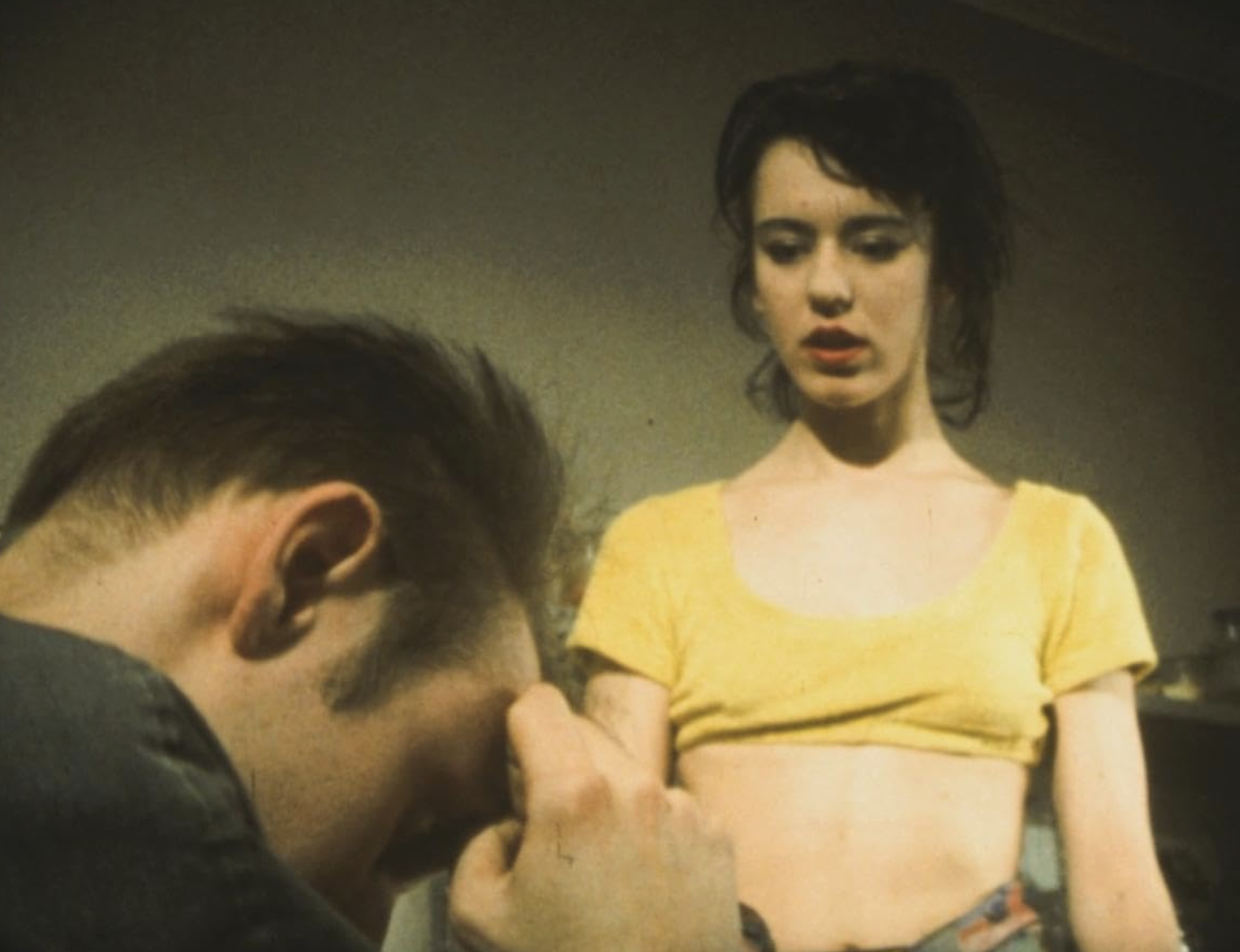
Sourced through IMDb
First Time Watches
Where the Dead Go to Die (2012)
Oh, here we go with some corny animated shit. This was made by someone named James Creamer, which is hilarious, but beside the point. This film is so bad that I checked multiple times to make sure I was watching the right thing. I cannot imagine putting something like this on a genuine list of disturbing cinema.
The first chapter follows a boy named Tommy who meets a demon-dog named Labby, who tells him to kill his father and pregnant mother. When Tommy refuses, Labby kills them himself, then claims he can resurrect them if Tommy gives up his virginity (which he does) by having sex with Labby on top of his mother’s corpse. All of this happens in roughly sixteen minutes.
The second story follows a prostitute who is assaulted by a client, who then crawls into a church and encounters a serial killer. Random “scary emoji” figures appear without explanation. The killer stabs her and injects himself with her blood, prompting a long, tedious acid-trip sequence filled with violent surrealism.
The third story follows Ralph, a boy with a parasitic twin. Ralph has a crush on a girl named Sophia and meets her father to impress him. Sophia’s father hands Ralph a tape of Sophia being sexually assaulted, which Ralph masturbates to. Ralph later dreams of Sophia and his parents. His father congratulates him for raping Sophia, prompting Ralph to murder his father, mother, Sophia’s father, some random people in her home, and eventually his parasitic twin, slicing him off his face.
I don’t plan to summarize every film, but this one requires emphasis. It’s boring, horribly animated, and offers nothing to invest in. None of the characters are empathetic or interesting. The visuals are atrocious. It’s barely disturbing because nothing is written, performed, or animated well enough to actually provoke a response.
Juvenile Crime (1997)
Juvenile Crime is a film about the murder of Junko Furata. Furata’s case is one that definitely comes to mind when thinking of the most heinous/disturbing true crimes, but putting it to film is complicated. Several films have tackled it (most notably Concrete in 2004), and as far as I know, none are good. It’s one thing to dramatize a real person’s suffering; it’s another to do it poorly.
I’m not perfect -- I don’t automatically condemn adaptations of recent real-life crimes (I liked the Menendez season of Monster, sue me). But turning Junko Furuta’s story into something for profit has a particular cruelty to it.
The film is mostly a sequence of rape scenes. While her sexual torture was horrific, the movie barely touches on the other forms of abuse she endured. With almost no information available about director Gunji Kawasaki beyond this film, it seems the decision to exclude other aspects of her suffering was made to maintain a fetishistic focus.
Philosophy of a Knife (2008)
My God. This was a four-hour, excruciating journey. I’ve never felt a runtime so brutally. Philosophy of a Knife documents Unit 731, an Imperial Japanese Army research facility active from 1936 to 1945. Unit 731 has inspired many films, books, and games -- Men Behind the Sun (1988) has been on my watchlist forever. Philosophy of a Knife is a documentary (sort of) that mixes reenactments, archival footage, narration, and interviews.
To start with a positive, it has a sick (though tonally bizarre) title sequence and a great score. With that out of the way, let’s talk about everything else!
The runtime absolutely ruins this film. I can usually handle long movies, but the four-hour-and-nine-minute length here feels totally unjustified. The film can’t decide whether it wants to be narrative or documentary. Reenactments drag on endlessly before cutting back to dry, overlong info-dumps. The pacing is a mess. The reenactments are decently executed, but the attempt to mimic film stock through filters is distracting. You shot on digital, and we can tell. Don’t be ashamed. Own it!
As for disturbing content, the film misses the mark in its execution. The reenactments lean so avant-garde that you forget you’re watching depictions of real atrocities, then the documentary segments drone on long enough to lose all impact. It’s hard to stay engaged at all.
This Letterboxd review sums it up pretty well: “I hated every second of this film. It has zero information to share, zero technical prowess, zero imagination, and zero entertainment value… If you are a fan of extreme horror, this film is neither scary nor effectively gory, and if you are a fan of history, this film has nothing at all to tell you that you can't learn from Wikipedia” (@auteur).
I haven’t seen Men Behind the Sun, but it seems like the better option for narrative engagement. And for actual information, I’d stick with other documentaries or, honestly, the library.

Sourced through TV-Media
Melancholie der Engel (2009)
Melancholie der Engel is a German film about two men who kidnap teenagers they meet at a carnival, leading into a weekend of drugs, alcohol, masturbation, animal slaughter, sexual violence, torture, and general debauchery. The film is loosely rumored to be based on a true story, according to Reddit and a UK publication called Sex Gore Mutants, so do with that what you will.
Much of the film’s infamy comes from its depictions of sexual violence and animal cruelty. The film includes genuine footage of a pig being slaughtered, the use of multiple animal carcasses as props, and a scene in which a cat’s throat is slit. While many sources insist the cat’s death was simulated, director Marian Dora has never definitively confirmed whether the scene was real or staged. The film was shot over a three-week period, which Dora has since described as the worst time of his life, which is always a great sign. Co-writer and star Carsten Frank later distanced himself from the project, citing artistic disagreements. In my pre-watch research, I even came across a Reddit thread flatly declaring it the worst film of all time. So, naturally, I was thrilled to watch this.

Sourced through Pinterest
As many reviews note, the film is technically well shot. Visually, it’s often striking, but the dialogue and narrative lean heavily into pretension--avant-garde to the point where it feels forced. The sequence involving the nun is genuinely interesting from a visual standpoint, and even the experimental intercutting, while overindulgent, is at least aesthetically engaging.
I, admittedly, don’t have nerves of steel, despite what you might assume about someone who lists Martyrs and a Gaspar Noé film in her Letterboxd Top 4 (@reeseyv). While I’m generally tolerant of gore and body horror, I’m particularly sensitive to animal cruelty (real or simulated), “poop horror,” forced ingestion, and vomit (something I’ll elaborate on in the lengthy Lucifer Valentine section of this article). I skipped the pig slaughter entirely. Another moment that genuinely rattled me was a scene in which a woman’s ostomy bag is violently ripped off. Good lord. Sexual violence and murder are difficult to watch for a lot of people, but they’re familiar cinematic taboos; mutilation involving a stoma, however, is not something you often encounter on screen.
Ultimately, Melancholie der Engel is a frustrating film. It’s meandering, occasionally nonlinear, and seemingly devoid of momentum. And while I understand that not all films aim for traditional structure, there’s very little thematic substance here to justify its violence, and even less narrative purpose to justify its runtime. In terms of sheer disturbance, I’m not going to lose sleep over this film, but the ostomy scene is one that will linger with me for a long time
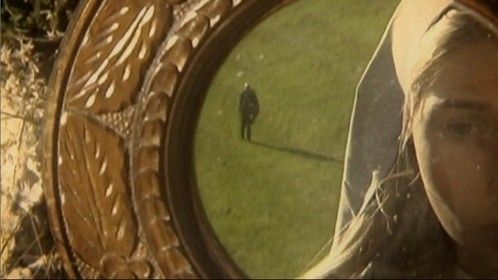
Sourced through Pinterest
Viva La Muerte (1971)
This is a visually stunning film with beautifully executed vignettes. It’s semi-autobiographical, told from the perspective of a young boy whose fascist-sympathizing mother turns in his communist father. The production design, violence, and overall aesthetic feel are earned and genuine. But narratively, I struggle with vignette structures. I understood the throughline, but the disjointedness made it hard to stay invested. Maybe it leans a bit too avant-garde for my taste. I wasn’t disengaged out of confusion or lack of effort -- I mostly felt frustrated. I didn’t dislike the film; it just didn’t excite or compel me. And sure, exploitation cinema isn’t always about entertainment; sometimes it’s about provocation, but I didn’t feel particularly provoked either. It washed over me more than anything. That said, I found myself warming to it as it progressed. I appreciated the surrealism, but wished for more narrative consistency.
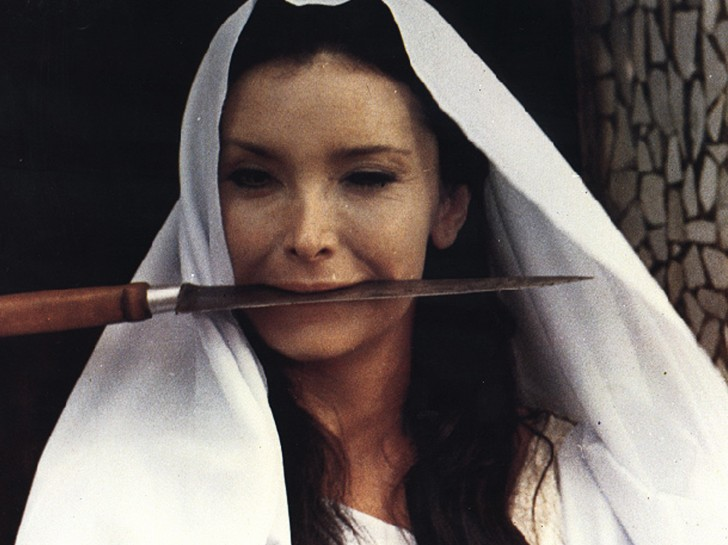
Sourced through Harvard Film Archive
Life and Death of a Porno Gang (2009)
This is a (literal) Serbian film about a struggling filmmaker who drifts into the porn industry. Of the two Serbian films centered on porn that I’ve seen, this is my favorite (though that’s not a high bar). The film has charm and even some camp: the titular porno gang is a group of misfit thespians, and one character sings ABBA at an event called the Porno Cabaret.
Viewer be warned: if you’re going into this expecting a John Waters-style camp fest, remember that even Waters wasn’t above pushing taboo boundaries, including the occasional on-screen animal death. There is a graphic animal death (possibly real, though sources are divided) and a depiction of bestiality. There are also several sexual assault scenes, including one set, yet again, to an ABBA song.
Despite all that, some sequences are… can I say fun? Some sections are surreal, inventive, and even a little psychedelic. The gore and bodily harm scenes are striking and well executed, and some shots are genuinely beautiful. But that’s about where my admiration stops. It’s interesting at times and occasionally engaging, but narratively weak. After the energetic first act, it really drags.
Lucifer Valentine’s Vomit Gore Trilogy (2006-2010)
The Vomit Gore trilogy consists of three films: Slaughtered Vomit Dolls (2006), ReGOREgitated Sacrifice (2008), and Slow Torture Puke Chamber (2010). The series follows a character named Angela Aberdeen, a bulimic teenage runaway prostitute--pick a struggle, girl--who experiences violent hallucinations. The broader canon also includes Black Mass of the Nazi Sex Wizard (2015) and The Angela Chapters (2020), which are mercifully not included in this tier -- I genuinely believe watching a movie titled Black Mass of the Nazi Sex Wizard might push me over the edge.
As someone who grew up interested in disturbing cinema, I’ve long been familiar with the name Lucifer Valentine, who, if not best known for his films, is best known for his many controversies. He has claimed that he engaged in incestuous activity with his disabled sister, Cinderella, who later killed herself (that is, if she exists, which there is little evidence to support). He also admitted to exploiting actress Ameara Lavey by housing her on the condition that she obey his demands, preying on her addiction, mental illness, and homelessness, and fetishizing her vulnerability throughout his films. Lavey--whose real name is Brandie Petrie--was killed in 2017 in a double homicide drug deal gone wrong. It’s difficult not to see her death as part of a larger pattern: a young woman who was exploited, failed by every system meant to protect her, and left to remain in dangerous circles without real help. Further, Valentine has faced extensive allegations involving manipulation, abuse, and grooming. Several of these allegations are supported by documented evidence and firsthand accounts. After maintaining anonymity for years, his identity was publicly revealed in August 2025 as Shawn Fedorchuk, a television editor who had previously worked on high-profile productions.
Adding to my apprehension is the fact that I’ve dealt with emetophobia since childhood, so naturally, I was thrilled to sit down with a trilogy explicitly built to fetishize my worst fear. While I’m generally tolerant of violent, gory, and taboo cinema, vomiting is uniquely difficult for me. There was a point when the hot tub scene in Euphoria was a lot for me. I’ve worked on that sensitivity over time through exposure therapy, and I’m far more tolerant now (I saw Triangle of Sadness in theaters twice!). Still, a trilogy literally branded as the Vomit Gore trilogy is a tall order, especially when its intent is direct provocation.

Sourced through Pinterest
Beginning with Slaughtered Vomit Dolls, I can tell I’m in for 3 long films of vignettes with scattered female carnage. The film has little interest in narrative cohesion. It’s strange to recognize so many familiar stills--images I’ve seen floating around Tumblr and Pinterest for years--in their original context. It’s a nasty film to aestheticize, but taken in isolation, some of those stills are visually compelling. Sure, it’s very few, but there are moments here that are genuinely striking, even if they’re embedded in something deeply unpleasant.
Among films on this list that amount to “a collection of loosely connected scenes with blood and no real throughline,” this one isn’t the worst. It’s boring, but not completely unstimulating. The premise itself is actually intriguing on paper; the execution, however, feels wildly disconnected from whatever it’s trying to say. The editing occasionally recalls A Serbian Film in how aggressively disorienting it is, as if it’s actively trying to short-circuit the viewer’s brain. As I said in my previous article, this could easily double as a “How it feels to chew Five Gum” commercial.
Halfway through, I was already struggling with the realization that I still had two more films to get through. What else could be left to say? From the jump, this was the most difficult film on the list for me to watch, largely due to its fixation on vomiting, some of which is rumored to be real. The film itself isn’t especially disturbing in a conceptual sense (it’s honestly pretty stupid), but paired with the knowledge that the lead performer may not have been fully free or safe during production, it becomes unsettling in a different way. Not because it’s effective art, but because it blurs ethical lines
If nothing else, Lucifer Valentine has a knack for memorable titles. The second installment, ReGOREgitated Sacrifice, opens with a disclaimer from Lucifer Valentine assuring viewers that everyone involved was a consenting adult, and encouraging skeptics to watch the behind-the-scenes documentary. No, thank you! I think I’ve seen enough! The film then hits the ground running with a voicemail from a female character (presumably Angela) saying, “I like it when you beat me up. I like it when you rape me.” Don’t you just love it when men write female characters with so much care and consideration?
Unexpectedly, the Soska Sisters appear in this entry, listed as “The Black Angels of Hell.” Given their later work on American Mary, which I adore, it’s genuinely strange to see them here among such slop. The twins meet up with a stripper, who they drug, force to vomit (classic), bite the nipples off of, etc., which is followed by some slow-motion twincest makeout intercut with some blood and gore.
And while this film often feels like I’m at the worst circus in the world and the ring leader is the local molester, some moments actually work, particularly Angela’s monologues from the afterlife. These sections are oddly compelling, and for brief stretches, emotionally engaging. That said, it’s hard not to feel uneasy wondering how much of that distress is performance and how much reflects something real. The sense of entrapment she articulates lingers, even if the film itself refuses to give it structure.
This trilogy desperately needs narrative grounding. Any hint of story or character is quickly buried under abstraction, chaotic editing, and long stretches without meaningful dialogue. I typically love films about hell; I love lore, texture, rules, and there’s the faintest suggestion of something like that here. It’s not The House That Jack Built, but it could have some lore or intrigue to it. Instead, it collapses into repetition and provocation for its own sake. Random grotesqueries pile up without rhythm or payoff, punctuated by baffling tonal choices, including the sudden Kurt Cobain tribute and a tarantula crawling into a woman’s vagina (then being sewn inside it), that left me asking, sincerely, what we were doing here.
The film ends with a prosthetic penis that spurts blood out of it. Whatever, man.
At long last, we’ve arrived at Slow Torture Puke Chamber. Absolutely zero part of me wanted to watch this movie, but alas, I am nothing if committed to seeing things through. Once again, we’re greeted by an aggressive disclaimer. Okay, dude, sure! The more you tell us: Whatever you heard about the nonconsensual stuff, don’t listen! It DIDN’T happen! EVERYONE is DEFINITELY 18. The more we’re gonna believe you. Nothing screams innocence like preemptively getting overly defensive. The disclaimer, again, has the audacity to direct viewers to the behind-the-scenes documentary. I’m not watching any more of your content, Shawn! Have I not suffered enough?
A woman addresses the camera directly, assuring the man behind it (Satan? The director? The viewer?) that he can hurt her, do whatever he wants to her, and that she’ll never leave him. It was at this moment that it dawned on me: Is this supposed to be found footage? Is this entire trilogy found footage? Am I meant to be watching from Satan’s POV? This realization hit me three movies in, which should tell you how little sense the visual language makes. Then we get a monologue about bulimia and how fun it is! Frankly, even the girls on EDTWT do a better job of convincing us this. If a balding 15-year-old bulimic on Twitter is a better storyteller than you, you may not be cut out for filmmaking.
From there, it’s more vomiting, more rambling about sexual trauma, followed by masturbation with a crucifix (you will never be The Exorcist), culminating in blood being thrown up onto the crucifix mid-act. At some point, I realized Angela Aberdeen is now being played by two actresses simultaneously: Ameara Lavey and Hope Likens. This development, I must have missed the memo on, but whatever, sure. Angela #2 eats a cake topped with crickets while Angela #1 urinates into her own mouth. A random woman in a pig mask gets slapped with a used tampon. Alright.

Sourced through Pinterest
Then there’s a botched C-section, if you can even call it that, after which the person who “delivers” the child eats it. For all the otherwise competent practical effects in this film, it is painfully obvious that they used a baby-shaped gummy bear for this scene. And my goodness, there is a lot of urine in this installment!
And finally: it’s over. I hear an angel choir sing. I feel like I’m being lifted into the heavens. Praise be, I’ve done it!
Lucifer Valentine, Shawn Fedorchuk, whoever you are, you clearly have some technical talent, considering you’ve managed to earn an Emmy nomination for post-production and title design work. And thank God it was for that, and not for anything involving a camera, actors, or a screenplay. Please, for the love of cinema, stay as far away from directing as humanly possible for the rest of your life. Do not type another screenplay. Do not open Final Draft. Your computer should be programmed to immediately detonate the next time you type: INT.
There is nothing of substance here because this was never about story, film, or art; it’s about fetish, dressed up as transgression. Please, Shawn. Go do something useful with your time. Work on an oil rig. I’d rather there be another male podcaster on this Earth than another male director of exploitation cinema.
Closing Thoughts
What a labor of love this has been. My Letterboxd followers may have been disturbed the past several weeks as I’ve made this descent, but I do it for the love of Gut Instinct Media. And because someone has to sit through this garbage and report back! YouTube’s Wendigoon cannot be the only one carrying this burden.
Descending further into the Disturbing Movie Iceberg has clarified something for me: I understand why some people have an aversion to extreme cinema, especially when so much of what passes for “transgression” in the mainstream of the genre, like the Vomit Gore trilogy or August Underground, is really just fetish content in disguise. Directors like Shawn (yes, I’m still not letting go of the fact that his name is Shawn) and Fred Vogel would fold instantly if placed next to filmmakers like Gaspar Noé or Michael Haneke. What does Slaughtered Vomit Dolls’ supposed commentary on sexual assault look like next to Irreversible’s? I’ll tell you: it looks like a child’s crayon drawing next to the complete works of Shakespeare.
I suppose I’ll keep going down this iceberg, because I’m stubborn, curious, and apparently allergic to peace. But if this tier has taught me anything, it’s that the most unsettling thing about disturbing cinema isn’t what it shows, it’s what it reveals about the people, overwhelmingly men, who make it.