“I Am a Revolutionary”: The Life and Legacy of Fred Hampton
By Natalie McCarty
“You can kill the revolutionary, but you can’t kill the revolution.” — Fred Hampton
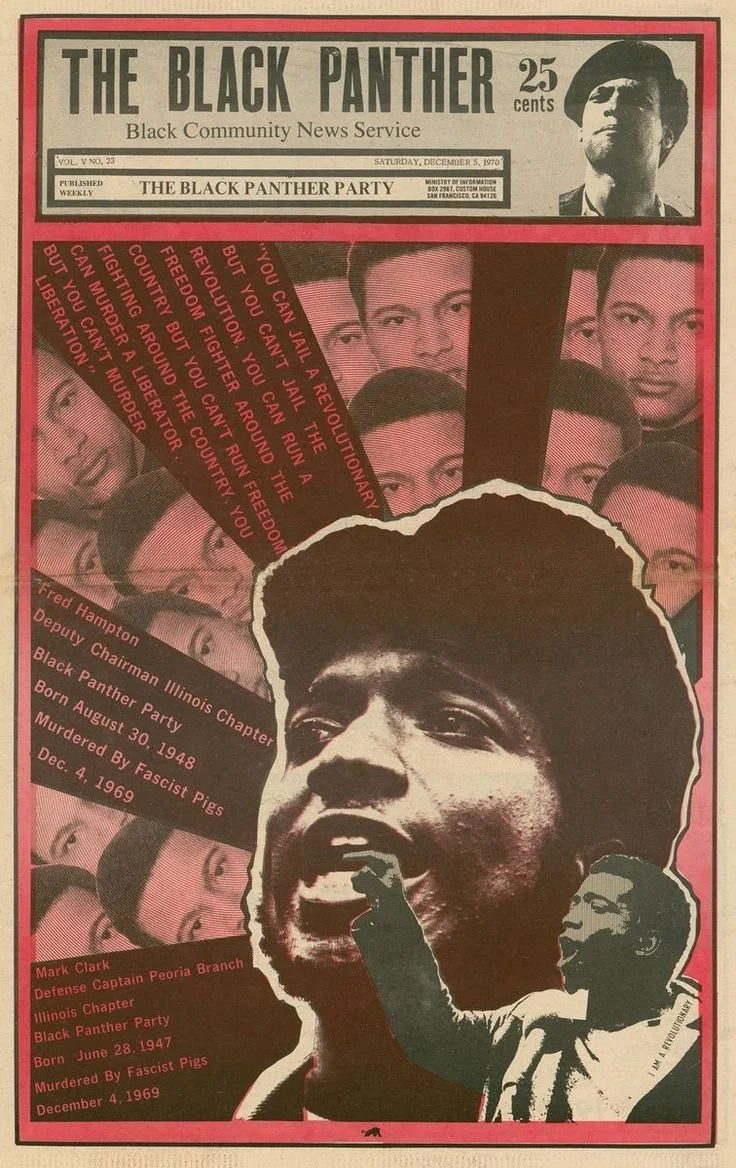
Sourced through Pinterest
Fred Hampton was twenty-one years old when the state murdered him. By that age, he had already done what many political leaders never accomplish in a lifetime: he made people understand that their suffering was not accidental, that it had a source, and that they could act collectively to change it.
To understand Hampton, you have to understand Chicago in the late 1960s. Mayor Richard J. Daley’s political machine controlled the city, enforcing policies like redlining that confined Black families to overcrowded, under-resourced neighborhoods on the West and South Sides. Police acted as an occupying force. Jobs were scarce, schools were underfunded, and violence—often from the state—was rampant (sound familiar yet?). Against all odds, Hampton organized in direct response to a city that had already declared war on its poorest residents.
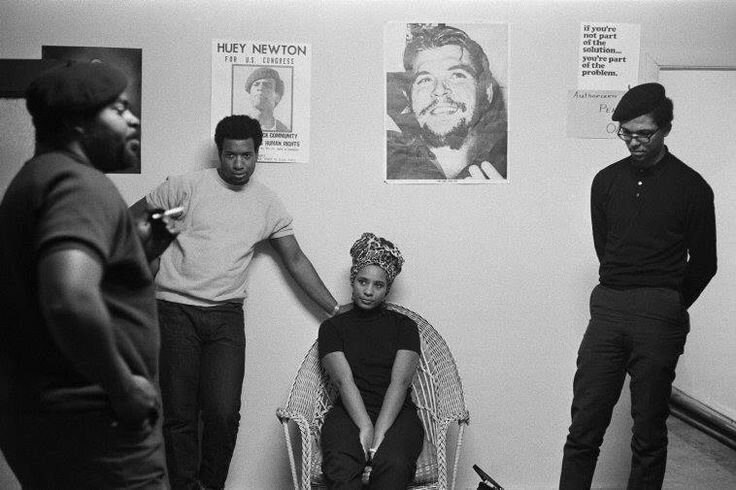
Sourced through Pinterest
When Hampton joined the Black Panther Party and quickly rose to become chairman of its Illinois chapter, he brought clarity, discipline, and purpose. He spoke plainly and urgently, with a preacher’s cadence and a strategist’s logic. He said, “We’re not going to fight capitalism with Black capitalism. We’re going to fight capitalism with socialism.” Every program he built, every coalition he forged, was an act of revolutionary praxis, not abstract ideology.
The Panthers Hampton led were defined not by the leather jackets or guns society associated them with, but by care. Their Free Breakfast for Children Program fed thousands of kids before school. Free medical clinics offered services where hospitals refused. Political education classes taught people how capitalism, policing, and racism reinforced one another—and how they could resist.
Fred Hampton’s message was simple: oppression is structural, not accidental, and knowledge is power.
That understanding shaped his most radical intervention: the Rainbow Coalition. Hampton built alliances between the Black Panthers, the Young Lords (a Puerto Rican liberation group), and the Young Patriots (poor white migrants from Appalachia who had been marginalized and displaced). This coalition was rooted in class consciousness, for as Hampton said, “Poor people of all colors have more in common with each other than they do with their oppressors.” He understood that division is manufactured, and that unity is the most dangerous weapon against those in power.
The FBI recognized this threat under COINTELPRO, the counterintelligence program explicitly designed to “prevent the rise of a Black messiah.” Hampton was targeted not for crimes he committed, but for the threat his organizing posed. William O’Neal, an informant, provided the FBI with the layout of Hampton’s apartment and slipped a powerful sedative into his drink the night before the raid.
In the early hours of December 4, 1969, Chicago police stormed the apartment. Police fired ninety-nine shots; one shot—likely accidental—was fired by the Panthers. Hampton was shot point-blank while unconscious. His partner, Deborah Johnson, pregnant with their child, was dragged from the room after officers said, “He’s good and dead now.” It was a state-led execution, and the whole event is a stain on humanity.
Unfortunately, Hampton’s murder was not an anomaly. As he said, “When the people understand that they can deal with the system, the system will deal with them.” He was a threat more dire than anything in America, not because of violence, but because of his unique ability to unite communities taught to mistrust one another.
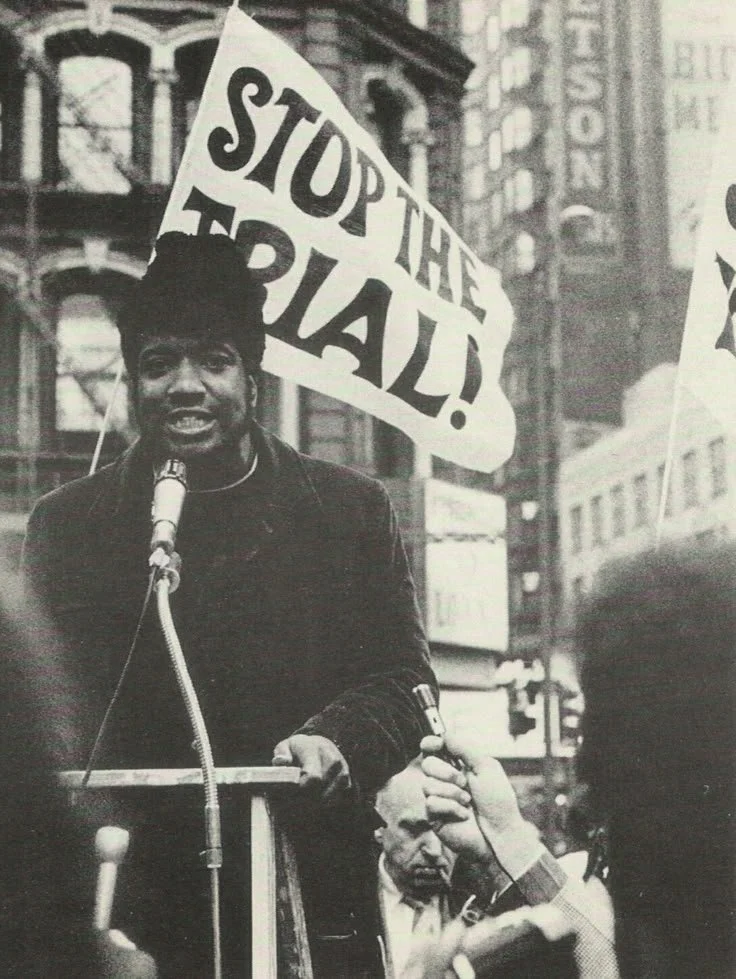
Sourced through Pinterest
Even in death, Hampton’s voice remains, and his revolutionary vision continues to inspire—from the Brown Berets in Watsonville to the resurgence of the Black Panthers in Minnesota today, confronting authoritarian policies, ICE raids, and systemic oppression.
Remembering Fred Hampton is not enough. In a moment when the same systems of inequality, police violence, and political manipulation he fought against are accelerating, his example is a blueprint for what we need to build now. It is a call to organize locally, to protect and empower marginalized communities, to insist that care and justice are inseparable.
His life shows us that transformation does not come from hope alone—it comes from action, discipline, and solidarity.

Sourced through Pinterest
The revolution he imagined is unfinished. It asks something of us: to stand with neighbors, to build networks of mutual aid, to educate ourselves and others about the structures that keep us divided. Hampton’s vision reminds us that communities united are the most powerful force on earth and that fear will always be directed at those who organize effectively.
The revolution Fred Hampton built is alive today in every act of solidarity, every meal shared, every community defended. It is alive in us if we choose to carry it forward.