The Most Romantic [Abuse] Film You’ll Never Want to See Again: 'Pillion' Reviewed
By Natalie McCarty
“Next to you, I am nothing.”
If there were ever a man to absolutely humiliate yourself for, it’s Alexander Skarsgård. That said, not even he is worth all of that.
He is impossibly handsome, yes. I know it, you know it, the film knows it, but Pillion actually weaponizes it and leans on it as a narrative device all on its own. The truth is that there is a limit to how far physical magnetism can carry a story before it collapses under the weight of what it’s actually depicting.
Courtesy of A24
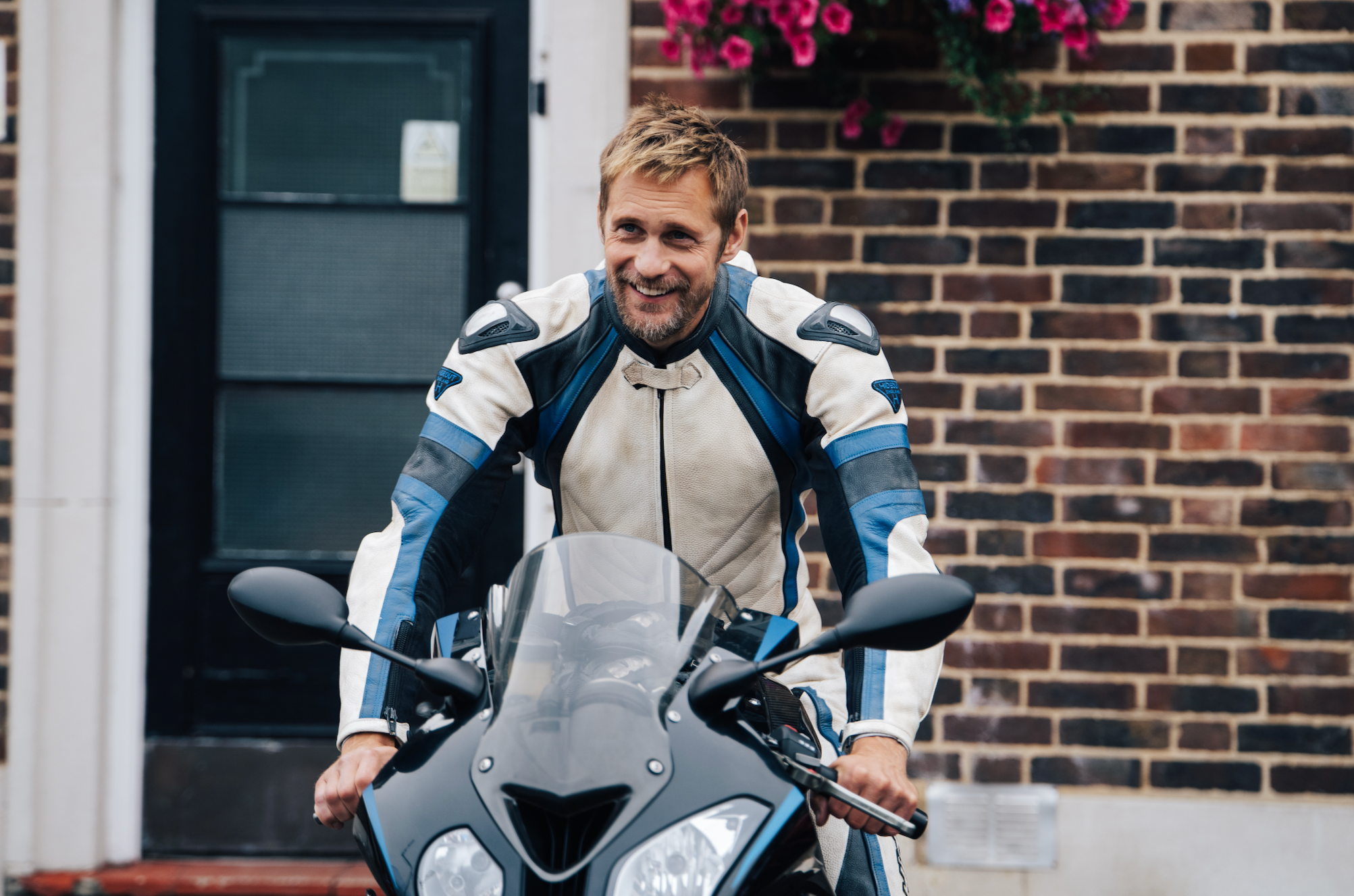
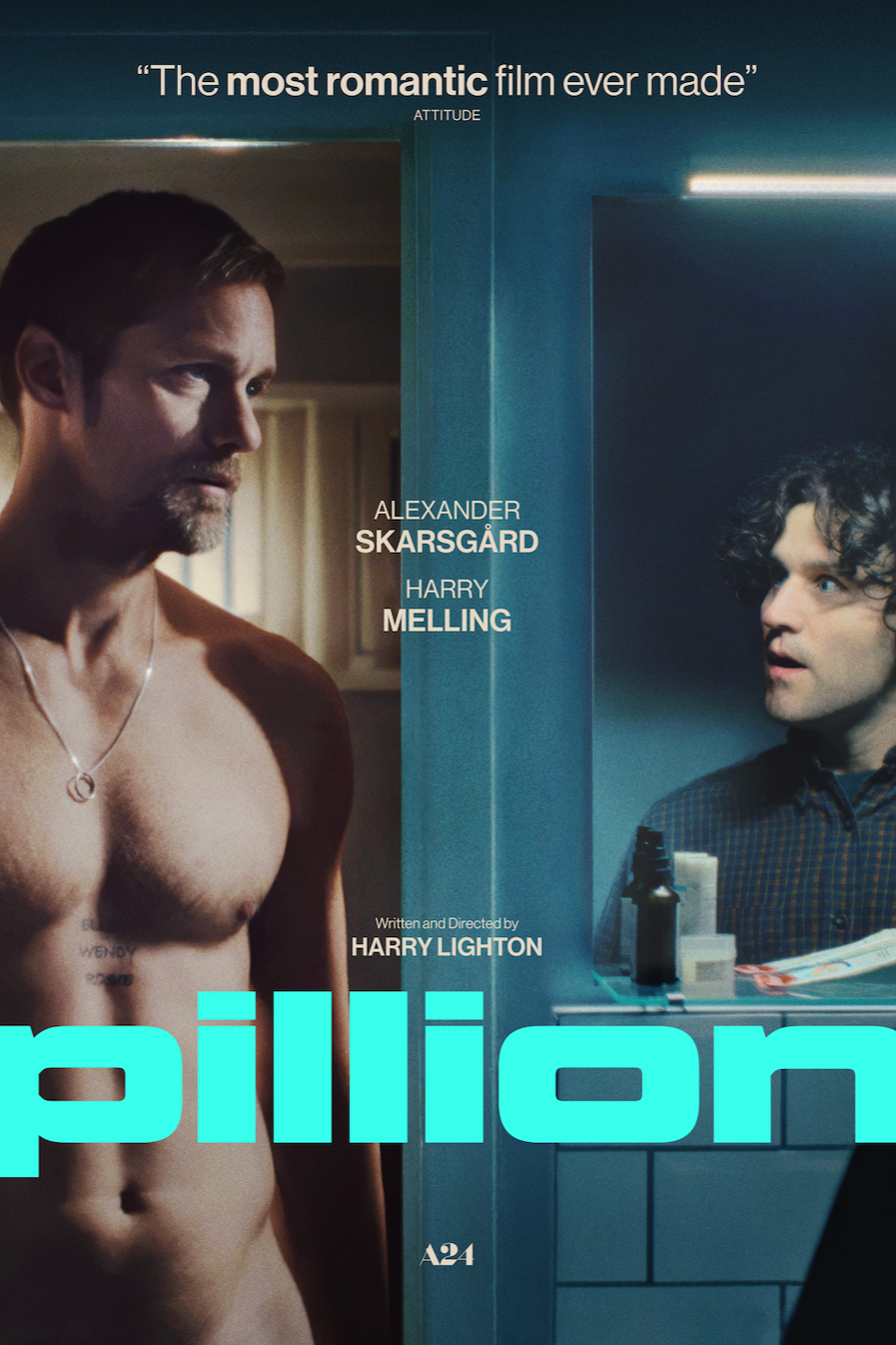
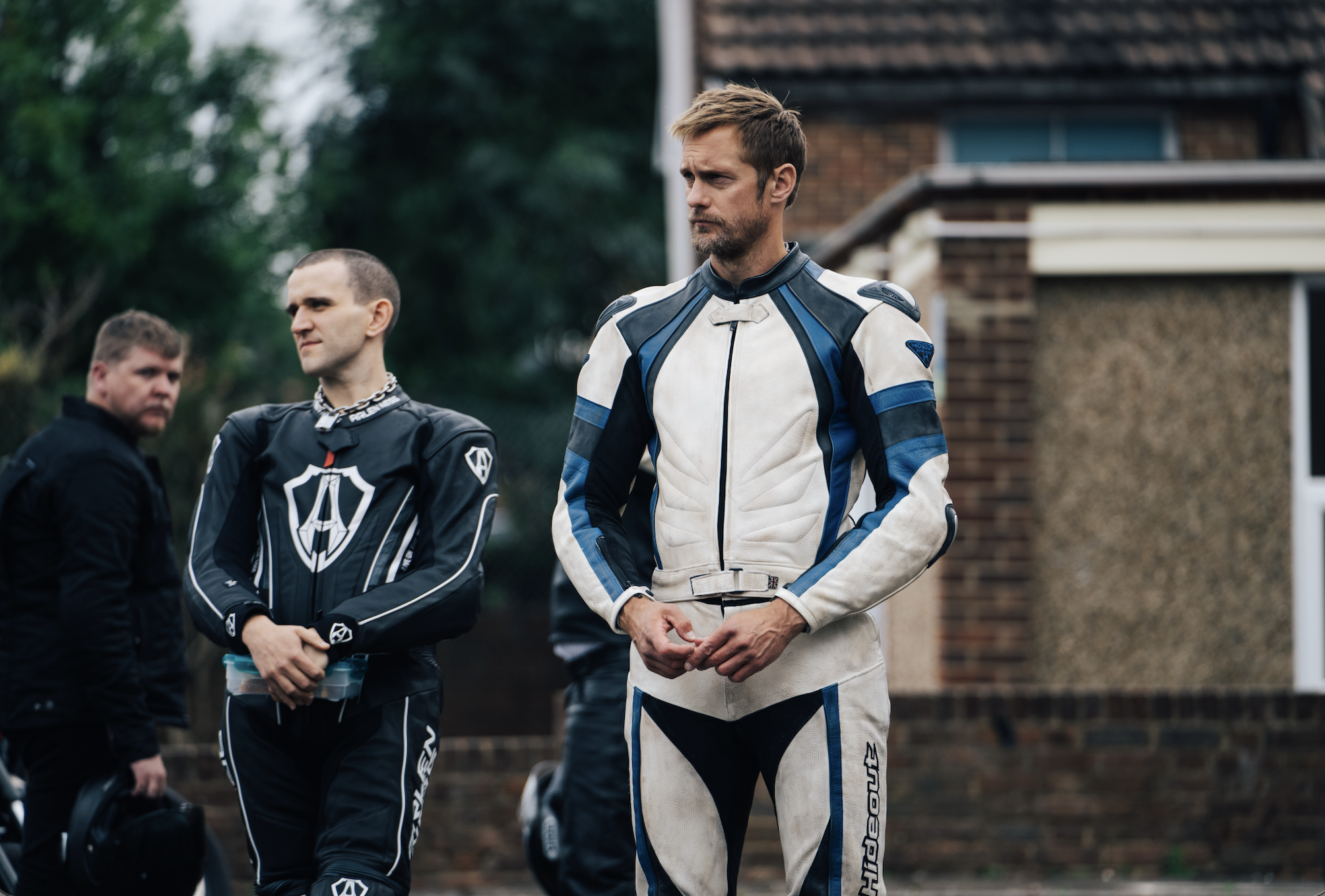
Based on Adam Mars-Jones’s novel Box Hill, Pillion follows Colin (Harry Melling), a timid suburban traffic warden, and Ray (Skarsgård), an enigmatic, Adonis-like leader of a gay motorcycle gang who takes Colin on as his submissive. The title itself refers to the passenger seat on a motorbike—a term that, within biker culture (particularly among LGBTQ+ riders) carries a submissive charge.
The official synopsis describes “a timid man with an aptitude for devotion” being swept off his feet and entering a complex relationship that “tests the boundaries of love”.
I do not believe that is anywhere near the film I actually watched.
If you thought Fifty Shades of Grey was excessive, I raise you one—no, ten thousand. At least Fifty Shades (which are genuinely some of the worst films ever made) attempts the fantasy of negotiated power, whereas Pillion feels uninterested in negotiation entirely.
Courtesy of A24
There is maybe fifteen minutes total of genuinely compelling material in the entire film, and nearly all of it is crammed into the ending—brief flickers of something resembling tenderness, autonomy, or equality between two people, which literally is just one sequence that ends quickly. The problem here is that those moments don’t feel earned and rather feel like a last-minute attempt to retroactively justify hours of degradation.
I have, by just a hair, seen worse movies. Not many though…
However, there is, I suppose, an audience for this, as the screening I attended made that abundantly clear.
The crowd responded audibly, warmly, and even enthusiastically to the film’s entire run. To paint the scene plainly and factually, several viewers wore dog collars, one pair arrived literally chained together via a leash situation, and someone brought a chihuahua dyed an alarming shade of pink as their companion. At that point, I realized I was not so much watching Pillion as I was attending a fully immersive preshow experience.
I digress; the point here is I am not interested in kink-shaming anyone. Consensual BDSM exists out there in the world, probably even amongst many of the advertised couples last night who were told to “bring their sub.” Power exchange can be negotiated, chosen, or even emotionally meaningful in these relationships.
However, my issue here is consent and the film’s refusal to meaningfully interrogate its absence. And it’s not just the audience who should be concerned: our culture is quietly absorbing this nonsense.
Twice, the encounters depicted read as coercive to the point that agency is effectively erased, yet they are absorbed into the film’s aesthetic of dominance as though they are stepping stones toward intimacy.
That is where the film loses me entirely. And hearing the movie described in some early reactions as “the most romantic film ever made” is, frankly, disturbing.
There is nothing romantic about a dynamic in which one person has no voice, no freedom, and is reduced to an object to be owned. There is nothing romantic, trust-building, or endearing about nonconsensual sex.
What’s depicted here does not meaningfully resemble negotiated BDSM or chosen submission; it reads instead as sustained coercion framed as devotion. Calling that romance does not feel provocative; it feels irresponsible and disgusting. And I fear that it even manages to justify or excuse that kind of behavior. Yes, I am that woke, actually.

Courtesy of A24
Even if you strip away the sexual politics entirely and look at the relationship in purely behavioral terms, what are you doing being treated like a dog?
Ray even expressively shows more care toward his motorcycle—and his actual dog—than toward Colin. There is a difference between a power imbalance and the complete erasure of personhood. Pillion repeatedly crosses that line.
Licking boots. Sleeping on the rug. Existing as less than a partner, less than fully human. At one point, Colin is lined up in a rapelike group sexual assembly line.
From a purely formal standpoint, the film’s visual language reinforces the imbalance it claims to examine. Ray is frequently framed as looming, monumental—shot from angles that emphasize physical dominance—while Colin is visually minimized, often positioned lower in the frame or physically obscured. What could have been a deliberate critique of power instead begins to feel like complicity with it.
I’ll be generous and say that there are flashes (tiny ones) of a better film. In the closing stretch, you almost see the possibility of something grounded in mutual recognition, autonomy, and actual emotional exchange. But it arrives too late, after too much degradation has already been normalized, and then it’s stripped away.
The pacing compounds the issue. Scenes of humiliation linger with a near-fetishistic patience, while moments of emotional development are brief, rushed, and narratively underfed.
Clearly, some viewers find meaning or recognition in the dynamic depicted here, but recognition alone does not automatically translate into responsible storytelling.
Courtesy of A24
In a cultural moment increasingly attentive to consent, power, and exploitation, a film that presents obedience and silence as romantic is both upsetting and careless. Between the Epstein files and Diddy’s documented sexual abuses, one has to ask: what exactly is this film adding to our culture? Arguably, its impact normalizes dynamics that have detrimental real-world consequences.
Pillion didn’t have to be this hollow, this debased, or this uninterested in the humanity of its own characters. What a damn shame.