Politicians, Take Notes
By Sadie Jane Mayhew
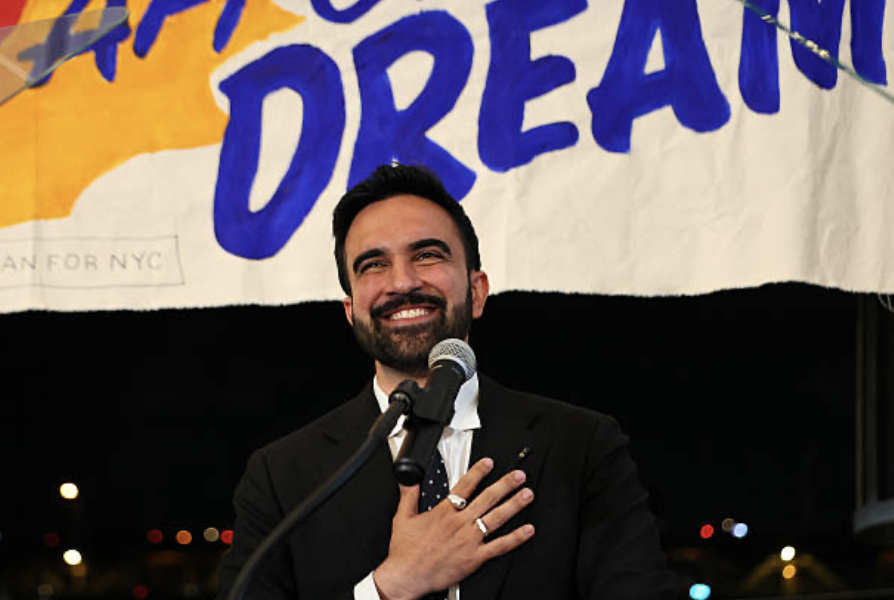
Courtesy of Getty Images (2025)
In New York, cynicism has long been a survival skill. We expect big promises to dissolve into task forces that never meet, ribbon cuttings that lead nowhere, and mayors who campaign in poetry and govern in footnotes. Change, we’ve been told—by history, by experience, by habit—takes time. Or rather: it takes longer than our attention spans, our rent hikes, our patience. In fact, it’s even (an unofficial) tradition to hate our mayors, whoever they may be in office. But maybe it’s time to toss this “tradition” aside. Because many New Yorkers are tired.
Which is why Zohran Mamdani’s first month as mayor feels so… hopeful.
I was contemplating using so many adjectives other than hopeful; alive, fresh, exciting… but hope is what we felt during his run and even more now than ever for the future of what politics can be in other cities, states, and maybe, just maybe. Even the country?
Not because every New Yorker agrees with him, which they definitely don’t. Not because his politics are universally beloved. But because he is doing something that modern American politics has trained us not to expect: he is moving quickly, visibly, and in alignment with what he said he would do. And that’s really encouraging for how people can see what politics can be in making change.
It’s only been a month since Mamdani has been in office, and every day he is getting something done! Even during his campaign, that man was working every day, making an appearance somewhere, in some burrow, morning, day, and night. And somehow has still found time to be on Subway Takes, The Adam Friedland Show, and active on other high-quality, organic, social posts without the use of AI, like his mayoral-running competitor, Andrew Cuomo did. And with all this, what we can assume is done on little to no sleep, his energy is up, and his marriage still seems to be very much intact.
With all this said, it is evident that during his first days in office, Mamdani has treated the mayoralty less like a symbolic perch and more like a job with an inbox already on fire, which is something we haven’t really seen before. The result is not perfect, with some challenges already at hand, like the announcement of being left with a surprise $12 billion of debt left by former mayor Eric Adams. But even being candid and addressing new obstacles and coming up with new plans shows he has great momentum. And momentum, in a city starved for it, has the power to change how people feel about politics itself.
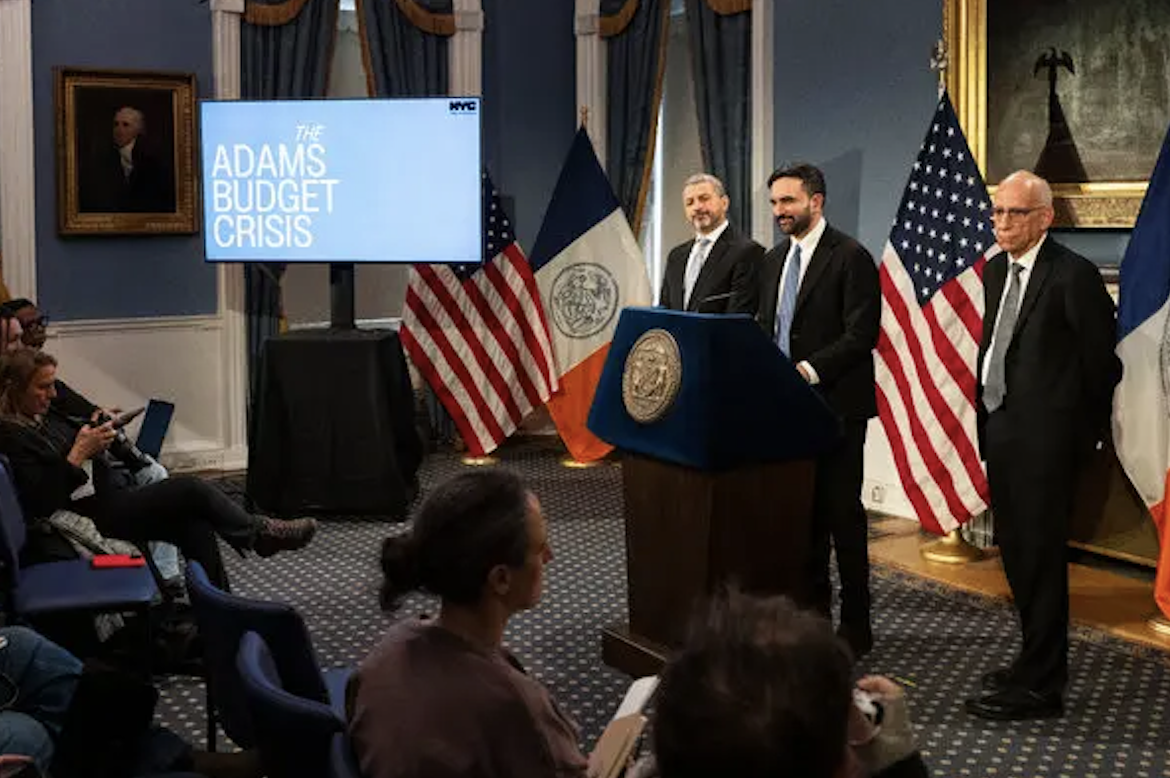
Courtesy of Getty Images (2026)
The Power of Speed
On January 1—rent day in New York—Mamdani signed three executive orders aimed squarely at the city’s housing crisis. The symbolism was obvious, but the substance mattered more.
He revitalized the Mayor’s Office to Protect Tenants, appointing Cea Weaver, a nationally recognized tenant organizer, to lead it. He established two new housing task forces, SPEED and LIFT, designed to cut through the bureaucratic choke points that have made building more affordable homes in New York an exercise in exhaustion. And he announced these actions not from behind a podium at City Hall, but inside a Pinnacle Group–owned building in Brooklyn, where tenants have lived with thousands of unresolved housing violations.
Mamdani toured an apartment with broken walls, torn flooring, and no heat. He did not treat the visit as a photo opportunity alone; he directed the city to intervene in Pinnacle’s bankruptcy proceedings, a move intended to secure relief for tenants and recover money owed to the city. It was an unusually aggressive step and an unmistakable signal that enforcement, and not just rhetoric, would define his approach as a leader.
For years, New Yorkers have heard elected officials describe housing as a “top priority.” What Mamdani offered instead was something more legible: action tied to a timeline, delivered before the press cycle could move on.
Doing the Small Things, Too
Just as striking as Mamdani’s big policy swings has been his attention to the small, maddening details of city life—the ones that rarely make it into campaign speeches but dominate daily experience.
When cyclists complained about a dangerous bump at the end of the Williamsburg Bridge bike lane, the mayor didn’t delegate the concern to oblivion. He showed up with the Department of Transportation and shoveled asphalt himself, acknowledging that he’d hit the bump before and knew exactly how bad it was. The moment went viral not because it was revolutionary, but because it was recognizably human: a mayor responding to a specific complaint, in public, without pretense.
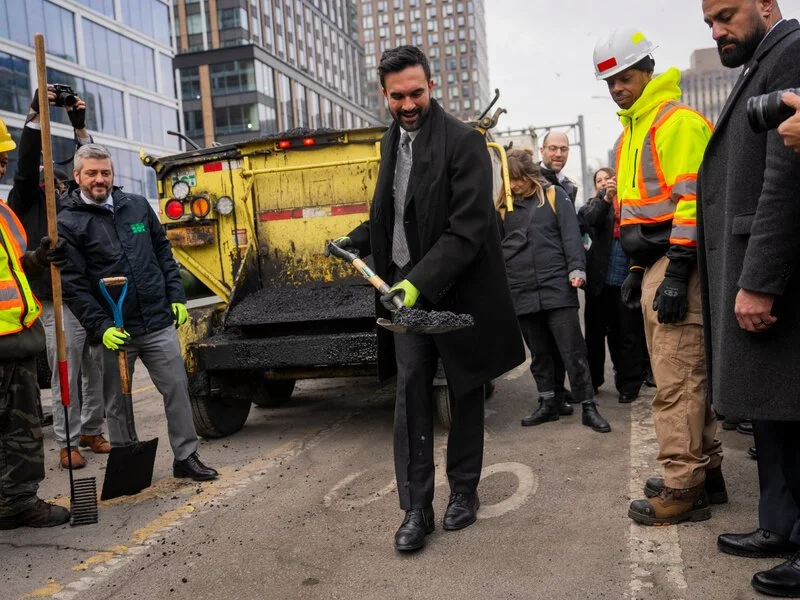
Courtesy of Getty Images (2026)
The same philosophy appears in his revival of the original McGuinness Boulevard redesign in Greenpoint, restoring a plan that prioritizes pedestrian and cyclist safety after years of deadly collisions—and after his predecessor’s wavering reversals. Where past administrations seemed trapped by indecision, Mamdani chose clarity.
These gestures don’t solve structural inequality on their own. But they do something else: they communicate respect. They tell New Yorkers that their frustrations—large and small—are not beneath the attention of power.
Building Trust With Doubtful New Yorkers
Courtesy of Getty Images (2025)
What makes Mamdani a good leader, or anyone a good leader for that matter, is he doesn’t need unanimous approval; So many of our current and past leaders have made their non-supporters their public enemies which has made politics sour, bleak, and discouraging for so long. Or even being disqualified for the gig and put into power through slimy powermoves and private funding. The hope comes up again with Mamdani’s leadership because it’s been a while to see someone elected into a position where they are literally the opposite of that. A great leader needs support and organic fundraising from the people, credibility, consistency, and the willingness to work tirelessly for the people, even when those people disagree with them. Zohran Mamdani leads by showing up, following through, and treating trust not as something he’s owed, but something he earns—day by day, action by action, for all New Yorkers, not just the ones who voted for him.
Perhaps the most consequential move of Mamdani’s first month was symbolic. But symbolism, in politics, is never merely decorative.
Early on, he signed executive orders revoking those issued by former mayor Eric Adams after September 26, 2024—the day Adams was indicted on federal corruption charges. Mamdani framed the decision as a line in the sand, not as a type of partisan revenge, as many politicians have been quick to do historically.
For many New Yorkers, that date marked another chapter in a long story of disillusionment. Mamdani’s response was to say, in effect, this administration will not pretend that cynicism is irrational. It will acknowledge why people have turned away from politics. And attempt to earn them back.
He preserved the Office to Combat Antisemitism while rescinding orders that had adopted the International Holocaust Remembrance Alliance’s controversial definition of antisemitism and restricted city officials’ participation in the Boycott, Divestment, and Sanctions movement. In doing so, he walked a careful line affirming the need to protect Jewish New Yorkers while signaling openness to critique and debate rather than decree.
The throughline is coherence. Mamdani’s actions reflect his stated values, rather than contradicting them for convenience.
A Different Kind of Political Persona
Mamdani’s appeal is not rooted solely in policy. He’s also just a really likable guy, too.
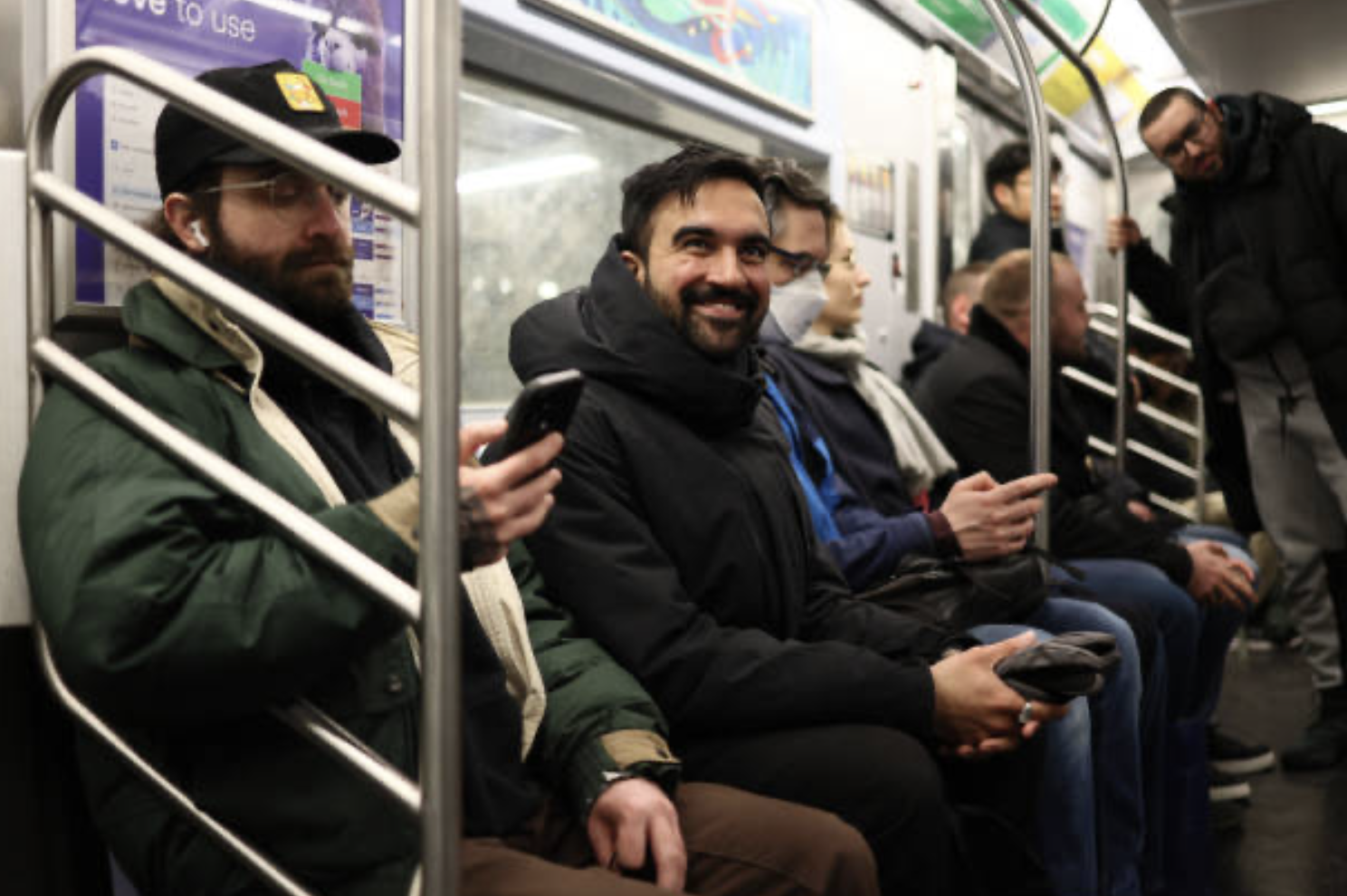
He rides the subway. He seems to get along with everybody and anybody, finding a connection to everyone in one way or another. He’s not just an incredible speaker (a really important part of being a politician, of course), but he’s a really good listener. Something a lot of politicians lack. This makes Mamdani not a traditional talking head that we, the people, are so exhausted by.
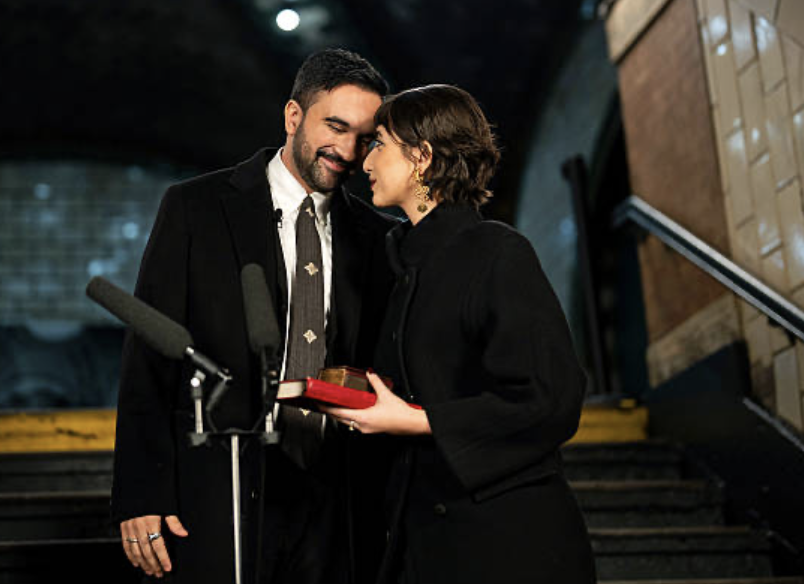
He also seems great around kids, talks openly about his immigrant upbringing and his parents with affection rather than mythmaking, likes great music, and has awesome food recs for the city. But what seems to be a fan favorite is how he publicly adores his wife, artist Rama Duwaji, with a humility and tenderness that feels refreshingly romantic, which is even incredible for a city and younger generation who’ve become cynical about love at times too. Their partnership, which is also creative, progressive, and unguarded, has also become part of his public image.
Courtesy of Getty Images (2026)
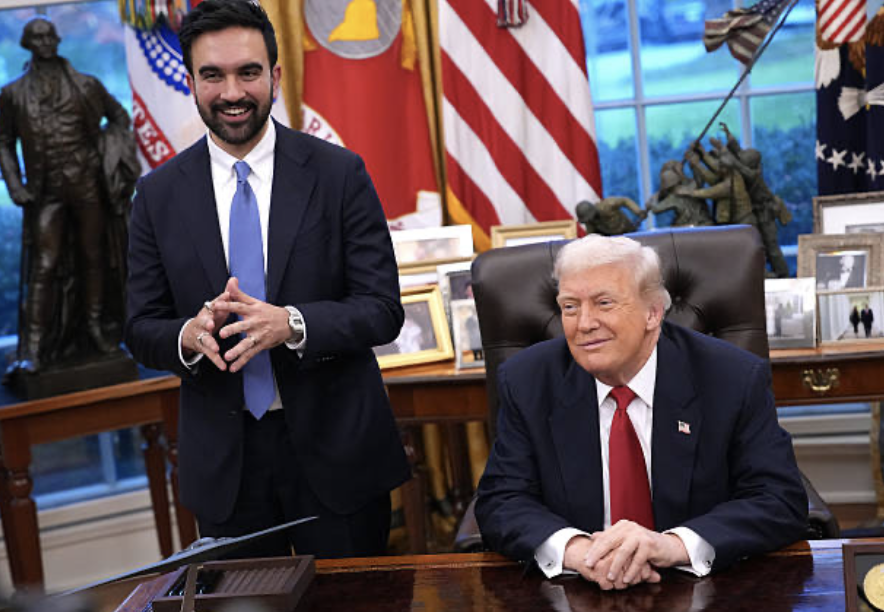
He has appeared on unconventional platforms, from leftist comedy podcasts to cultural events, without flattening himself into a meme. Even political opponents have remarked on his personality; when Donald Trump reportedly gushed over him and described him as “a very rational man,” the comment landed less as an official endorsement (because at that point, Trump had already endorsed Andrew Cuomo), than as a strange acknowledgment of Mamdani’s undeniable ease.
In an era when politicians are often either aggressively polished or deliberately abrasive, Mamdani’s demeanor occupies a third space: competent, earnest, and visibly unafraid of sincerity.
Courtesy of Getty Images (2025)
Work as a Political Value
What Mamdani is modeling, more than ideology, is a work ethic for all current and future leaders.
He has announced judicial appointments and reappointments with an eye toward transparency. He has created an Office of Mass Engagement modeled on the volunteer infrastructure that powered his campaign, signaling that governance, for him, is not something done to the public but with it. He has launched audits of city agencies to address looming budget deficits while pairing fiscal restraint with expanded social programs like universal childcare.
This is not the work of a mayor content to manage decline. It is the work of someone trying—perhaps audaciously—to prove that the government (small or large) can absolutely function at the speed of need.
Why This Matters Now
Young people are not disengaged from politics because they don’t care. They are disengaged because they care deeply—and have been disappointed repeatedly. They have watched leaders speak eloquently about crises while postponing solutions indefinitely. They have learned to expect paralysis dressed up as prudence.
Mamdani’s first month has been such a radical shift from what New Yorkers are used to. And it’s most likely that they won’t relax in relief that he is doing all that is, but will continue to hold him accountable to not shift or change with this kind of power (being the mayor of the biggest city in the country that is). Governing New York will test any mayor’s stamina, alliances, and ideals. Mistakes will come. Compromises will be unavoidable.
But what his early tenure has already accomplished is something subtler and arguably more important: it has made political action feel imaginable again. And many politicians should be sweating. Governing should not be a game. Buying your way into this field will not slide anymore. And youth really has an advantage now with the younger generations being more politically educated and active than ever.
By moving quickly, by aligning words with deeds, and by treating public office as a responsibility rather than a performance, Zohran Mamdani has begun to shift expectations for good. He has reminded New Yorkers that change does not always require a decade of patience—that sometimes it begins with a decision, followed by work, followed by more work.
Other politicians should, indeed, take notes.
Image by @strange.victory