Claire Fuller on 'Hunger and Thirst': Horror, Trauma, and the Search for Belonging
By Alivia Stonier
Prior to the release of her novel Hunger and Thirst, I had the pleasure of sitting down with author Claire Fuller to discuss the process of digging into horror for the first time and how it is also able to capture the lived experience of someone living within the foster system and the life that follows after these difficult times. Across the novel, Fuller creates a lot of depth and moral questioning that goes deeper than just the typical thrills of a crime novel or suspense.
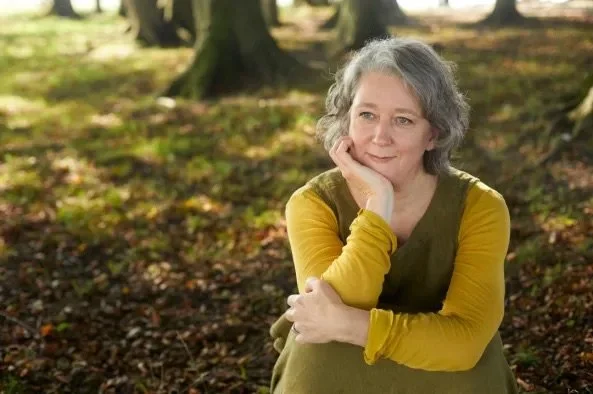
Image Provided by Claire Fuller
Given that her previous works were incredibly different, I wanted to start there and understand how this process truly came to her for this particular work.
“They are all different, but that's not a plan. I don't think I'm going to write something very different now. I am able to go wherever I choose in terms of subject matter. My publishers and agents don't prescribe anything. They don't ask to see anything in advance. So I just get on and write for a few years before they see anything.”
“I've always been interested in feral children or children who have been brought up by animals and left to run wild. I was thinking about that, and I had recently read ‘Train Dreams' by Denis Johnson, which I have always loved. In the novel, there is a feral child who is possibly brought up by wolves, the main character's daughter. I was interested in thinking about that. Then I wrote a short story for a competition that didn't get anywhere, but it was about this woman who goes to dinner with her colleagues, and one of them is mean to her and suggests she's been brought up by animals because of how she eats. It was only a couple of thousand words. I was interested in who these people were, who the main character was, and who the horrible colleague is, so I started writing with that as my opening, but in the end, that is just a scene in the novel. It doesn't open with that. Also, at some point I decided this is going to be set in the 1980s.”
Her lead character, Ursula, is a sculptor as well, and after I read that the author herself studied sculpture at art school and had lived in a squat. I wondered what it was like shaping Ursula as a character and how her own background pulled into describing the character and the way she navigates creativity in the book as well.
“I wouldn't say she, as a character, is based on me. I don't have the background she has been raised in; I don't have the same anxieties as she has, but maybe I was a little bit of an outsider. It's hard to say that for yourself. But I drew on my experience of having been a sculptor and having studied sculpture for three years at Winchester School of Art, where Ursula works in the post room. I looked back at that time, trying to remember what it was like. I put myself in the book. There is a student that she meets with; she's described as having an unhappy mouth, and that's me. Her experience of making wood carvings is what I really drew on because I know exactly what that feels like physically and what you're capable of. Also, a little bit of stone carving. I was perhaps more of a stone carver. Ursula is a wood carver, but her interactions with students and her interactions with tutors all came from my experience as well as the house.” The author explained when opening up about the creation of the character.
The novel alternates between 1987 and the present day for Ursula. Given that this place is such an important part of the story, we dug into why the dual timeline matters.
“I did consider having it all set in 1987. From Ursula's point of view, when she was sixteen. But there are problems for me with that, in that she didn't have much of an education. Her voice at sixteen would not be very sophisticated. It's not like I write in a very sophisticated language, but I wanted that opportunity to not write just in the voice of an uneducated sixteen-year-old. It would work much better if she were older, looking back, because then I could give the voice a different texture of someone older and also someone who can reflect on what's happened when she was sixteen, because if you're living in that moment at sixteen, there is no time for reflection, especially with what actually happens. So that was important. I hope that the later sections help with the pace, the mystery, or the feeling that you want to know what happens because you're drip-fed information about this true crime documentary that is broadcast. We see it in real time at the end of the book.”
“By drip-feeding that information, you don't know who is dead because in the first paragraph, you learn that someone's dead, that possibly Ursula might be involved in the killing. She certainly was involved in the disappearance. By being able to move into the future and give information about what happens then, I'm hoping that the reader is teased about who is killed and who is not. Each time you read a piece of the documentary about someone who's interviewed, you realize that person obviously isn't dead. It's a way of removing characters until only one is left. I'm presuming the reader will think that it must be that person because they haven't been interviewed yet. I thought that was a cool element to slowly give information, because I liked the element of using this documentary, which is popular in current times, to slowly give that information. It gives a contrast to the eighties versus now in the type of content being made surrounding these issues.”
Ursula accepts Sue's ultimate dare, which leads to the act of violence. We discussed how the author approached writing such a pivotal scene and what she wanted to convey about Ursula's state of mind in that moment. Allowing for other devices to dig deep beyond the dual timeline.
“I don't approach any writing with any forethought. I don't have a plan when I'm writing. I didn't know when I was writing that first draft who was going to die. I knew that Ursula was going to kill someone, but I wasn't sure who. It's an organic process for me. I'm in the moment. Whatever comes out, comes out, and then I deal with it later in the edits. If I'm looking back when I'm editing, when I finished that first draft, then there is a lot more thought that goes into it. I'm much more conscious of Ursula's state of mind. At that moment of violence, she is frustrated, clearly still easily led, easily influenced, and impulsive. The whole book, I hope, is written so that you could read it as supernatural, suspense, or horror, or just accept that the supernatural elements absolutely happen. Or you could read it as a reflection of Ursula's trauma that she had in her childhood and question whether these things even actually happened. I'm happy for readers to take it either way.”
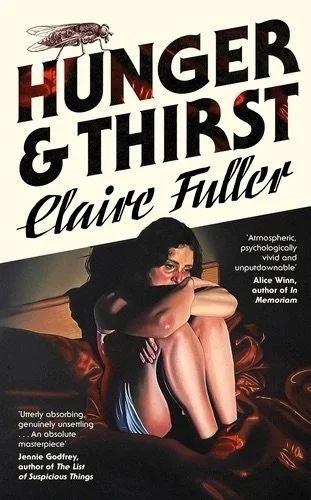
Image Provided by Claire Fuller
Another important element of the book is Ursula's childhood trauma, which is not simply handled lightly but is handled with care, as Fuller did research into that lived experience. When talking about what that process looked like, it truly brought to light the level of diligence involved.
“It was important to get it right. I have no personal experience of that. I knew that I was going to have to research this as thoroughly as I could. I read as much information as I could about the care system in the 1970s and 1980s. There have been quite a few documentaries about that, which I watched, and quite a few memoirs about life in the UK system of care. Then I decided that I also needed to speak to some people who had gone through this themselves. Through various contacts, I spoke to people who had been through the care system, a social worker, a care home manager, a foster parent, and as many people as would speak to me, and I recorded their interviews, wrote lots of notes, and then used that to inform what happened to Ursula. None of these interviews or the information from them goes into the book. I didn't use anyone's real story. I just wanted to make sure that things like if you want to access your own records, what is that like? How easy is it? What happens when you receive it? What does that feel like? I wanted to make sure I got that right, that sometimes you'll just be sent all your files with some information that relates to other people redacted, without any supervision, without any counseling. You just sent it through the post. Here is all the information from when you were a child and the way that people thought about you. It's quite shocking that that still happens. I knew nothing about that, so I had to speak to some people to get the right information about the process as well as what life was like for them.”
I've then wondered if any research was also done to really capture the mood of 1980s Britain, as it really did dig deeper than just a setting and instead was a reflection of the cultural and political period that was taking place around the characters.
“I didn't do any research around that. It was more about trying to tap into my own memories because I was only a couple of years older than Ursula. We are more or less the same age. She has a very different background and a very different life, but I just tried to remember what it was like. I checked all the political changes when the new prime minister, when Margaret Thatcher got in, what year that was, and what date that was, so that it could be reflected in the novel. Somebody makes a comment about that, but I wouldn't say it's an overtly political novel. I wasn't too worried about most people expressing what they thought about politics. Certainly not Ursula. She just has this friend John, who is more political and states his mind. It was more about tapping into my memories. Sometimes there were certain things that I couldn't remember very well because you assume all sorts of things at a particular point in time, and then stuff changes, and you can't remember when it changed. There's a Facebook group called Winchester Memories, and loads of people post on there with photographs from all sorts of eras. I often posted on there with questions about the location. These characters, a lot of them, watch films. I needed to remember what video shops we had in Winchester, where the book is set in 1987. Things like that I would post on there, and so many people were chipping in with their answers. We had blockbusters and all sorts of things. You could hire videos from little corner shops all over the place, which I had completely forgotten about. Things like that were really helpful.” Fuller explained.
Stepping back into the '80s once again, horror movies and film in general are a big inspiration for the author. When sharing which ones took the stage for this project, there were some fun answers.
“There are three main films that the characters watch over and over, which are The Shining, Rosemary's Baby, and The Stepford Wives. They are three of my favorite horror films, so it was fun to get to write about them and therefore have to watch them over and over. I did think, should Sue and Ursula really be watching horror films from the 80s rather than looking back even further? But the films from [that period], most of them, didn't quite fulfill the criteria that I was looking for. They are much more in-your-face horror slashers with lots of gore. This novel is about the psychological background of these characters. I think those three films in particular, certainly Rosemary's Baby and The Shining, look at the psychology behind the characters, and the build-up to the horrible things that happen is really slow. None of them are those kinds of horror films where you're getting gore quickly. It's about a very slow buildup. I wanted films that would reflect the kind of story that I was telling. I love these films so much that I actually put little Easter eggs in this novel, with just little hints here and there that are all references to these three films, which was great fun.”
Much of where the author thrives is with the complexity of her character, including the dynamics between women. When asked about what it was like to develop these relationships, especially the friendships between lead characters Ursula and Sue, the author had this to share.
“I was thinking back to trying to imagine what life was like, what female friendship was like when I was sixteen. It is complicated because you're finding out who you are and everybody's doing that at the same time. I was not particularly confident. Even people at sixteen who put on a confident front are probably not confident. You're testing to see who is a true friend and who isn't, and you're changing allegiances, and you all have your own agenda. I think often girls don't necessarily say what they mean because they're worried about how that is taken or accepted or rejected. They have this front that they put on. It means that female friendship at that kind of age is very complicated. Ursula's and Sue's relationship becomes even more complicated because Ursula is, for the first half of the book, this very much weaker character who is very easily led. Sue is this very dominant character who bosses her around, and Ursula accepts that. There's a difficult dynamic there. It becomes even more tricky when Sue has this big, supposedly happy, bustling family that Ursula wants in on. Sometimes on the surface, that kind of family can look very attractive to an outsider. But when you're in a family like that, it's always much more complicated. The family dynamics are different. It's not always as joyful as it looks. Those two young women have all that stuff going on. Plus, it's the 80s, and there's loads of misogyny and sexism.”
Going deeper into that exploration of misogyny and sexism, one of the things Fuller does best is develop women characters that are empathetic and complex. They react to the world around them and are never one-dimensional in nature. When speaking to what drives her to create such depth, we get to dig into the importance.
“I guess you started by saying all my books are all really different, but they do have complicated female leads. Often, they have some kind of sense of isolation, whether that's from friends or community or being literally out on their own. I don't ever sit down and plan them. I never do that questionnaire that sometimes beginner writers are told to do, where you have a form to fill in that examines their first kiss, eye color, or what their mother did for a living. I don't ever do that. What I sometimes do, if I'm a bit stuck because I don't plan and I don't always know a character's motivation when I'm writing the first draft, is I will open a new Word document and I will type a conversation between me and the character about a specific subject. The heading might be, "So, Ursula, we need to talk about Sue." I will type to Ursula, "So tell me what you think about Sue," and Ursula will answer. Obviously, I'm answering, but it's a way of tapping into my subconscious and drilling down into issues that I feel I don't know enough about and coming up with some answers that help me move on with the work in progress.”
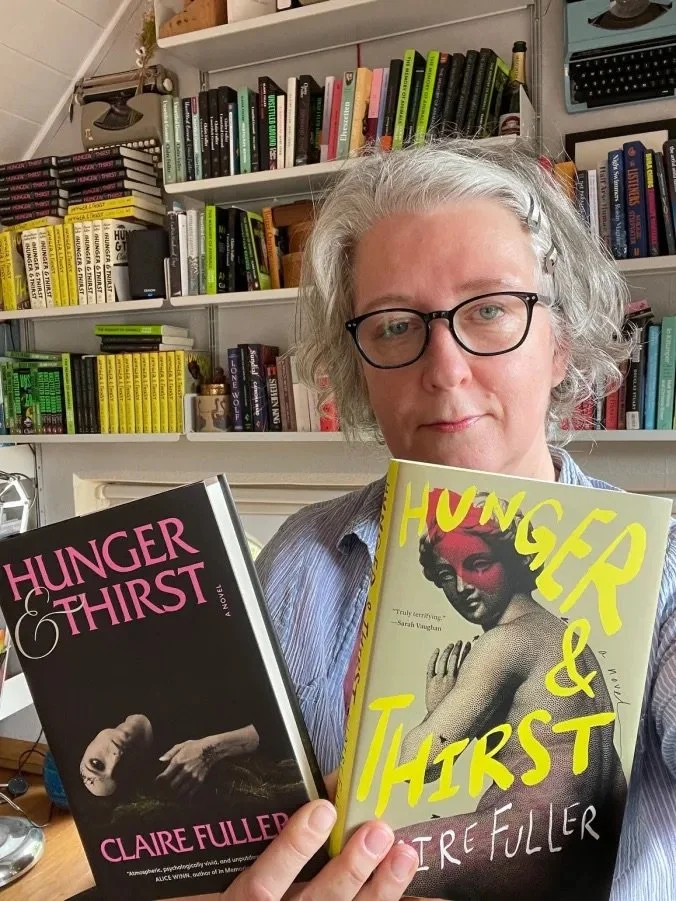
Image Provided by Claire Fuller
Claire Fuller has said Hunger and Thirst kind of captures the dangerous line between wanting and needing, and how far a person will go to belong. The writer opened up about how she feels the other characters kind of embody this idea separately for themselves, of wanting and needing.
“Thirst to me feels like something that you must be satisfied with in order to live, because you need water in order to stay alive. So that's need and thirst. Hunger and wanting are something that you desire and you long for and maybe you're searching for, but they are not necessary to stay alive. With Ursula, she is thirsty for connection or thirsty for belonging, thirsty to find her place in the world. She's hungry for a family. She wants to belong in a different way. Vince is thirsty for forgiveness for all the stuff that he's done in his past and hungry for Sue. He wants to possess her. Sue is hungry for personal recognition. She wants to be a horror film director and then thirsts for freedom to be able to get away from her family and do her own thing. All the other minor characters I thought about in the same way. What's their want and what's their need?”
“I hope that [readers] find these characters real and deep and with motivation that might surprise them. I wanted some surprises. I wanted some depth of character. I wanted readers to be left feeling unsettled, not confused, but not necessarily having all the answers, having to accept some kind of ambiguity, whether that is through characters or through their actions.”
The novel, like its many complexities, is not straightforward and instead balances the ambiguity between whether it is truly a psychological novel or supernatural in nature. And while the other explains that she likes to leave it open to interpretation, I wondered if she had a version of the truth for herself that guided her throughout the creative process.
“I do like the idea of the supernatural. I think it would be presumptuous of human beings to think that we have discovered everything there is to discover. Certainly we haven't. We keep discovering new things. Whether that's supernatural or not, I'm not sure. Nothing supernatural has ever happened to me, but I'm open to it. I like the idea of being frightened. I enjoy that thrill. Writing this novel, I'm happy just to go with the idea that it's a straight horror story. But I also like the idea that there is some real-world explanation for everything that happens. I'm somewhere on the fence. In the editing, I did have a huge complication. My UK editor is more open to this novel being just a horror novel, and my U.S. editor really wanted some real-world explanations. There's a body that disappears, and we never find out what's happened to that body. She was dissatisfied with that, frustrated with that. She wanted me to come up with a reason or an explanation. I thought about possibilities and wrote another version of the novel with those in. Then both my UK and US editors said that this has gone too far over towards explaining everything. I need to pull back again. For a year, there were so many edits where I was reining things in or giving a tiny bit more explanation. At one point, Ursula goes to a grave. How much should I explain what happens there? How much should I leave it up to the reader's interpretation? There is a very fine line to get that right. I hope that I've got it right. I'm happy with the novel now, but it did take a long time to see where I should sit.” She answered openly.
Explaining what she was able to learn overall from this being her sixth novel, there was a big takeaway.
“I think I learned that I am capable of scaring some people, some adults, because I get really scared by horror films. As a child, I read a lot of horror or ghost stories and was really scared. But as an adult, I've found it quite hard to be scared by fiction. I enjoy being unsettled, but not completely scared where I'd have to make my husband come to the bathroom with me. Having written this, and from the early feedback of some readers, they do seem to be genuinely scared. I'm proud of that. What I will take forward to a future project, when I sent it off to my UK and U.S. editors, I'd been writing it for two or three years, and I thought, I'm ready to send it off. There was a year of editing because I think I sent it too early. I should have kept it, maybe not even have looked at it for six months, and then gone back and looked at it and really thought hard about the themes and what story I wanted to tell and how much ambiguity I wanted; just make some of those decisions clear in my own head before I send it off. Next time I have to take longer.”
The novel is now available to be yours to discover the mystery for yourself and make up for yourself how the thrills of the novel land, including the characters that don't shy away from you.